The Story Behind 4900 Colors by Gerhard Richter
21 Oct 2025
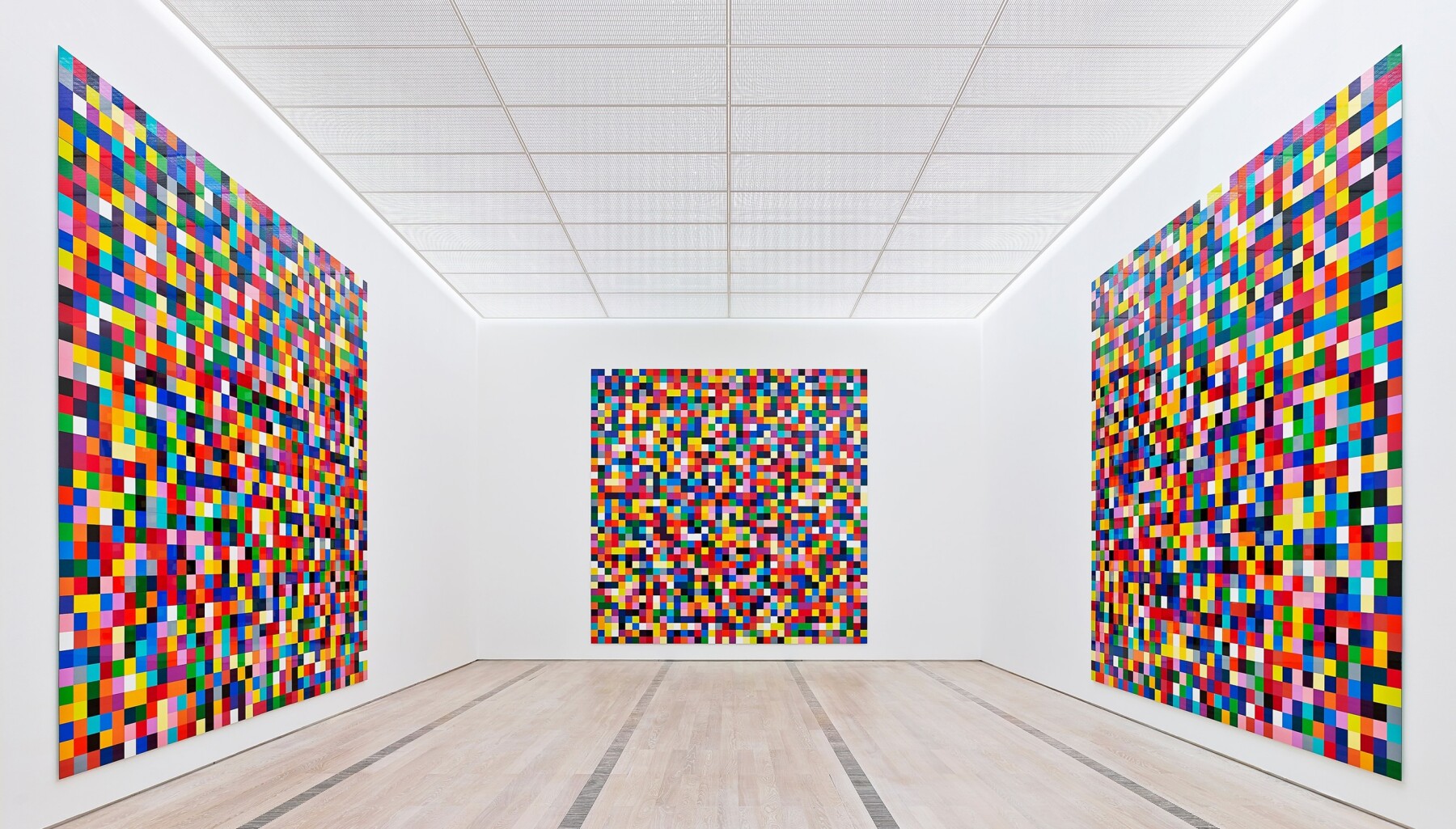
To mark the unveiling of the most extensive Gerhard Richter retrospective yet at the Fondation Louis Vuitton in Paris, we turn our attention to one of his most striking and conceptually rigorous works, 4900 Colors (2007).
The exhibition, on view through March 2, 2026, spans more than 270 works and six decades of Richter’s practice. It moves from his early blurred photo paintings and austere grey canvases to his monumental abstractions, reflective glass constructions, and delicate late drawings. Together, they trace an artist who has continually tested the limits of what painting can be.
4900 Colors was created in the same year as Richter’s Cologne Cathedral Window (Kölner Domfenster), a commission that replaced a stained-glass window destroyed during the Second World War. That project comprised 11,500 coloured glass squares arranged according to a computer-generated sequence. While designing the window, Richter began developing 4900 Colors, a painting series that brought the same principles of chance and systematic colour distribution into a new, secular context.
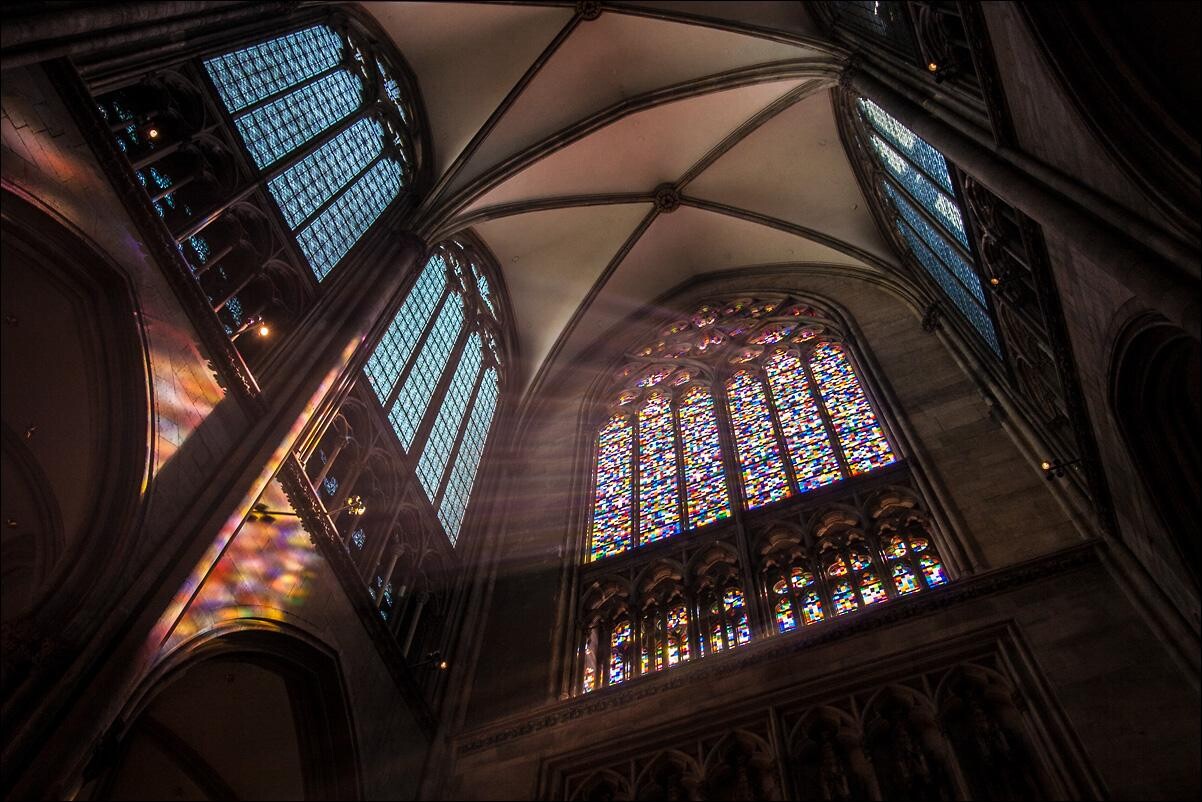
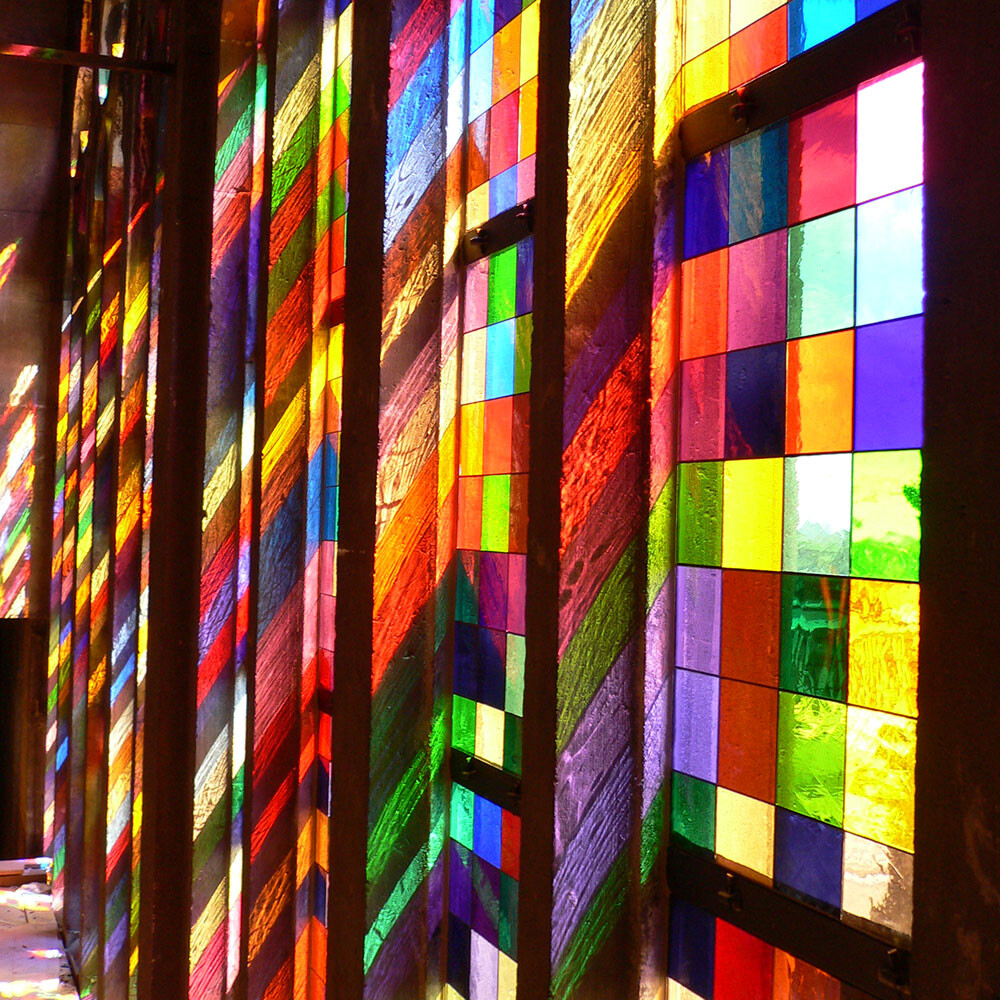
(Above) Gerhard Richter, Cologne Cathedral Window (Kölner Domfenster), 2007. 11,500 squares of hand-blown glass in 72 colours, arranged by computer algorithm. Photo credit: Frank Krumbach.
Rooted in the logic of his Colour Chart Paintings from the 1960s, 4900 Colors extends Richter’s long-standing fascination with colour as both system and sensation. The work consists of 196 square panels, each containing 25 coloured squares, for a total of 4,900 units. The panels can be arranged in eleven configurations, ranging from a single expansive field to multiple smaller grids. No version is definitive; each holds equal status, reflecting Richter’s interest in multiplicity and non-hierarchical form.
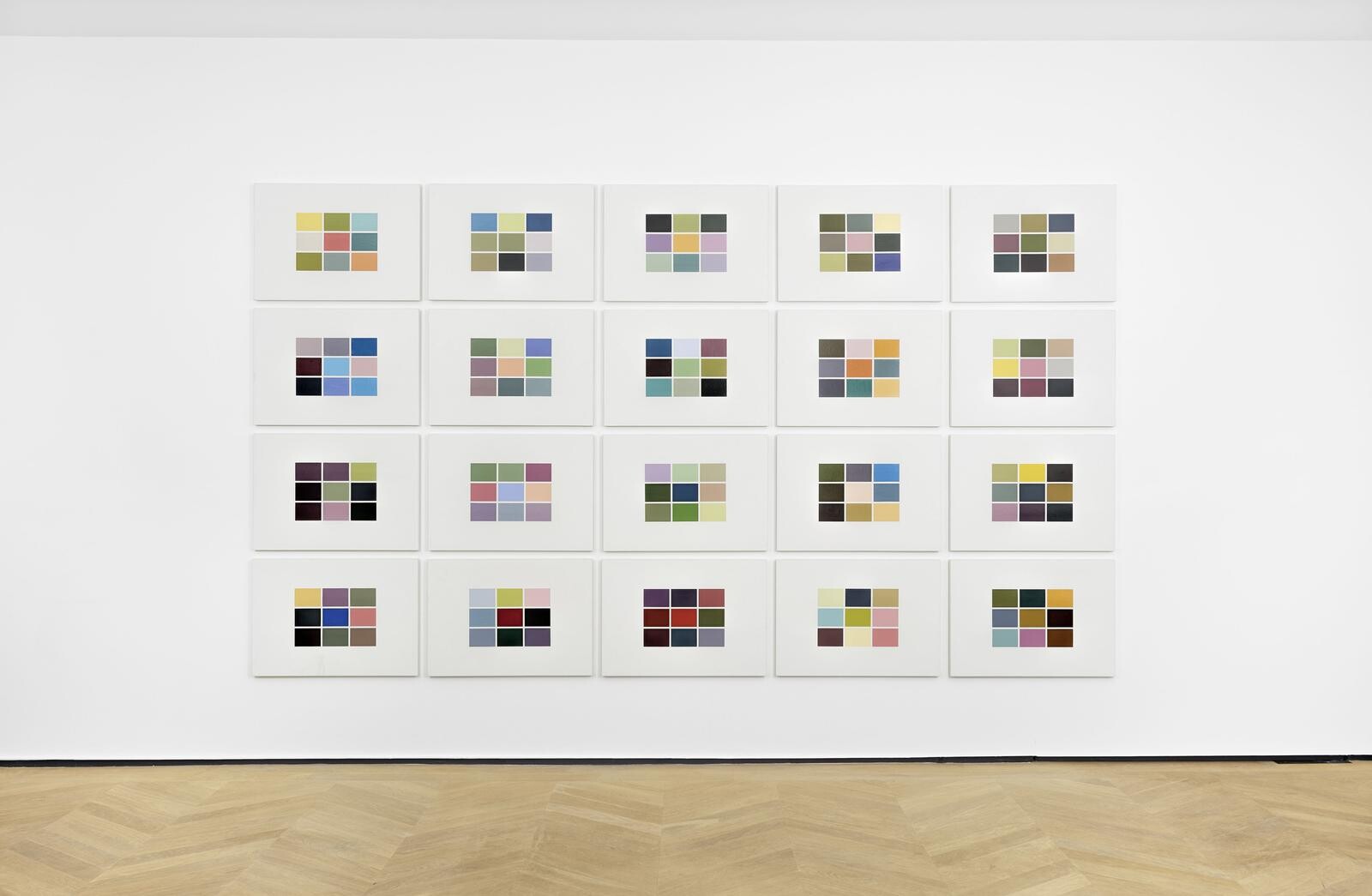
(Above) Gerhard Richter's earlier Colour Chart Series from the 1970s. Photo: courtesy of LÉVY GORVY. These earlier works established the artist's lifelong dialogue with industrial colour and systematic randomness.
While 4900 Colors appears strictly systematic, its production was anything but mechanical. Each panel was executed with industrial precision, typically using spray enamel on aluminium to eliminate any trace of brushwork. The artist and his studio calibrated colour density and edge alignment meticulously, ensuring perfect uniformity across hundreds of panels. From close range, the grid reads as a field of discrete, autonomous colour blocks; from a distance, the eye blends these tones into new, shimmering fields that appear to vibrate and shift. Each configuration invites a slightly different rhythm of gaze, with patterns emerging and dissolving depending on how the viewer’s eye moves across the panels. The work reveals as much about human perception as it does about colour itself.
Richter has often described his use of chance as a way to temper artistic intention, to show the balance between structure and accident, control and randomness. 4900 Colors embraces randomness only within the rules he sets, from palette to grid and structure, turning the relationship between control and accident into the true subject of the work. The computer-generated order echoes the logic of the Domfenster, but here the light is captured rather than transmitted, contained within the opaque surface of paint.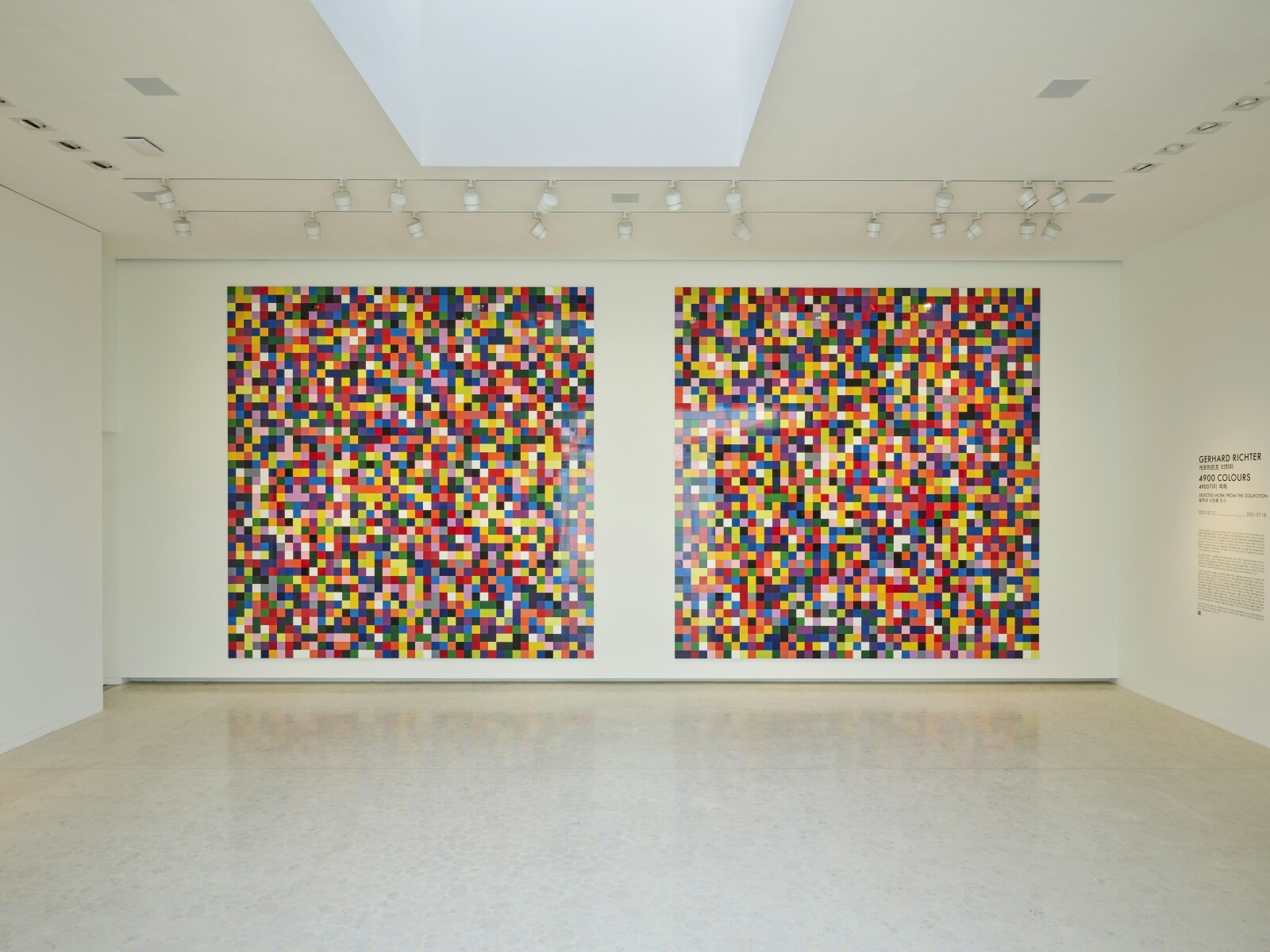
(Above) Installation view, Gerhard Richter: Retrospective, Fondation Louis Vuitton, Paris, 2025. More than 270 works spanning six decades are presented across the museum’s luminous galleries. Photo: © Gerhard Richter. Photo © Louis Vuitton / Kwa Long Lee.
Installed within the Fondation Louis Vuitton’s vast retrospective, 4900 Colors acts as a pivotal link in Richter’s evolution. It connects the rational systems of his early Colour Charts to the digital rhythm of his later Strip paintings (below), where images are algorithmically stretched into bands of pure colour. In this sense, the work stands as both culmination and bridge: a moment where analogue precision meets digital logic, and where the act of seeing itself becomes Richter’s enduring subject.
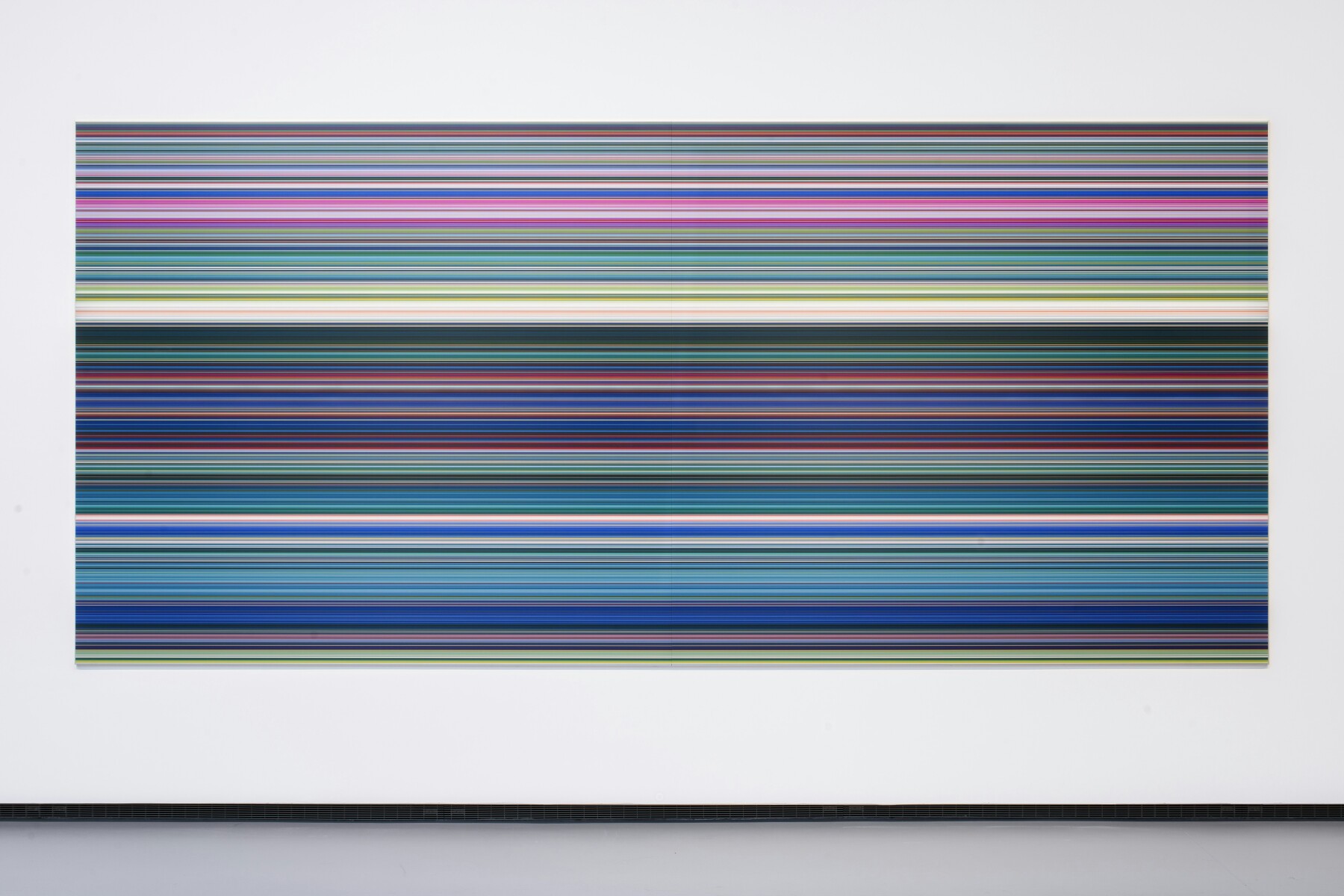
(Above) Gerhard Richter: Strip (920‑1). Building on his earlier colour block works such as 4900 Colors, the Strip series transforms images into horizontal bands of colour, extending his exploration of abstraction, seriality, and the digital manipulation of photographic sources.
Get closer to masterpieces like this and more! Club-level members enjoy free priority access to Fondation Louis Vuitton and a before-hours expert-led tour.