Your Cultural Guide to Summer In Sicily
30 Jun 2026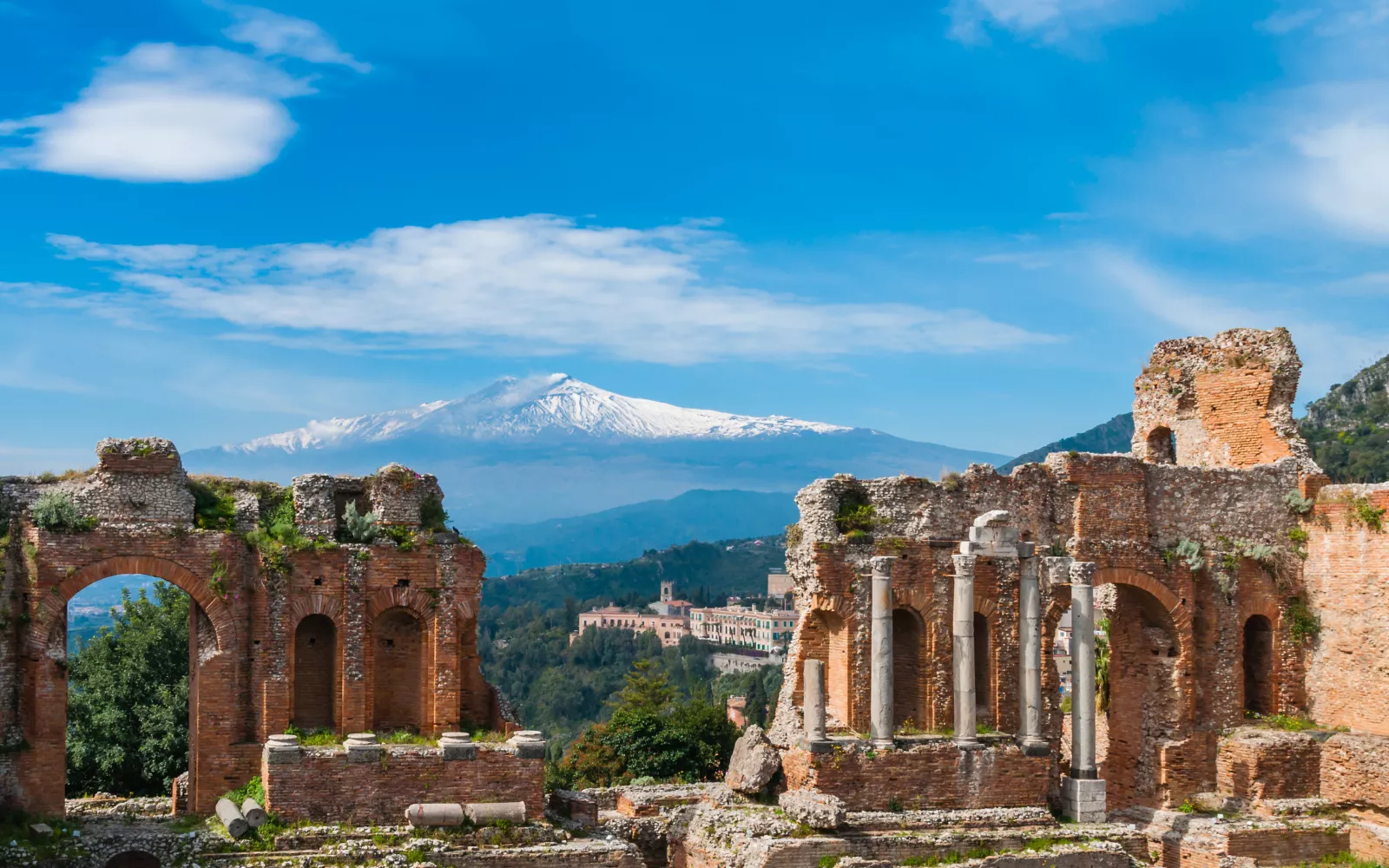
Sicily has always been a place of layers. Greek theatres, Norman mosaics, Baroque palaces, Byzantine churches and contemporary galleries sit close together, often with the sea just beyond them. Few destinations make history feel so immediate, or so visually alive.
For an art-led trip, build the route around Taormina and Palermo, with Noto, Syracuse and Catania as cultural stops along the way. Begin on the eastern coast, where ancient ruins look out across the Ionian Sea, then move west through Baroque towns, Caravaggio shadows and contemporary palaces.
Taormina
Start in Piazza IX Aprile, Taormina’s most elegant square and one of the best introductions to the city. From the terrace, the view opens out towards Mount Etna, the Bay of Naxos and the ruins of the ancient theatre. It is a theatrical beginning in every sense: artists, cafés, open-air restaurants and the 17th century Church of San Giuseppe all gathered around one of Sicily’s most memorable viewpoints.
From there, make your way to the Greek Theatre of Taormina. Dating back more than 2,000 years, the theatre remains one of Sicily’s most extraordinary archaeological sites, not only for what survives of the structure, but for where it sits: suspended between mountains, sea and sky. Even without a performance, it is one of the most cinematic places on the island.
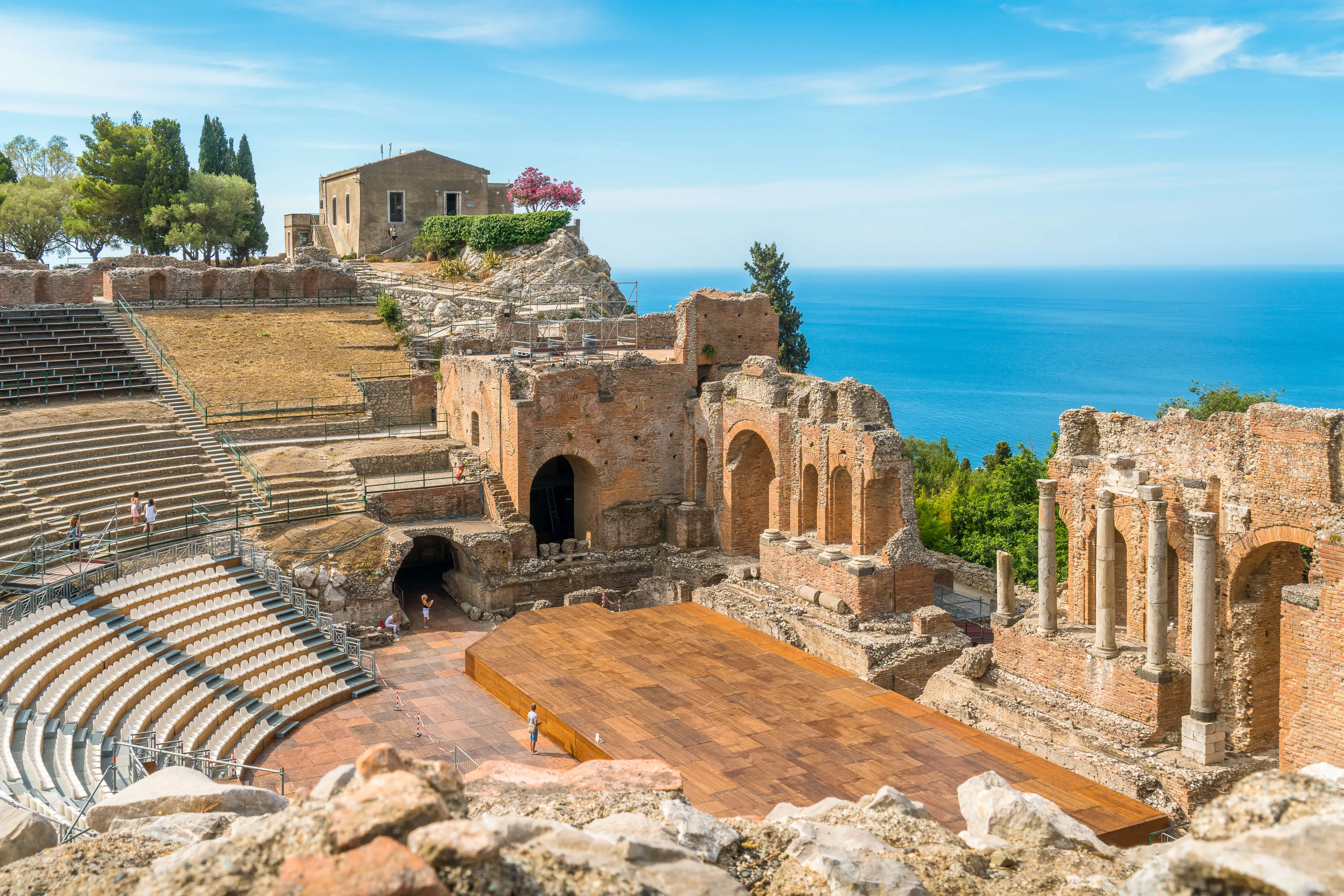
Ancient Theatre of Taormina. Photo Credits: Exoticca
For a quieter stop, visit Casa Cuseni, an early 20th-century villa built by the English painter Robert Hawthorn Kitson. Now a house museum, it holds the collections of Kitson and the writer Daphne Phelps, with a focus on the English Grand Tour in Sicily. Part artist’s house, part garden retreat, it offers a more intimate view of the island’s long relationship with foreign artists, writers and travellers.
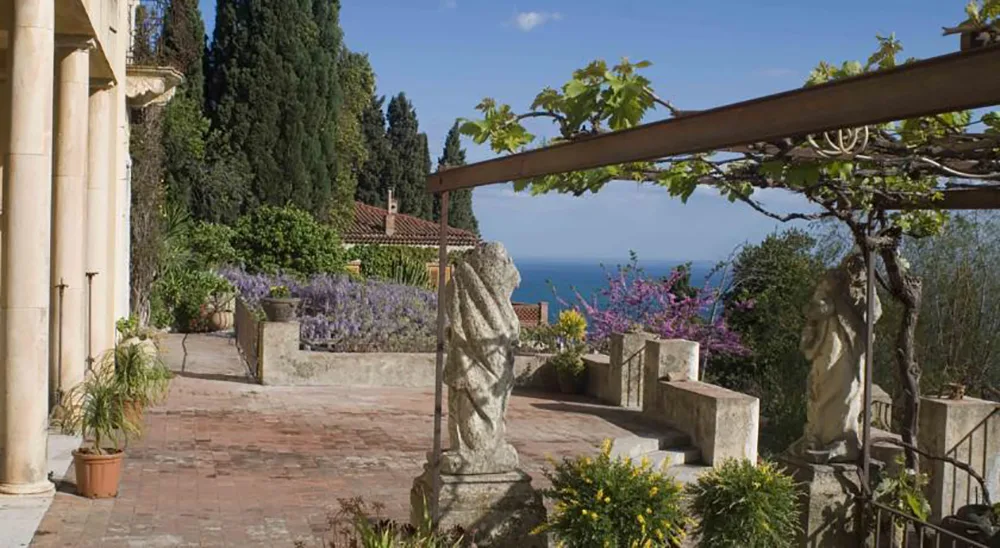 Casa Cuseni garden, terrace. Photo Credit: Sicily Lifestyle
Spend the afternoon on Corso Umberto, stopping at L’Agorà di L. Consoli, which specialises in antique engravings, maps, prints and paintings of Sicily through the centuries. It is the kind of place that makes the island feel collectible: Sicily not only as a destination, but as an image that has been drawn, mapped and reimagined again and again.
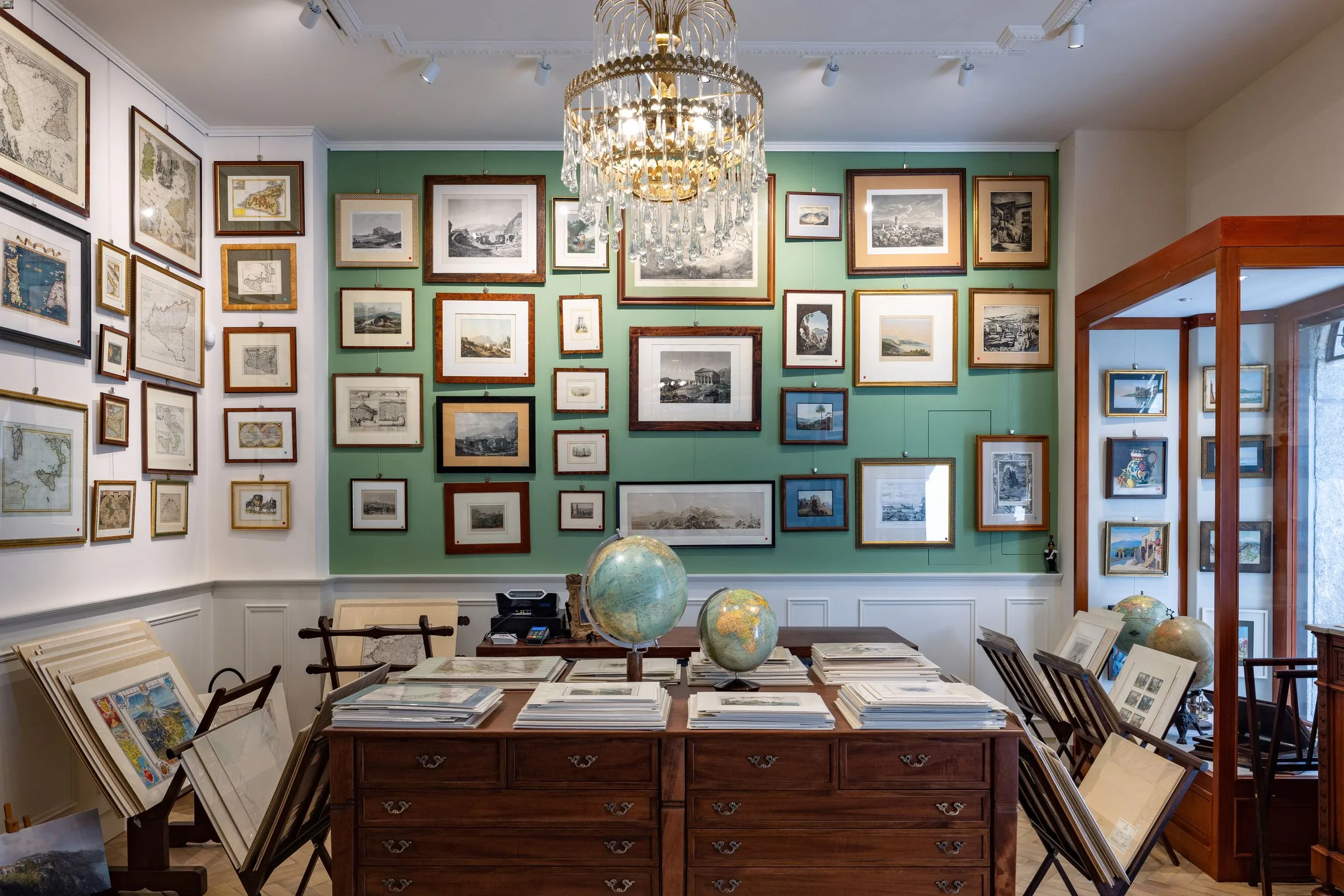
L’Agorà Galleria d’Arte, Taormina. Photo Credits: L’Agorà
Nearby, Kerameion offers handmade Sicilian ceramics by Marco Monteforte, who has been making ceramics for more than 30 years. For something to take home, this is a more personal alternative to the usual souvenir: colourful, local and rooted in craft.
Before leaving Taormina, climb or drive up to Castello Saraceno. Now in ruins, the medieval fortress crowns the city and offers one of the best views of the area. It is less polished than the Greek Theatre, but that is part of its appeal: stone, silence and a wide-open panorama.
Between Taormina and Palermo
Noto
On the road south, make time for Noto. The city is one of Sicily’s great Baroque set pieces, and Palazzo Nicolaci di Villadorata is its most elegant calling card. Built in the 18th century as the urban residence of the Nicolaci family, the palace is known for its theatrical balconies, richly decorated façade and the way it seems to turn the street itself into a stage.
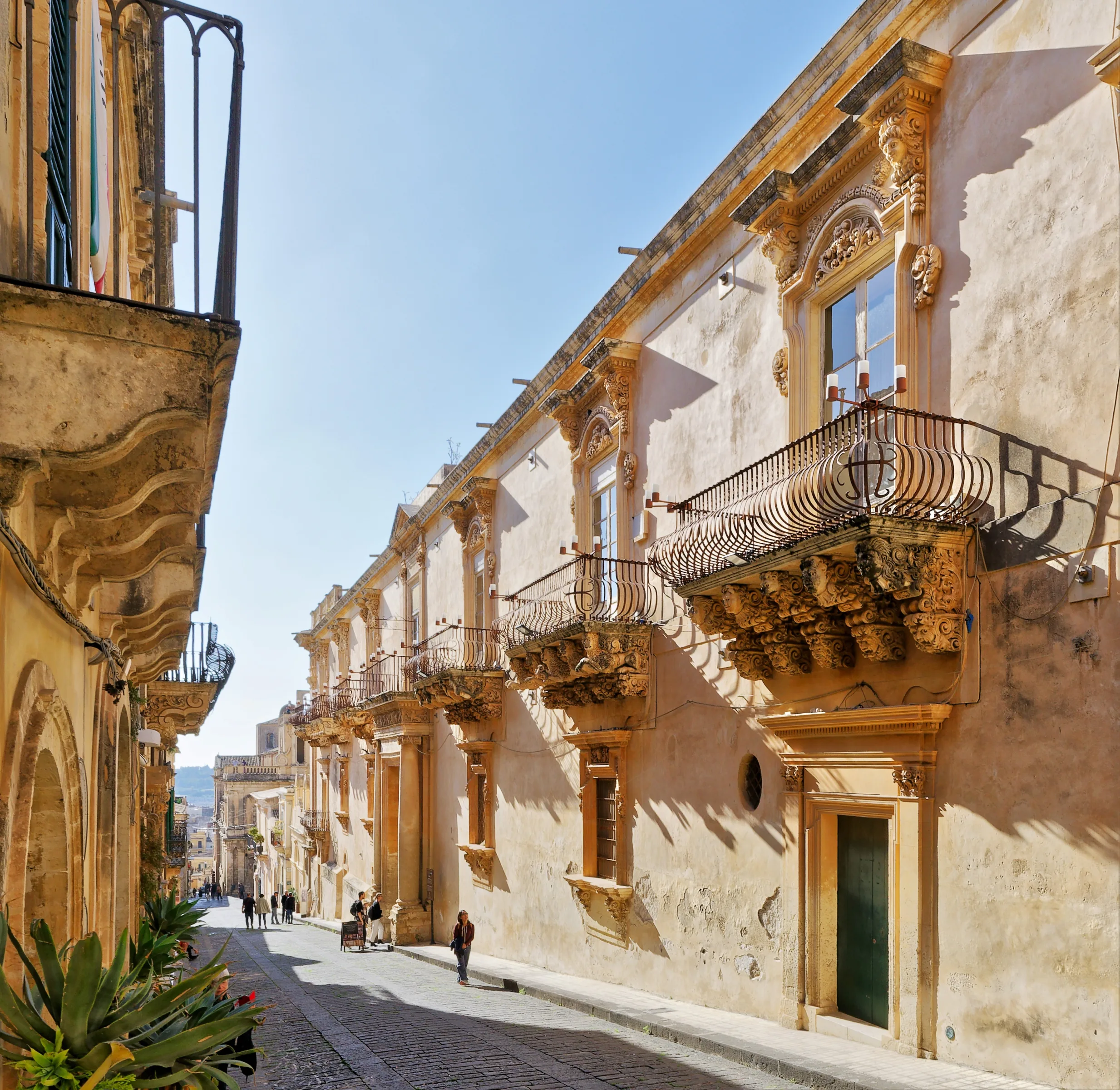
Palazzo Nicolaci di Villadorata, Noto. Photo Credits: Holger Uwe Schmitt
Afterwards, step into Chiesa di San Carlo al Corso. Noto rewards anyone who remembers to look everywhere: up at the ceilings, down at the floors, across the chapels and decorative surfaces. San Carlo is especially beautiful for the way it brings together Baroque ornament, painted detail and architectural rhythm.
Syracuse
Continue to Syracuse for Caravaggio’s The Burial of Saint Lucy at Santuario di Santa Lucia al Sepolcro. Painted in 1608 while the artist was on the run and seeking refuge in Sicily, the work has a dark, unsettled force that feels inseparable from the circumstances of its making. Monumental and spare, it is one of the island’s essential art pilgrimages.
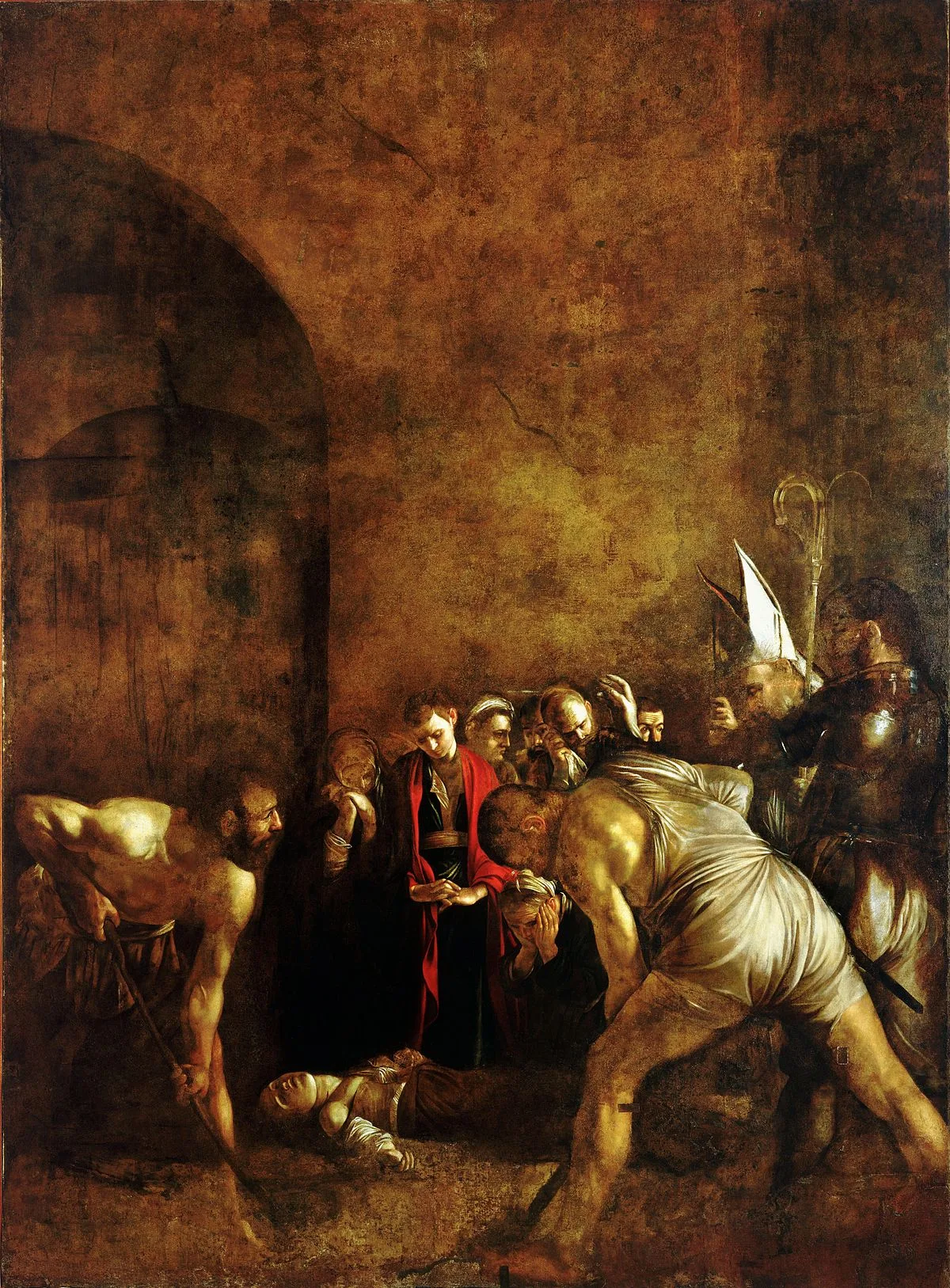
Caravaggio: Burial of Saint Lucy, 1608. Photo Credits: Caravaggio.org
Nearby, visit the Galleria Regionale di Palazzo Bellomo, housed in a 13th-century Catalan-Gothic palace. The collection moves from Byzantine and Norman stonework to medieval sculpture, Renaissance painting and Baroque religious works. Its highlight is Antonello de Messina’s Annunciation, a small but unforgettable masterpiece by Sicily’s greatest 15th-century painter.
Catania
If your route takes you through Catania, stop at Chiesa San Benedetto, a Baroque landmark known for its Staircase of Angels and richly decorated interior. A few steps away, the Museum of Contemporary Art in Sicily offers a more intimate contemporary counterpoint, tucked into the city’s historic centre.
For a more ambitious detour, Villa Romana del Casale near Piazza Armerina is worth the journey. Its Roman mosaics are among the best preserved in the world, with scenes of hunting, mythology and aristocratic life that still feel astonishingly vivid.
Palermo
Begin Palermo at Palazzo Butera, in the historic Kalsa district. Restored by Massimo and Francesca Valsecchi, the Baroque palace brings together aristocratic architecture, contemporary art and sweeping views over the Gulf of Palermo. It is one of the best places to understand the city’s current cultural energy: historical, ambitious and very much alive.
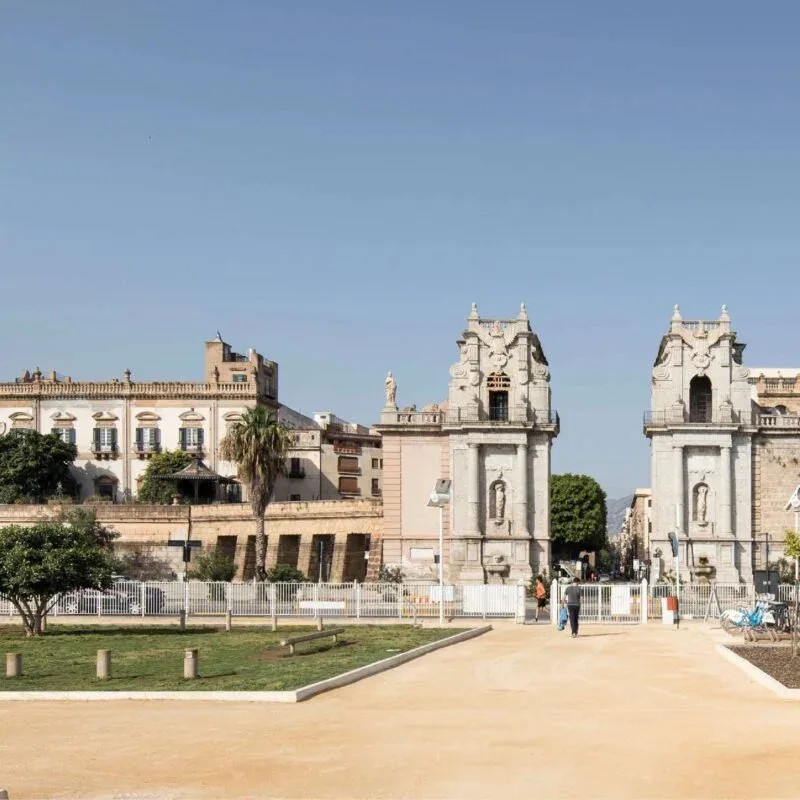
Palazzo Butera, Palermo. Photo Credit: Palazzo Butero
From there, walk to the Regional Gallery of Sicily at Palazzo Abatellis. Housed in a striking 15th-century Gothic-Catalan palace designed by Matteo Carnilivari, the museum traces Sicilian art from the Middle Ages to the 18th century, with sculpture on the ground floor and paintings above. The building alone is worth pausing for, but the collection gives Palermo’s visual history a beautifully framed centre.
If you see one church in Palermo, make it Chiesa di Santa Caterina d’Alessandria. From the outside, its setting on Piazza Bellini is already beautiful, but the interior is the real moment: frescoes, marble, stucco and painted detail layered into one of the city’s most dazzling Baroque spaces.
Then continue to Chiesa del Gesù di Casa Professa, one of Palermo’s most breathtaking churches. Its exterior is relatively restrained, but inside the transept, apses and dome burst into 17th-century Baroque excess. It is Palermo at its most maximal: every surface animates, carved, painted or gleaming.
For contemporary Palermo, visit Palazzo Riso. Set within Palazzo Belmonte Riso, an 18th-century noble residence in the historic centre, the museum brings late Baroque architecture into conversation with contemporary art. After years of abandonment, the building was restored and reopened as a contemporary art museum in 2005. 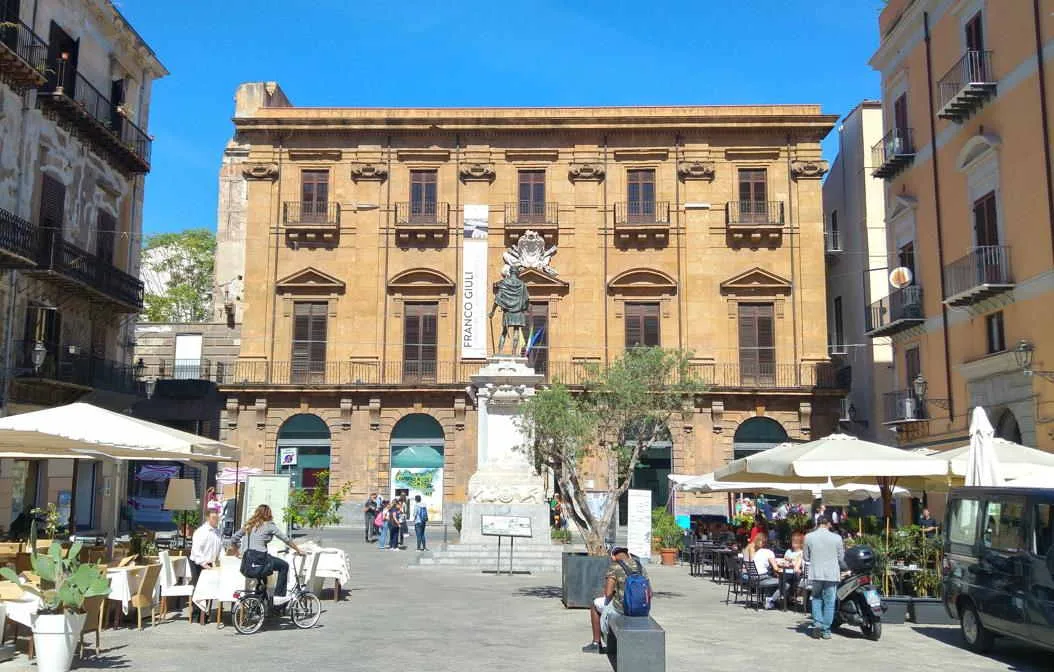
Palazzo Riso - Museo de Arte Contemporaneo de Sicilia. Photo Credits: Panormus.es
Nearby, Rizzuto Gallery offers a more focused look at Palermo’s contemporary gallery scene. Founded in 2013 and now operating between Palermo and Düsseldorf, the gallery supports emerging and established artists with an experimental approach to visual practice.
Just Outside Palermo
Make time for Cattedrale di Monreale, perched above the city. Commissioned in the 12th century by King William II, the cathedral brings together Norman, Arab and Byzantine artistry, with an interior covered in thousands of square metres of golden mosaics. It is one of Sicily’s most extraordinary sites, and a reminder that the island’s greatest masterpieces often come from cultural overlap.
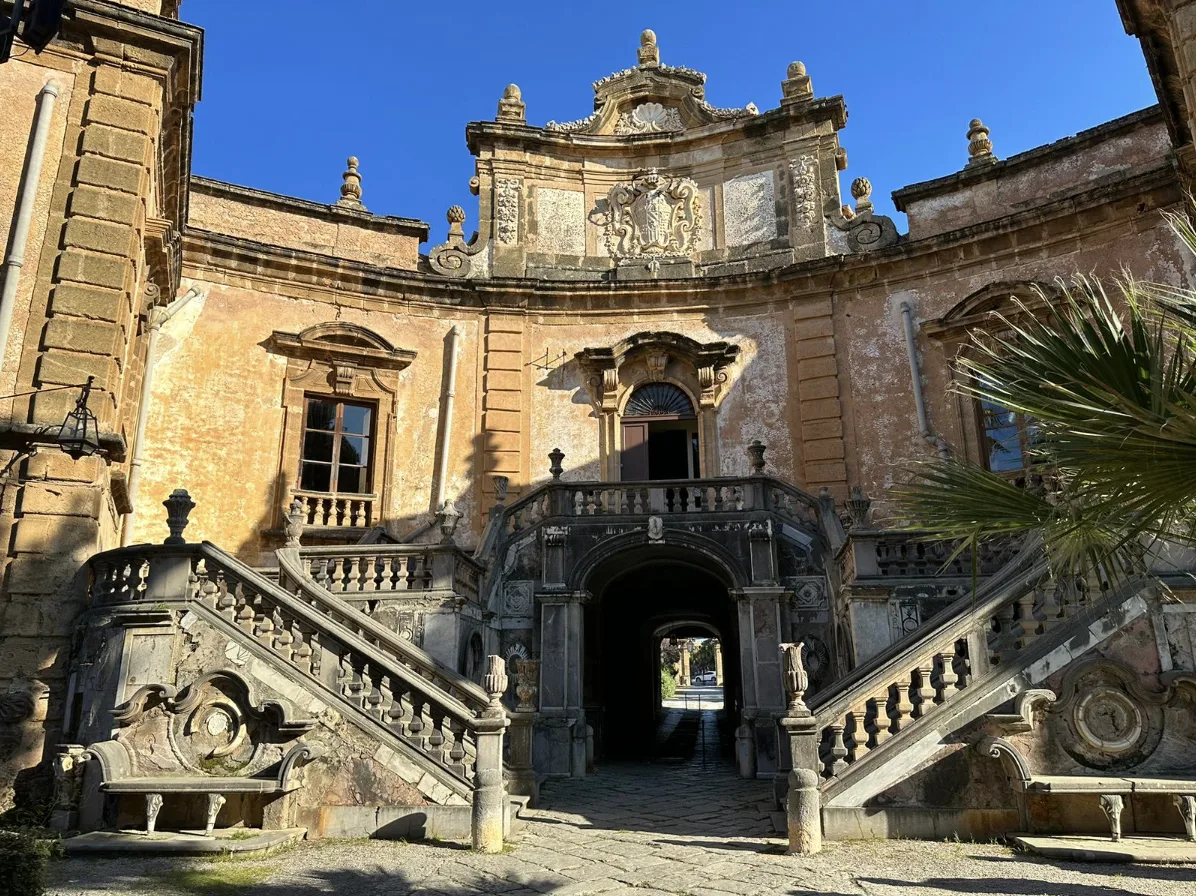
Villa Palagonia, Bagheria. Photo Credit: Villa Palagonia
For something more eccentric, drive to Villa Palagonia in Bagheria. Known as the “Villa of Monsters”, the 18th-century Baroque villa is famous for its grotesque sculptures, mirrored ceilings and strange, theatrical imagination.
Sicily is not a place to rush. Let the route unfold from Taormina’s sea-facing ruins to Noto’s Baroque streets, Syracuse’s Caravaggio, Catania’s churches and Palermo’s palaces. The island’s art is not confined to museums; it is in the façades, mosaics, staircases, chapels and gardens. Few places make the past feel so present, or so beautifully alive.