What's Happening in the Art World this August
31 Jul 2026
August might be the art world's quietest month on paper, but this year it's delivering some of 2026's biggest openings instead. From ancient Egypt's golden city landing in San Francisco to Do Ho Suh's most personal survey yet in his hometown of Seoul, this month proves that even the summer lull can't slow down a museum calendar this stacked.
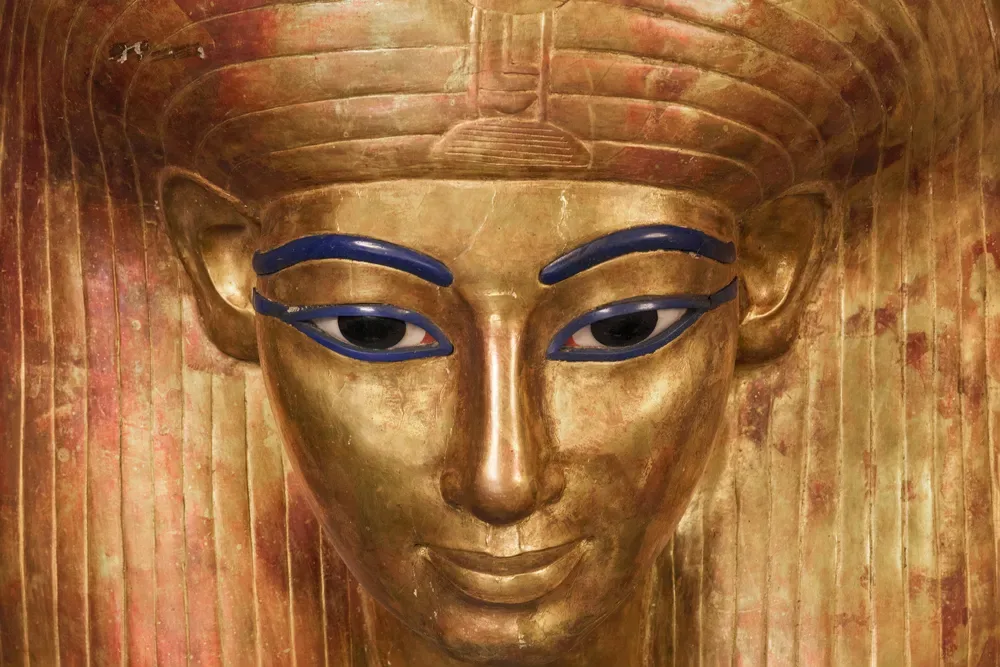
Outer anthropoid coffin lid of Thuya (reign of Amenhotep III, New Kingdom, Dynasty 18), tomb of Yuya and Thuya, Luxor, Valley of the Kings. Egyptian Museum, Cairo. Photo: Massimo Listri
Treasures of the Pharaohs | de Young Museum, San Francisco| 1 Aug – 31 Jan 2027
After a celebrated run at Rome's Scuderie del Quirinale, Treasures of the Pharaohs makes its US debut at San Francisco's de Young this month, bringing 130 objects on loan from the Egyptian Museum in Cairo and the Luxor Museum. Curated by Tarek El Awady, former director of the Egyptian Museum, the show spans 3,000 years of history across six sections, from royal gold to the tools and pottery of everyday Egyptian life. Its biggest draw may be the twenty artifacts making their North American debut from the "Golden City" of Aten, a remarkably intact settlement built under Amenhotep III and uncovered in 2020.
What makes this one worth the trip is the way it resists the usual golden-mask spectacle. Alongside royal jewelry and sarcophagi, curator Renée Dreyfus has built out sections on craftsmen, scribes, and household workers, the people who actually built and maintained the world the pharaohs ruled over. It's less a highlight reel of royal treasure and more a portrait of the whole machinery of a civilization that ran for millennia.
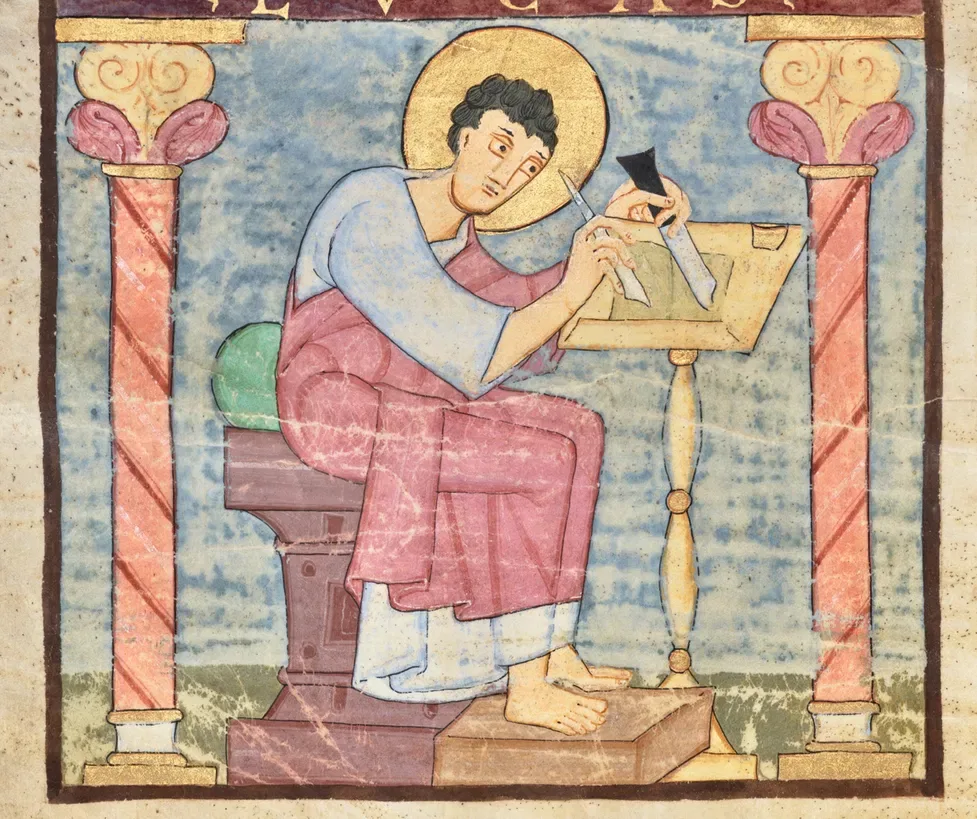
Saint Luke from Irmengard Codex, shortly after 1053, German. Tempera colors, gold, and ink on parchment. Getty Museum, Ms. 125 (2023.6), fol. 3v
The Making of a Medieval Manuscript | The Getty, Los Angeles | 4 Aug – 14 Mar 2027
The Getty pulls from its own collection for this one, walking visitors through every stage of how a manuscript actually got made in medieval Europe (quite an apt name). From treating animal skin into parchment to ruling lines with lead point, applying gold leaf, and binding the final pages by hand. The show draws on Christian manuscripts from across Europe, Armenia, and Ethiopia alongside Jewish and Muslim material, including a French manuscript known as The Story of Two Lovers, its margins still holding half-finished illustrations exactly as the scribe left them centuries ago.
There's something genuinely disarming about seeing the process laid bare like this. We tend to think of illuminated manuscripts as finished, precious objects behind glass, but this show is more interested in the hands that made them: the specific tools, the false starts, the blank spaces where an illustration was planned and never painted. It's a rare chance to see medieval craftsmanship as work in progress rather than untouchable treasure.
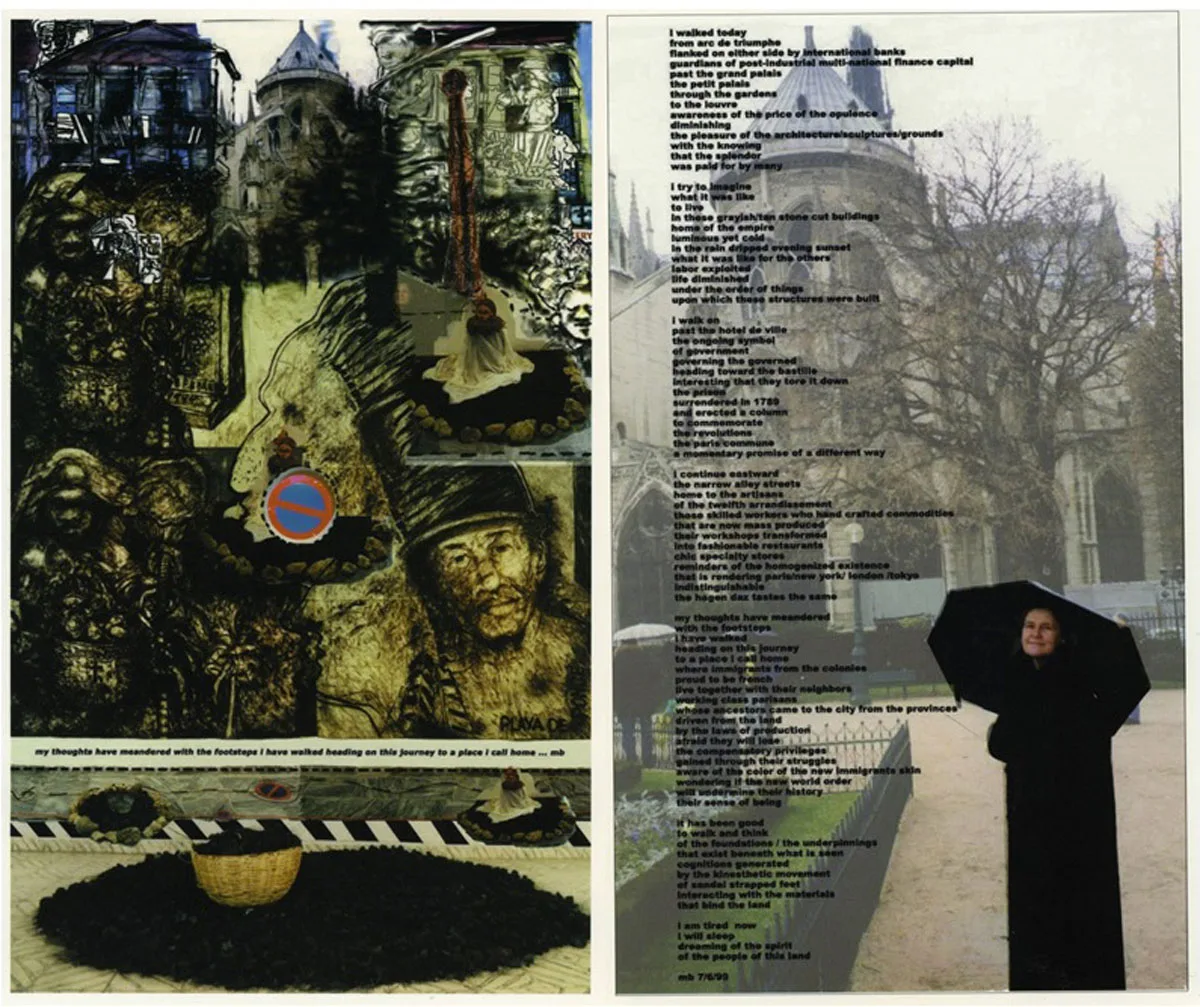
Diógenes Ballester and Mary K. (María) Boncher, Globalization, Post-industrialism and Syncretism, from Taller Boricua's 30th Anniversary Commemorative Portfolio, Alma Boricua, 2001. Image courtesy El Museo del Barrio.
Octopus & Others: Acts of Collaboration & Poetics | El Museo Del Barrio, New York City | 6 Aug – 15 Nov
In 1982, artist and Exit Art co-founder Papo Colo staged Octopus: An Act of Sculpture in El Museo del Barrio's courtyard, an accordion-style book built from eight-by-four-foot plywood panels, with each "page" created on site by a different artist or poet from New York. More than four decades later, several panels from that original piece, recently gifted to the museum by Colo, anchor Octopus & Others: Acts of Collaboration & Poetics, on view for the first time since its debut.
The original roster reads like a cross-section of downtown New York in the early '80s: writers Nicholasa Mohr and Pedro Pietri alongside artists Vito Acconci, Tehching Hsieh, and Juan Sánchez. Bringing it back now isn't just nostalgia, it's a reminder that El Museo has always been part of a much bigger, messier, more interdisciplinary art scene than any single medium could hold on its own.
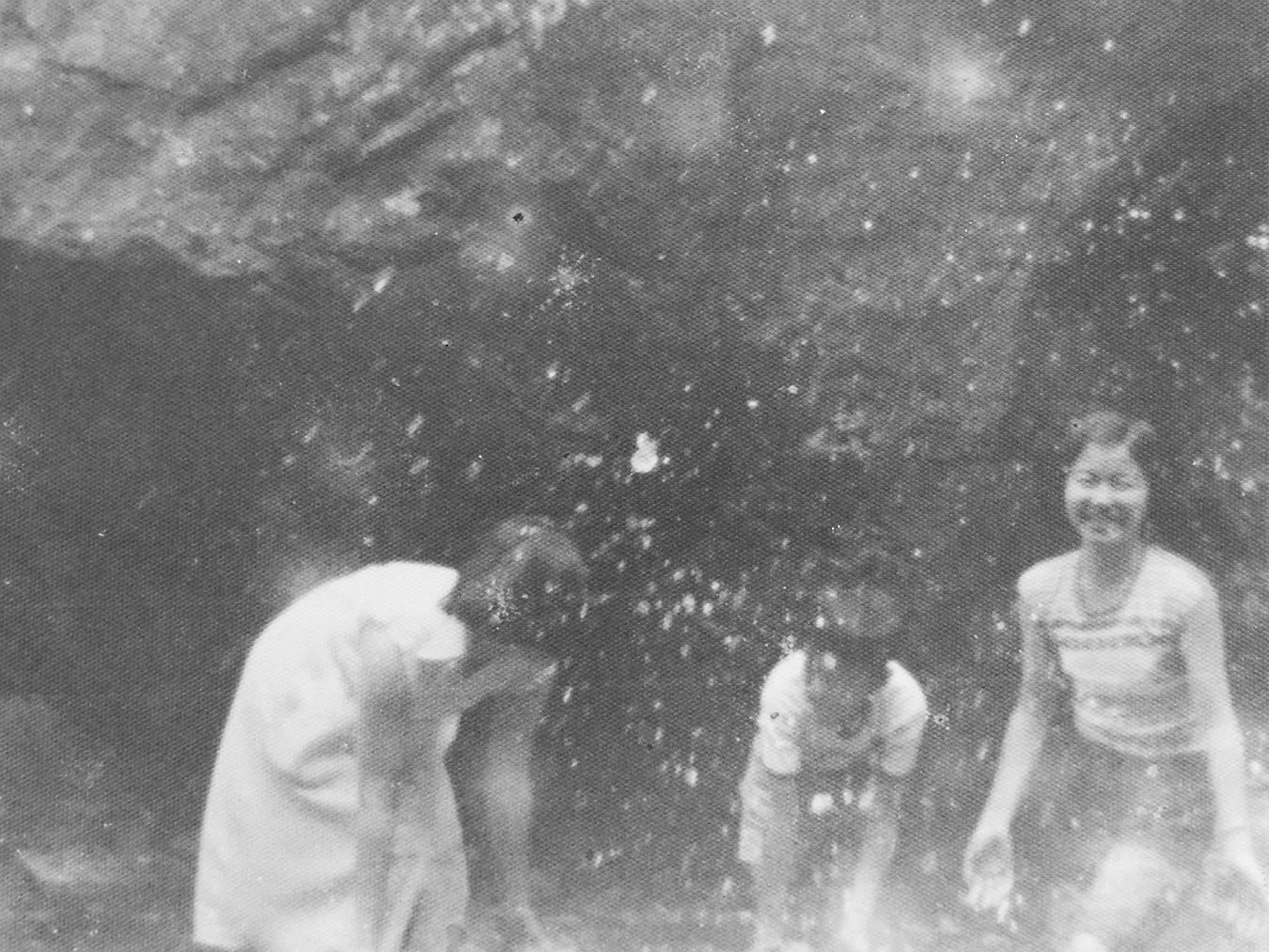
Léa Chen, "Youth" (2025) From "The Stars That Don't Look back", courtesy of the Royal Photographic Society and the Artist
International Photography Exhibition 167 | Saatchi Gallery, London | 7 Aug – 11 Sept
The Royal Photographic Society's International Photography Exhibition returns to Saatchi Gallery for its 167th edition, making it the longest continuously running photography exhibition in the world. Selected from more than 5,200 submissions, the show features 113 prints by 48 photographers working across themes of environment, identity, conflict, and memory. This year's top honor, the IPE167 Award, went to Marcy Palmer for a series on reproductive rights, while the Under 30s Award went to Léa Chen for a project documenting three generations of women in Taiwan.
167 editions in, the format still works because it refuses to specialize. Amateurs sit next to professionals, decades-long practices sit next to first-time submissions, and the throughline is simply photography now, in all its unglamorous range. It's less a survey of masters and more a snapshot of what the medium is actually being used for this year, which is arguably more useful.
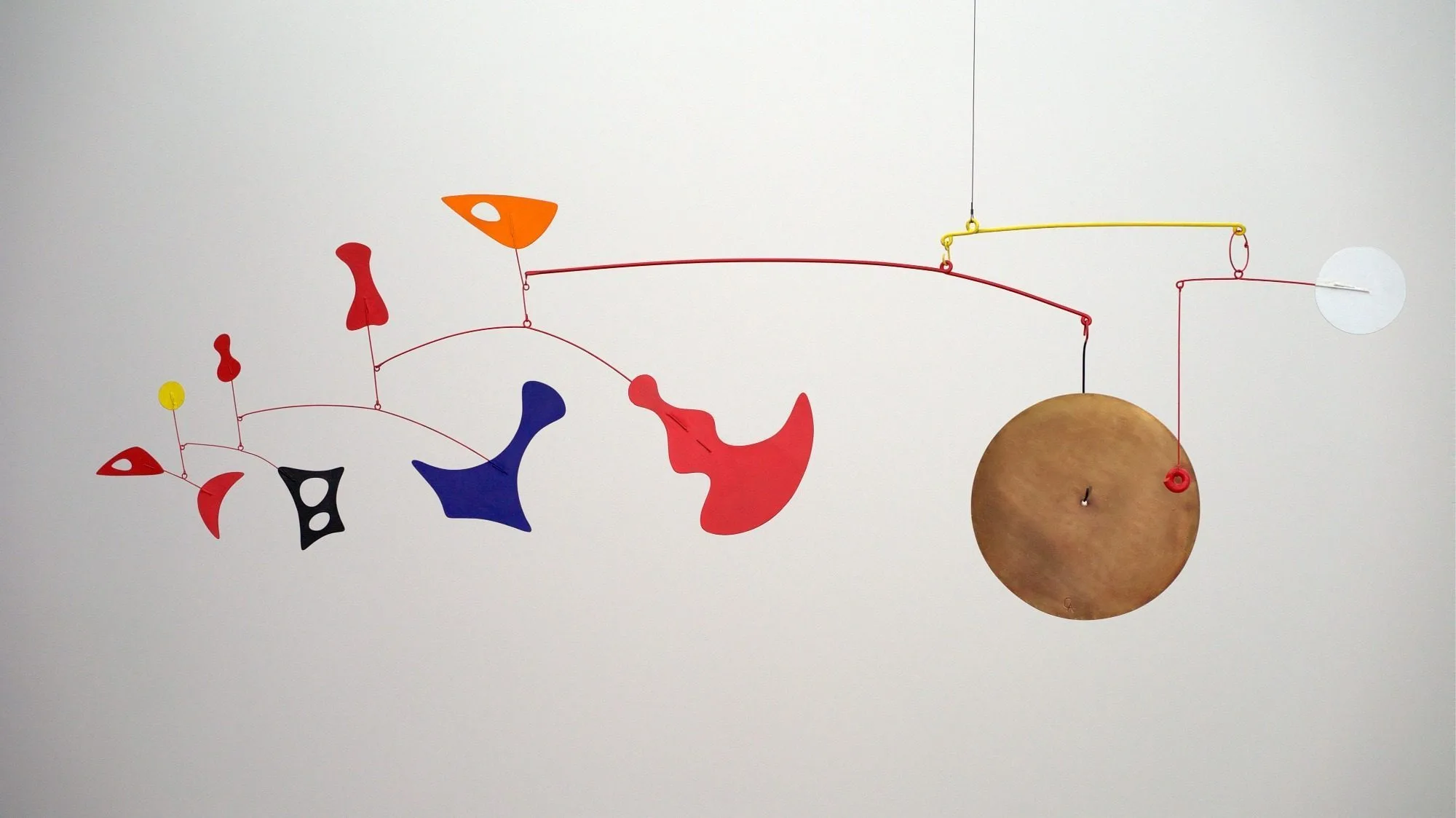
Alexander Calder "Dispersed Objects with Brass Gong " (1948) Promised Gift to the Seattle Art Museum. © 2026 Calder Foundation, New York / ADAGP, Paris. Photo courtesy of Calder Foundation, New York / Art Resource, New York
Calder. Rêver eb Équilibre | Fondation Louis Vuitton, Paris | Through 16 Aug
This is the final stretch for Calder: Rêver en équilibre, Fondation Louis Vuitton's sweeping look at Alexander Calder's mobiles, stabiles, and sculpture, on view since April. The show lands squarely on an anniversary that's easy to miss: 2026 marks 100 years since Calder first arrived in Paris, the city where he developed the language of suspended, moving sculpture that would define the rest of his career, and 50 years since he passed.
Calder didn't invent sculpture that moves so much as invent the idea that stillness was optional. A century after he first started experimenting with wire and motion in Montparnasse studios, his mobiles still manage to mesmerize, always on the verge of shifting into something new. Worth prioritizing before it closes.
(Cultivist Members: Fondation Louis Vuitton is a Partner Museum, reserve your tickets here)
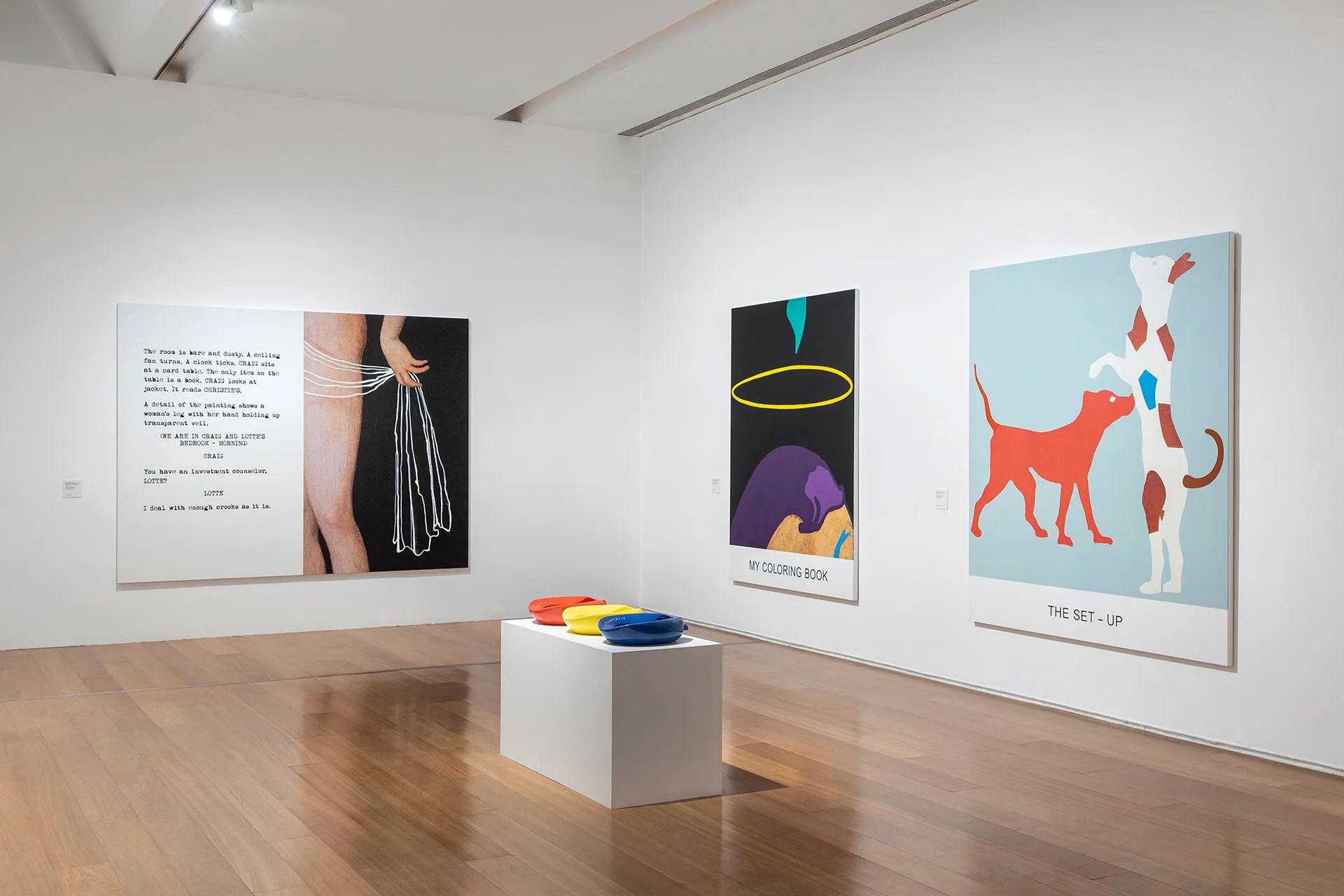
Insatallation View, "John Baldessari: The End of the Line" Courtesy of Craig Robins.
John Baldessari: The End of the Line | Pérez Art Museum Miami | 20 Aug – 9 May 2027
John Baldessari: The End of the Line marks the artist's first institutional presentation in South Florida, drawing primarily from the collection of Craig Robins to cover fifty years of Baldessari's work. The show spans his foundational conceptual pieces from the 1960s and '70s, including work tied to his famous decision to incinerate his own early paintings, his serial photographic practice, and the deadpan interplay between image and text that became his signature.
Baldessari spent his career arguing, gently and often hilariously, that art didn't need to look like art to function as art. A colored dot over a face, a flat one-line caption under a photo, these are jokes that double as genuine positions on meaning and representation. Fifty years on, they still land.
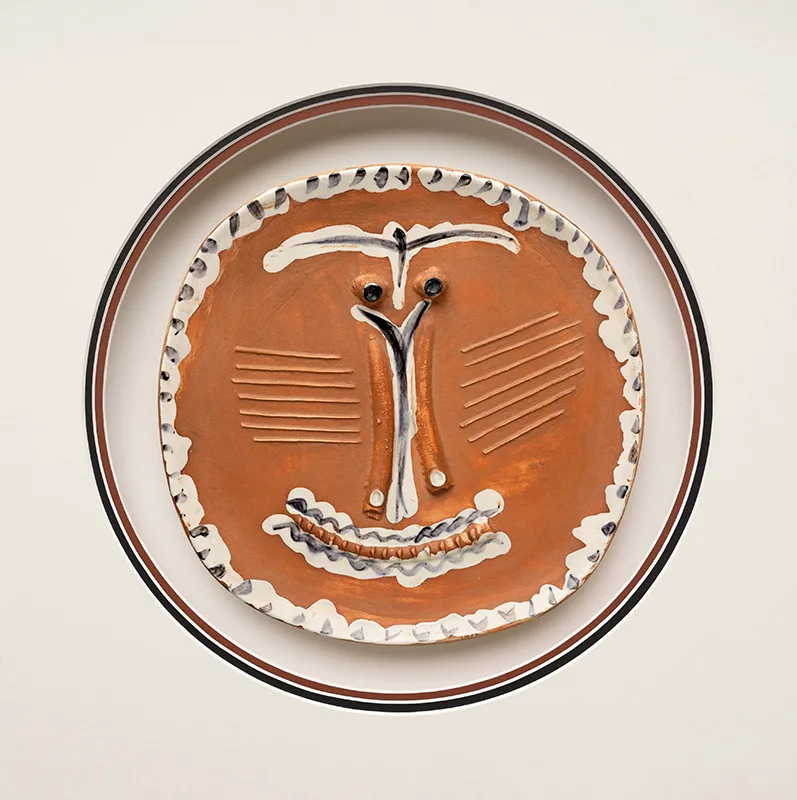
Pablo Picasso, "Face with Pinched Nose (Visage au nez pincé)" (A.R. 414), (1959). Meadows Museum, SMU, Dallas. Gift of The Robert (’83) and Tina Tonti Family, MM.2025.23. Photo: Kevin Todora. © 2026 Estate of Pablo Picasso / Artists Rights Society (ARS), New York.
Picasso Beyond the Canvas: The Ceramic Years | Meadows Museum, Dallas | 23 Aug – 24 Jan 2027
Picasso Beyond the Canvas turns its attention to a chapter of Picasso's career that rarely gets equal billing with his paintings. Starting in 1946, Picasso began working at the Madoura pottery workshop in Vallauris, France, alongside owners Suzanne and Georges Ramié, a collaboration that stretched across twenty-five years and produced hundreds of ceramic works.
Vallauris gave Picasso something his canvases couldn't: unpredictability. Clay warps, glazes shift color in the kiln, and forms have to be built in three dimensions rather than implied on a flat surface. The results are looser and stranger than his paintings from the same years, proof that even at the height of his fame, Picasso was still happiest getting his hands dirty with a new material.
Do Ho Suh, Part of Work/ Nest/s (2024) Courtesy of the artist, Lehmann Maupin New York, Seoul, and London, and Victoria Miro, Photograph by Jeon Taeg Su © Do Ho Suh
Do Ho Suh | National Museum of Modern and Contemporary Art, Seoul | 27 Aug – 9 Feb 2027
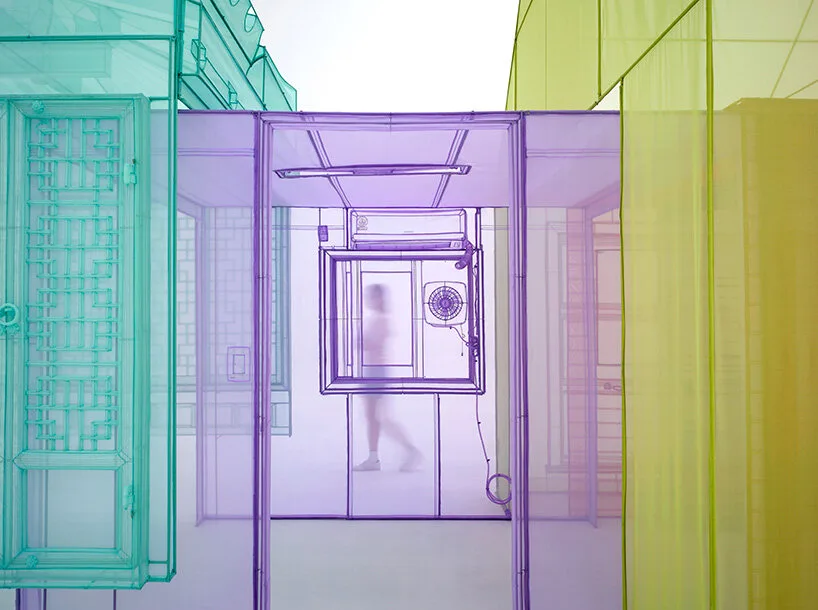
Do Ho Suh's biggest solo show to date opens this month at MMCA in Seoul, tracing four decades of a practice built around one deceptively simple idea: rebuilding home, over and over, in fabric. Using translucent silk and polyester, Suh recreates full-scale replicas of spaces he's actually lived in, a childhood house in Seoul, apartments in New York, a flat in London, each one rendered as a hollow, ghost-like outline you can walk straight through.
Suh has spent most of his adult life moving between countries, and that constant in-betweenness is really what the work is about. A stitched-together doorframe or staircase isn't a comment on architecture so much as a record of what gets carried forward, and what gets left behind, every time "home" changes address. Staging this particular survey in the city where the story started adds a layer of meaning that's hard to replicate anywhere else.
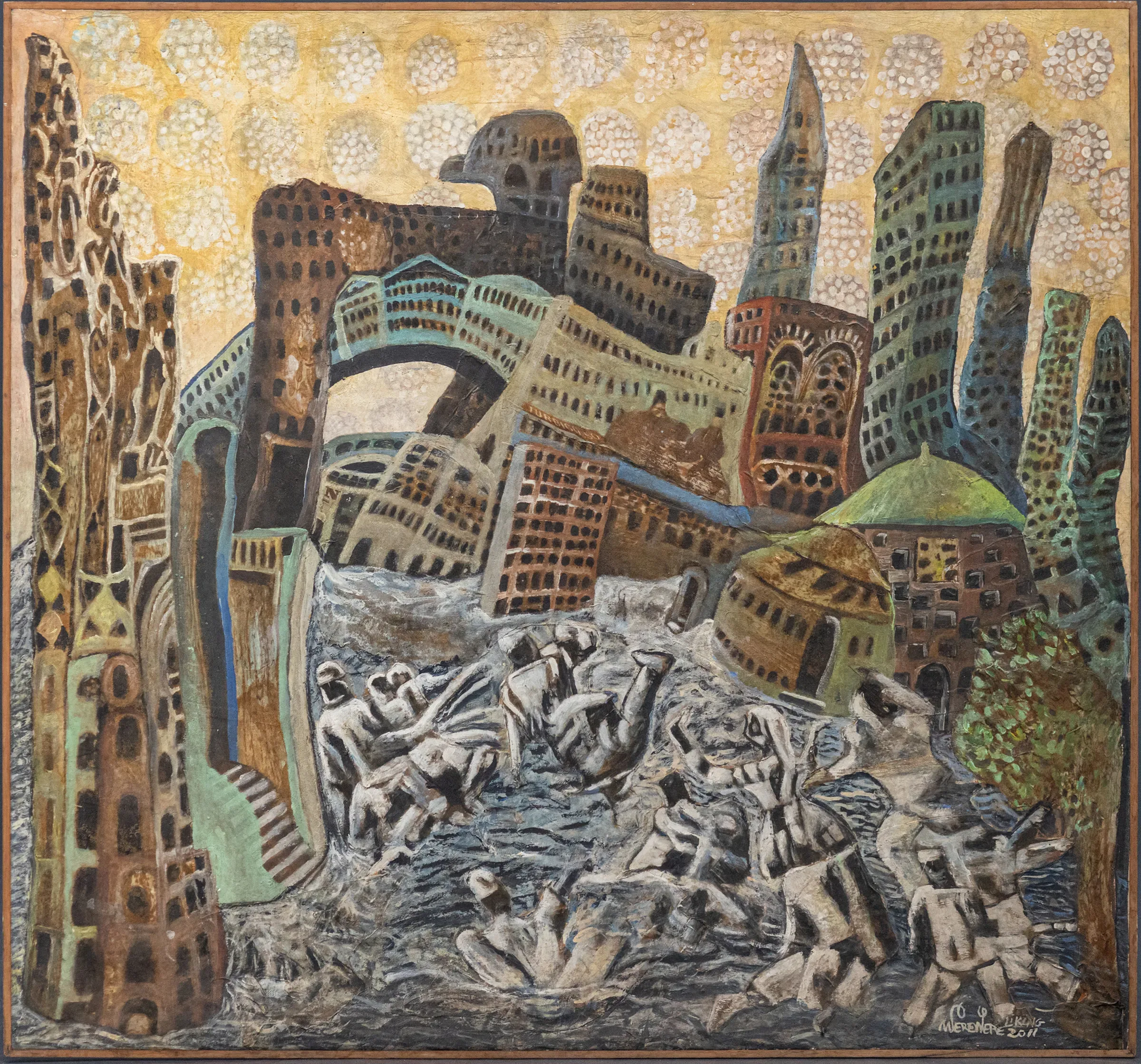
Wèrèwèrè Liking "Cité des Tsunamis" (2011) Courtesy of the artist and Cécile Fakhoury
Invisible Architectures - Dreams in Mirror | Cécile Fakhoury, Abidjan | Through 29 Aug
Le Temps du Rêve de l'Enfant — Architectures Invisibles brings together nine major trans-African artists across two spaces in Abidjan, curated by Franck Hermann Ekra. The main gallery centers painter Ernest Dükü in dialogue with poet and performer Wèrèwèrè Liking and the late Senegalese painter Souleymane Keïta, while the Project Space gathers seven more artists, including Ouattara Watts, Cheikh Ndiaye, and Roméo Mivekannin, under the companion title Dreams in Mirror.
The show takes its name from a poem written to celebrate the dawn of African independence, and its real subject is the stuff that doesn't show up in a photograph: ancestral memory, spiritual cosmology, sacred geometry, the invisible scaffolding that holds a culture's visual language together across generations. It's a dense, ambitious premise, and a genuinely rare one to see staged with this scale of artists in Abidjan itself, rather than in Paris or New York.
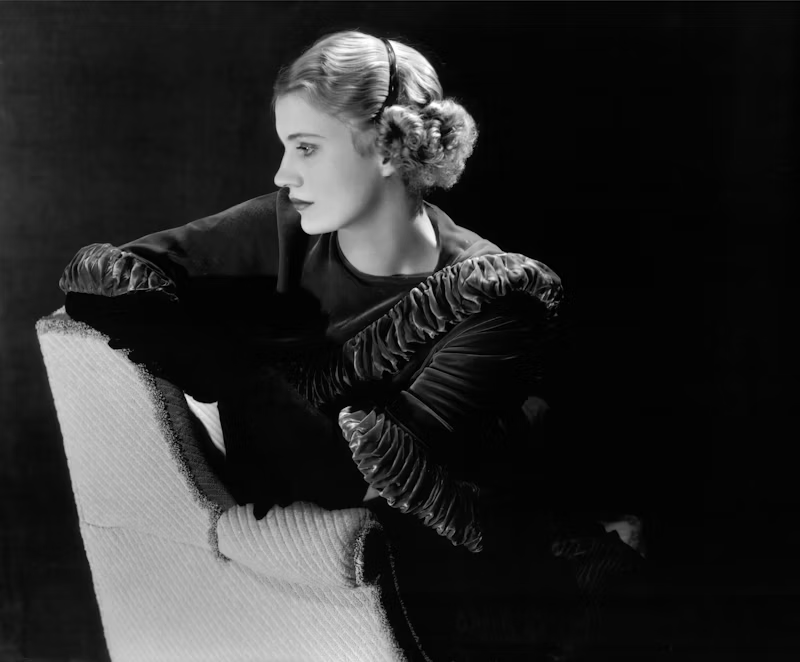
Lee Miller "Self-Portrait with Headband (detail)", about (1932) Lee Miller Archives. © 2026 Lee Miller Archives, England. All rights reserved.
Lee Miller: Fearless | Art Institute of Chicago | 29 Aug – 7 Dec
Lee Miller: Fearless is the first major survey of Miller's photography in more than twenty-five years, organized in partnership with Tate Britain and the Musée d'Art Moderne de Paris, both of which are also presenting the show this year. It traces her full and genuinely strange arc: fashion model, muse to Man Ray and the Surrealists, and eventually one of the only female photographers to document the liberation of Nazi concentration camps during World War II.
Most retrospectives have to argue for their subject's range. This one doesn't need to try very hard. Miller photographed haute couture and human atrocity within the same decade, sometimes within the same year, and the show's title isn't just marketing language, it's closer to a plain description of what it took to do both.