Sculpture Spotlight: The Calder Family of Artists
22 Jul 2026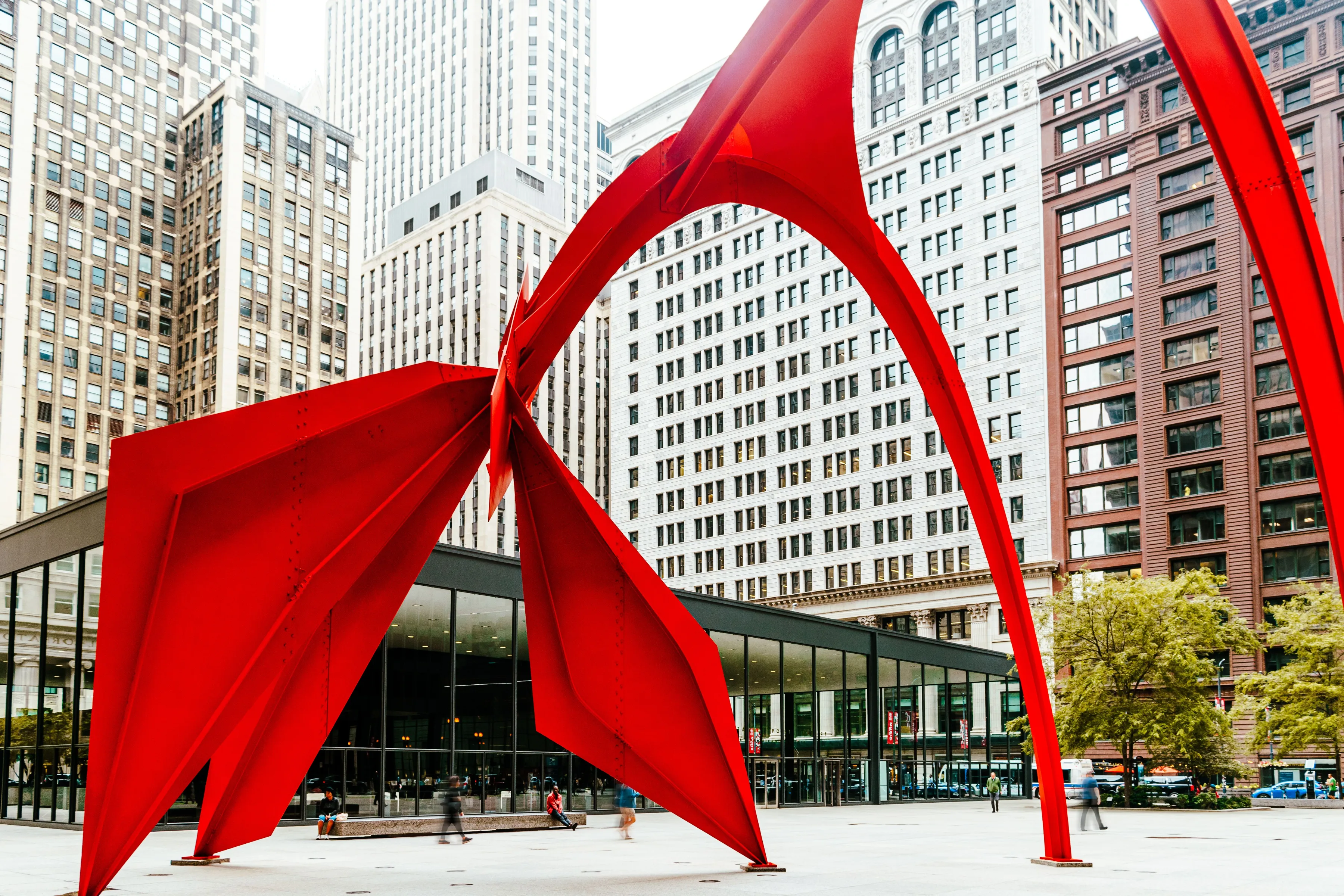
The Calders worked across nearly 150 years, creating some of the most iconic sculptures across the globe. From a hand carved bronze giant atop Philadelphia’s City Hall to wire mobiles that moved with nothing but air. Each Calder rewriting the family trade in their own style.
Alexander Calder "Flamingo" (1974) Photo by Thomas Parker
ALEXANDER CALDER (1898–1976)
The grandson, and the one most people mean when they say "Calder." Trained as a mechanical engineer before he ever considered sculpting, which explains a lot. In 1930 a visit to Piet Mondrian's studio pushed him toward abstraction, and by 1931 he was making the wire and metal sculptures that Marcel Duchamp would name "mobiles," works that move on nothing but air currents and balance. He circled Surrealism and the Abstraction-Création group without ever fully joining either, invented the stationary "stabile" as the mobile's counterpart, and spent decades moving between Paris and Connecticut making work that turned physics into play.
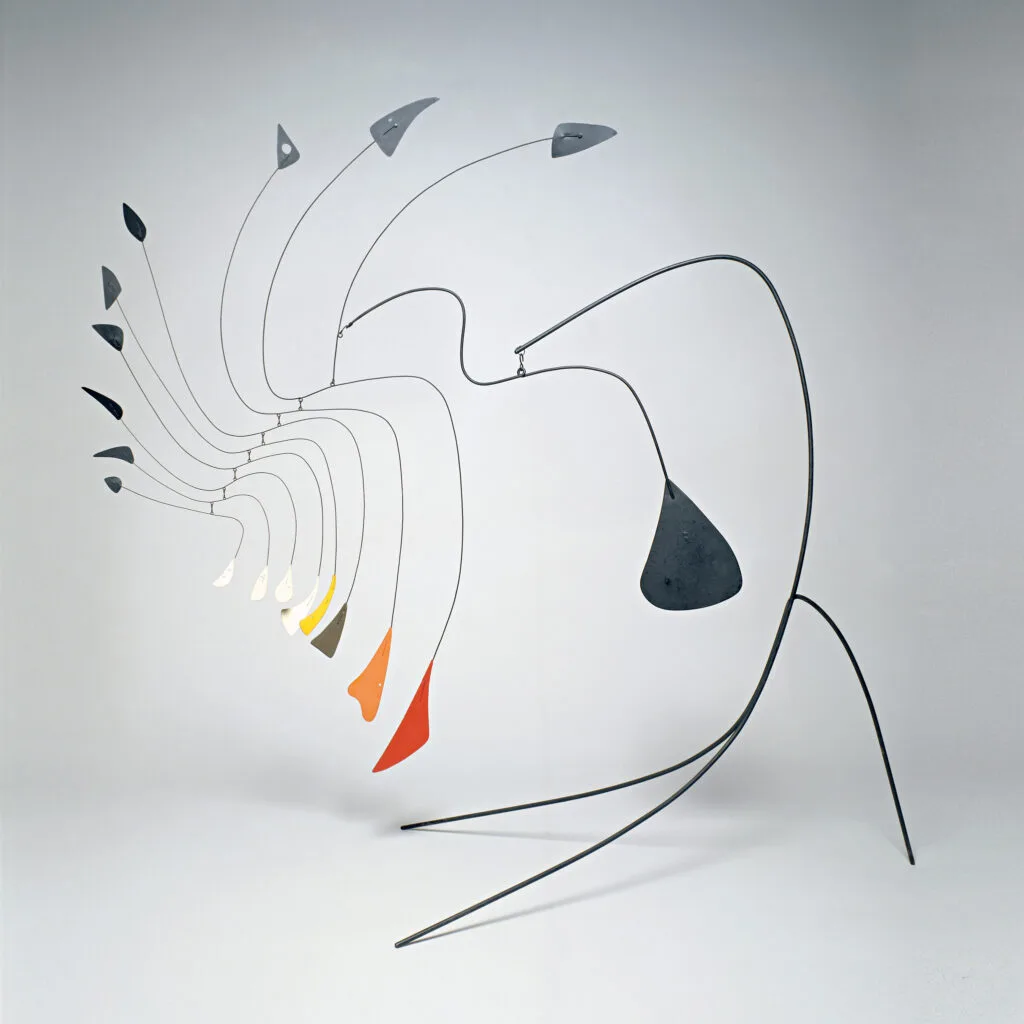
Alexander Calder "Little Spider" (1940) courtesy of the Calder estate and the National Gallery of Art
ALEXANDER STIRLING CALDER (1870–1945)
The middle generation, and the hinge between his father's Beaux-Arts formality and his son's total break from tradition. Stirling trained under Thomas Eakins in Philadelphia, then in Paris, and came up assisting his own father on the City Hall sculptures before building a career of his own. In 1915 he ran the entire sculpture program for the Panama-Pacific International Exposition in San Francisco, where his Fountain of Energy anchored the fairgrounds. Later, the U.S. government sent him to Iceland: his bronze Leif Erikson memorial, gifted for the 1,000th anniversary of the Icelandic parliament, still stands over Reykjavik today.
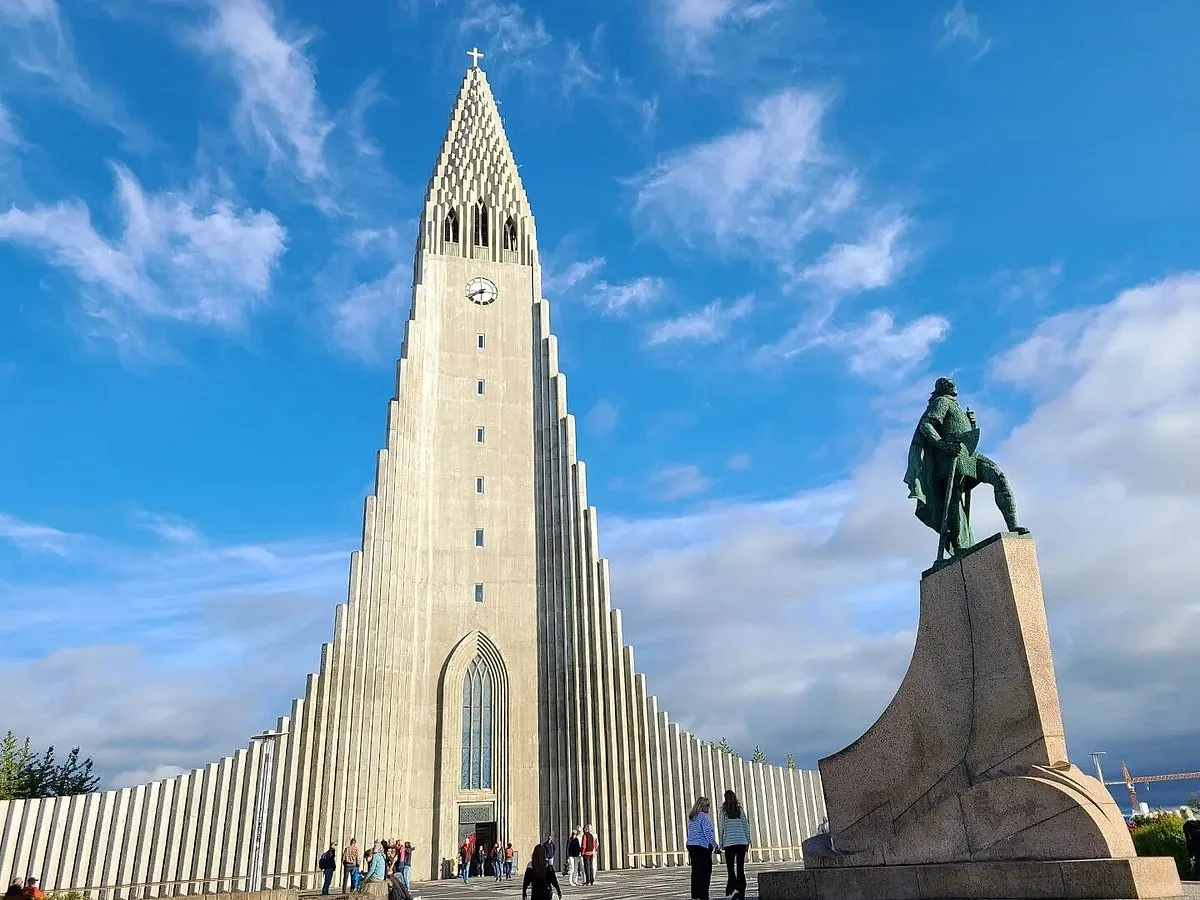
Leif Erikson in front of Hallgrimskirkja Photo by Steve Rainville
ALEXANDER MILNE CALDER (1846–1923)
Where the family line starts. Milne Calder was born in Aberdeen, Scotland, and learned to carve stone from his own father, a tombstone mason, before immigrating to Philadelphia in 1868. He spent roughly 30 years on the sculptural program for Philadelphia's City Hall, more than 250 figures in total, working out of a studio inside the building itself as it rose around him. The crown of that project is the 37-foot bronze William Penn atop the tower, cast in 14 sections and hoisted into place in 1894. It's still the tallest statue ever placed atop a building anywhere in the world, a record it's held for over 130 years.
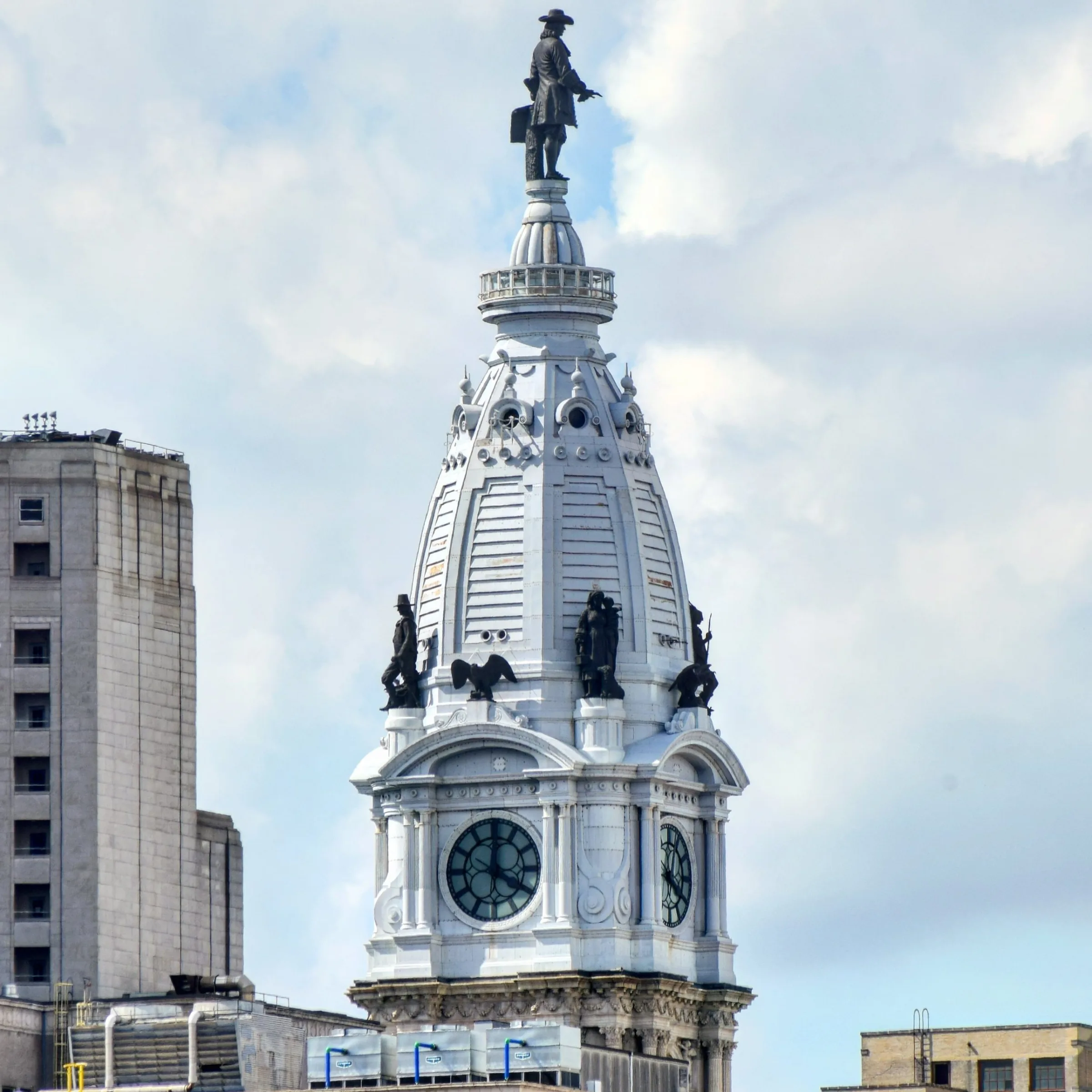
The William Penn statue atop City Hall, with other sculptures of Native Americans and European Pilgrims, Alexander Milne Calder. Photo by Thomas Koloski