Reflections on The Venice Biennale 2026
6 Nov 2026
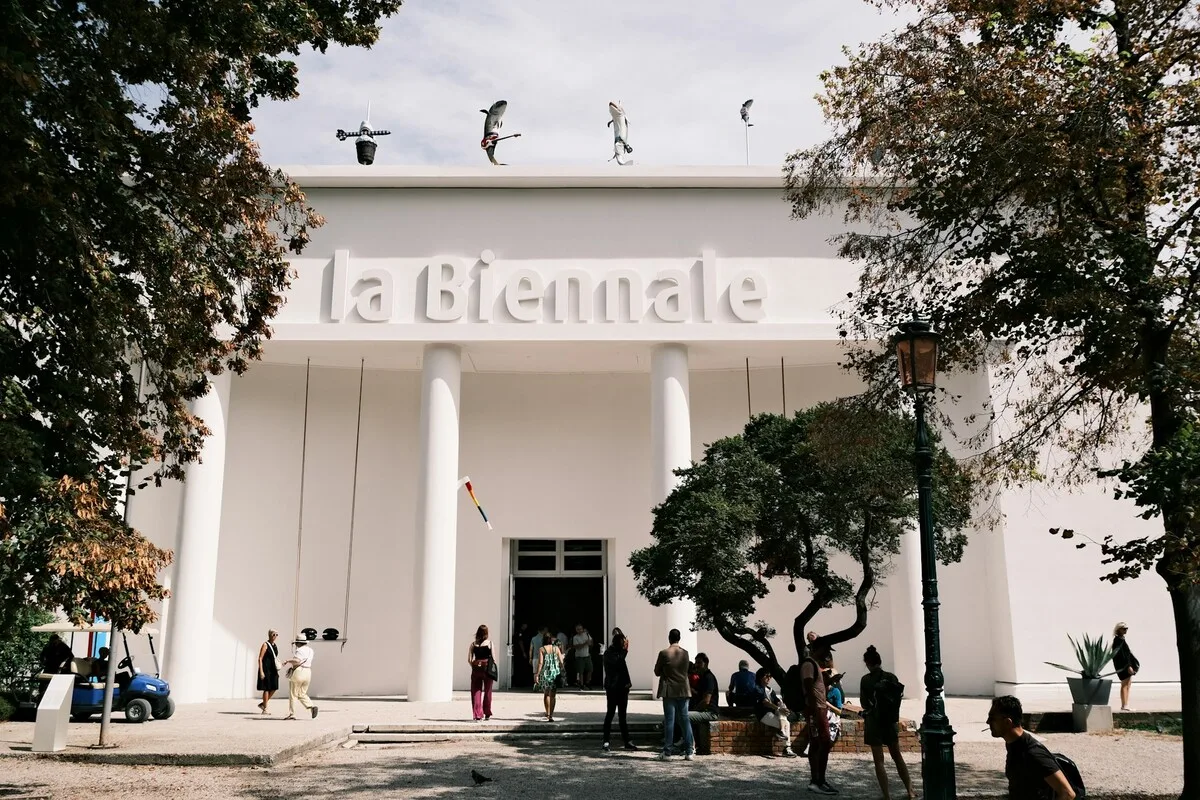
The 61st International Art Exhibition of La Biennale di Venezia, titled "In Minor Keys" by the legendary late Koyo Kouoh, comes to a close on the 22nd of November, 2026. With just two weeks left in the Biennale, we wanted to take the opportunity to reflect on some of our favorite moments, pavilions, and exhibitions, so we sat down with some of the members of the Cultivist Team to hear some of their highlights. Giving their first hand feedback , we have Georgina "Georgie" Morley, Managing Director of Product, Rebecca Lipsitch, Manager of Enthusiast and Experiences, and Kinda Ghandour, Graphic Designer and Creative Lead.
Central Pavilion at the Giardini della Biennale, courtesy of La Biennale di Venezia
In Minor Keys – The Arsenale and Giardini
Georgie: What I loved about this year’s central exhibition was its invitation to slow down. The Biennale that can sometimes feel like an endurance sport. In Minor Keys offered a more contemplative experience. There was a great sense of discovery in the quieter, more unexpected encounters. It felt less about being dazzled at every turn and more about allowing certain works to stay with you. A rather welcome change of pace for Venice!
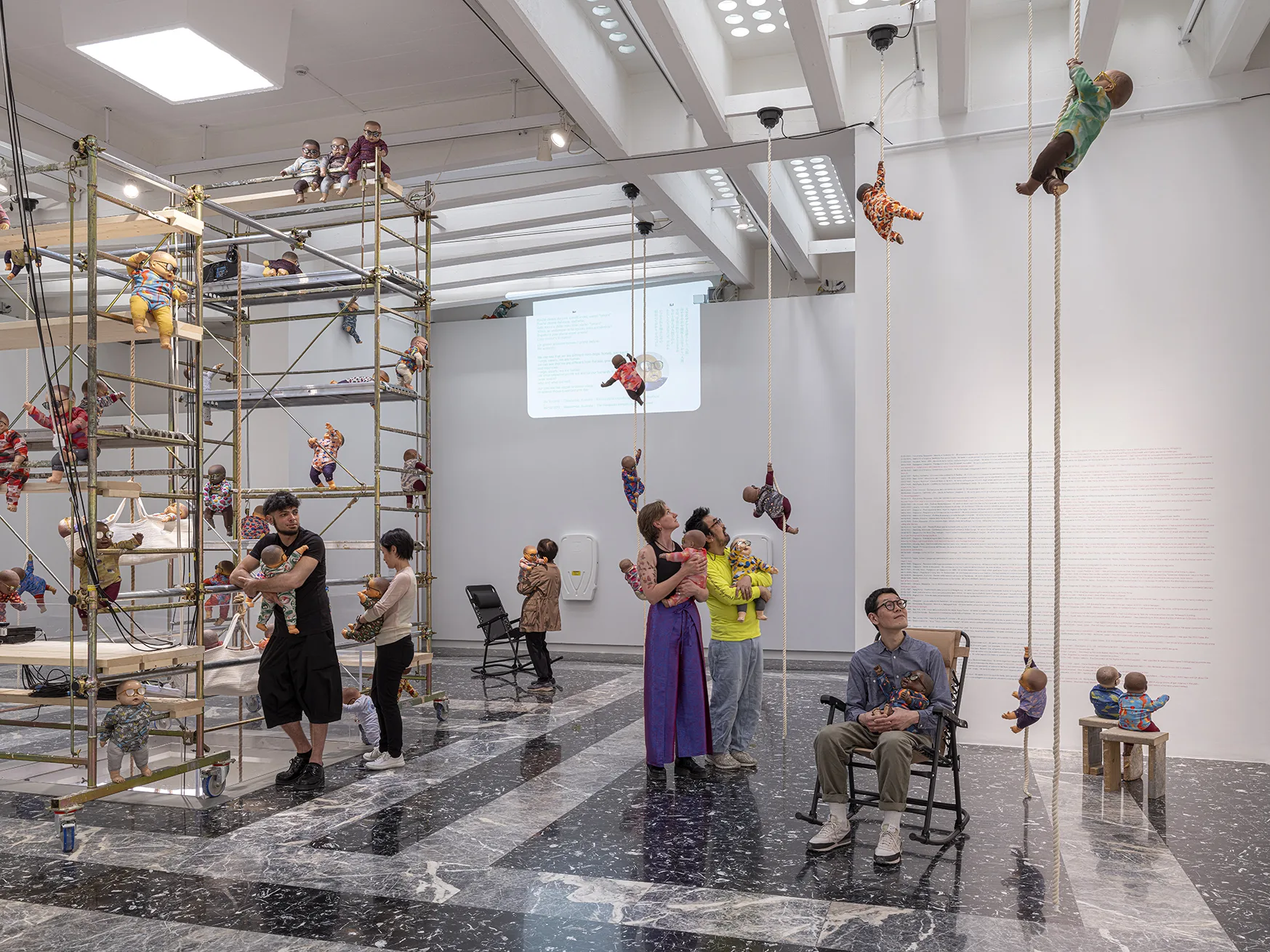
Installation View, Ei Arakawa-Nash "Grass Babies, Moon Babies" at Japan Pavilion, Venice Biennale 2026 Photo by Uli Holz
Ei Arakawa-Nash – Grass Babies, Moon Babies, Japan Pavilion
Rebecca: One of my favorite exhibitions was Grass Babies, Moon Babies at the Japanese Pavilion. Guests "adopt a baby" by holding a heavy, randomly assigned doll for the length of the walkthrough. The experience invites caregivers to consider what it means to raise a child in a world of uncertainty, where you don't get to choose who your baby will become and you can't perfectly control their environment.
Georgie: This was an unexpected encounter! Ei Arakawa-Nash has populated the Japan Pavilion with more than 200 baby dolls, some suspended from scaffolding or perched in wonderfully acrobatic positions, while visitors are invited to pick one up and carry it around the exhibition. As a mother of two, I was grateful to recall that my own babies were never quite so acrobatic!
Beneath the playful exterior, there’s a lovely thoughtfulness to the work. Through this slightly surreal experience of holding, carrying and even changing the babies, Arakawa-Nash explores parenthood, care and our collective responsibility for the next generation. I loved the way it draws you in, blurring the boundaries between art, performance and participation.
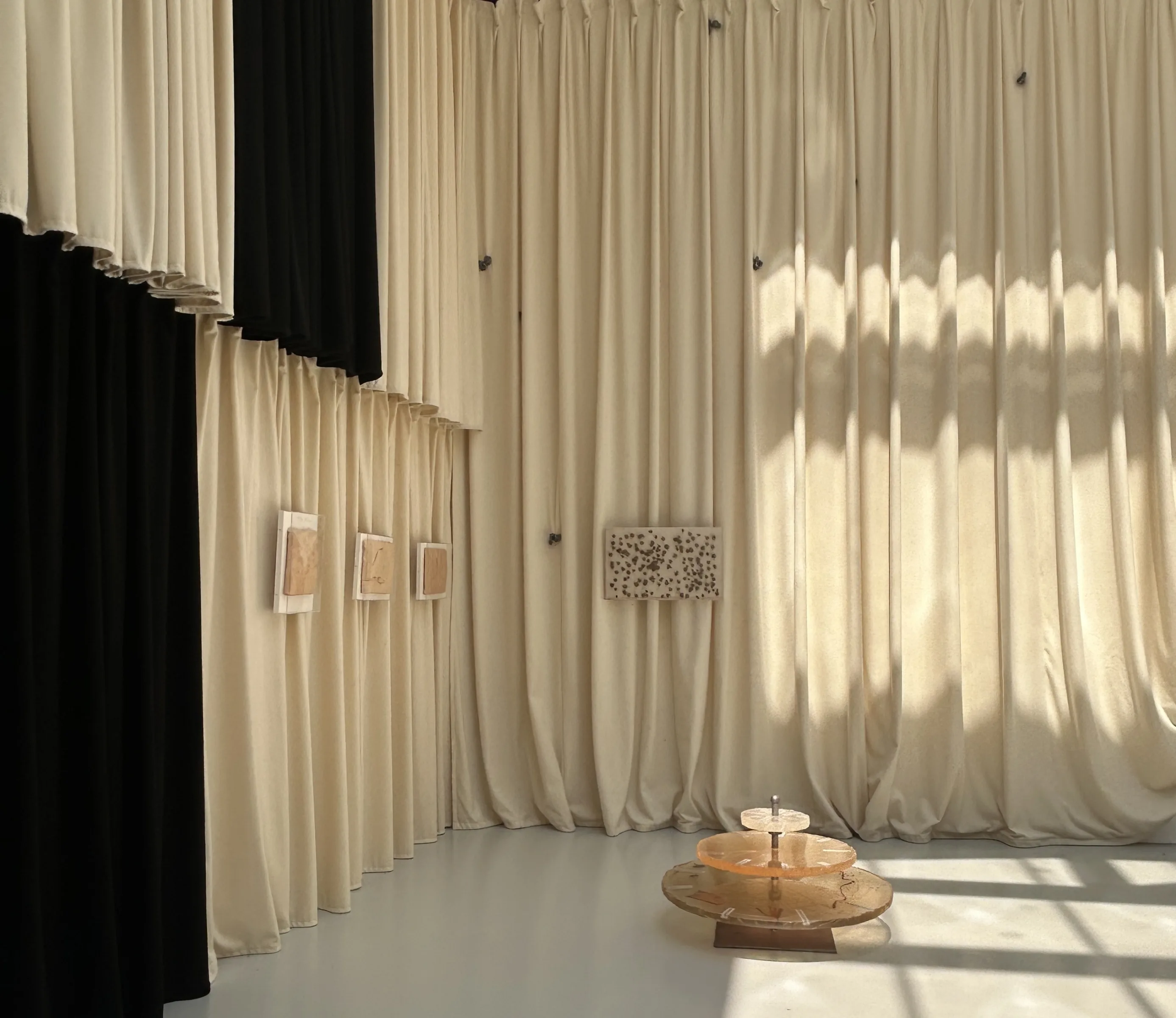
Installation View, Yto Barrada "Comme Saturne" at French Pavilion. Photo by Kinda Ghandour
Yto Barrada – Comme Saturne, French Pavilion
Kinda: My top highlight from the Biennale was the French pavilion showcasing the solo exhibition of Yto Barrada Comme Saturne ("Like Saturn"), curated by Myriam Ben Salah. The artist uses beautiful, acid-etched textiles to explore how revolutions and creative systems consume themselves over time. It's a mix of deep history, natural dyes, and clever wordplay that feels both melancholic and incredibly poetic.
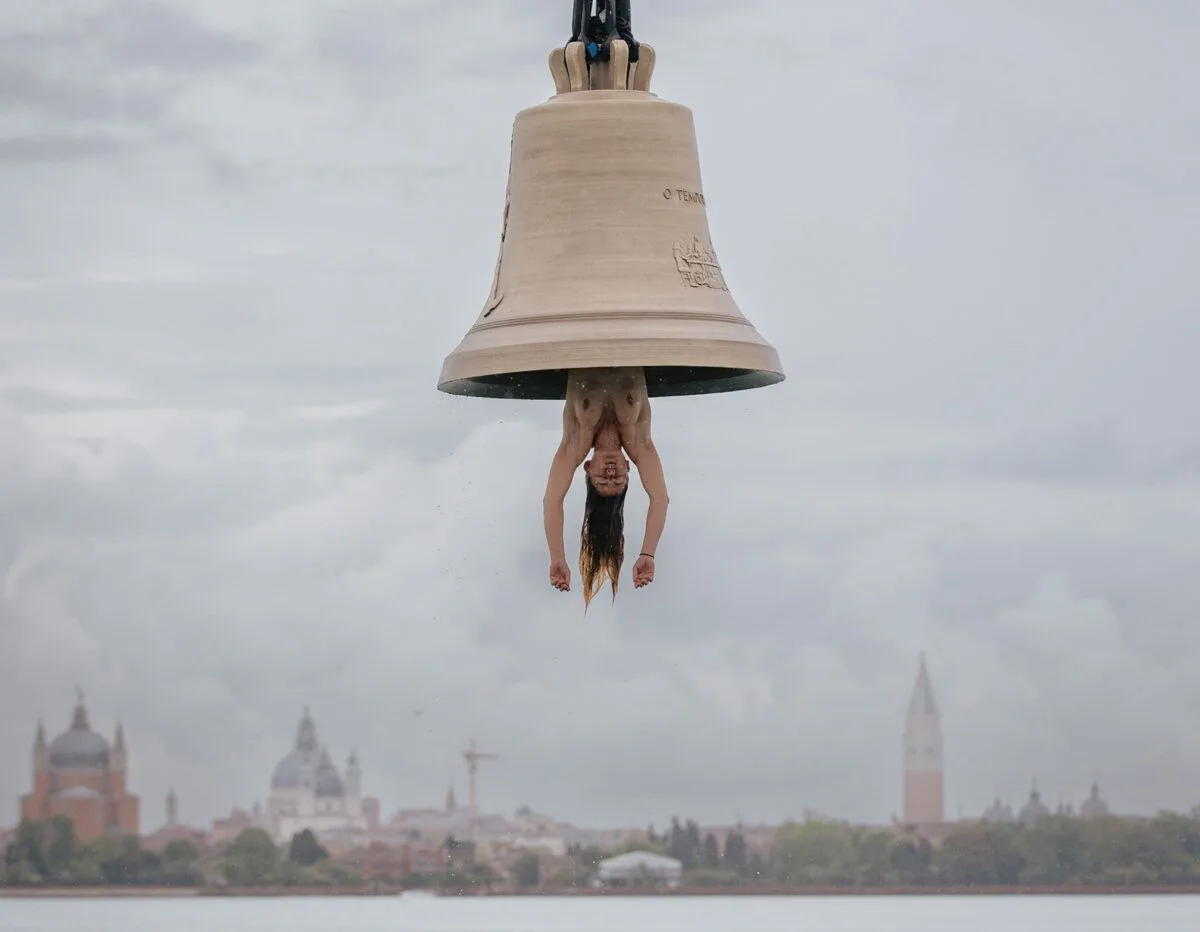
Florentina Holzinger "Seaworld Venice", photo by Helena Manhartsberger
Florentina Holzinger – Seaworld Venice, Austrian Pavilion
Georgie: Florentina Holzinger certainly doesn’t do things by halves. The Austrian Pavilion was one of those experiences that you really couldn’t simply stand back and observe – it was theatrical, visceral, provocative and, at times, pretty uncomfortable. I loved the sheer audacity of it. It’s not necessarily an experience you leave feeling relaxed, but it certainly gives you something to talk about over an aperitivo!
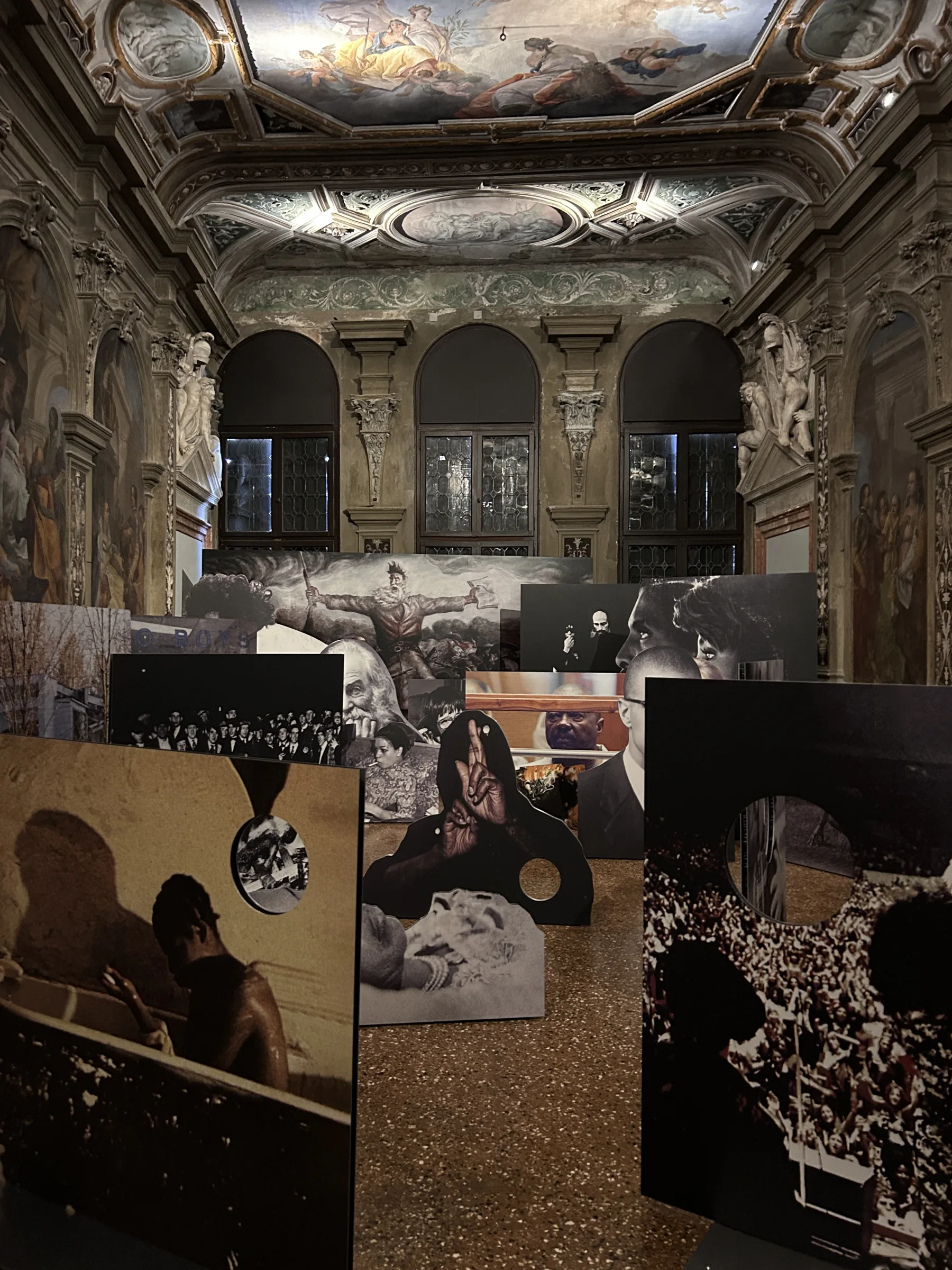
Installation View, Arthur Jafa and Richard Prince "Helter Skelter" at Fondazione Prada, Photo by Kinda Ghandour
Helter Skelter – Fondazione Prada
Kinda: Helter Skelter at Fondazione Prada brings together works by Arthur Jafa and Richard Prince to examine the darker side of the American psyche. It is a powerful, intense mashup of hijacked media, music, and pop culture imagery that uses juxtapositions to explore themes of race, celebrity, and violence.
Lubaina Himid – British Pavilion
Georgie: Lubaina Himid brought such intelligence, colour and humanity to the British Pavilion. I was particularly drawn to the way she explores the idea of home and belonging – subjects that feel both deeply personal and universally relevant. There’s a wonderful theatricality to her paintings. A thoughtful, beautifully layered presentation!
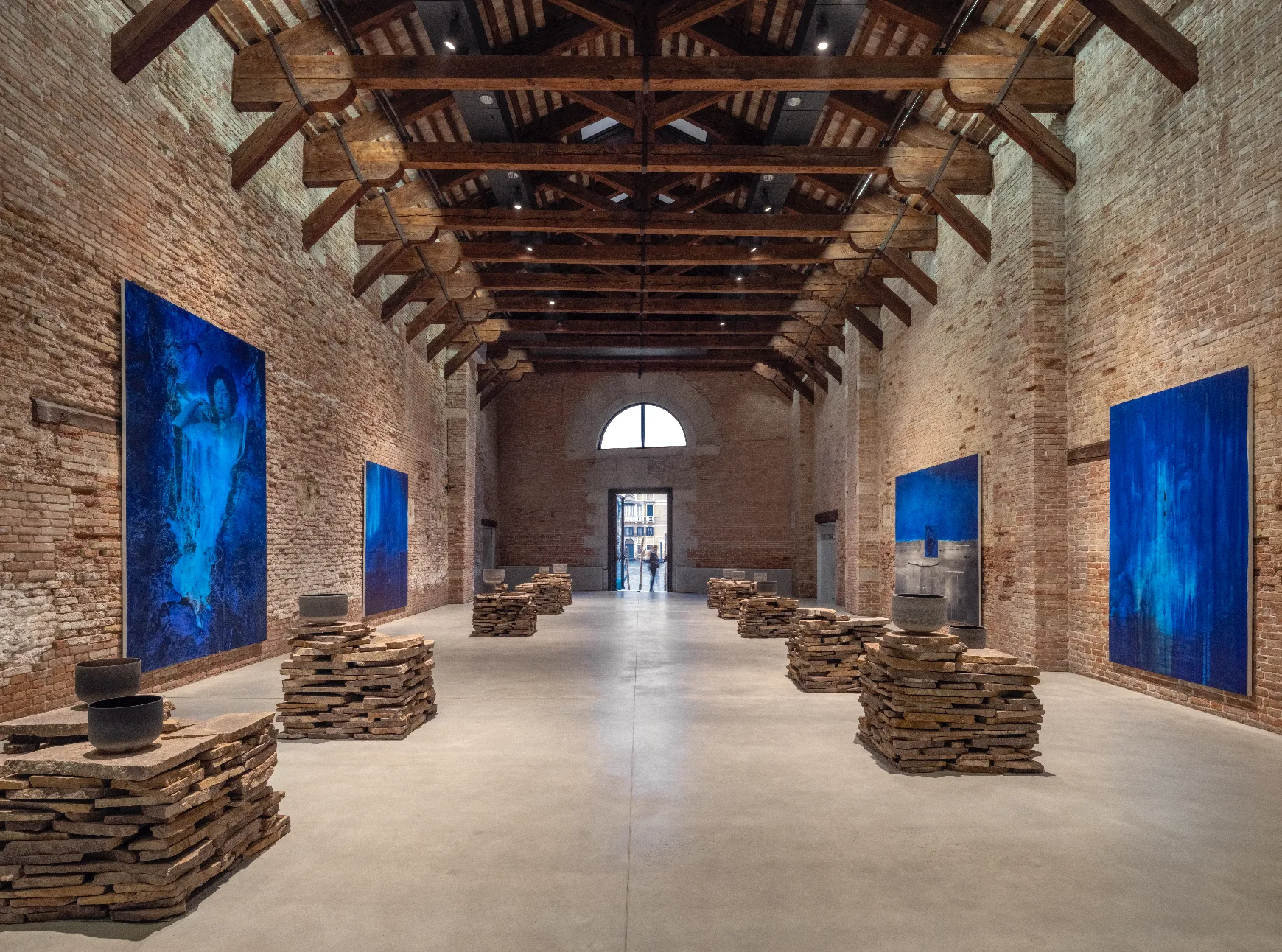
Lorna Simpson, Vibrating cycles, 2026, Courtesy of the artist and Hauser & Wirth
Michael Armitage and Lorna Simpson – Palazzo Grassi
Kinda: Palazzo Grassi has to be mentioned. Redesigned with Tadao Ando’s sleek minimalist walls, the show creates a powerful physical dialogue between centuries-old Venetian architecture and contemporary East African narratives.The exhibition, The Promise of Change, features 45 of Michael Armitage's large-scale paintings alongside more than 100 drawings spanning the last fifteen years of his career. It showcases his signature style of layering fluid oil paints onto raw, textured Ugandan Lubugo bark cloth to tell complex global stories.
Georgie: Michael Armitage is always worth spending time with, and seeing this body of work in the setting of Palazzo Grassi was a real highlight. His paintings have such an extraordinary visual richness. You are drawn in by the colour and composition, then find yourself unpicking the much more complex narratives beneath. There is a tension between beauty and unease that makes the work particularly compelling. For me, one of the must-see exhibitions in Venice this year!!
Rebecca: Lorna Simpson’s exhibition at Palazzo Grassi was my favorite by far. Every piece was massive, and it felt like stepping into another world: the building’s raw brick set against her rich, dark blues, purples, and blacks, with sculptures and sound baths that filled the space. She’s also extremely multidisciplinary, working in ink, screen printing, and even large rocks.
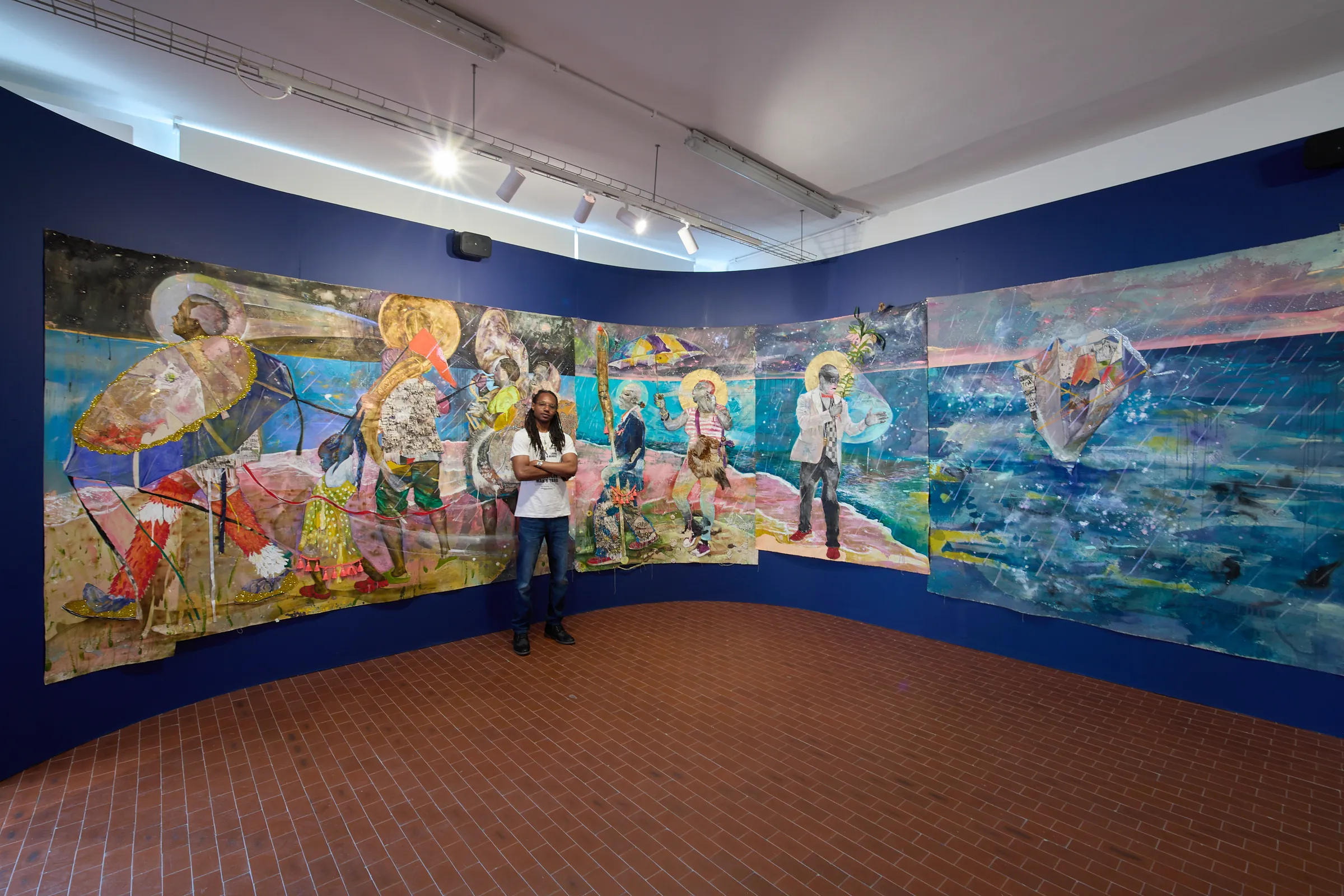
Lavar Munroe in front of his works, presented at The Bahamas Pavilion. Photo Courtesy of Larkin Durey
John Beadle & Lavar Munroe – In Another Man’s Yard – The Bahamas Pavilion
Georgie: This was one of the discoveries that made wandering around Venice so worthwhile. There is something incredibly compelling about the dialogue between John Beadle and Lavar Munroe, particularly their shared interest in Junkanoo, community, memory and the transformation of discarded materials. It has a wonderful energy and generosity to it. A reminder that some of the most interesting stories at the Biennale are found outside of the main sites!
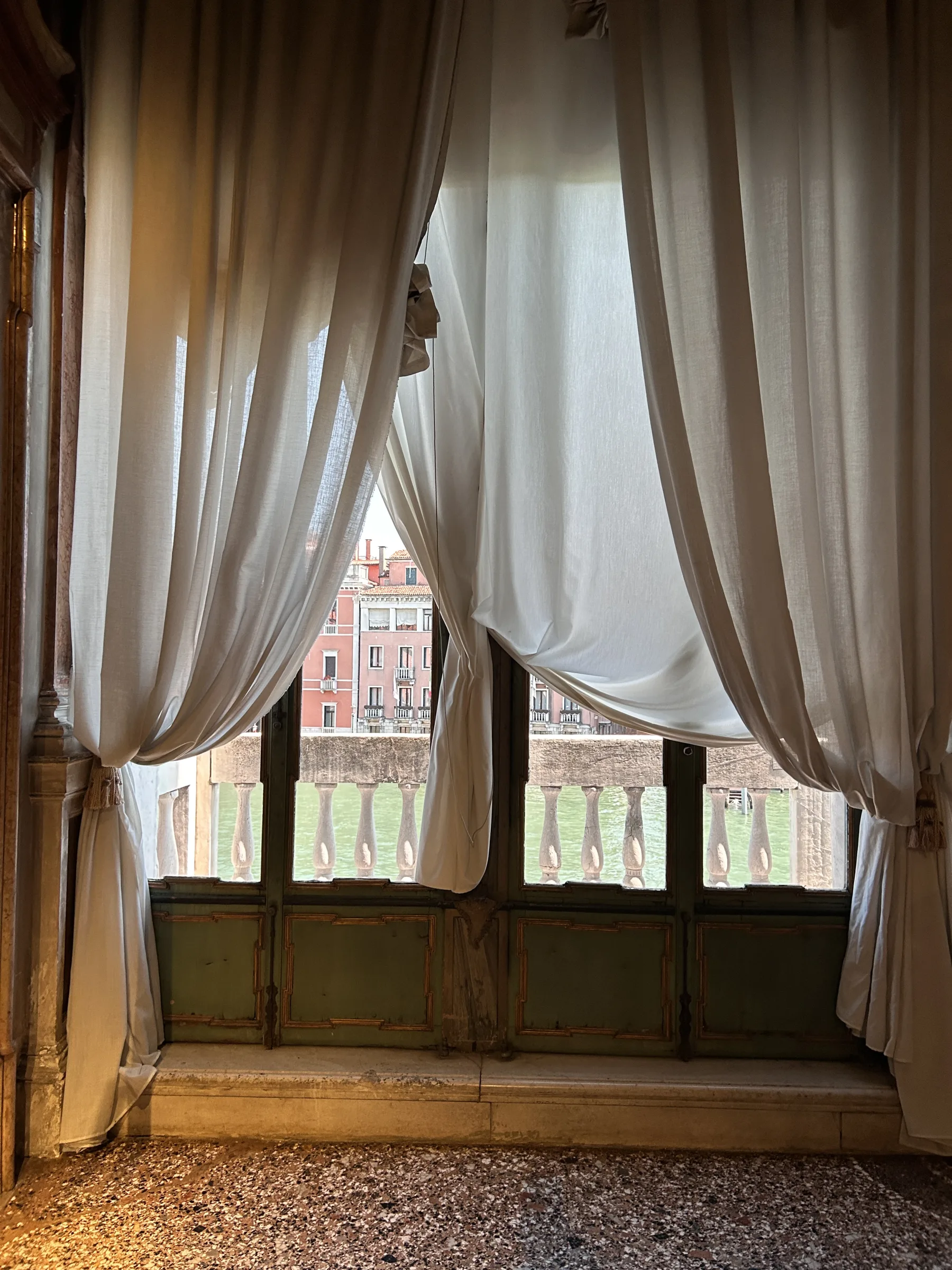
Looking out at the Grand Canal from within Palazzo Pisani Moretta. Photo by Kinda Ghandour
Fondazione Dries Van Notten at Palazzo Pisani Moretta
Kinda: The terrace at the Fondazione Dries Van Notten inaugural site, Palazzo Pisani Moretta, extends directly out over the Grand Canal, portraying a magnificent view of the Venetian waterfront. I stayed there almost an hour just watching the boats pass.
Holy See Pavilion
Georgie: Holy See Pavilion was one of my absolute highlights of this Biennale. As someone who loves gardening, I was particularly taken by the setting. Hidden away in the garden of a Carmelite monastery, with aromas from the lavender and herbs planted throughout. I loved the idea of experiencing art through sound rather than sight, with contributions from artists and musicians including Brian Eno, Patti Smith and FKA twigs. After days of visual overload in Venice, it was appreciated to slow down, enjoy the garden and simply listen. A magical little discovery for anyone who got tickets, it was sold out most days!!
The 61st International Art Exhibition of the Venice Biennale is coming to a close on 22 November, 2026. With how good this year's edition was, we're already looking forward to 2028.