Punta del Este Guide: Art, Culture, and Beaches
01 Dec 2025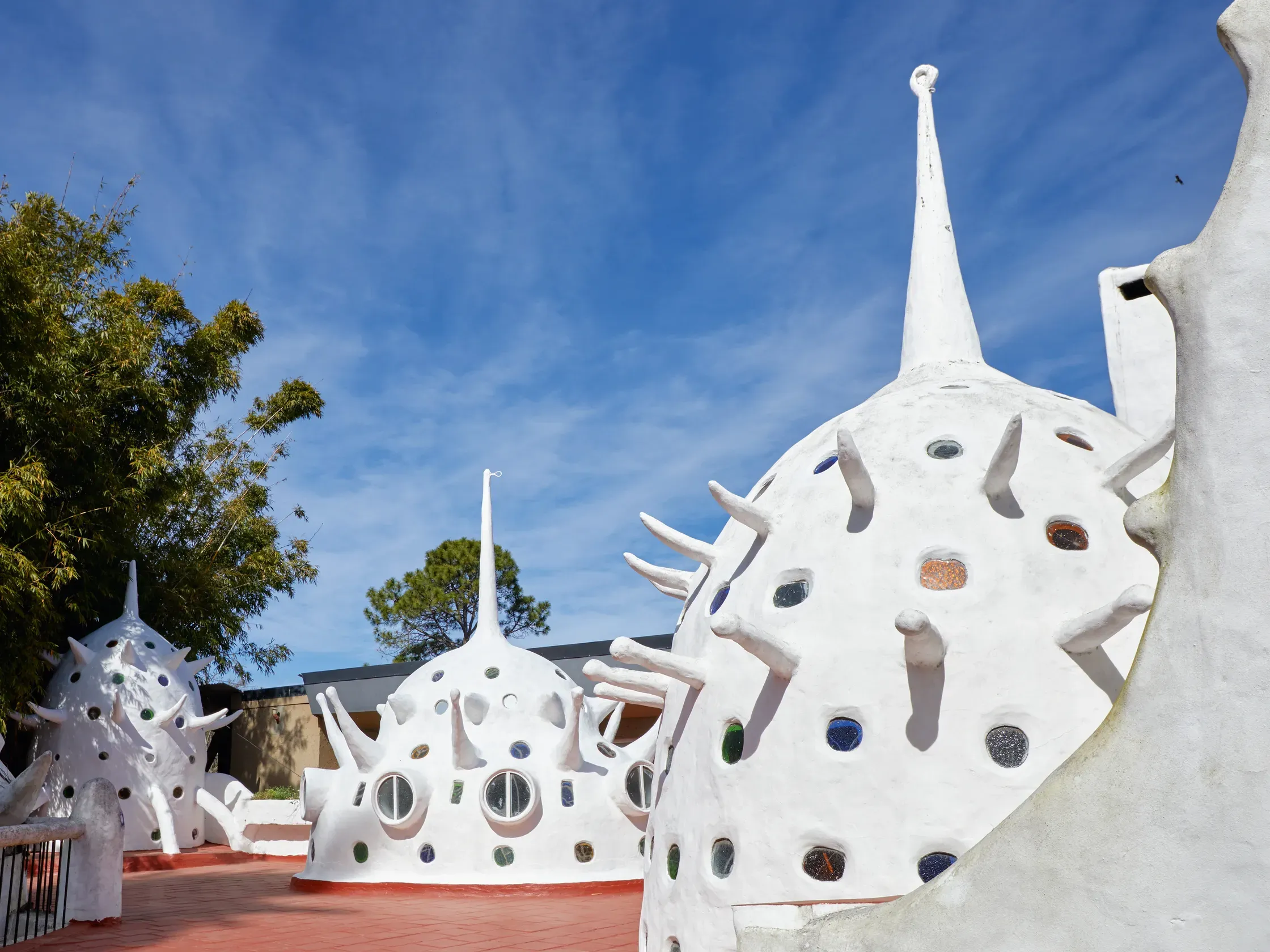
Punta del Este in December and January is at its most seductive. Bright Atlantic light, slow mornings, and days that stretch lazily into evening. The season is not only about beaches and rosé, though. This is when the cultural life of the coast comes fully into focus. Sculpture parks are lush and alive, galleries along Ruta 104 open their strongest seasonal programs, and for a few days José Ignacio turns into a small but serious art capital. Here is a three day itinerary that keeps the coastline and the art world in the same frame.
Day 1
Start the day early on Playa Brava, when the wind is still gentle and the beach feels wide open. Stop at La Mano de Punta del Este, the giant sculpted hand emerging from the sand, for the obligatory photo, then keep walking along the shore while the city is still half asleep.
By late morning, cross over to Playa Mansa for softer waves and an easy swim in clear, calm water. The December light is softer on this side and the mornings have a relaxed, almost Mediterranean feel. Café de la Mansa Zunino is a good place to pause for an unhurried lunch with ocean views. It is known for its brunch dishes and coffee and it is an easy spot to sit for a while and watch the fishing boats drift by.
If you want a short change of scene, swap the beach club for a quick 15 minute boat ride to Isla Gorriti. The island has sheltered beaches, pine trees and the ruins of Batería de Santa Ana, an eighteenth century coastal fortification. It is just enough walking and history to justify a couple of hours off the main strip before you head back to town!
In the late afternoon, take a cab to Museo Ralli. This small, free museum focuses on Latin American contemporary art and is made up of quiet, airy rooms that feel almost like a private house. Currently on view is From Self Portrait to Selfie, an exhibition that looks at how artists have represented themselves over time. Across around twenty works in different formats, Chilean postwar and contemporary artist Enrique Campuzano follows the self portrait from its classical roots to the digital age, all in his characteristic realistic style. The permanent collection, which includes works by Salvador Dalí among others, is thoughtfully hung and easy to take in.
Continue to Casapueblo in Punta Ballena. Go early enough to walk the white, cliffside terraces of Carlos Páez Villaró’s “livable sculpture,” a labyrinthine, whitewashed building inspired by the Mediterranean curves of Santorini and the playful forms of Gaudí’s Park Güell. Visit the small museum and gallery spaces inside before the light begins to shift. If you have time before sunset, you can also stop at Arboretum Lussich, a hillside park and botanical garden planted with species from around the world, with viewpoints back toward the bay. Return to Casapueblo and settle in for the Ceremonia al Sol: the daily sunset ritual that will take your breath away.
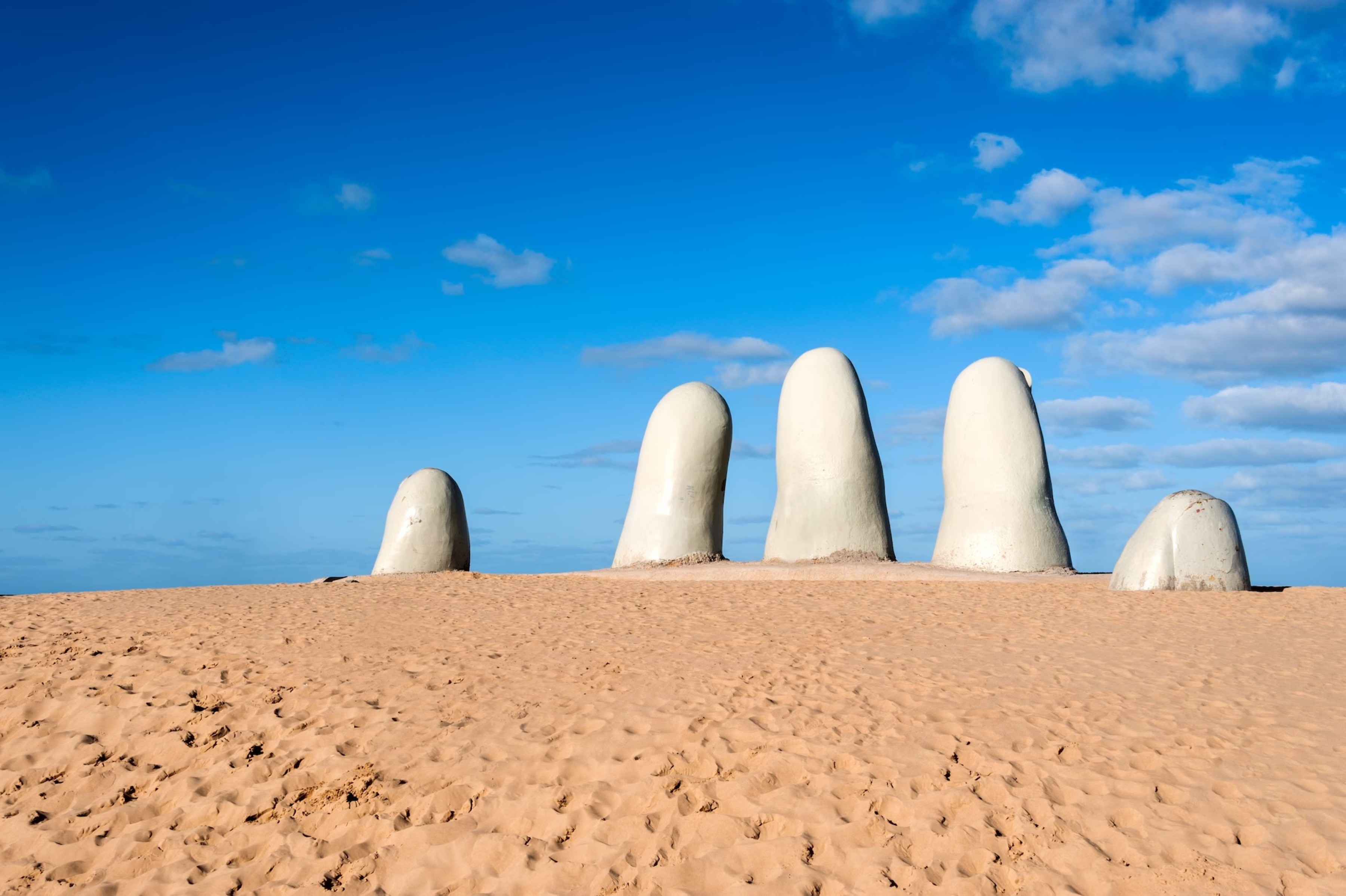
La Mano sculpture, located on picturesque beach Playa Brava. Photo: courtesy of Humboldt Travel.
Day 2
Spend the second day at Fundación Pablo Atchugarry and MACA, the Museo de Arte Contemporáneo Atchugarry. The sculpture park covers about ninety acres of lawns, water and gentle hills with large scale works by Uruguayan and international artists placed throughout. The December and January programme is particularly strong:
Lucio Fontana: Genius of Two Worlds (from 6 January 2026) is the first exhibition in Uruguay dedicated to Fontana. A key figure in twentieth century art, he changed the language of abstraction by cutting, piercing and opening the picture plane into real space. This exhibition gives you a rare chance to see that evolution up close and to understand how his work altered the relationship between matter, light and space.
Reason and Existence: Concrete Art and Informalism in Uruguay (1947–1970) (from 27 December 2025) brings together a previously unseen selection of works by twenty six Uruguayan artists from three generations. It traces a conversation between two ways of working with abstraction. Concrete art is presented as an art of reason, linked to impersonal visuality, industrial techniques and constructive order. Informalism appears as an art of existence, where the surface becomes a field of freedom, gesture, material intensity and subjective expression.
Arrive while it is still cool and start outside among the sculptures. Move into the galleries once the sun climbs, then finish with a long coffee on site. With the workshops, exhibition halls, open air stage and permanent collection all in one place, it is easy to spend most of the day here without feeling rushed. Afterwards, head back to the coast for a swim or a nap. A quiet evening will be welcomed after a full day of art exploration!
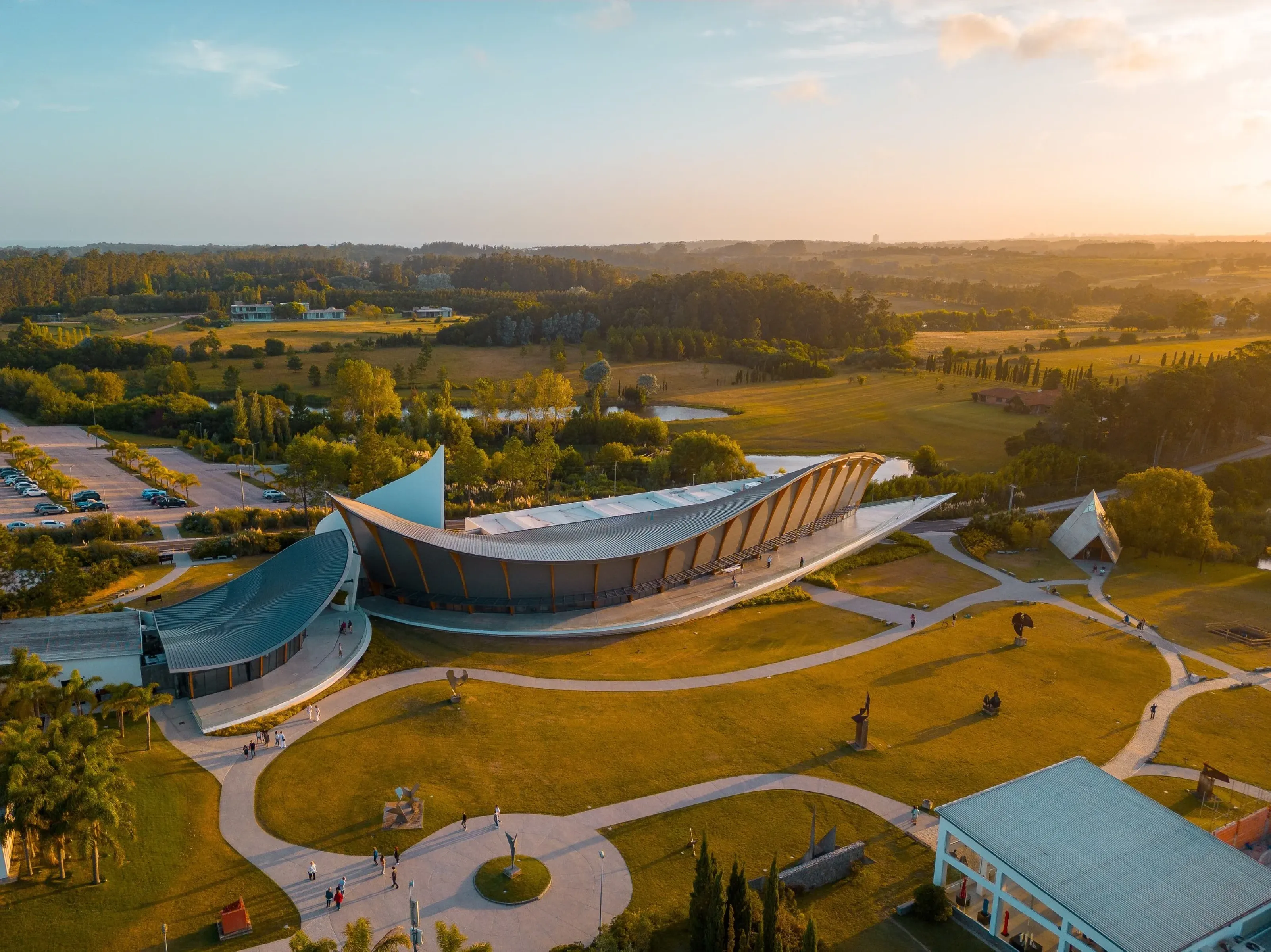
Museo de Arte Contemporáneo Atchugarry (MACA). Photo: courtesy of MACA.
Day 3
On the third day, head east. Cross the “wavy bridge” into La Barra, the relaxed beach town that feels like Punta’s slightly scruffier, more bohemian cousin. Officially called the Puente Lionel Viera, it was designed by engineer Leonel Viera and opened in 1965. Its undulating structure creates a gentle rise and fall as you drive across, a brief rollercoaster that earned it the nickname “the bridge of laughter” and helped turn it into a local landmark.
Start with a slow wander through the Trading Post, the antiques shop run by Casa Zinc’s Aaron Hojman. It is a quiet kind of treasure hunt. You pick through stacks of old signage, portraits, odd bits of hardware and one off pieces that feel like they have been rescued from forgotten estancias and beach houses. A few streets away, Museo del Mar leans into the eccentric side of the coast. It is a densely packed tribute to the sea built up over many years by its founder, full of shells, bones, old photographs, vintage tins and assorted nautical relics.
Continue along Ruta 10 through Manantiales and then turn inland to Ruta 104, where several of the region’s strongest galleries are located. Xippas Punta del Este is the key stop here. It is part of an international gallery network and regularly hosts some of the most interesting exhibitions in the area and is a great platform for discovering fresh talent as well as enjoying the work of established names.
In the afternoon, make your way to José Ignacio. The beach is the main event here. Wide dunes, a clear horizon and a barefoot, easy kind of elegance define the village. Climb the lighthouse if it is open, then find your spot on the sand and stay.
If you are in José Ignacio in early January 2026, set aside time for ESTE ARTE at Pavilion VIK. The fair runs from 4 to 7 January, with public days from 5 to 7 January, and it has become the key contemporary art event in the region. It is small in scale and high in quality, and it is one of the few places where collectors, curators and artists genuinely share the same rooms.
Stay for dinner in José Ignacio if you want to hold on to the village mood, or drive back to Punta for a later night.
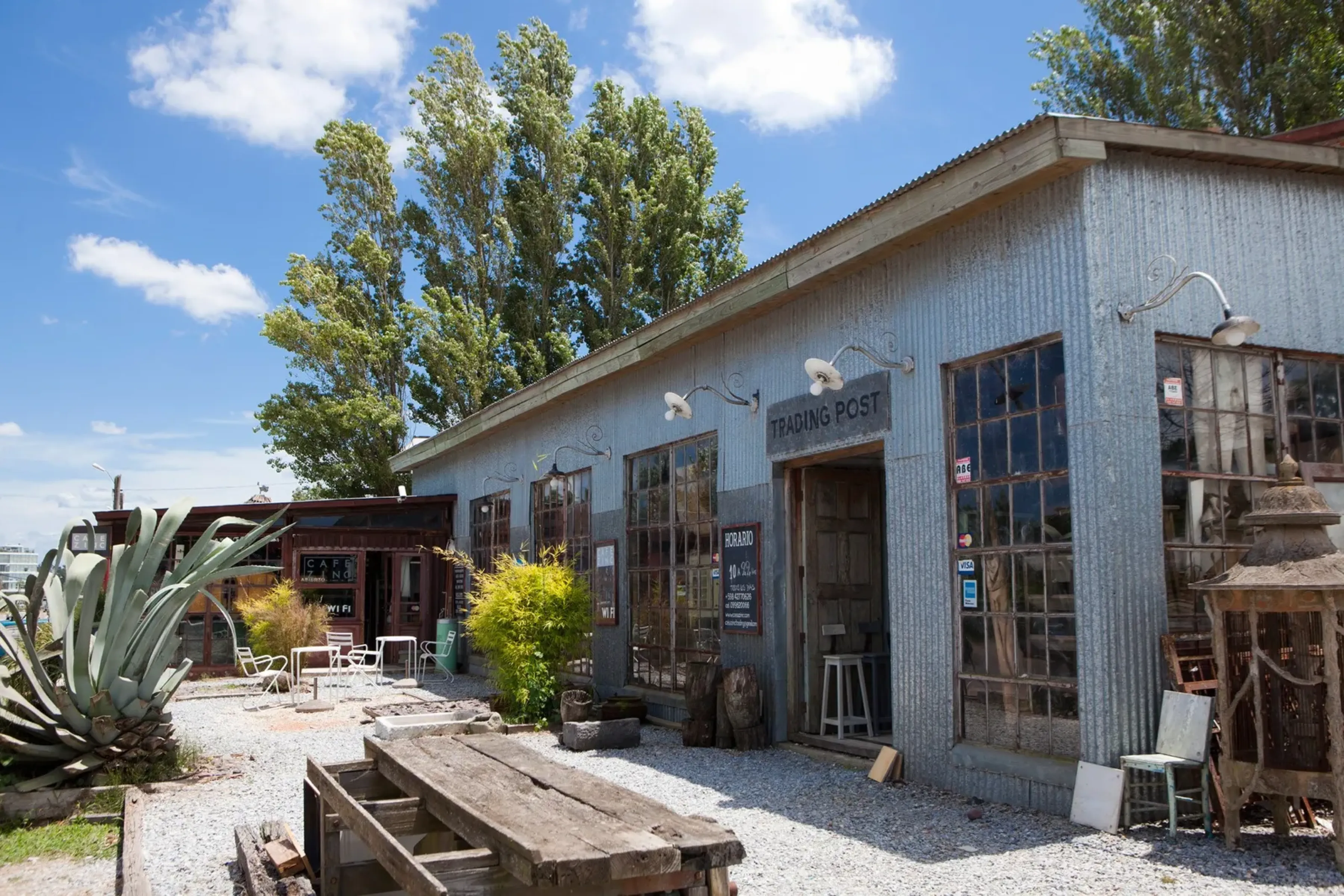
Trading Post Antiques Store, La Barra. Photo: Ricardo Labougle.