Naoshima Isn't just for the Pumpkin Anymore
17 Jul 2026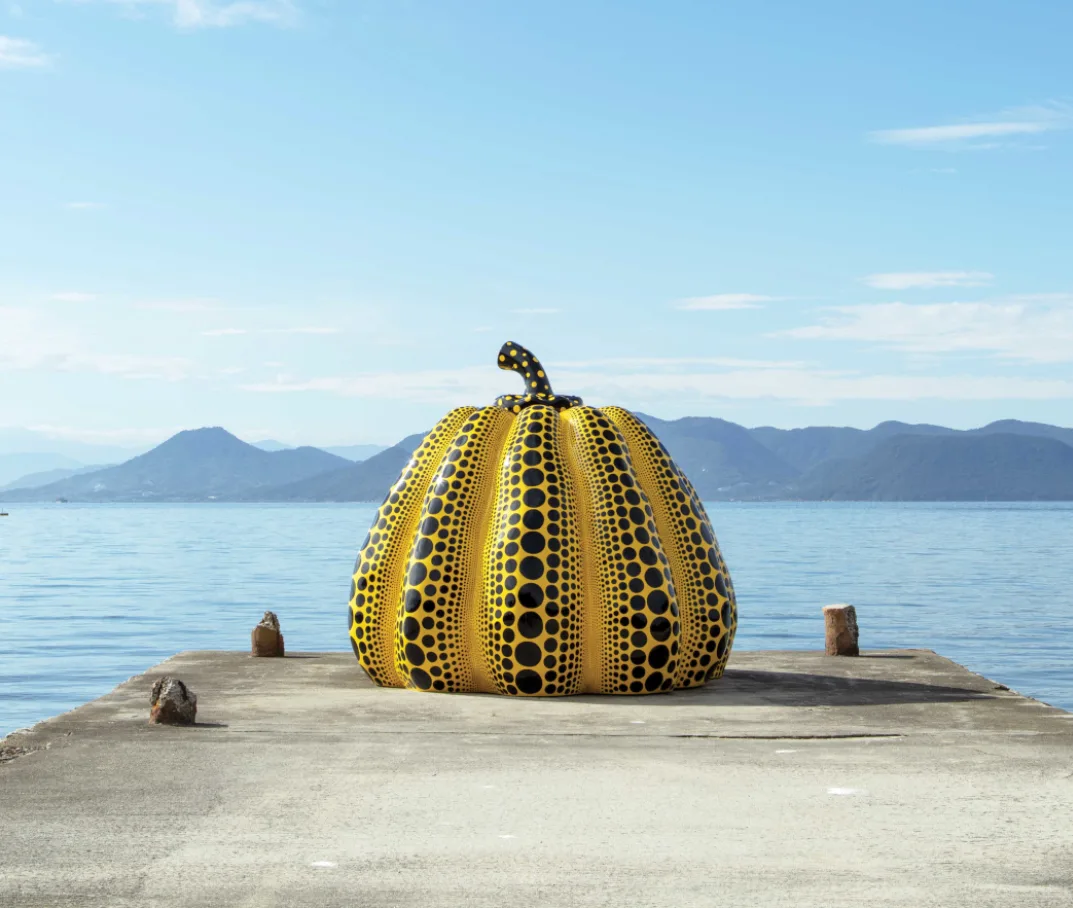
There's a version of Naoshima that exists almost entirely on Instagram: a yellow gourd, a blue sea, a few hundred thousand identical photographs. That version isn't wrong, exactly. It's just incomplete. The island has spent more than three decades building an entire ecosystem of museums, houses, and bathhouses around the idea that art and daily life don't need to be separated, and the newest chapter of that project recently opened its doors.
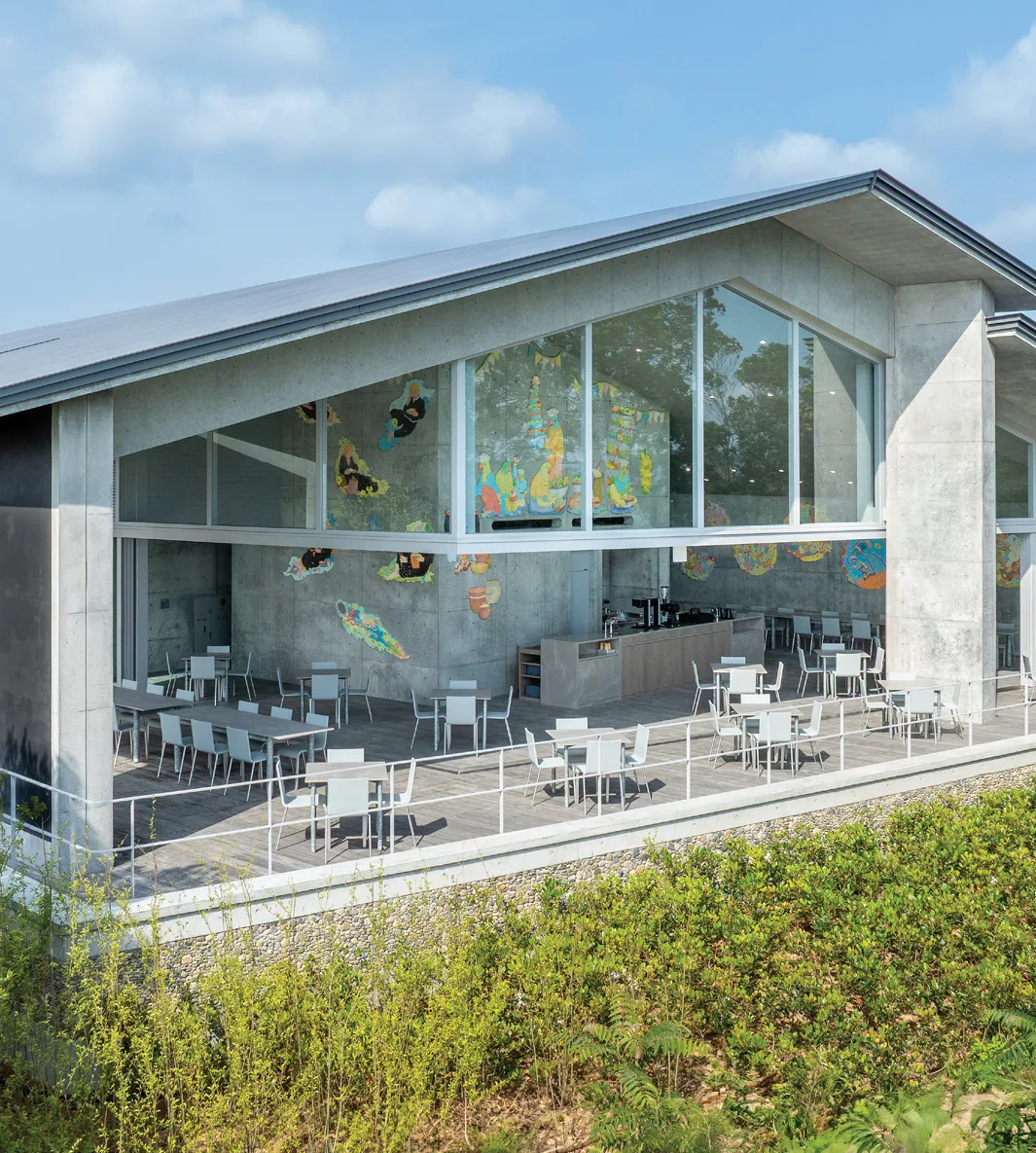 Naoshima New Museum of Art Photo ©2025 GION courtesy of GION Studio
The museum that finally has the island's name
Naoshima New Museum of Art is Tadao Ando's tenth building for Benesse Art Site Naoshima, and the first one to actually carry the island's name in its title. That's not a small detail. Ando has spent thirty years shaping how this island looks and moves, from Benesse House to the Chichu Art Museum, but this is the first time his architecture has been asked to represent Naoshima itself rather than a single collection or artist.
The building follows the same instinct Ando has applied across the island: hide the structure, let the landscape lead. Three floors make up the museum, two of them sunk underground, all of it connected by a single skylit staircase that pulls visitors down into the hillside instead of up into a building. At the north end sits a café that looks straight out at Teshima, close enough to watch the fishing boats coming in for the day.
Unlike Chichu or the Lee Ufan Museum, both built around fixed, permanent installations, the New Museum is dedicated entirely to contemporary art from across Asia, and its collection rotates. That alone makes it a different kind of stop on the island: not a monument you visit once, but a museum you might actually return to.
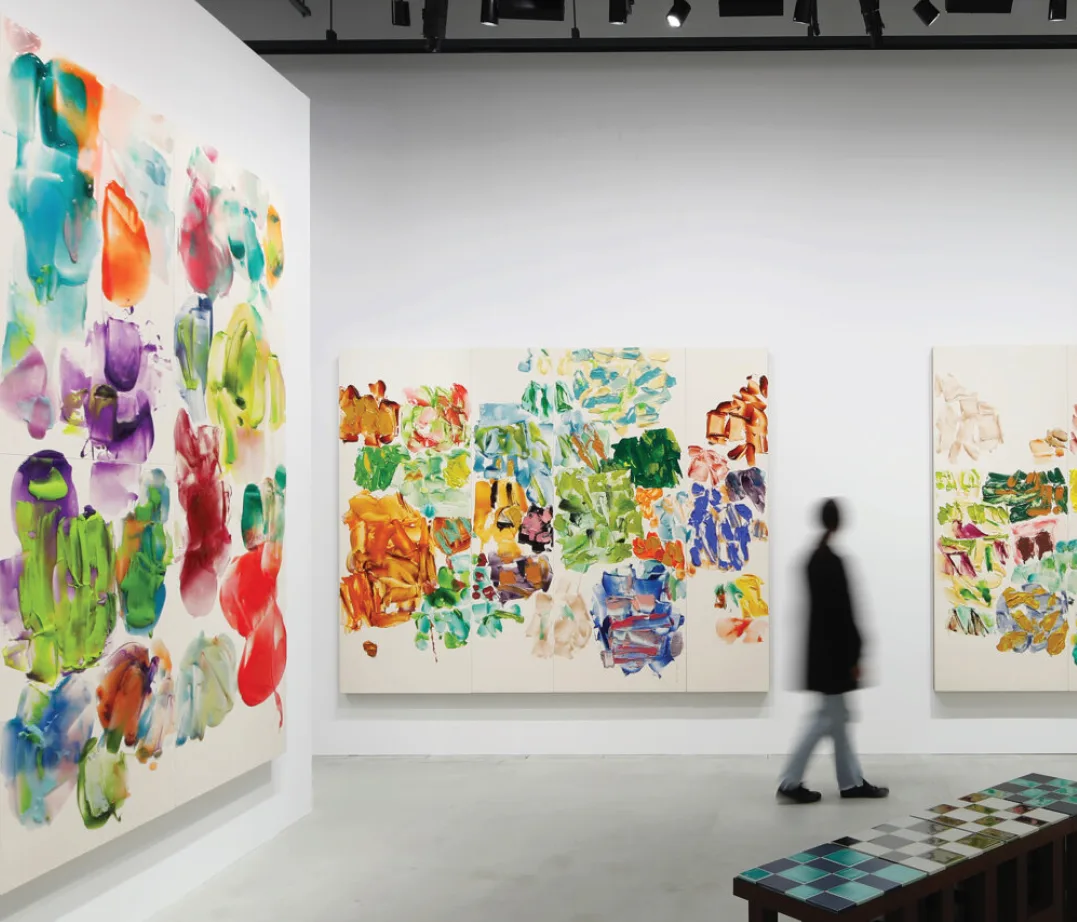 Okazaki Kenjiro, View of "Tender Buttons" (2026) Photos by Takeru Koroda
Right now, that rotation includes Okazaki Kenjiro's exhibition Tender Buttons. Okazaki has been showing work on Naoshima since the 1990s, so this isn't an introduction so much as a continuation of a decades-long relationship with the island. The exhibition, drawn largely from the Benesse Art Site Naoshima collection alongside newer pieces, is built around the connection between language and painting, using fragments from across different eras of Okazaki's career to surface memory rather than explain it. The season's broader theme, Flow, Recurrence, and Rebirth, runs through the museum's full 2026 program, and Tender Buttons is its clearest expression so far. The show is on view through 23 November.
Here's the part worth knowing before you plan around it: the New Museum is currently the one Ando building on the island that isn't booked out weeks in advance. It hasn't hit the algorithm the way Chichu has, largely because it's still new. If you only have time for one Ando museum on this trip and don't want to structure your entire itinerary around a ticket window months out, this is the one to start with.
Yayoi Kusama “Pumpkin” 2022 ©YAYOI KUSAMA(Photo : Tadasu Yamamoto)
Yes, the pumpkin is still here (there are two)
Every conversation about Naoshima eventually arrives at the pumpkin, and it should. Yayoi Kusama's yellow Pumpkin, planted at the end of the pier with the Seto Inland Sea and Takamatsu in the background, is one of the most photographed artworks in Japan for a reason. The current pumpkin dates to 2022, after the previous one was damaged by Typhoon Lupit in August 2021 and a newly created version was installed in the same spot that October. It remains, without much argument, a must-see.
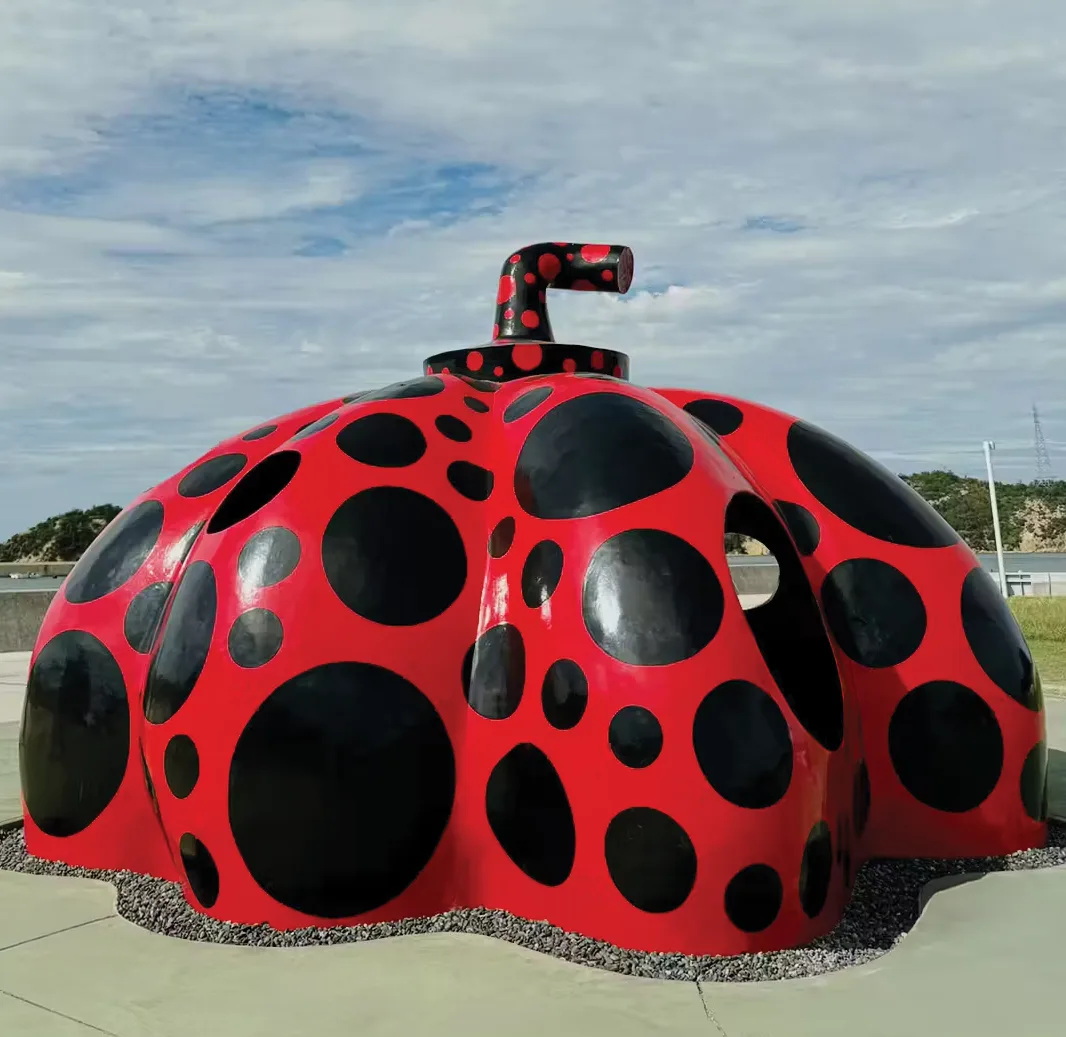 Yayoi Kusama “Red Pumpkin” (2006) Photo by Xiao Wu
What fewer people know is that there's a second pumpkin. The Red Pumpkin (2006) sits at Miyanoura Port, which means most visitors walk past it within minutes of stepping off the ferry, often without registering what they're looking at. If you time it right, you can get a clean shot of it just before the boat pulls away toward Honshu, before the crowd from your own ferry has fully cleared the gangway. Both pumpkins are lit after dark, which makes them worth a second visit if you're staying on the island overnight rather than doing Naoshima as a day trip.
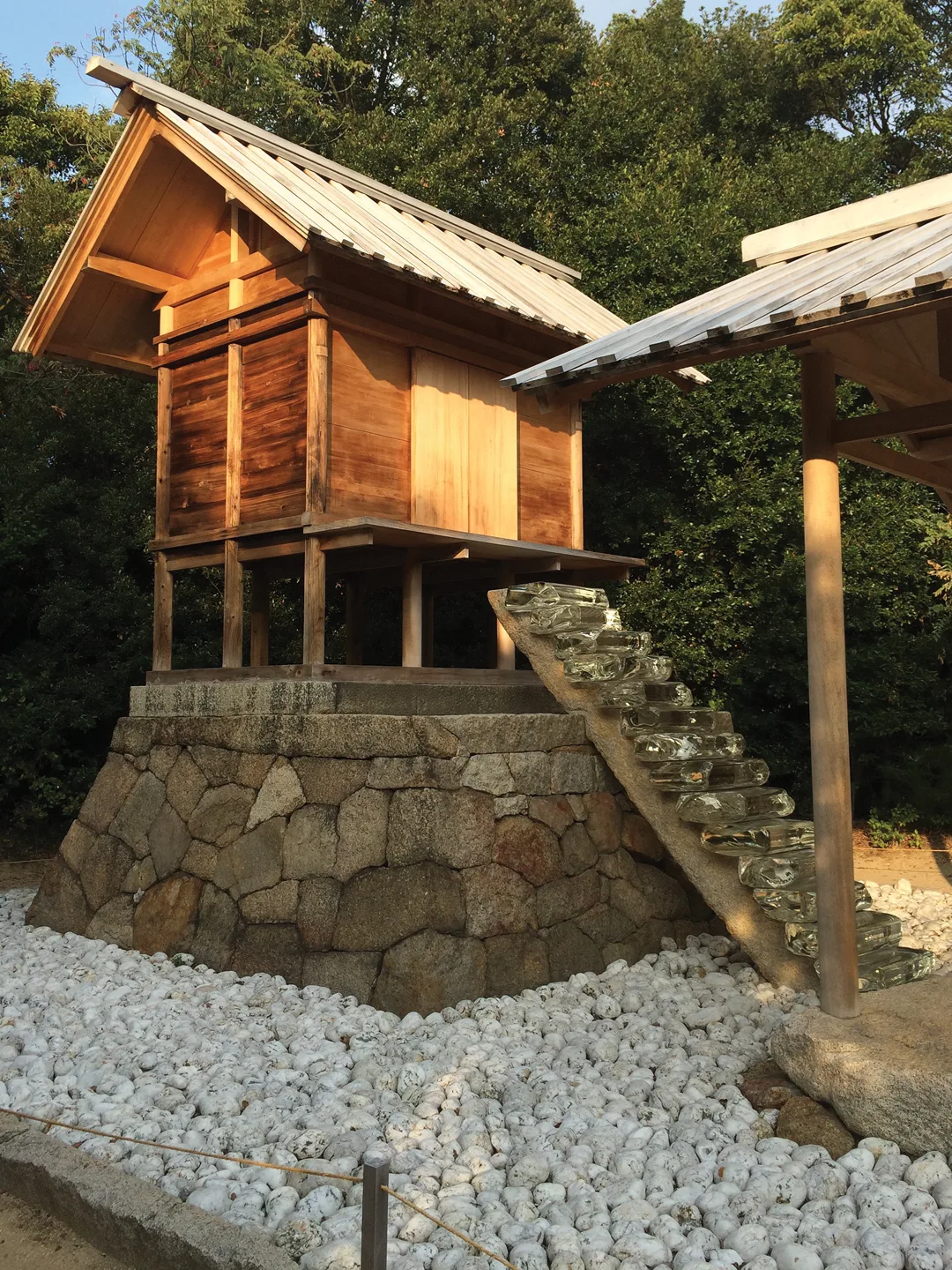 Go’o Shrine, Hiroshi Sugimoto. Part of the Art House Project. Photo courtesy of Tokyo Tidbits
The village that's secretly a museum
A short walk from the port, scattered through the ordinary houses of Honmura village, are seven spaces that the Art House Project has handed over to individual artists to transform completely. James Turrell's light installation lives inside Minamidera. Shinro Ohtake covered the exterior and interior of Haisha in mosaic. There's no ticket desk that ties the whole thing together, no gift shop at the end, no single building to orient yourself around. It's the opposite of a museum experience: you're simply walking between what used to be someone's home and what used to be the house next door, except now both are art.
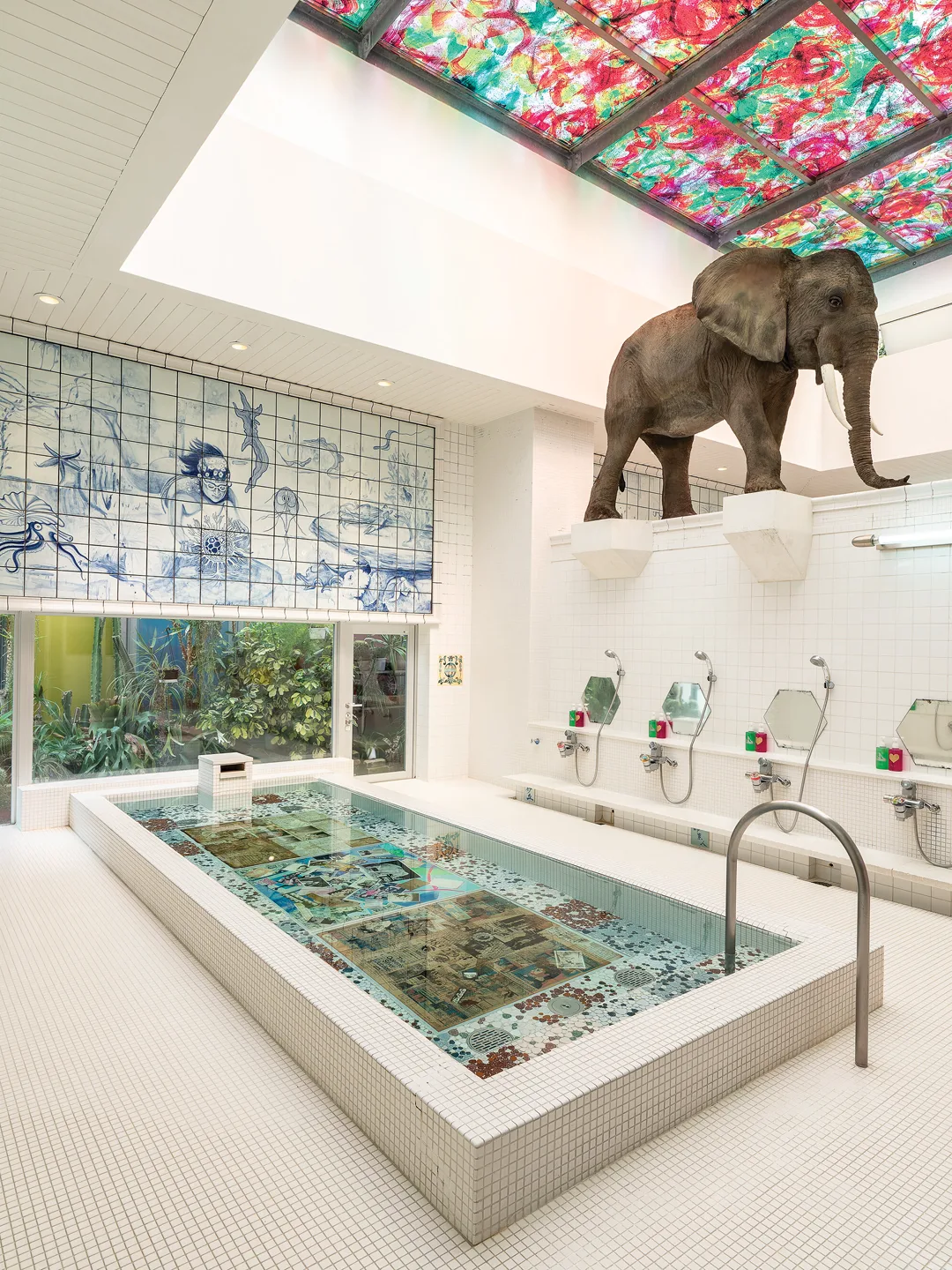 "I♥湯" (I Love Yu) by Otake Shinro. Photo © 2026 Trip Concierge
I♥湯 - The Artwork that's a Functional Bathhouse
Steps from Miyanoura Port is I Love Yu, a fully functioning public bathhouse that Shinro Ohtake also designed as a working artwork. This is not a museum you walk through. It's a bathhouse you undress for, and the "exhibit" is something you sit in, with a life-size elephant statue watching over the baths the entire time. Seeing the rest of it requires actually getting in the water. Bring your own towel if you want to skip the rental fee, and don't expect to photograph much past the entrance: cameras aren't allowed inside, which is precisely why I Love Yu hasn't been flattened into another overexposed Instagram backdrop the way so much of the island has.
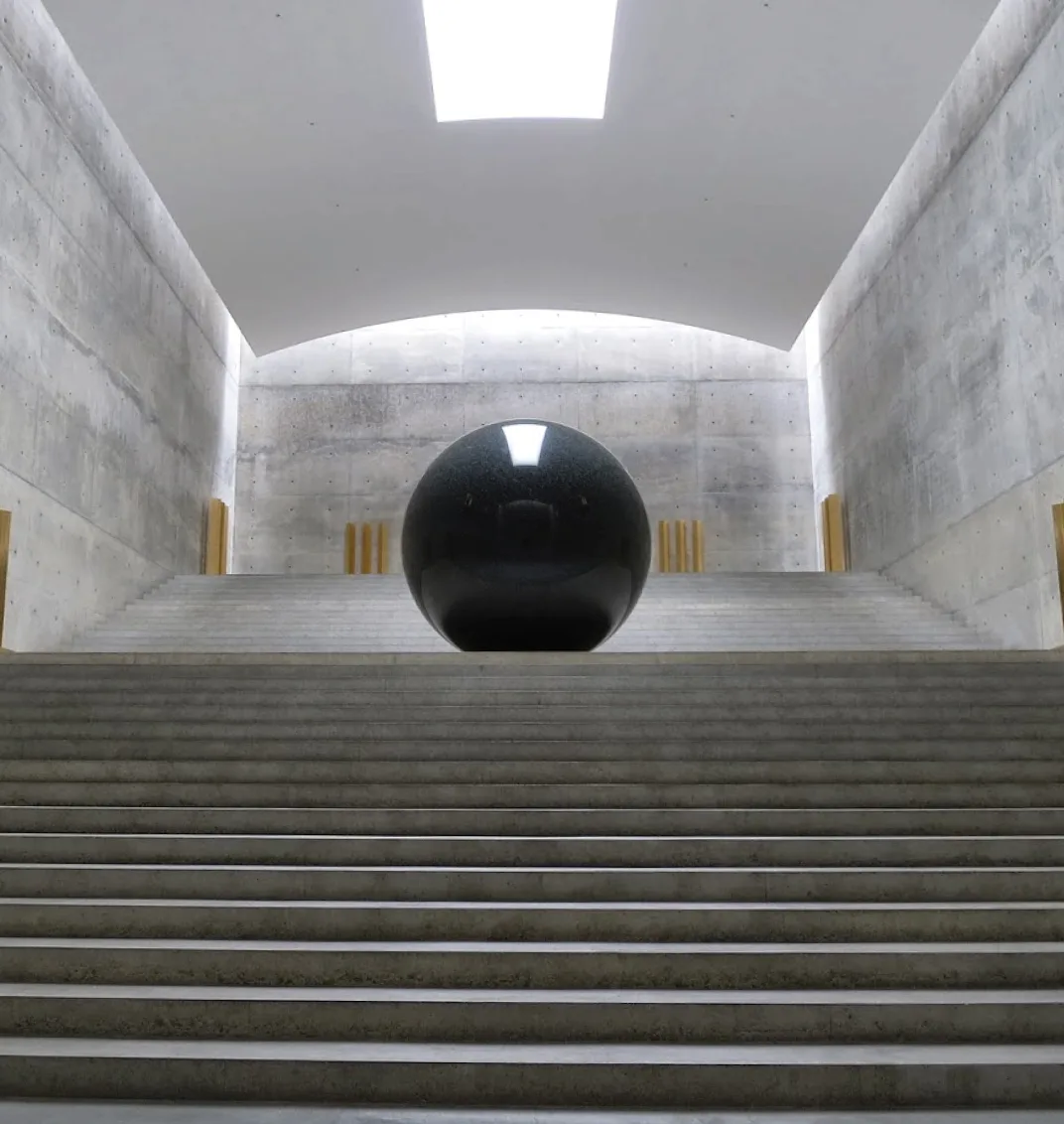 Walter De Maria ”Time/Timeless/No Time” (2004) Photo Courtesy of Brommel
The museum built around the hours of the day
Close out the trip at Chichu Art Museum, built almost entirely underground and lit only by natural light, which means the art looks different depending on what hour you walk in. Inside are five of Monet's Water Lilies canvases, shown in a room built to the artist's own specifications, alongside permanent installations by James Turrell and Walter De Maria. Tickets are timed, sold online in advance, and they sell out fast during spring and autumn, so this is the one museum on the island worth booking before you land rather than after. Visit in winter instead, and you'll see the same Monet and the same Turrell with a fraction of the crowd.
The takeaway
The pumpkin will always be the way people find Naoshima. It just shouldn't be the reason they stop looking. Between a museum that finally bears the island's name, a artsy bathhouse you have to climb into, and a village where the houses are the art, Naoshima has quietly built an entire world around one small, well-photographed gourd. It's still worth the picture. It's just not the whole trip anymore.