Masterpiece Spotlight: The Movement and Stillness of Calder's Black Widow
26 May 2026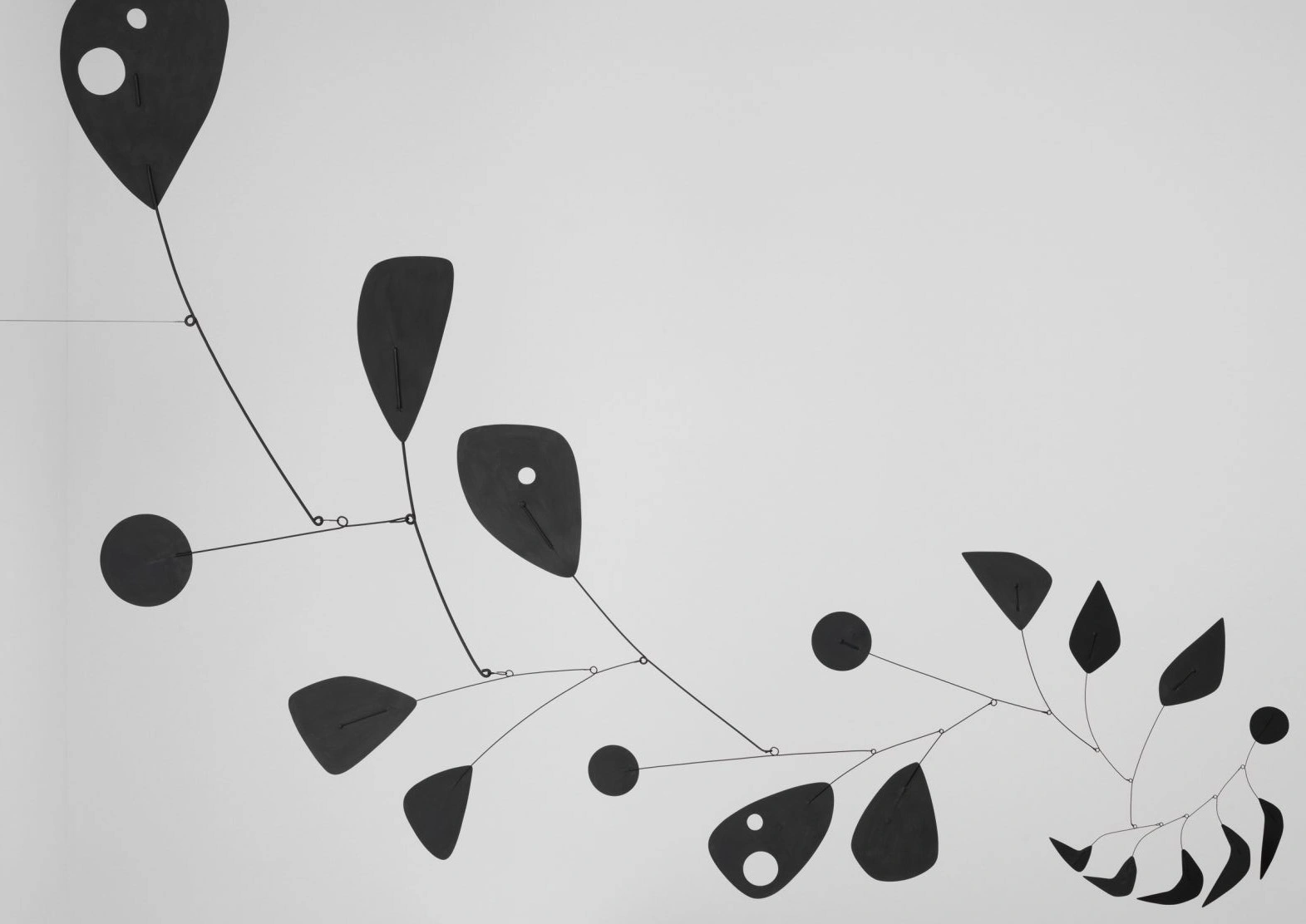
Fondation Louis Vuitton's Calder: Rêver en équilibre brings together an extraordinary gathering of the artist's work, including mobiles, stabiles, wire sculptures, and paintings, alongside pieces by peers and contemporaries who shaped his world creatively. One of the pieces in this exhibition, Black Widow (1948), displays Calder's genius in full view. Playful in form, but careful, calculated, and precise in practice.
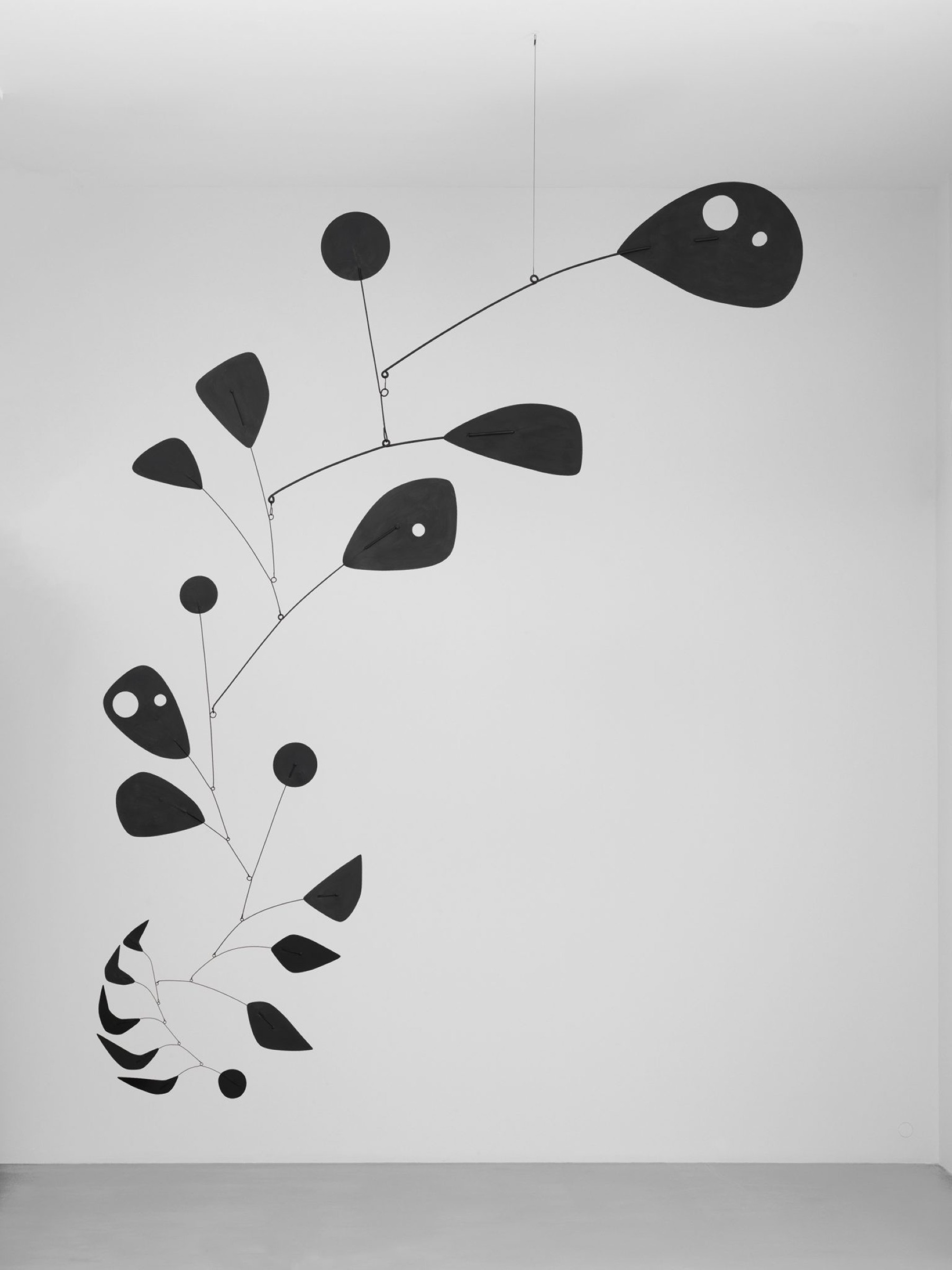
Alexander Calder “Black Widow” (1948) Instituto de Arquitetos do Brasil–Departamento de São Paulo; On deposit from the Artist, 1948. Courtesy © 2026 Calder Foundation, New York. Photograph by Tim Nighswander
There's a particular kind of tension Calder perfected: the kind that looks like it might, at any moment, tip over or take flight. Black Widow (1948) has that quality in excess. A hanging mobile, it responds to the faintest shift in air, its counter-balanced arms drifting slowly through space, connecting abstract forms with a fluidity that lets negative space pierce through the cutout shapes. Painted entirely in Calder's signature black, the work is at once delicate and imposing.
Calder made Black Widow during one of his most critical periods, when he was moving between mobiles (the hanging, kinetic works that made him famous) and stabiles, the grounded sheet-metal sculptures he'd been developing since the 1930s. The distinction mattered to him. "The mobile has actual motion," he once said, "while in the stabiles, the motion is suggested." Black Widow belongs fully to the first category, and it shows. Every element is calibrated to move in relation to the others, endlessly rearranging itself as you watch.
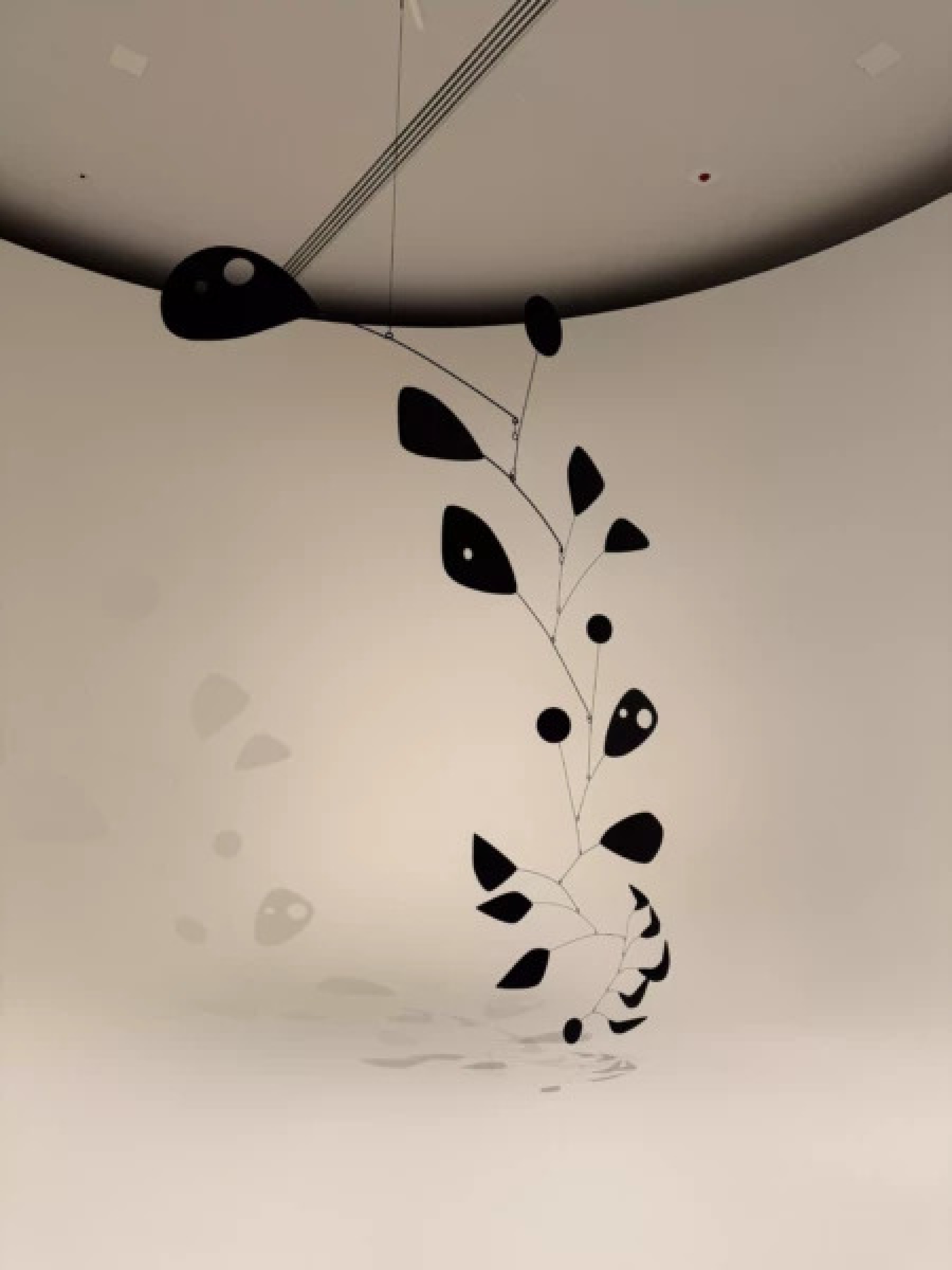
Alexander Calder “Black Widow” (1948) at Fondation Louis Vuitton, photo by Judith Benhamou 2026
This period also marked a homecoming of sorts for Calder. During World War II, he had been working primarily with wood and wire, having forgone sheet metal due to strict rationing. After the war, eager to exhibit again, Calder was invited by architect Henrique Mindlin to show at the Ministério da Educação e Saúde in Rio de Janeiro. That show was a huge success, and he took it to Museu de Arte de São Paulo (MASP), where nearly everything on display sold. Brazil and its people left a lasting impression on him, and Black Widow was born directly from that experience. As a gesture of gratitude, Calder donated the work to the Instituto dos Arquitetos do Brasil, where it normally hangs in their front lobby, rarely leaving.
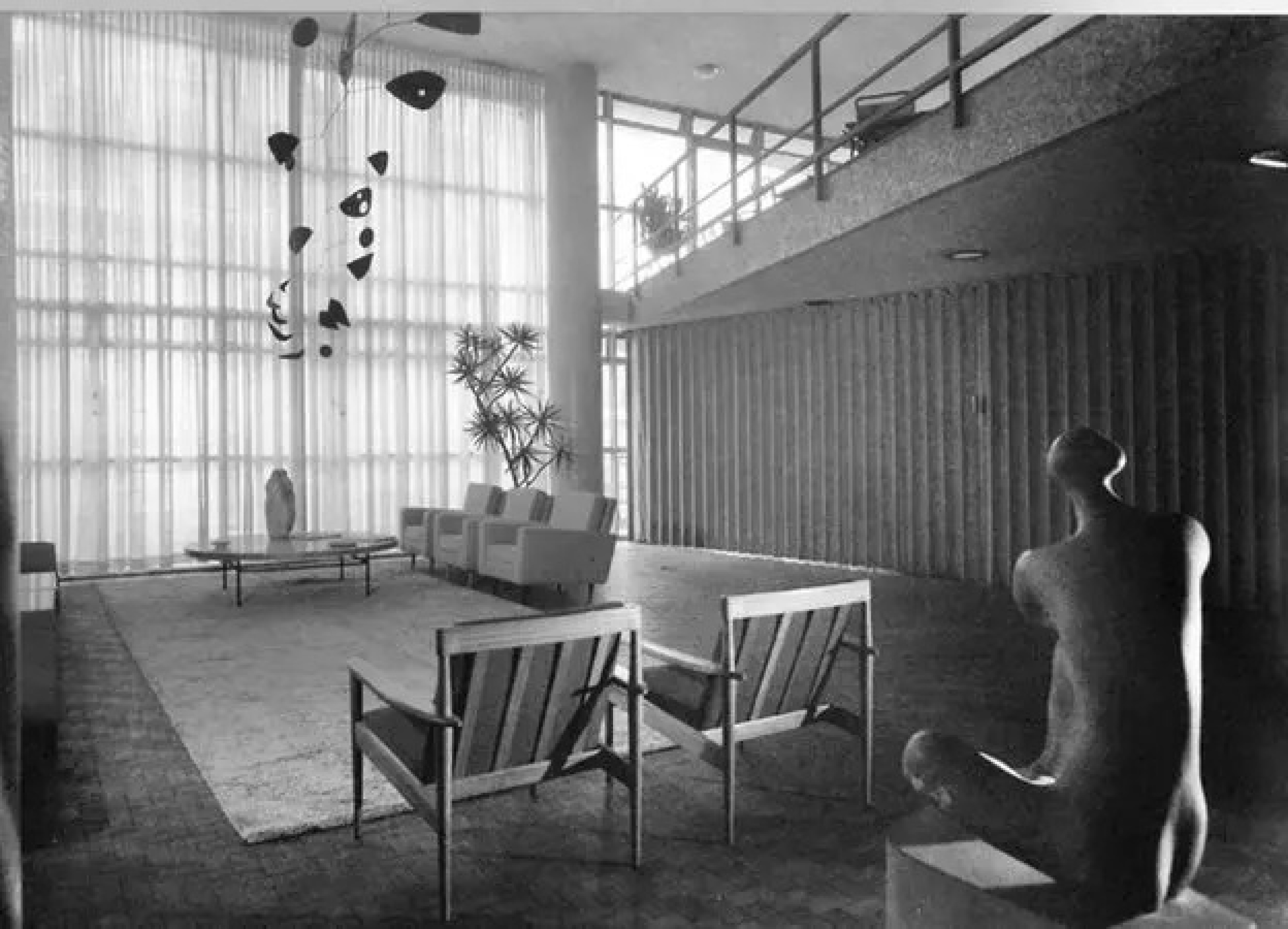
Black Widow (1948) hanging in the Instituto dos Arquitetos do Brasil, Courtesy of Instituto dos Arquitetos do Brasil
The title is apt but characteristically playful. Calder named his sculptures the way he named most things, with a wink. The form does evoke its namesake: angular, slightly threatening, with a concentrated center and limbs that splay outward in different directions. But it rewards time spent with it. The more you watch it move, the more the relationships between its parts shift: weight and counterweight, void and form, shadow and silhouette.
Vassilis Oikonomopoulos, who co-organized Tate Modern's landmark 2015 exhibition Alexander Calder: Performing Sculpture, singled out Black Widow as his favorite piece in the show. The work encapsulates something essential about Calder's ambition in this period: the desire to make sculpture that was genuinely alive in space, that changed depending on where you stood, or simply, on the weather that day.
This summer, Black Widow travels to Fondation Louis Vuitton in Paris for Calder: Rêver en équilibre. A rare chance to see it outside its usual home, and in dialogue with the broader sweep of Calder's practice. If you're in Paris, this is where you want to be.