Masterpiece Spotlight: Ellsworth Kelly’s 'Seine'
17 Jun 2026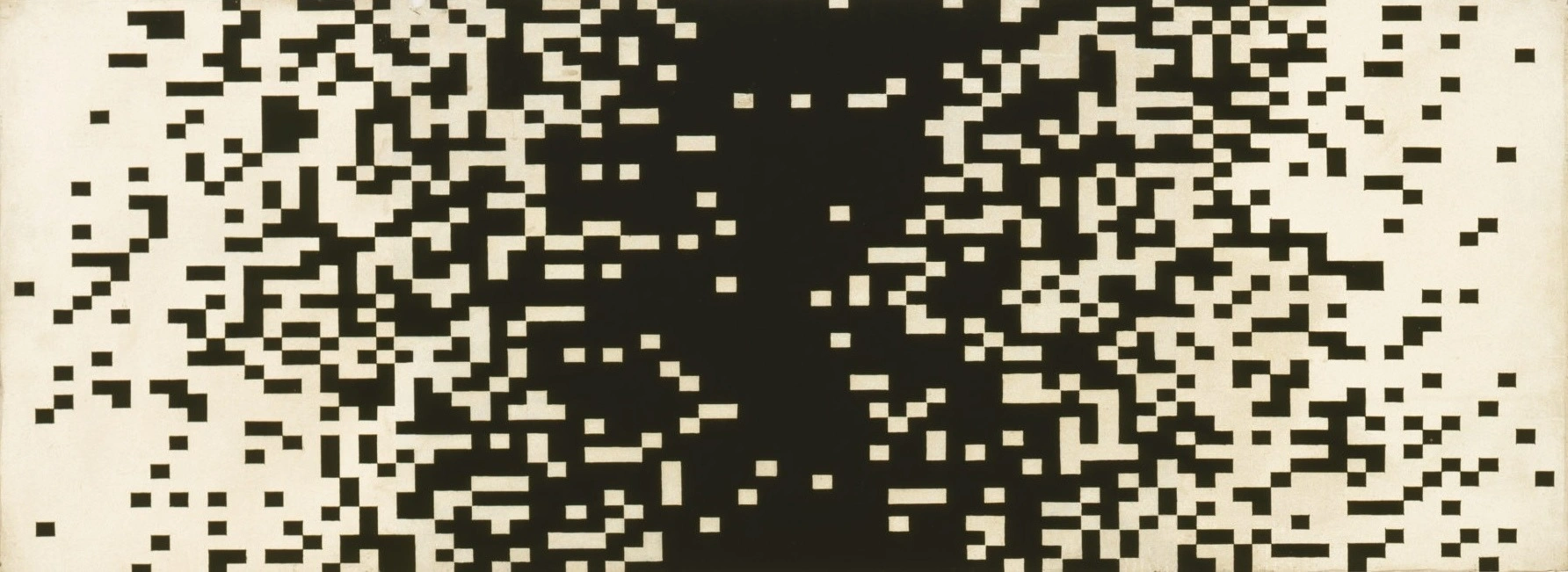
At first glance, Ellsworth Kelly’s Seine does not look much like a river. There is no bank, no bridge, no reflected skyline. Just a long field of black and white blocks, arranged with the cool authority of a grid and the flicker of something moving underneath.
But the river is there.
Kelly made Seine in 1951, while living in Paris, after observing light catching on the wavering surface of the water. Instead of painting the scene, he translated it. The shimmer became structured. The reflection became rhythm. The Seine became a sequence of intervals, interruptions and chance.
That is what makes the work so quietly radical. Kelly is often remembered for colour, clarity and hard-edged form, but Seine shows something more restless beneath the surface. The painting holds itself together like architecture, yet it moves like water. Its black and white squares seem fixed until the eye starts to travel across them, picking up the irregular pulse of light across a river.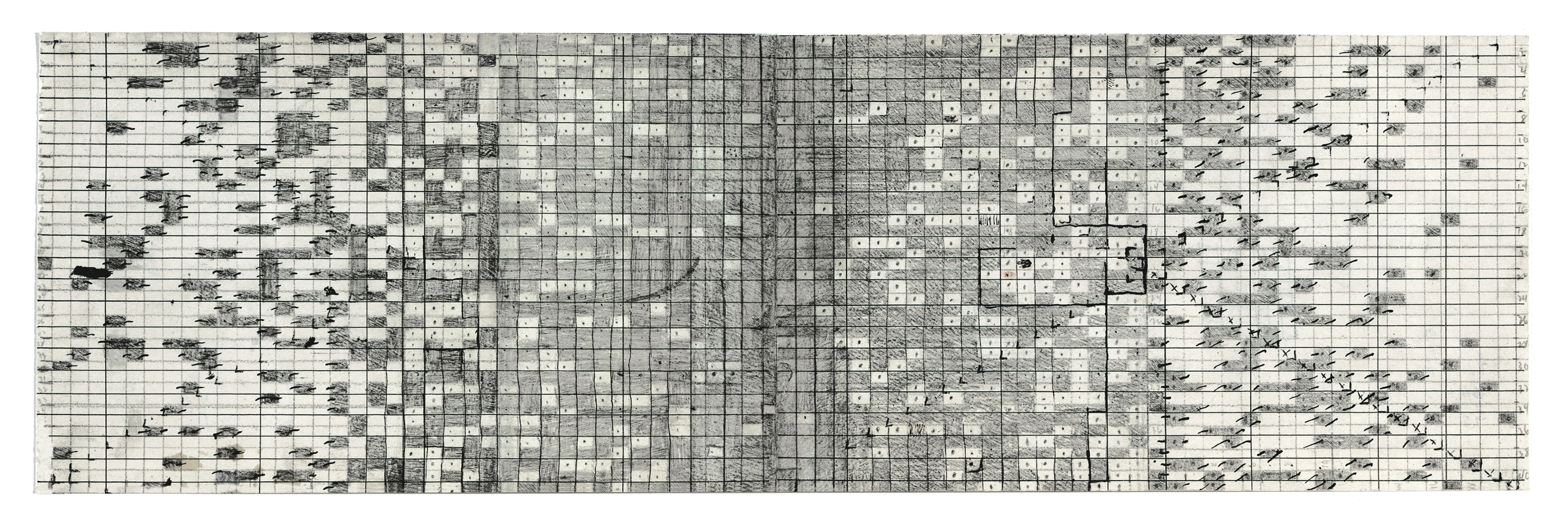
Ellsworth Kelly, Study for Seine, 1951. Graphite and ink on paper.
The study pulls back the curtain. Before Seine became clean and resolved, it was worked out across this narrow grid in graphite and ink. Kelly marks, shades, tests and adjusts, building a system from something he had seen but could not hold still: light breaking across the surface of the river.
What makes the study compelling is how alive it feels. The finished painting has the calm authority of a final decision; this has the energy of discovery. Some sections are dense with marks, others are left open. Blocks appear, disappear and shift in weight, as though Kelly is working out how much of the river he can remove before its movement disappears too.
That balance became central to his work. Kelly was not making abstraction from nowhere. He was taking moments from the visible world and cutting them down to their sharpest form: a shadow, a curve, a window, a plant, a flash of light on water. In Seine, the subject is almost entirely stripped away, but the act of looking remains.
Seen within Ellsworth Kelly: At the Edge of Water at Fondation Maeght, Seine feels like one of the clearest ways into the exhibition. It shows Kelly using water not as scenery, but as a problem of perception: how to translate reflection, instability and change into something fixed.
The result is a river reduced to black and white, yet still somehow in motion.
On 16 July, Club Members can visit the exhibition in a director-led tour at Fondation Maeght. Click here to find out more about membership.
Cover Image Credits: Ellsworth Kelly, Seine, 1951. Oil on wood. Philadelphia Museum of Art.