Life With P | Philip Guston at Hauser & Wirth
21 Apr 2026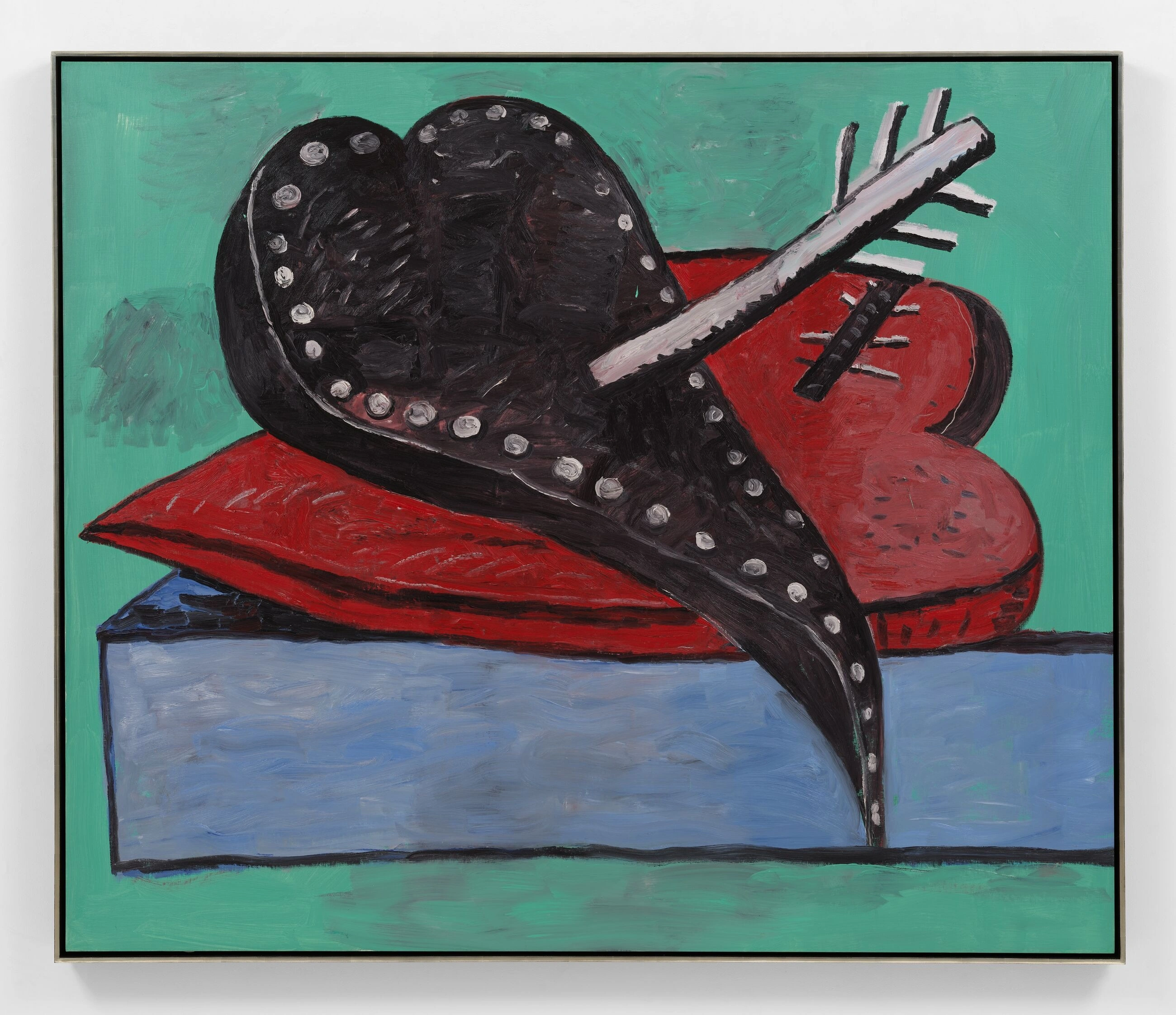
“There is nothing to do now but paint my life; my dreams, surroundings, predicament, desperation, Musa - love, need”
-Philip Guston, September 28th, 1972
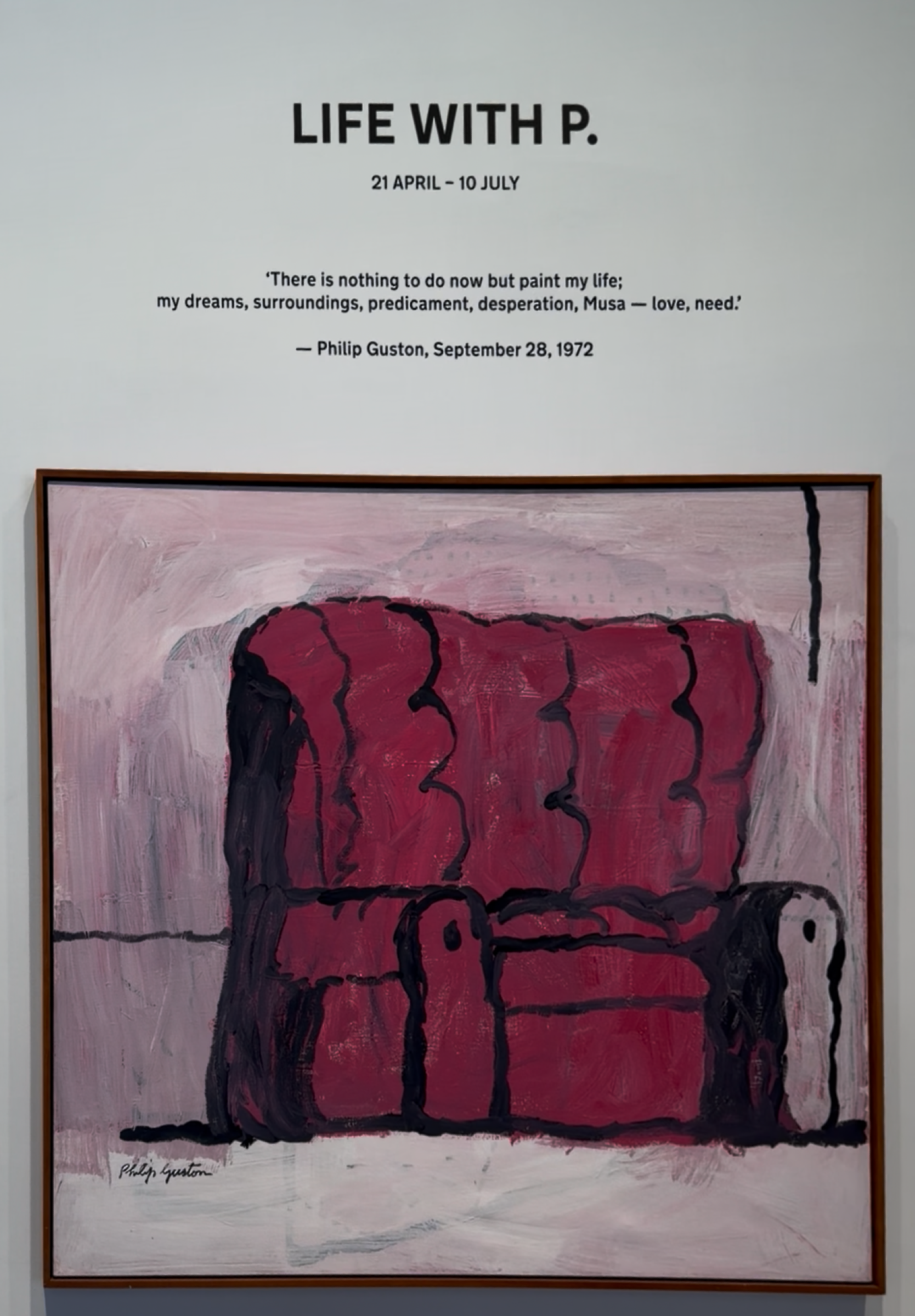
Armchair (1969) at the entrance to the gallery
The last major Guston survey in New York was a decade ago. Hauser & Wirth's “Painter 1957–1967” landed before the gallery had become quite so synonymous with his estate. Since then, every exhibition has looked at Guston through a different lens, whether it be his printmaking practices, satirical murals, or paintings of political commentary, you may be asking yourself “what else could there be to know about his work?”
Life With P. answers that question quietly. This is not the Guston of sociopolitical menace, of hooded figures and clenched fists. The show explores something more private: Guston as husband, father, and reluctant romantic, a man who once wrote in a note now hung at the exhibition's entrance that his work had narrowed to a single preoccupation. That preoccupation was Musa.
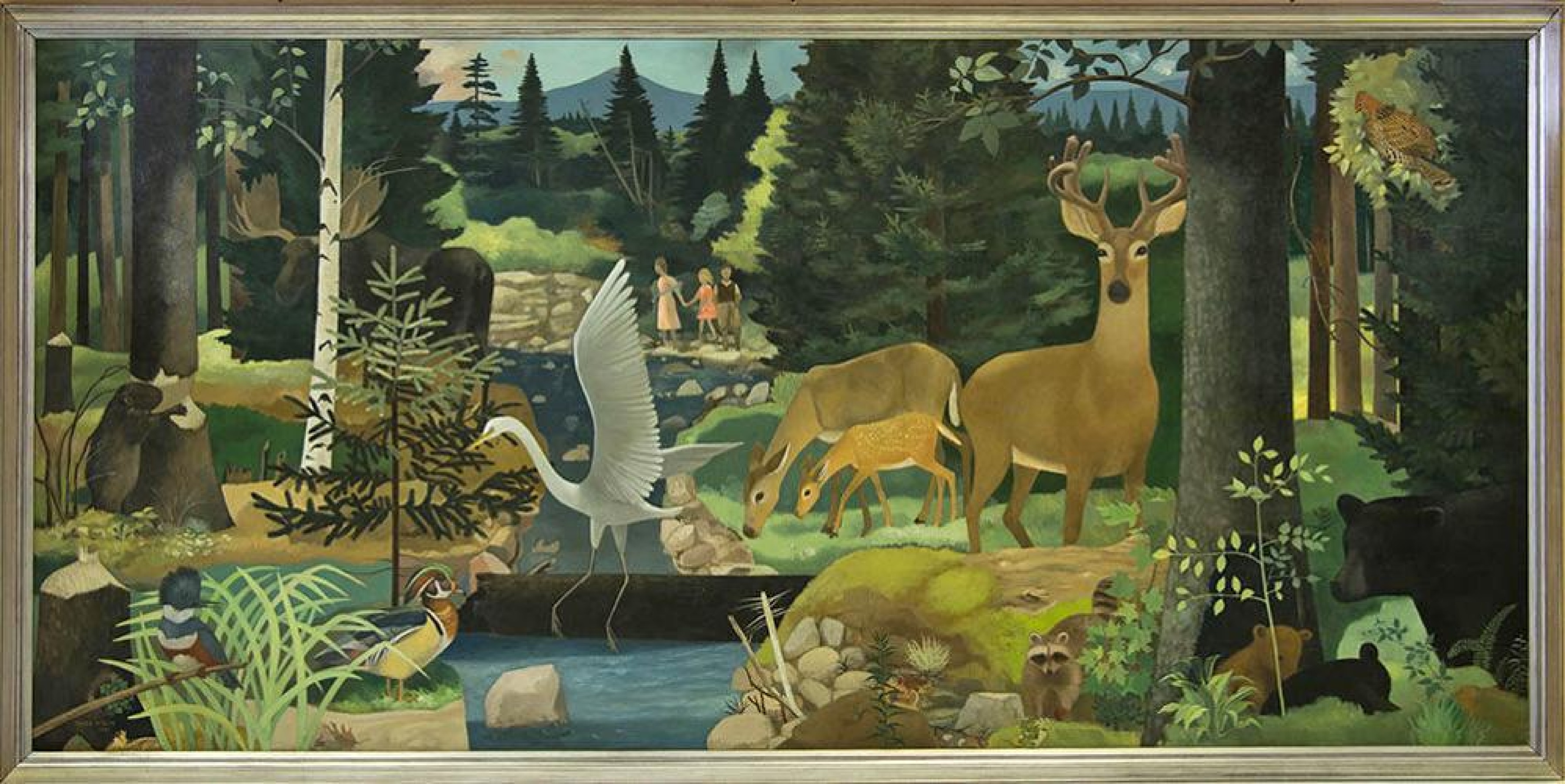
Musa McKim - Wildlife in the White Mountains.(1941) Fine Arts Collection U.S. General Services Administration
Musa McKim was a poet and an artist in her own right. (above) The title of the show is borrowed from her newly published journals, a decade of entries covering 1966 to 1976, edited by the couple's daughter, Musa Mayer. The book, and by extension the exhibition, takes its name from McKim's own nickname for Philip. "P." was exclusively what she called him. The irony, and Mayer acknowledged this at the opening, is that the journals begin not with P. but without. Philip had left Musa for a younger woman, a photographer, for about a year in 1966.
It was during that separation that McKim's writing found its most clarifying impulse.
Mayer was in the gallery the morning of the opening. She spoke with the kind of careful precision of someone who has spent a lifetime parsing two legacies at once. "In a life that had been dominated by my father's work," she said, "not only my mother's life but my life, his creative genius and the force of his personality was very dominant. In many ways, I feel like I have to do more to preserve her legacy." She described her mother as Philip's guardian, his fierce protector. The woman who held the world at bay so he could paint.
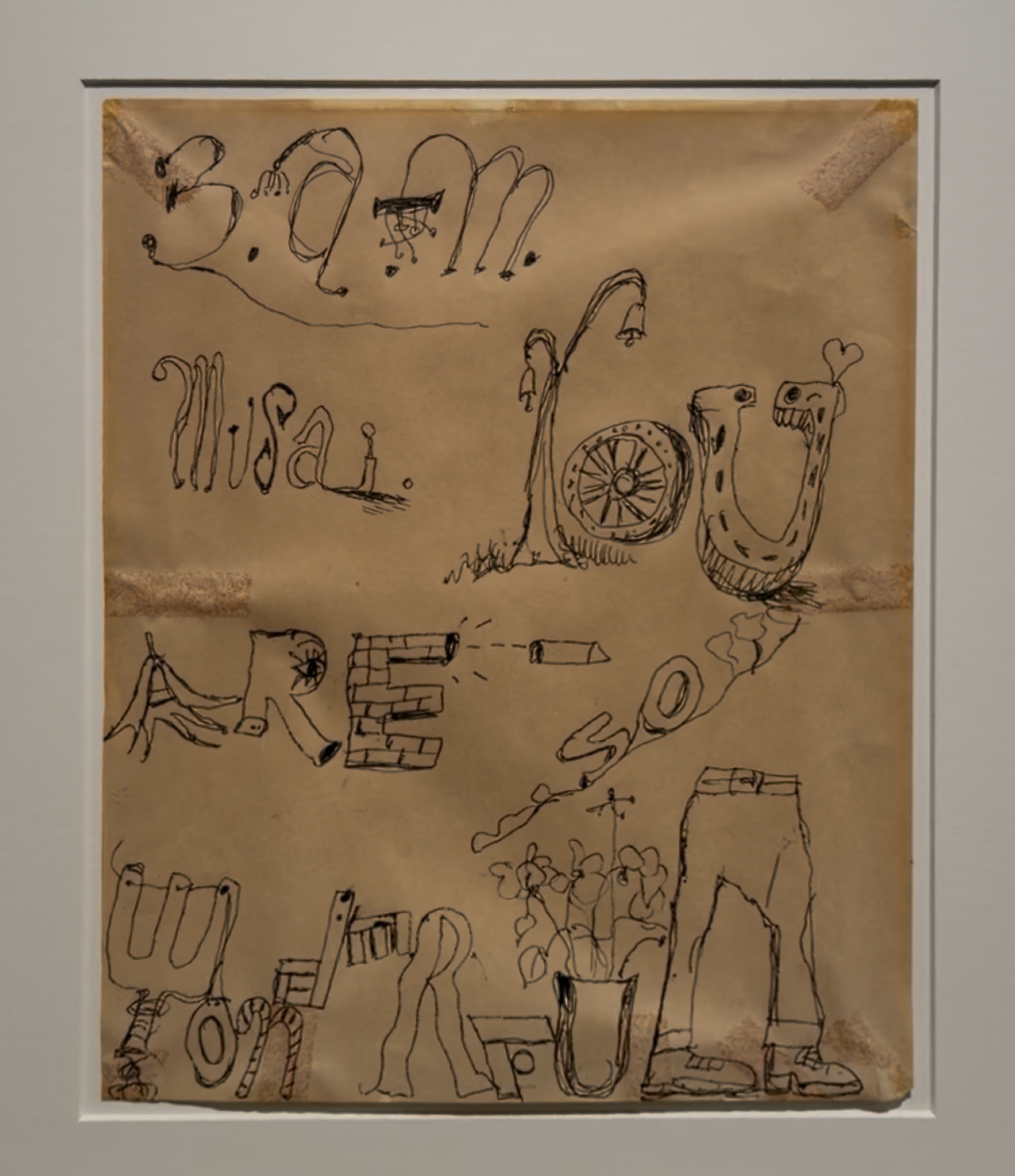
Philip Guston "3 A.M. Musa You Are So Wonderful"(1973)
The Poem Pictures on view are among the most tender things Guston ever made. They lack the bravado of the late figurative work, the bruising comedy of the hooded self-portraits. Instead they feel like annotations, notes left in the margins by someone reading very carefully. Awakened By A Mosquito (c. 1972–1975) is dense with handwritten text and loosely rendered imagery, the boundary between word and image genuinely blurred. 3 A.M. Musa You Are So Wonderful(1973)(above) is exactly what it sounds like: a love note given the formal weight of a drawing.
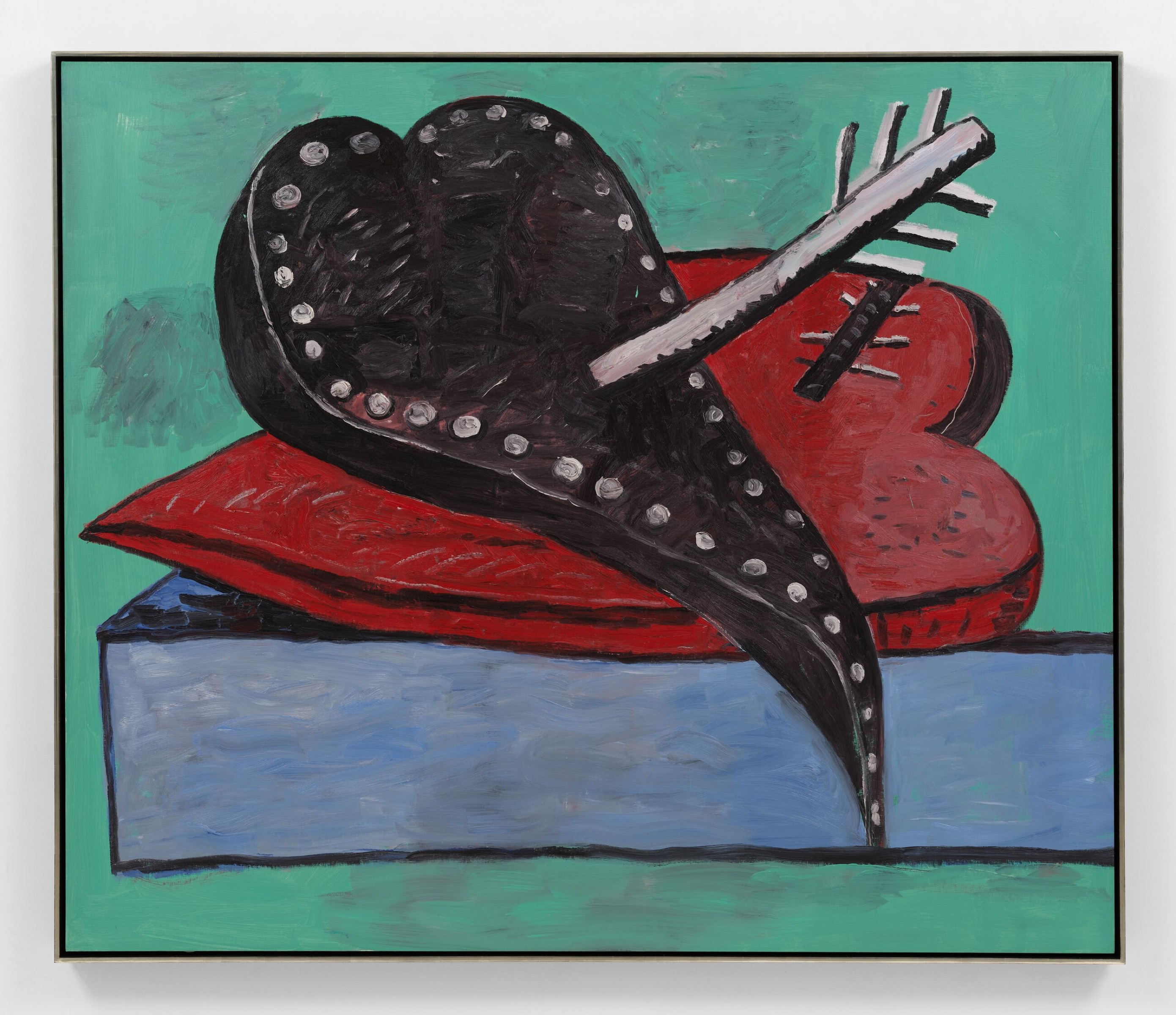
Philip Guston "Two Hearts" (1978)
The three large-scale paintings shown together for the first time anchor the back of the show. Blue Cover (1977) (below) gives us two block-like figures pressed together beneath a blanket, intimate in the way that only long familiarity can be. Two Hearts (1978)(above) is more wounded, two limp punctured forms lying on top of each other, with uncomfortable closeness. And the large Untitled (1976) that is used in all the promo images: McKim rendered as a mass of curly red hair and wide upward-gazing eyes, painted with something between tenderness and cartoonish devotion.
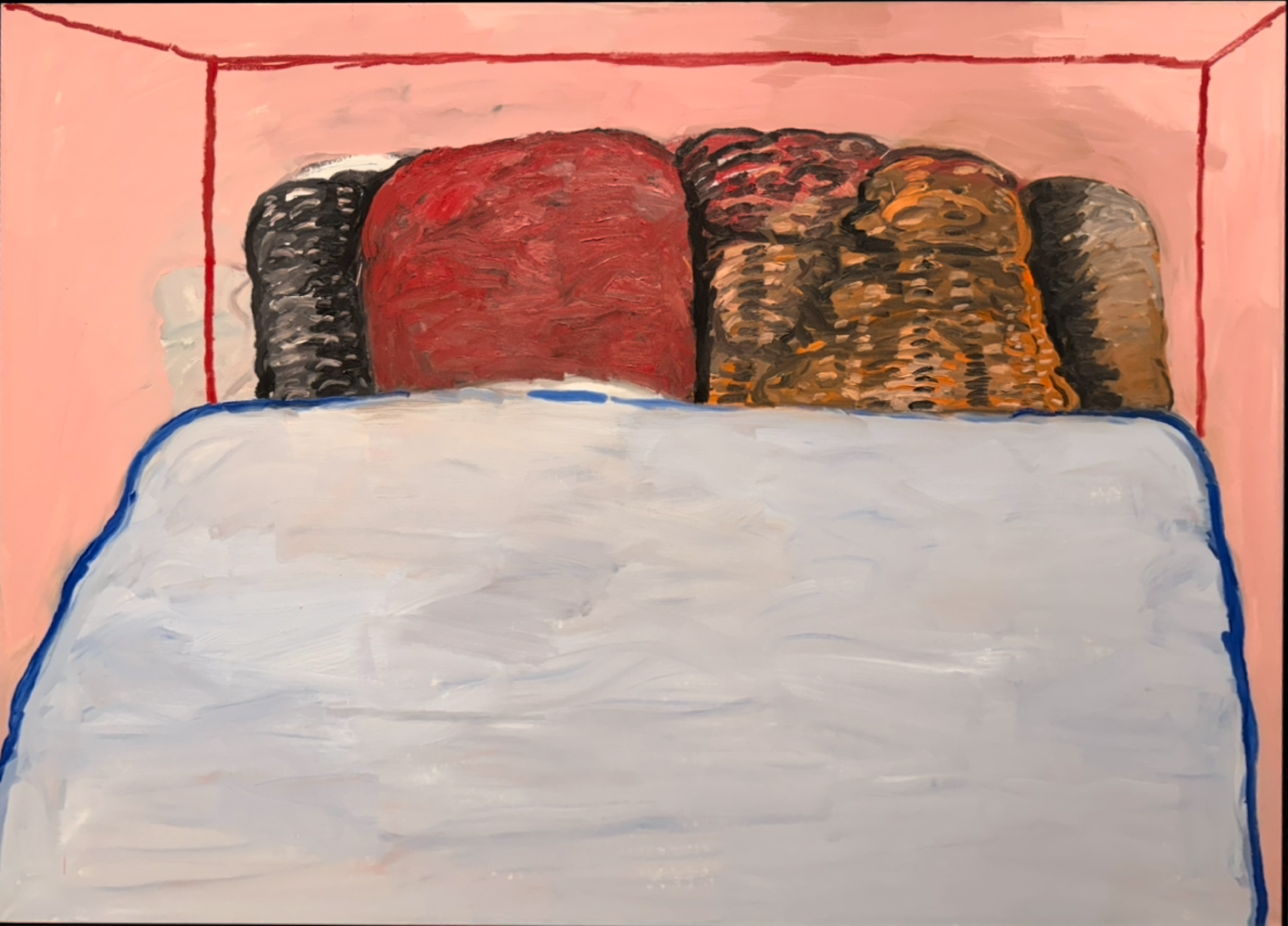
Philip Guston "Blue Cover" (1977)
Mayer called it one of the most important exhibitions of her father's work. The reason, she said, is that it offers the most intimate look at what it was actually like living with him. That intimacy is real and it shows. But the show also does something quietly revisionary, insisting that the domestic life Guston drew from was not just backdrop. Musa McKim was a collaborator in the fullest sense, even if the art world has spent forty years crediting only one name on the canvas.
Life With P.: Philip Guston: Paintings and Drawings 1964–1978 is on view at Hauser & Wirth New York, 18th Street, through July 10, 2026.