From My Heart x The Cultivist
25 Mar 2026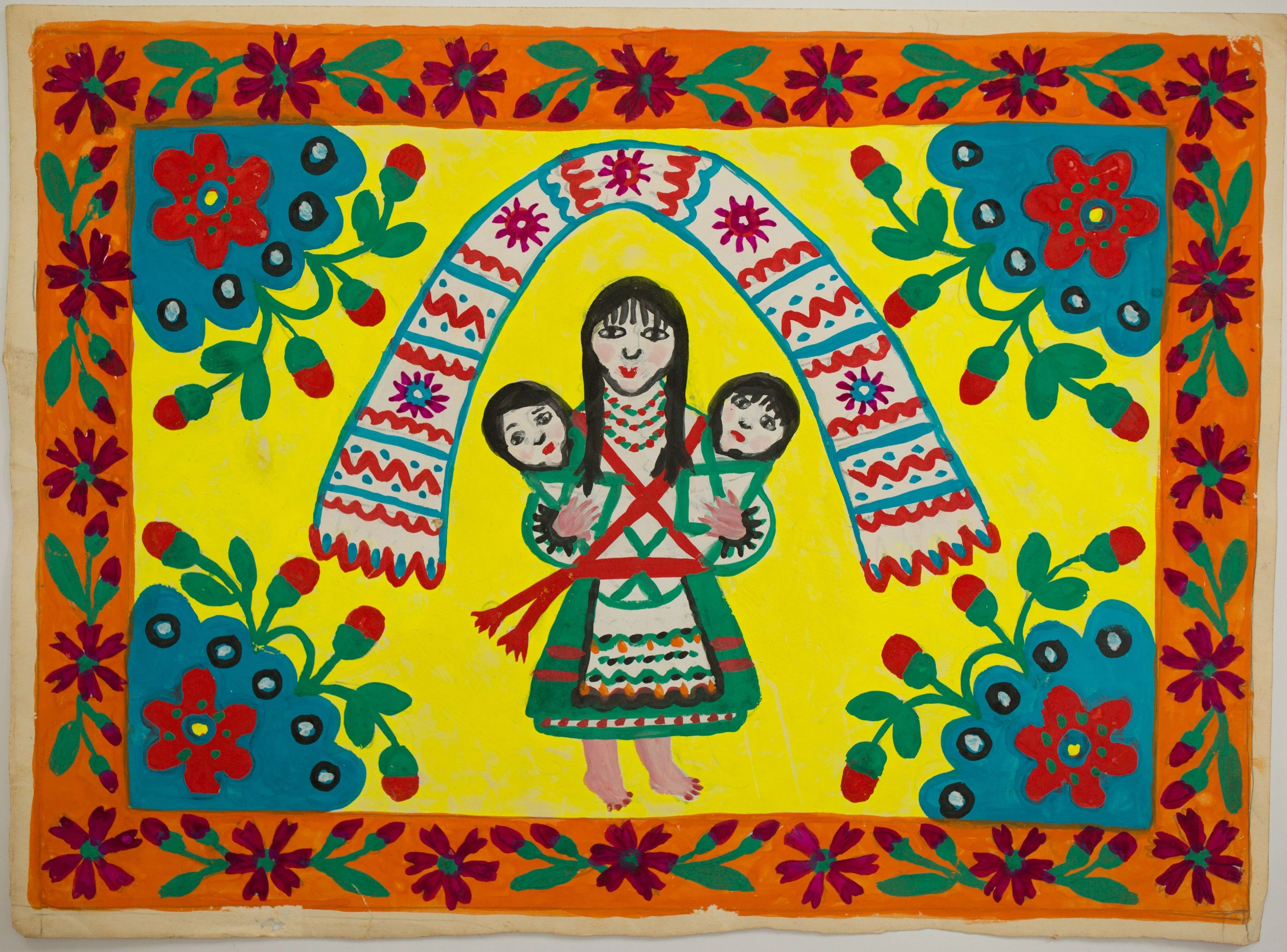
There’s an entire canon of women artists from Eastern Europe whose work has shaped national identities, moved world renowned artists to tears, and survived war, occupation, and erasure. Most of the world has never heard their names. Darya Zorka, writer, artist, and translator behind the Substack newsletter From My Heart, has made it her mission to change that. The Cultivist sat down with her to talk about the women who painted with pressed berries, disguised themselves as men to enter art academies, and create masterpieces that defined their nation’s artistic culture, as well as the labels, misattributions, and blind spots that still stand between their work and the recognition it deserves.
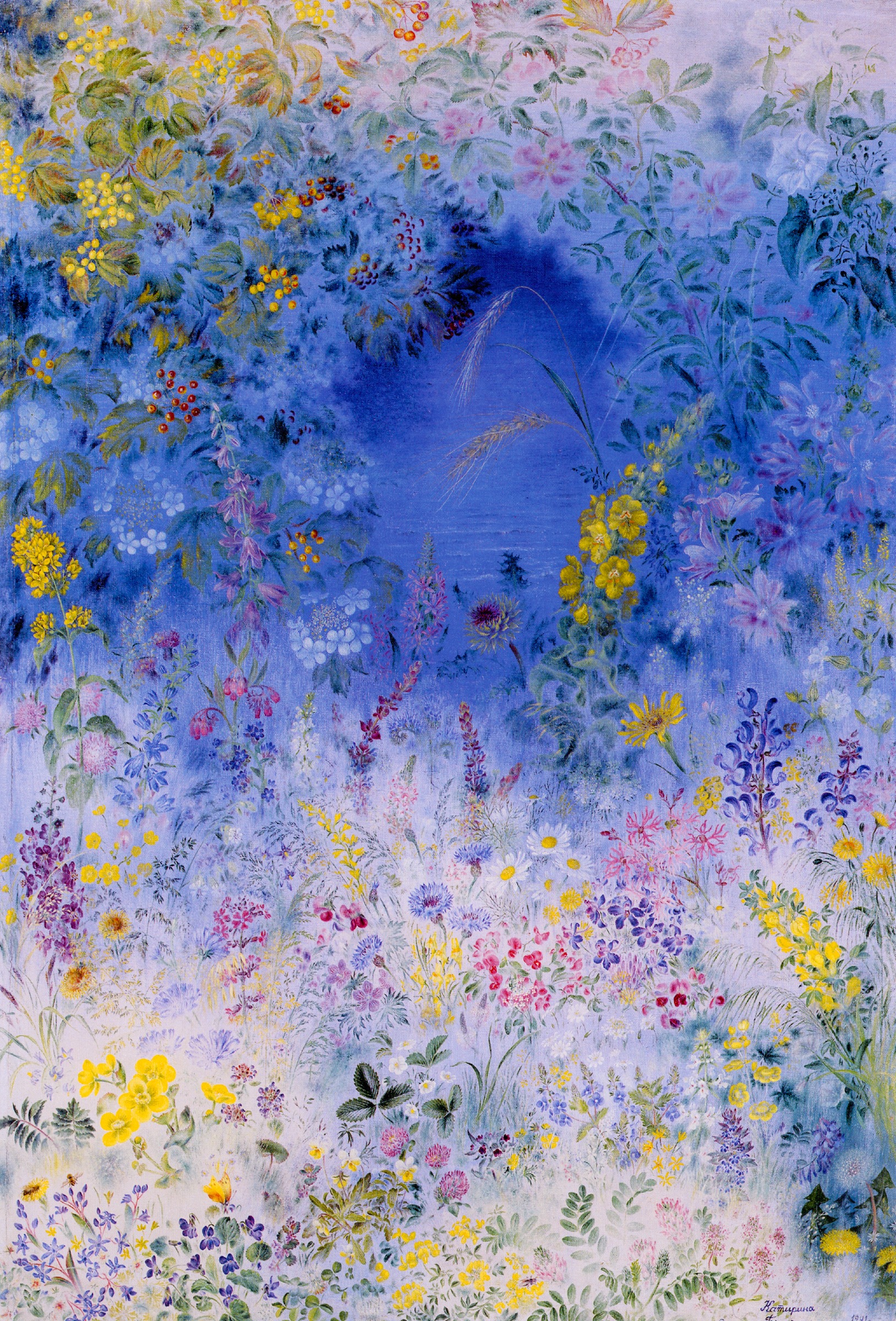
Photo Credits: Kateryna Bilokur “Wildflowers” (1941)
1. Your newsletter, “From My Heart” covers art, literature, history, and food of Eastern
Europe. What first pulled you specifically toward women artists from this region? Was there a single artist or moment that sparked this focus?
I started writing a weekly column on Substack to share my love and knowledge of Eastern European culture and history – a fascinating subject which, unfortunately, remains overlooked. It’s impossible to write about the region without writing about its people, who make it unique and beautiful. At one point, as I was doing research, I came across the painting of Ukrainian artist Kateryna Bilokur, titled “Wildflowers,”(above) and was completely mesmerized by its beauty. Bilokur’s life story, full of hardship but also incredible resilience and talent, struck a chord with me. It made me realize how little the world knows about women like her and how much it loses by ignoring them, and inspired me to share their stories.
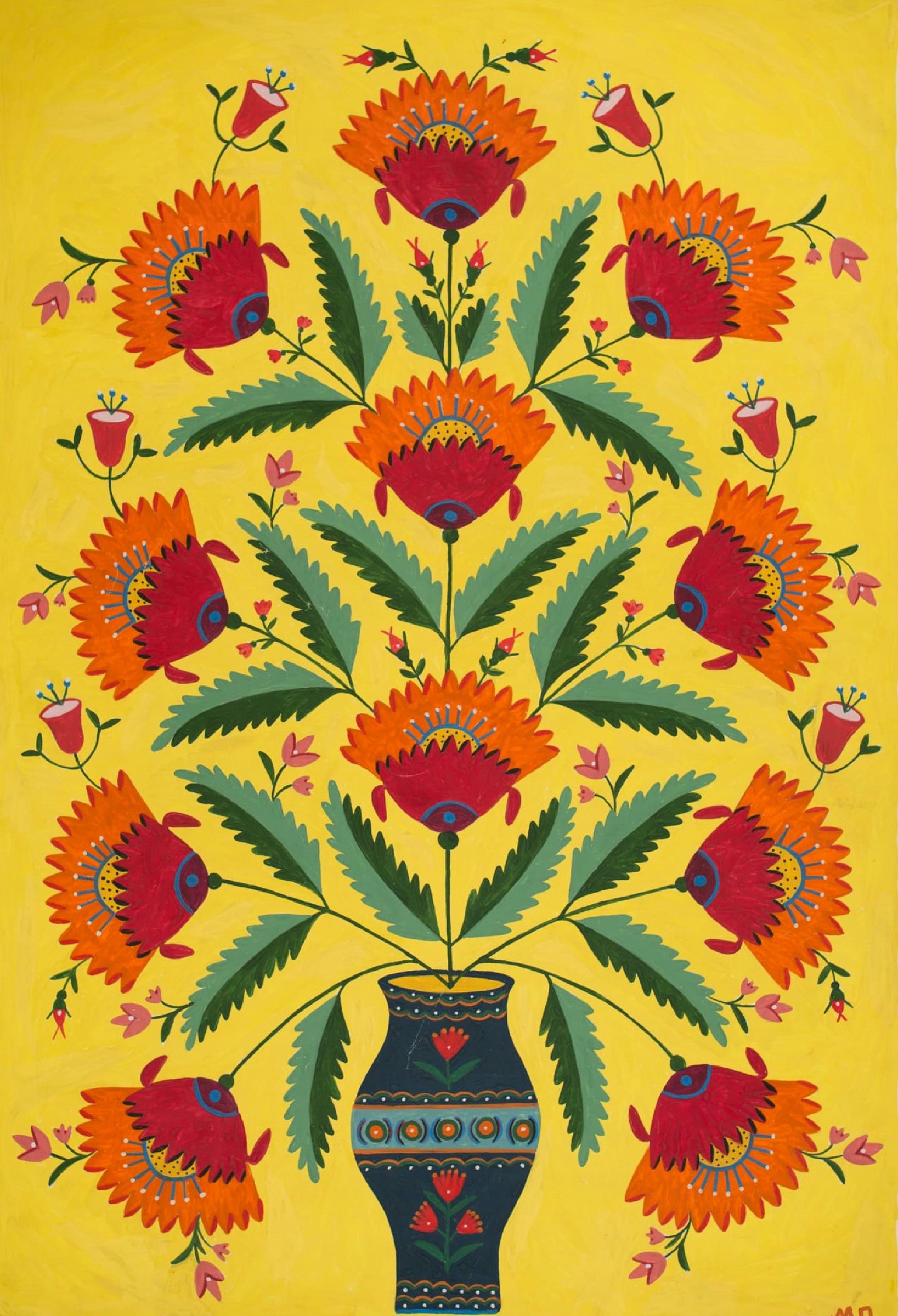
Photo Credits: Maria Prymachenko “Flowers” (1980s)
2. Maria Prymachenko, Kateryna Bilokur, Polina Raiko, Alena Kish, and many other Eastern European women were self-taught. This passion and drive led them to create art using things like cat hair for brushes and pressed berries as paint, and yet many of them are labeled as “folk” or “naïve” artists. Do you think these labels diminish their work? Is there something telling about the fact that these same styles are now considered defining symbols of Ukrainian and Belarusian national identity? What does it mean when a country claims an artist's aesthetic as its cultural soul, while the art world still struggles to take it seriously?
All of these women were born in highly patriarchal societies when their countries suffered from oppression and poverty, and had no support or access to education. Most people would have given up all hopes of becoming an artist in their situation. Yet, they didn’t, and created incredibly beautiful art. In my opinion, the life circumstances that surround their art do not diminish, but, on the contrary, enhance its genius, value, and depth. If only people could view their work free from the stereotypes about their place of birth and gender, they would see a completely different picture.
In 1954, three paintings by Kateryna Bilokur were presented during the Soviet art exhibition at the Louvre in Paris. The Soviet organizers purposely withheld Bilokur’s name and wrote that the paintings were done by “a woman who worked at a collective farm.” It is said that when Picasso saw Bilokur’s paintings, he exclaimed: "If we had an artist of this level, we would have made the whole world talk about her!" The way the paintings were labeled didn’t cloud his judgment at all. I think this is the example we should follow.
Even though the mentioned women artists didn’t receive the acknowledgement they deserved during their lives, I’m glad that Ukraine and Belarus recognize their talent now. Their resilience, strength, and talent are the cornerstones of the Ukrainian and Belarusian cultures, which have been fighting for survival for centuries. Recognizing the agency of these women means recognizing the agency of the countries they represent. It is long overdue for the world to do both.
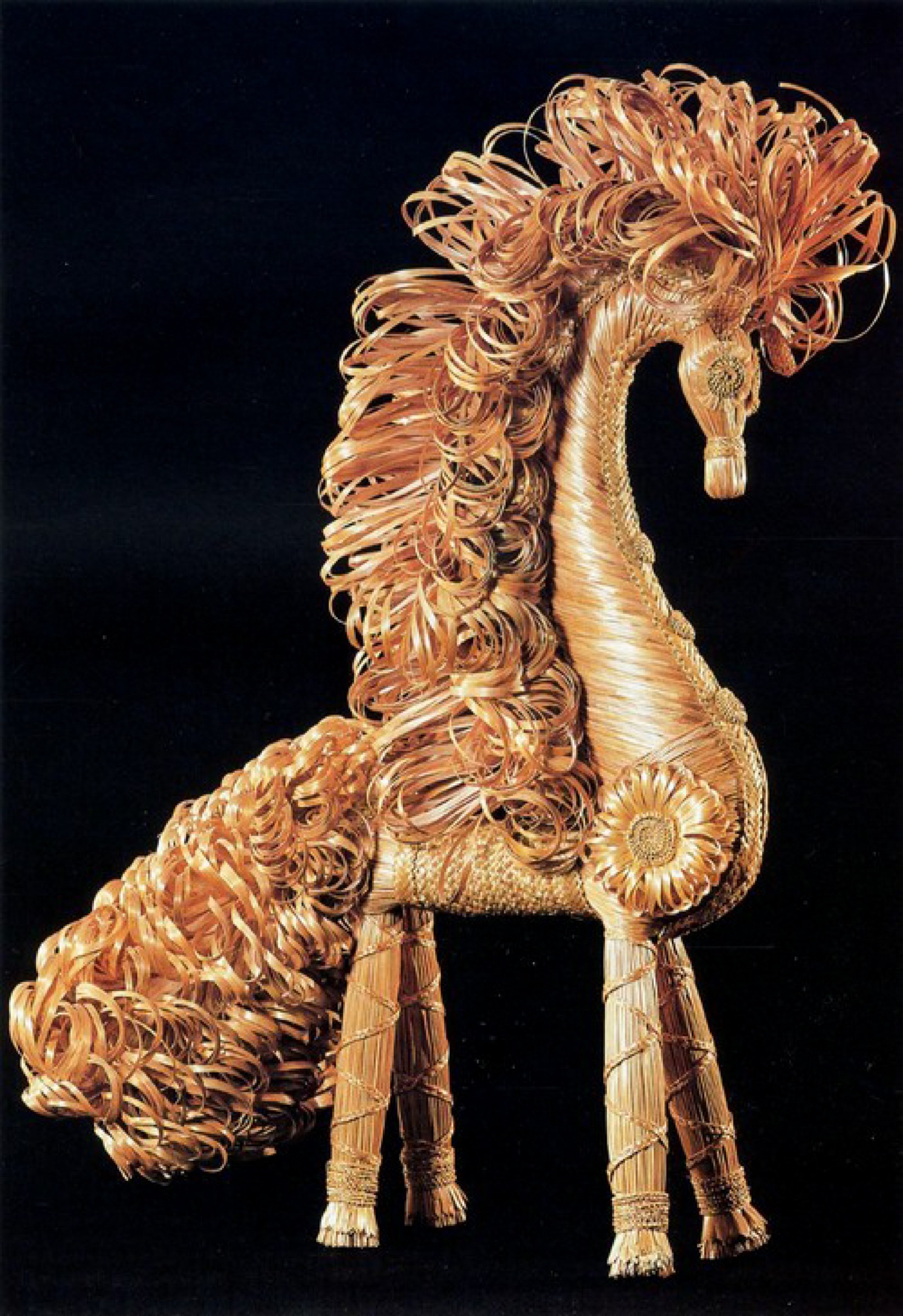
Taisa Ahafonenka (1975)
3. To expand on the styles of these artists, many of these artists practiced traditional artforms: Petrykivka painting, Belarusian straw weaving, Malyavanki carpets. These uniquely Eastern European styles sit at the intersection of folk art and fine art. Do you think that boundary has hurt the recognition of artists like Marfa Tymchenko or Taisa Ahafonenka in the Western understanding of art? Did the artists themselves have alternative labels they preferred?
The problem with the division of art into fine art and folk art is the assumption that one matters more than the other. By doing so, the world deprives itself of so much beauty. Interestingly, the Petrykivka painting and Belarusian straw weaving are recognized by UNESCO as intangible cultural heritage of Ukraine and Belarus, respectively. Yet, the artists who used these techniques remain in the shadows. If you look at the works of Taisa Ahafonenka (above) and Marfa Tymchenko (below), you will see that both of them surpassed the simplicity of folk art.
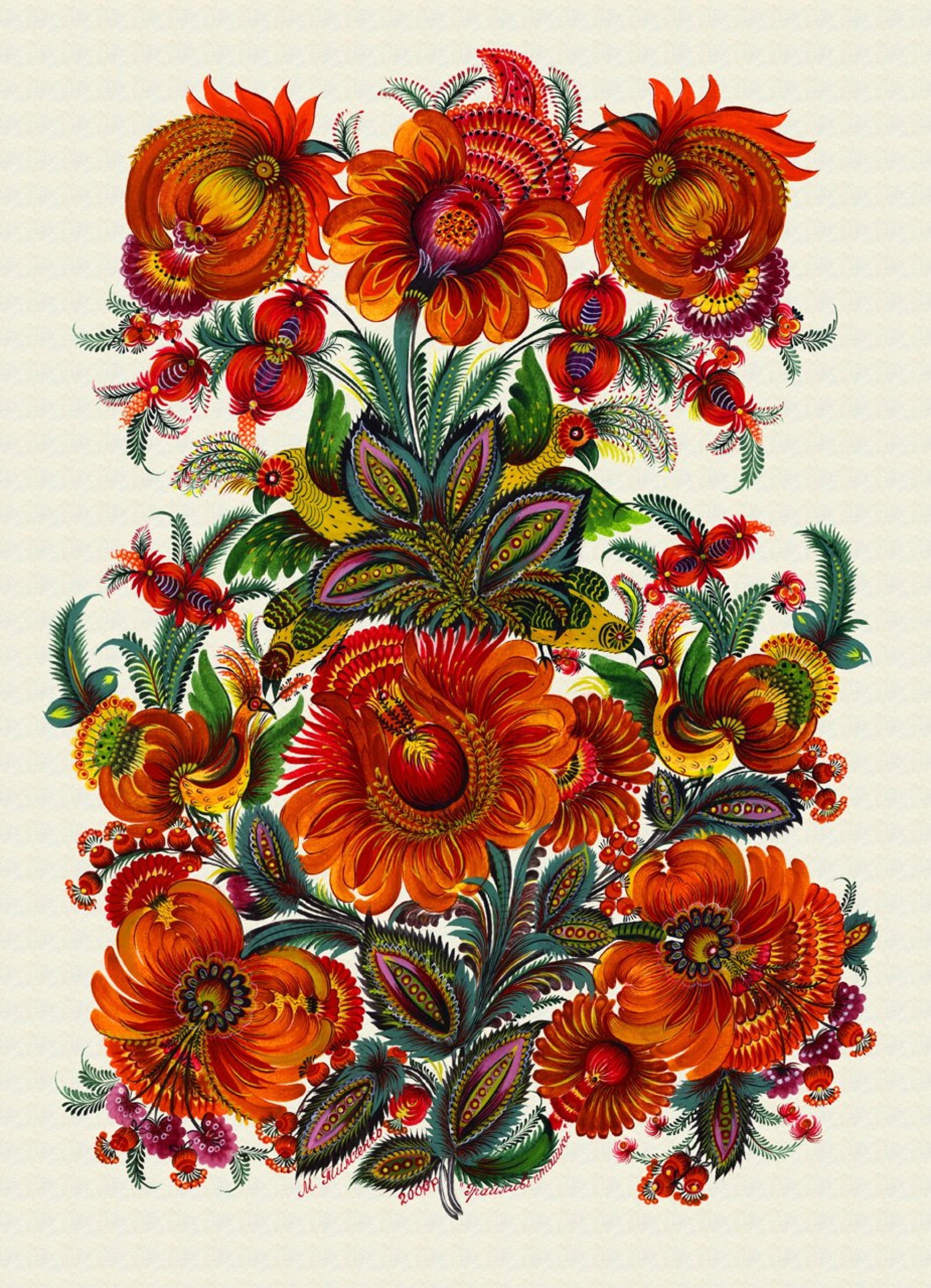
Marfa Tymchenko “Playful Birds”(2000)
Taisa Ahafonenka made spectacular sculptures from simple straw. She developed her own unique techniques and combined them with century-old weaving methods, producing masterpieces. Marfa Tymchenko worked in the Petrykivka style, creating gorgeous paintings full of complexity and emotion, similar to the works that people regard as fine art. The tea sets painted by Tymchenko were gifted to prominent political figures at that time, including Richard Nixon.
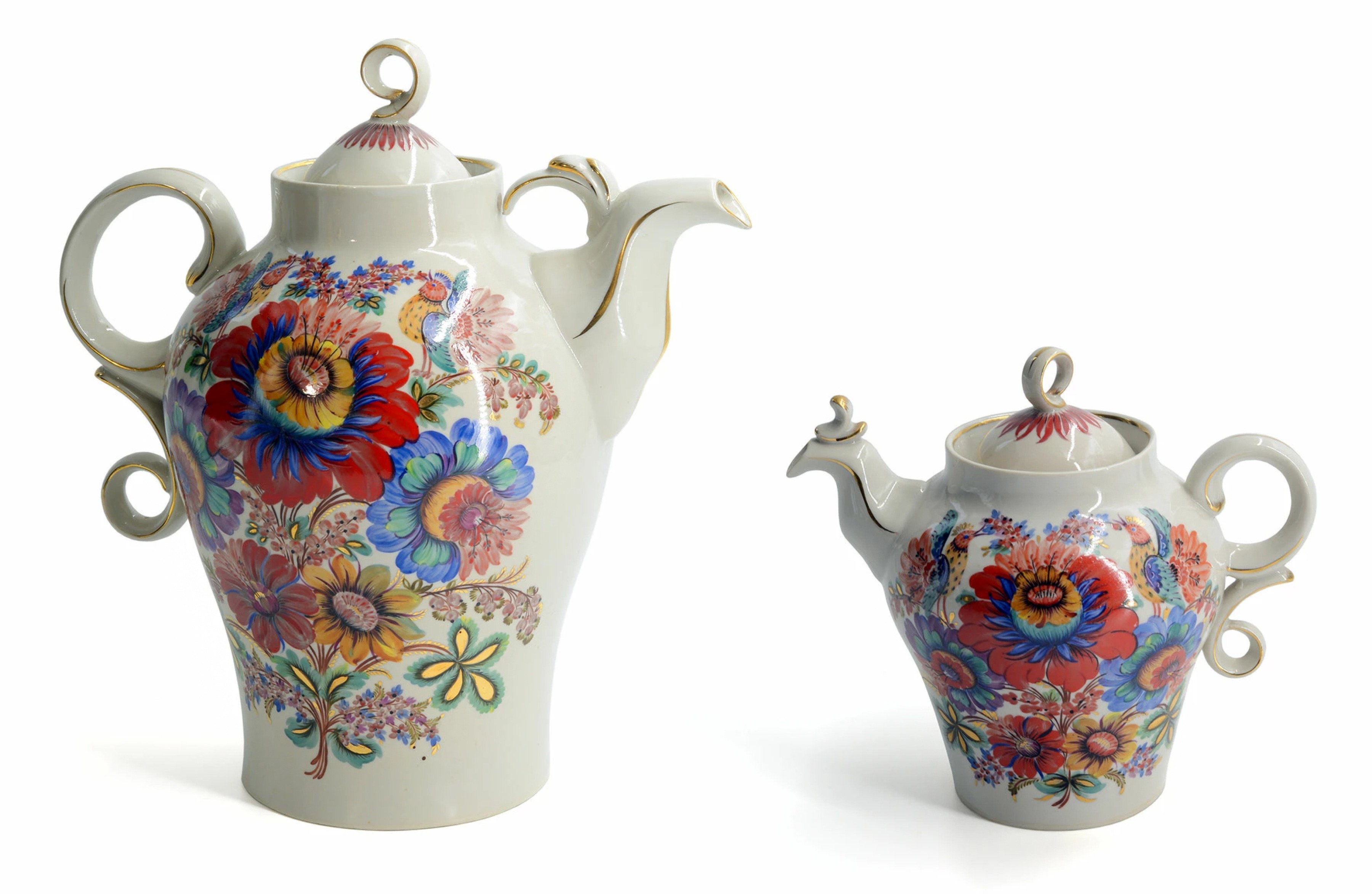
Marfa Tymchenko “Painted Tea Set”
Both women viewed themselves as artists and dedicated their entire lives to art, often making costly sacrifices. They never questioned their art or whether it deserved to be called serious. The questions and labels came from the outside world.
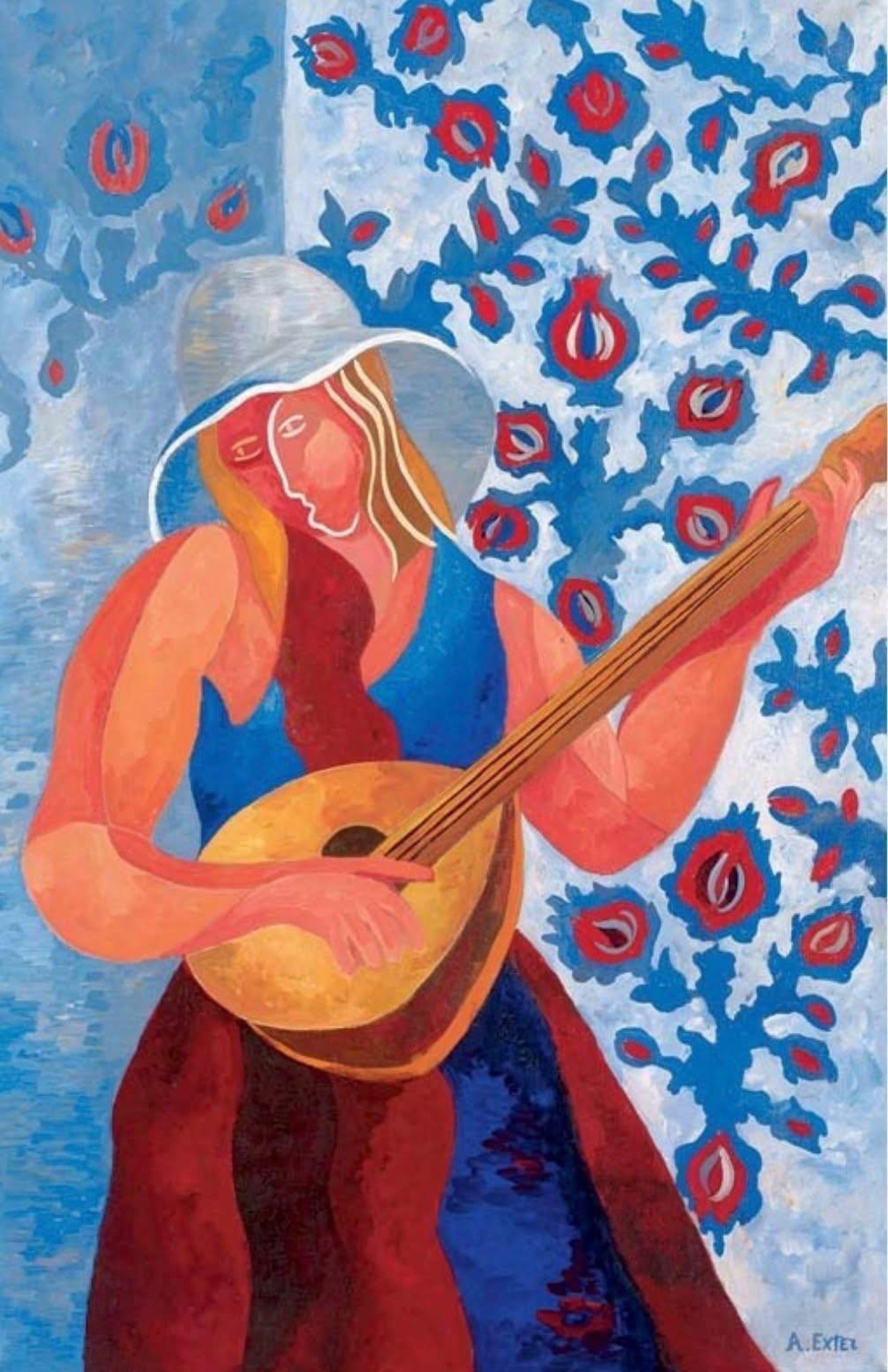
Aleksandra Ekster “Girl with a Mandolin” (1928)
4. Aleksandra Ekster and Sonia Delaunay are often labeled French or Russian artists, erasing their Ukrainian and Belarusian roots. In your continued study of history and culture in this field, do you find this to be a widespread misattribution? Why is it important to address this matter, especially right now?
It’s important to mention that although Aleksandra Ekster's father was Belarusian, she grew up in Ukraine and had always associated herself with Ukrainian culture. She found fame after moving to Paris later in life. However, her Kyiv studio was where she grew as an artist. Sonia Delaunay was born in Ukraine, but after losing her parents, she moved in with her relatives in St. Petersburg. She lived there until leaving for Germany and later France at the age of 18. The work of these artists was heavily influenced by Ukrainian culture. They both worked in avant-garde style, using bold colors and shapes to create harmony and movement. If you are familiar with Ukrainian traditional art and embroidery, you can see where Ekster and Delaunay took inspiration. The artists also mentioned it themselves, yet their Ukrainian heritage continues to be omitted, as if it didn’t exist at all.
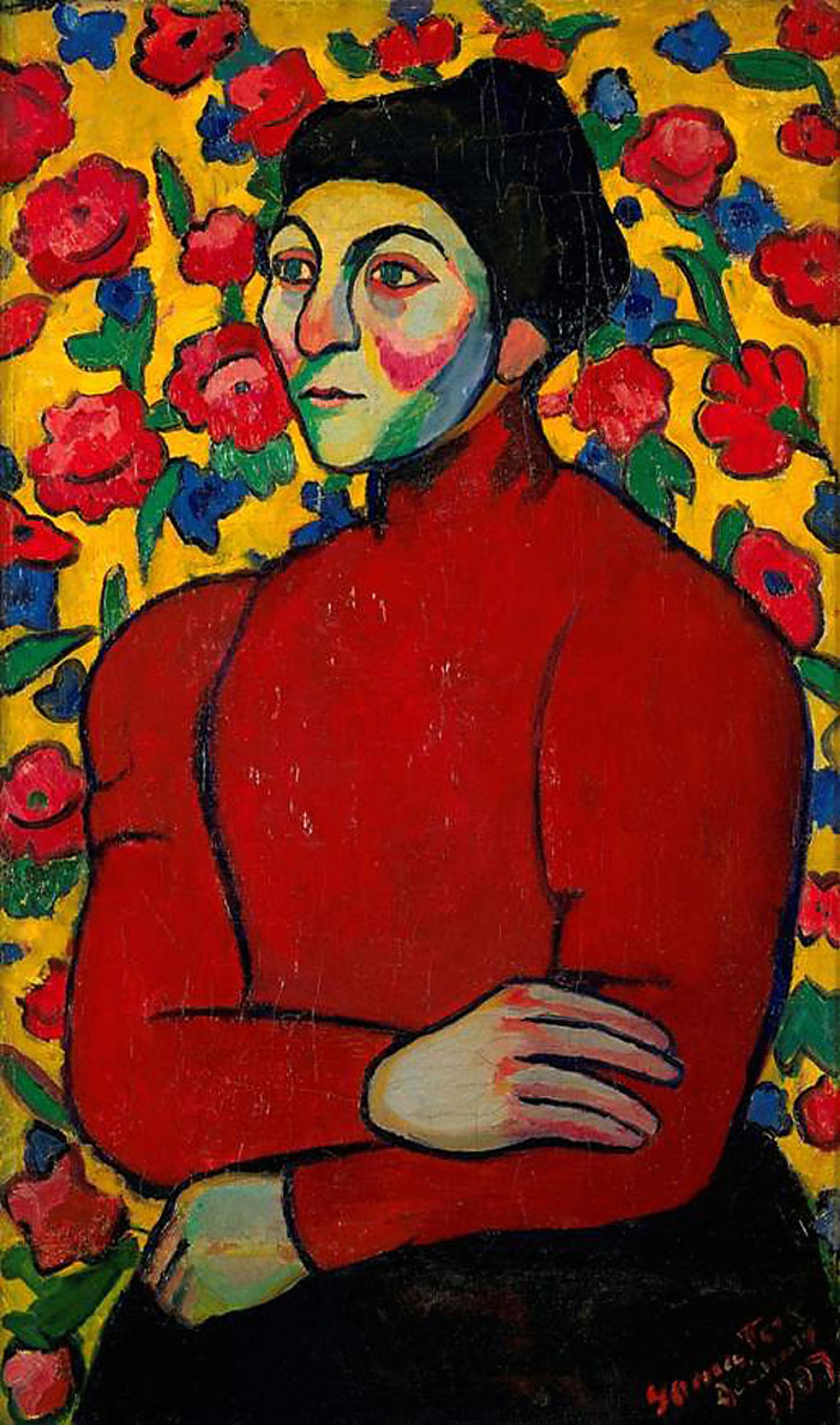
Sonia Delaunay “Philomène” (1907)
Unfortunately, the mislabeling is incredibly widespread. Too many artists who happened to be born during the period of the Russian Empire or the Soviet Union were labeled as Russian and stripped of their national identity. Additionally, many Eastern European women artists of the 19th and 20th centuries moved to Paris, as it was the center of the art world and provided enormous career opportunities. Those who managed to achieve success were labeled as French, while in fact being Ukrainian, Polish, or Belarusian.
The mislabeling of Ukrainian artists feels especially painful as Ukraine fights for survival and preservation of its culture. The continuous misattribution further erases Ukrainian culture and its role in the world. I hope that more people will start paying attention to cultural appropriation, as we can change something only after acknowledging it first.
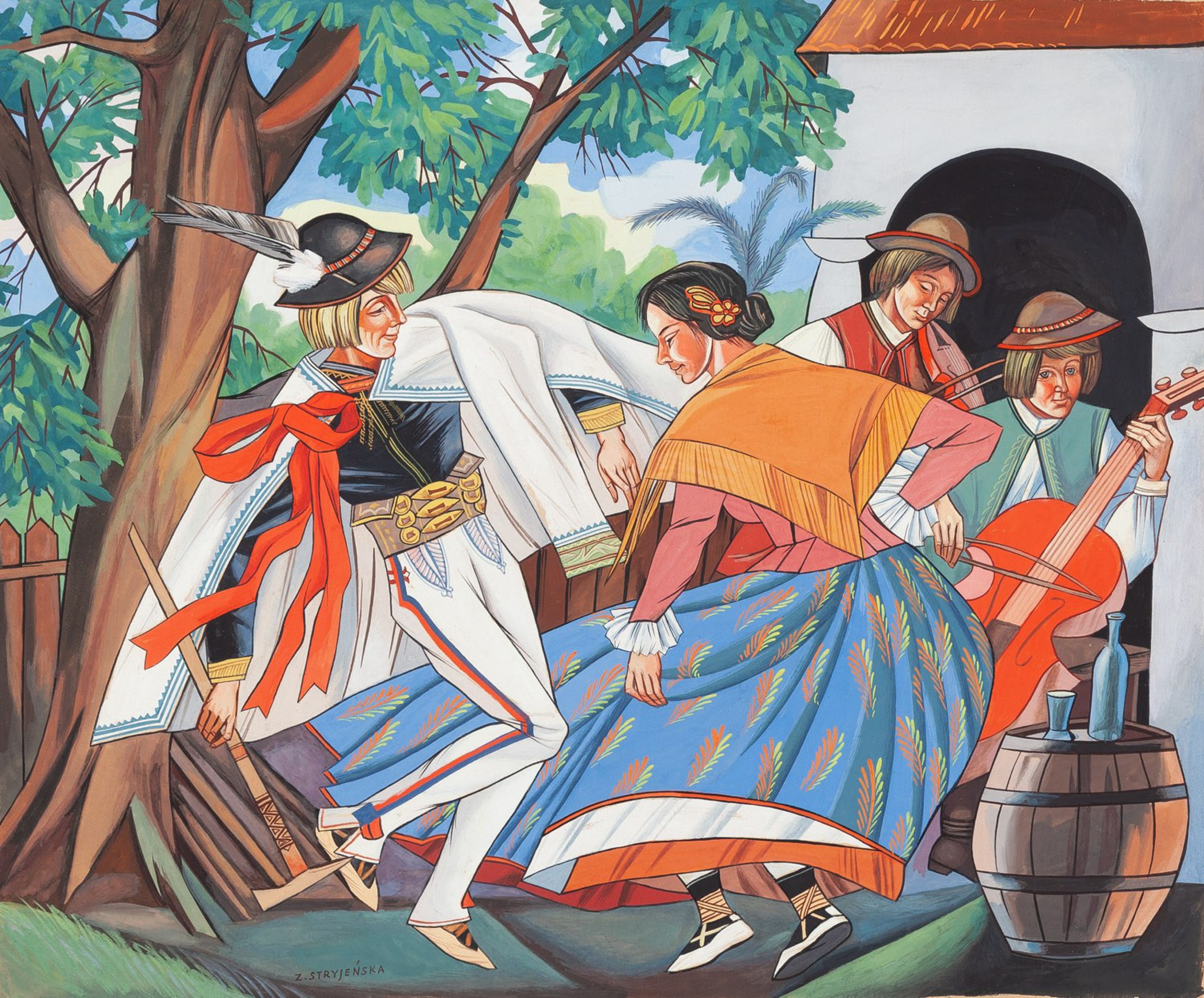
Zofia Stryjeńska “Highlander Dance” (post 1947)
5. Zofia Stryjeńska disguised herself as a man to study at the Munich Art Academy. How long did she have to disguise herself to practice her art? How did removing her disguise affect her work afterwards?
It’s a very interesting story! Zofia Stryjeńska was born in Poland at the end of the 19th century and, since childhood, dreamed of becoming an artist. Yet, women were not allowed to study at the prestigious art academies. Stryjeńska refused to accept it and decided to receive the proper art education. She cut her hair, put on men’s clothes, and used her brother’s documents to enter the Munich Academy of Fine Arts. She attended the classes for the entire year, until her cover was blown, and she was expelled. It’s hard to imagine how much courage and passion for art it took to go against the system and oppressive rules the way Stryjeńska did.
After being expelled, Zofia Stryjeńska returned to Poland. Equipped with the knowledge and the work she produced at the academy, she held her first exhibition. Ten years later, her paintings for the Polish pavilion won four awards at the International Exhibition of Modern Decorative and Industrial Arts in Paris. This success helped her build an art career in Poland, yet she remained unrecognized beyond its borders. Stryjeńska created her paintings in Art Deco style, and they were heavily influenced by Polish folklore, which was her main inspiration. Maybe the fact that she placed folklore at the center of her art was the reason for the bias towards her work. As we discussed earlier, Eastern European women artists whose work was swept under the label of “folk art” struggled to be taken seriously.
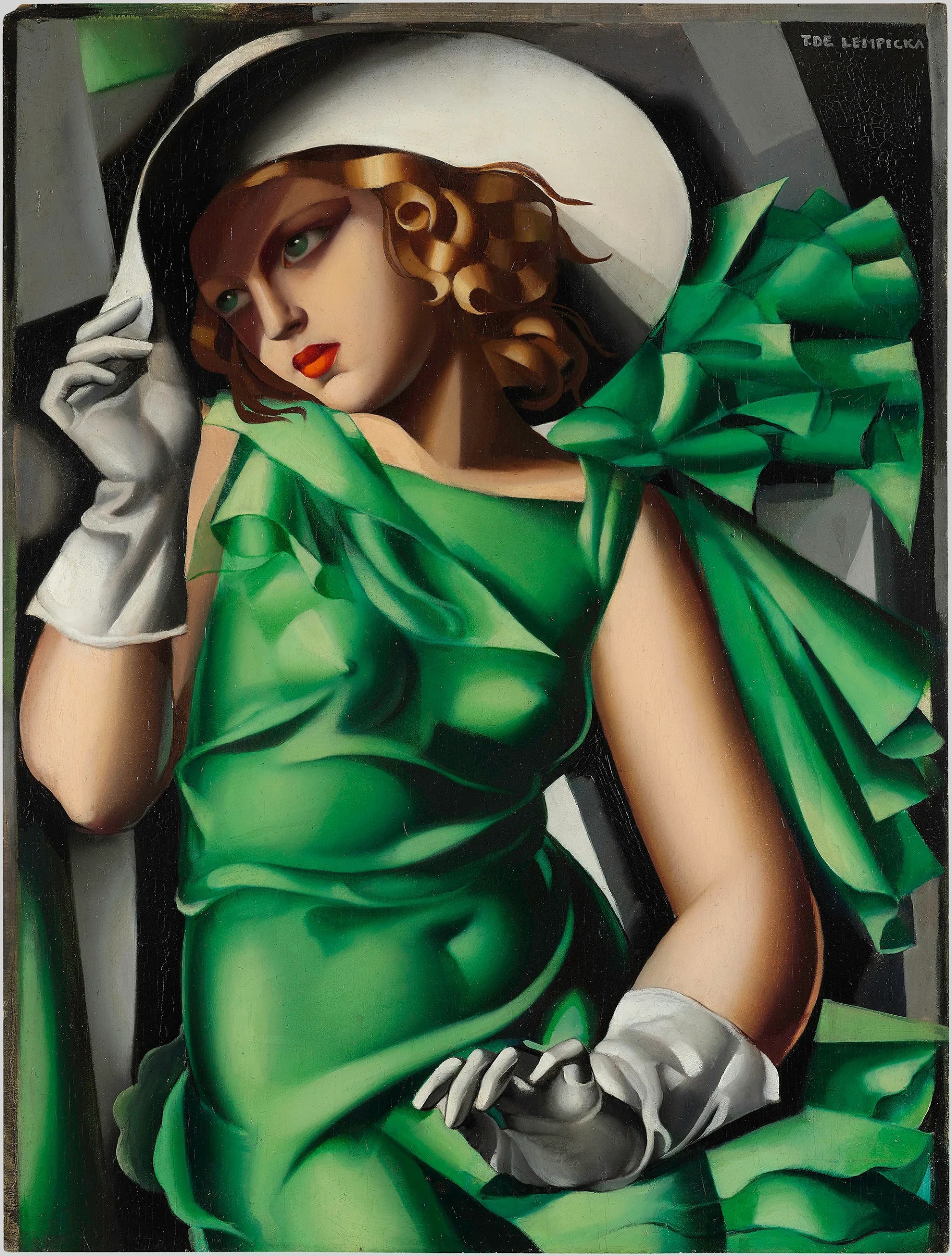
Tamara de Lempicka, Young Woman in Green (1927–30). © 2023 Tamara de Lempicka Estate, LLC
6. Tamara de Lempicka is probably the most globally recognized name on this list, in part due to the fact that she was the daughter of an attorney for a French Trading Company. How does her class affect her rise to fame, relative to the other women we’ve talked about? What opportunities did she have that allowed her to become as well known as she is?
I love the story of Tamara de Lempicka, as she was absolutely fearless and unstoppable! Of course, Eastern European women artists who were born into wealthy families had more opportunities to pursue art. However, it doesn’t mean that there were no challenges, as they still faced the same stereotypes and discrimination, and had to fight for their place in the world.
Tamara de Lempicka was one of those fortunate women who had money and family support from the beginning. Lempicka studied in Paris and travelled to Italy to study the works of the Renaissance masters, whom she admired. Her unique style, which combined tradition and modernism, won the hearts of the Paris bourgeoisie and made her one of the most famous Polish painters. She painted boldly and bravely, mostly nudes, not afraid of condemnation. For a very long time, women artists were forbidden to paint from live models during classes, as it was viewed as highly inappropriate. The fact that Lempicka made nude portraits her signature style speaks volumes about her bravery. She had a highly successful career both in France and the U.S., and I wish more Eastern European women artists had the opportunity to reveal their talent like that.
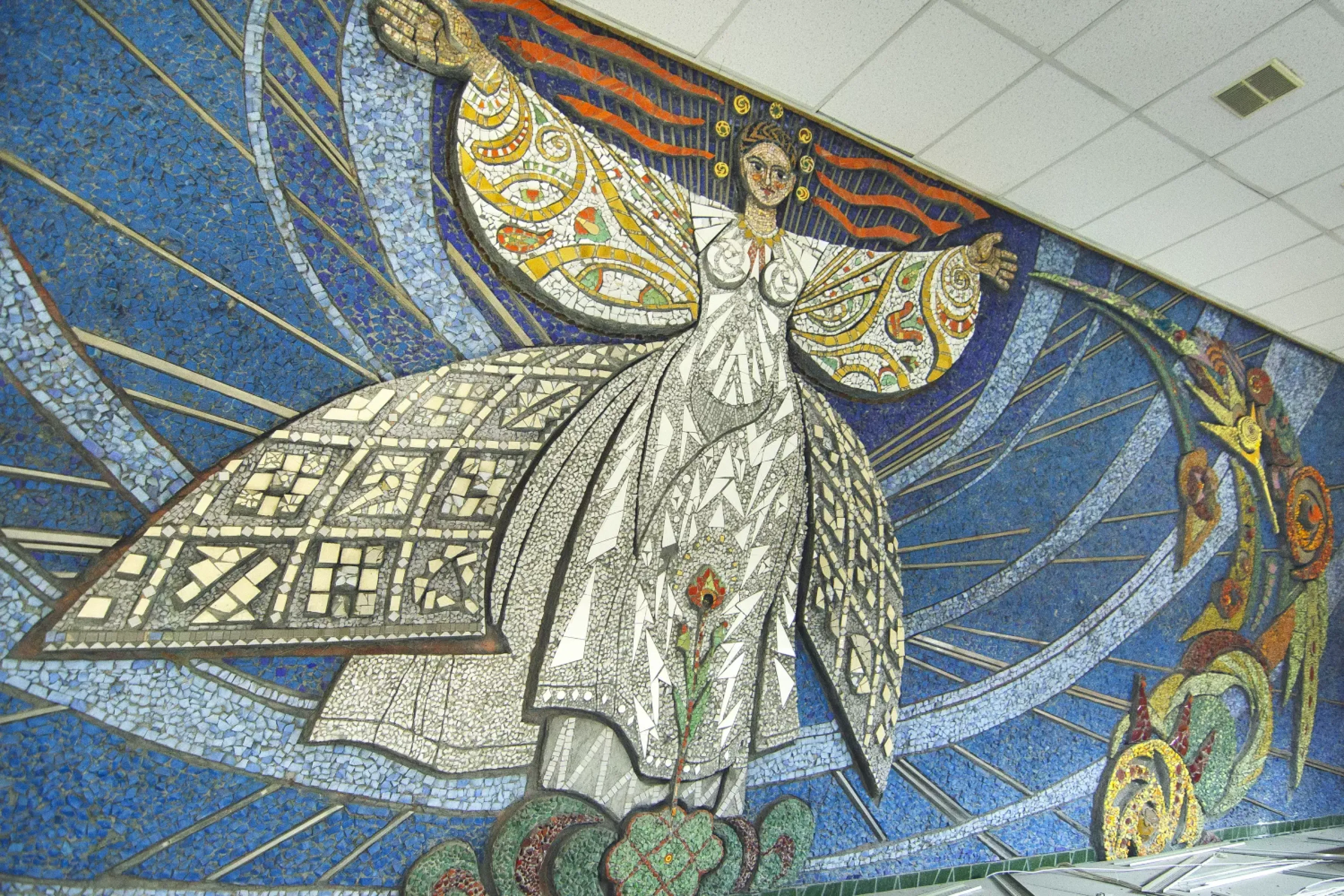
Alla Horska “Blossoming Ukraine”(1968)
7. Alla Horska was killed for her activism in 1970. Lyubov Panchenko died in Bucha in 2022. These aren't just art historical footnotes, they're recent tragedies, and quite politically charged. How do you hold the weight of that when you're writing about these women?
While writing about women like them, and all others whose voices were silenced, I think it is very important to be honest about what led to their deaths. Alla Horska was murdered by the KGB, Soviet secret police, for shedding light on the crimes of the Soviet regime and the erasure of Ukrainian culture. Lyubov Panchenko, who dedicated all her life to protecting Ukrainian culture as well, died from hunger during the Russian occupation of Bucha, which later would become known as the Bucha massacre. Even though the deaths of these women are 50 years apart, they share the same perpetrator and the same struggle over Ukrainian cultural identity and sovereignty. It is important to give this context, not only to honor them but also to fully understand the magnitude and importance of their work and legacy.
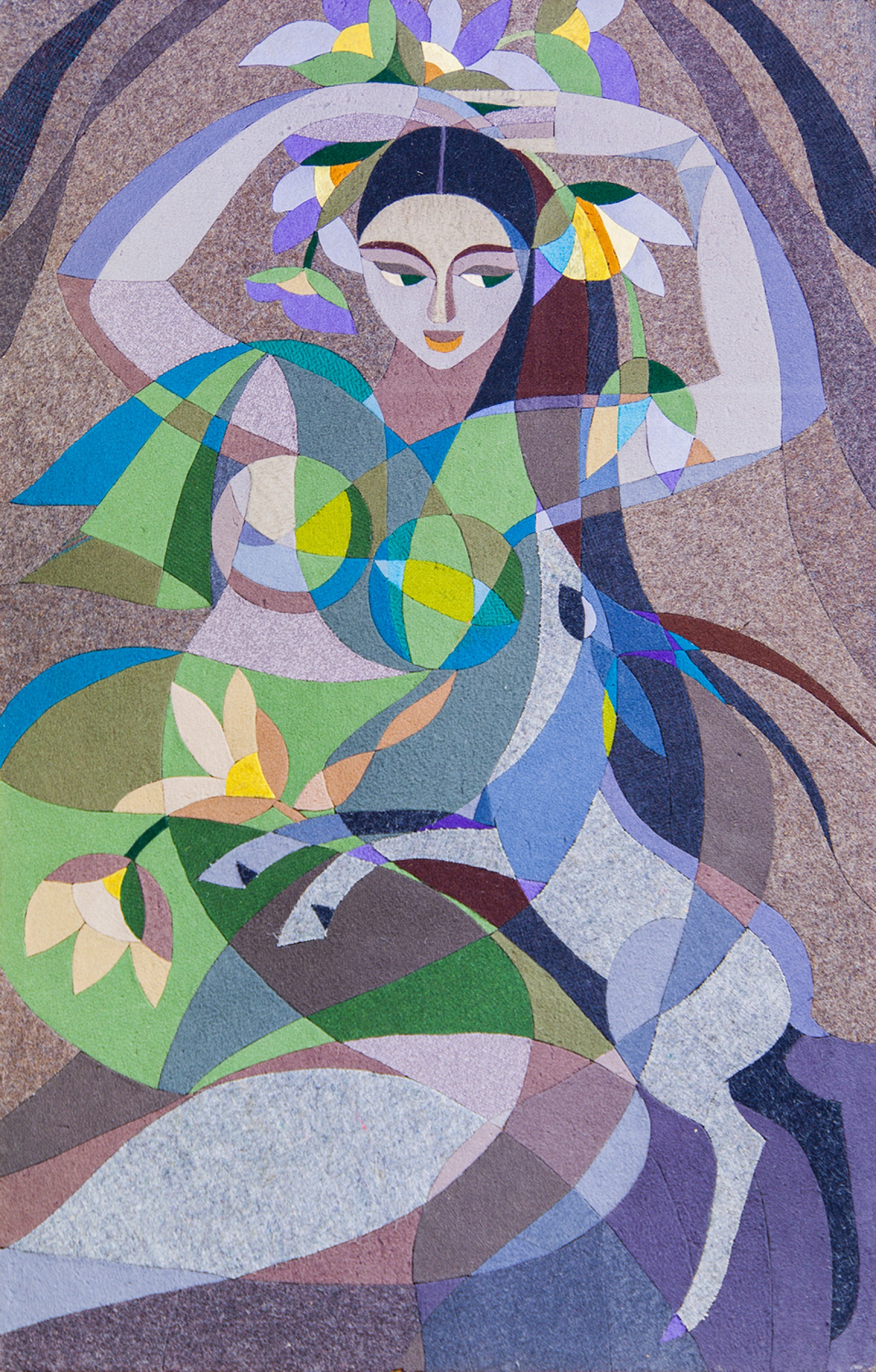
Lyubov Panchenko “Lily” (1960s)
8. You’re a writer, an artist, and a translator. As someone who moves between languages and disciplines, how does that shape the way you approach recovering stories that were often suppressed, forgotten, or simply never told in English? How long do you spend researching the subjects of your writing?
I grew up in the world that produced these stories, and it lets me see them not only through an academic but also through a personal perspective. The stories I recover are not foreign to me. They mirror the experiences of my family members, as the entire Eastern European region went through similar struggles, wars, and oppression. The way I relate to these stories helps me write better about them. It makes me a better researcher, too, as I intuitively know where to look for the answers and how to interpret them correctly. I usually spend several weeks to months working on an article. It largely depends on the scale of the project and how difficult it is to find the information, which is usually not easy.
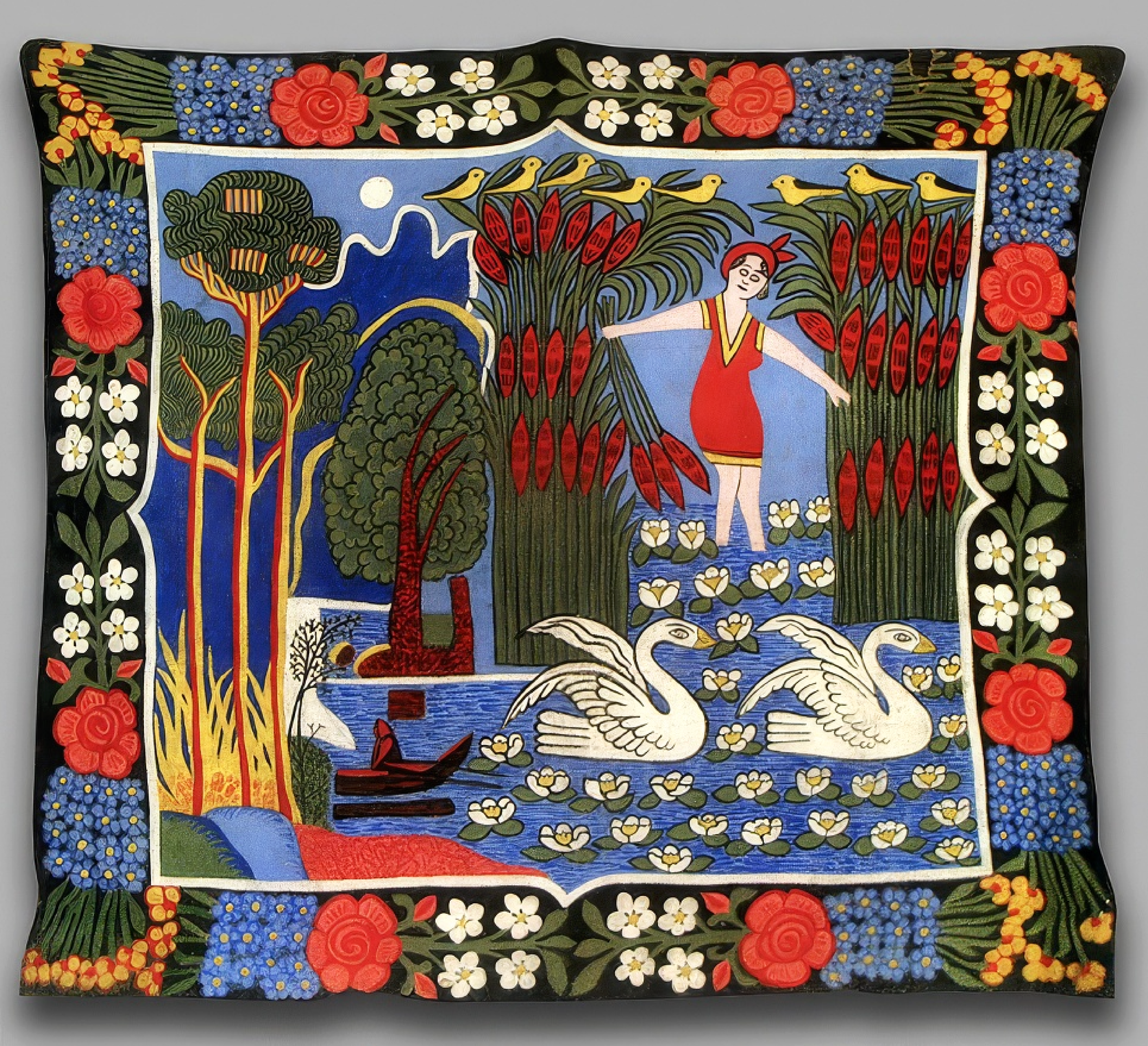
Alena Kish “A Girl by the Water” (1930s-40s)
9. For someone who wants to start exploring this world, whether through museums, archives, or just reading, where would you send them first? Is there a single artist, exhibition, or resource that's the best entry point?
I think this article is a good entry point to get acquainted with the names! The majority of the paintings and exhibitions of the Eastern European women artists are held in their native countries, and visiting them is often the only way to see them. I wish their work were presented better internationally, but unfortunately, it is still largely inaccessible to the Western audience. I believe it could change if people start giving museums feedback that they are interested in Eastern European art.
Overall, there are several Ukrainian and Polish museums in the U.S., Canada, and Western Europe. Such as the Ukrainian Museum in NYC and the Polish Museum of America in Chicago. The names and addresses of other museums could be found through an online search. There are also rotating exhibitions of Eastern European art, mostly in Europe. Unfortunately, Belarusian art remains the hardest to find in the West.
The scarcity of available resources is why I started my newsletter, hoping to bridge the existing cultural gap. Stories of the artists from Eastern Europe teach us invaluable lessons and enrich our lives in a unique way, and I wholeheartedly believe they deserve greater recognition in the world.
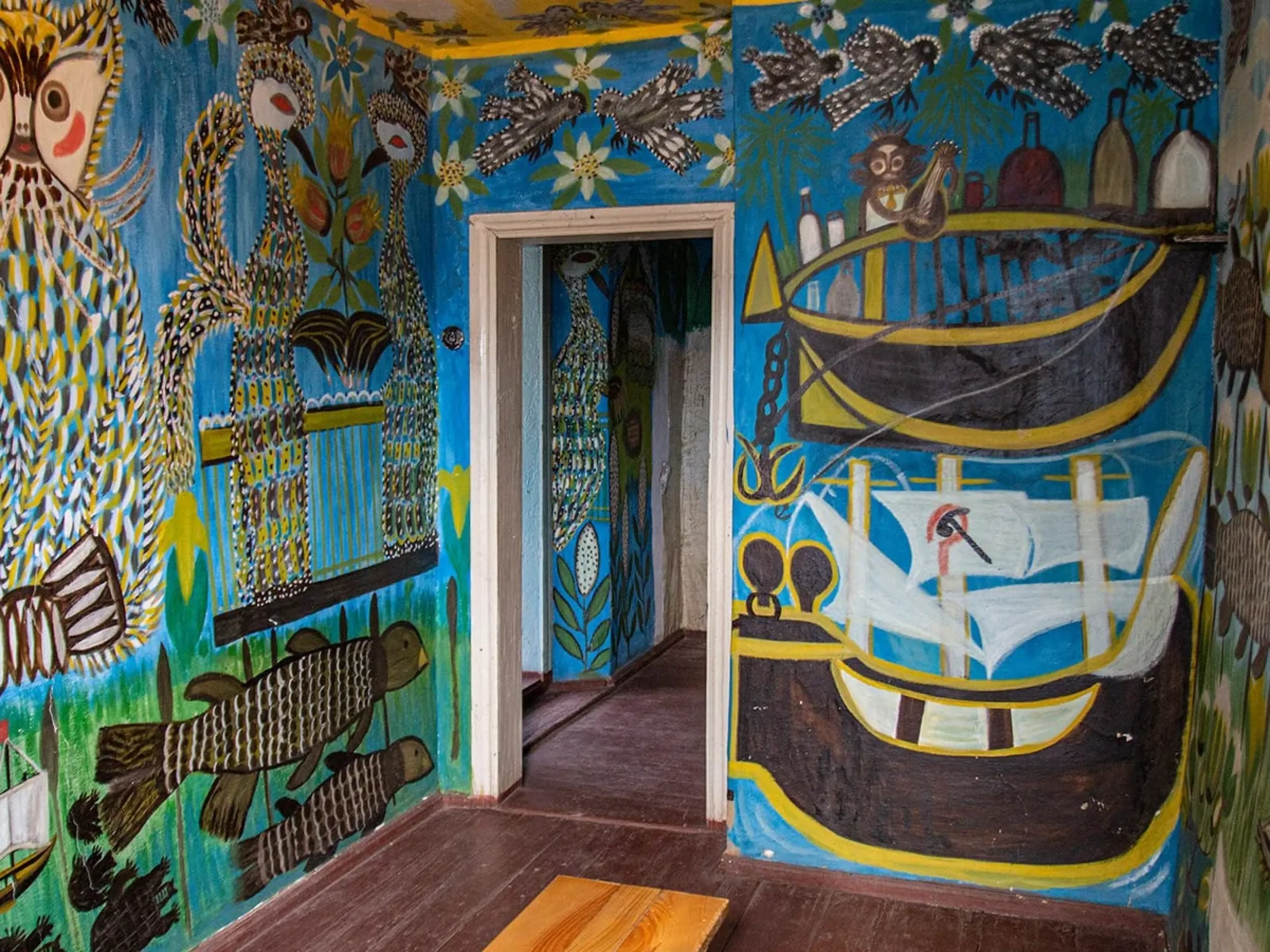
Polina Raiko - Room in her home, entirely painted. (1998-2004)
If Darya’s answers leave you with one clear takeaway, it’s this: the gap between these artists and the recognitions they deserve isn’t a matter of talent, it never was. It’s always been a matter of access, attribution, and attention. For those that want to go deeper, Darya’s newsletter From My Heart is exactly the kind of resource she wishes had existed when she started looking: a bridge between Eastern European culture, and the Western audiences would have been missing out on it.