Cultivist Conversations with Zeng Fanzhi
11 Nov 2026
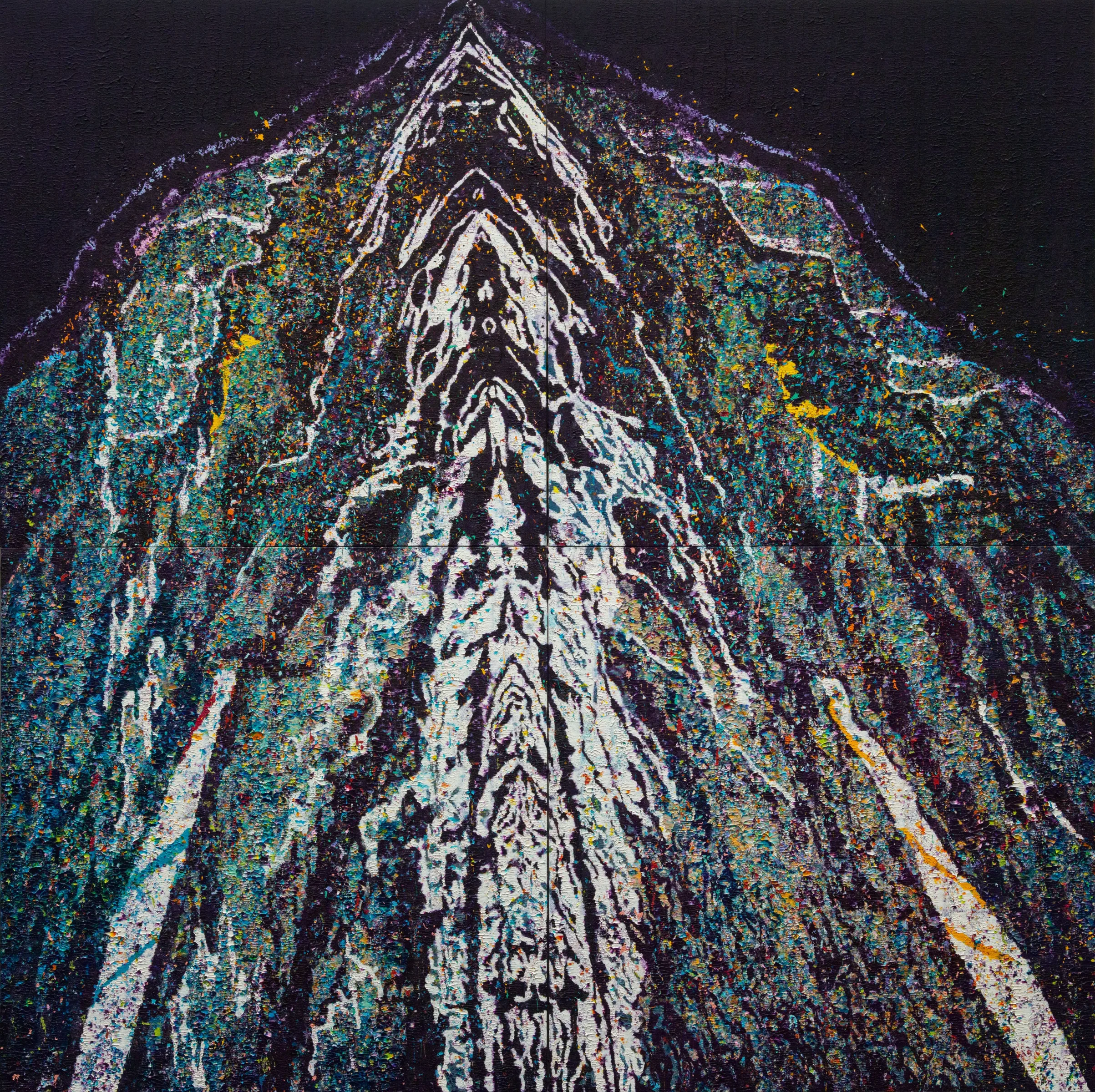
This season at Hauser & Wirth's 22nd Street Gallery, Zeng Fanzhi returns to New York City for the first time since 2009. His self titled exhibition is showing eight paintings and one sculpture, all made within the past two years. From across the room, the canvases seem like rugged, otherworldly landscapes under pitch-black skies. Up close, they break apart into dense fields of color. We asked him about his process, where these imagined worlds come from, and how one of the paintings became a towering blue onyx sculpture.
Zeng Fanzhi "Untitled" © Zeng Fanzhi (2024 - 2025) Courtesy the artist and Hauser & Wirth
This is your first New York exhibition in over a decade. What has changed most in your work since you last showed here, and what did you want this show to say to a New York audience?
This exhibition features eight paintings and one sculpture, representing my most recent works from the past two years. The imagery and the subject matter are abstract, while giving form to my imagination of ancient civilizations or a posthuman era. These works also reveal how I understand the Eastern and Western paintings within the broader course of art history.
Compared with over a decade ago, my artistic instinct has become sharper, and my command of painting has deepened. I am more confident in my work. In recent years, I have made endless attempts at both the macro and micro levels. I hope these works will encourage viewers to linger before the canvases, to immerse themselves in sustained viewing, and to recognise that painting, as one of the oldest creative mediums, remains profoundly dynamic today and will continue to be so in the future.
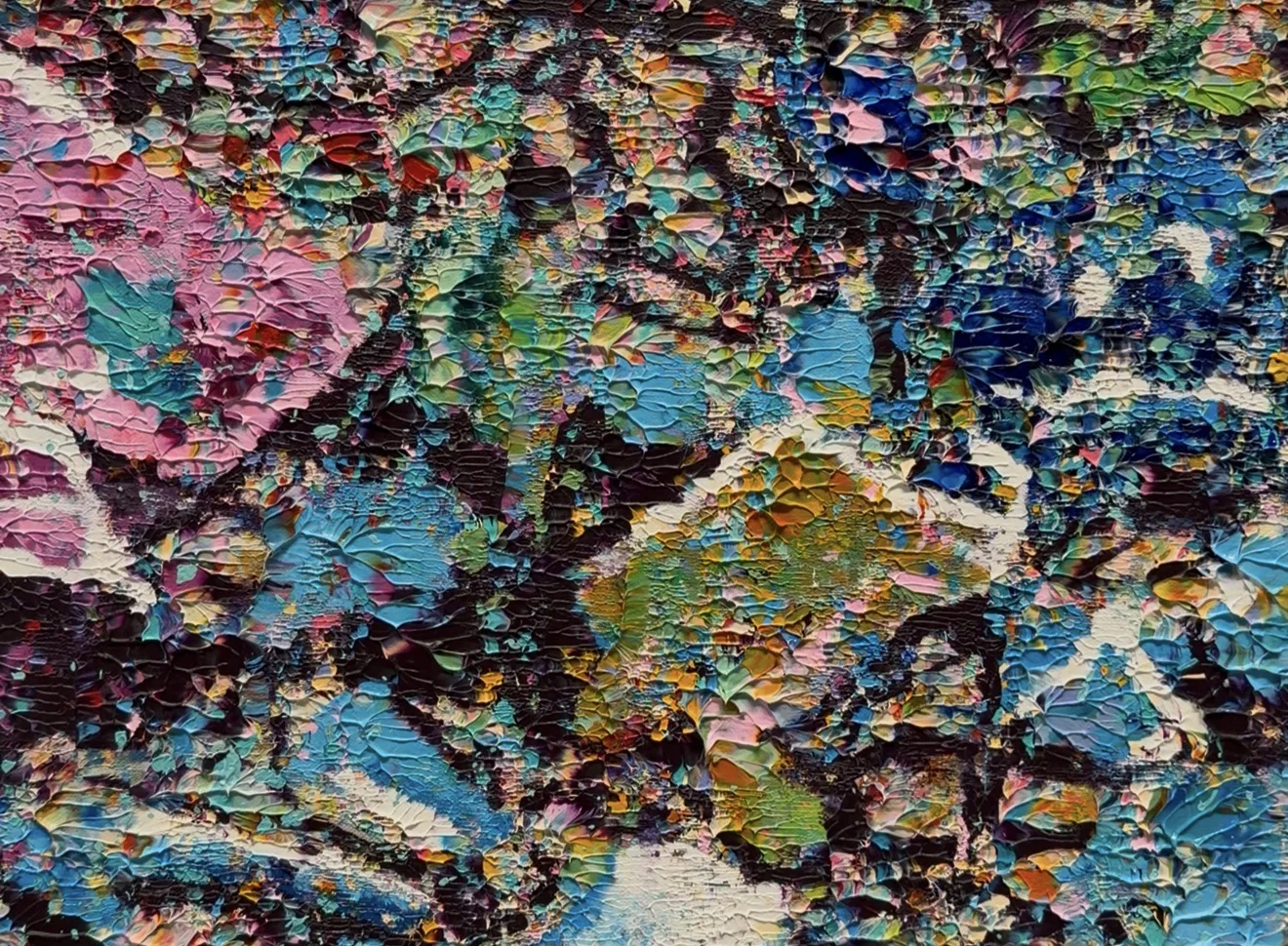
Zeng Fanzhi "Untitled" (2024-2025) (detail) © Zeng Fanzhi. Photo by Julian Weber
You work wet on wet with several brushes at once, each new layer disturbing the one still drying underneath. How did you arrive at this method, and as you’ve deliberately given up some control, how do you know when a painting is finished?
Almost everything on the surface, including the random elements, is premeditated. At the same time, there is some room for spontaneity in the color composition. During that process, I feel free and released, yet the overall outcome remains largely under my control.
Before painting, I always spend a long time meditating in front of the canvas. I rehearse every step in my mind. Once the painting begins, I no longer obsess or hesitate over any particular step. The entire process is like playing chess: you cannot pause mid-game to think about where you are, yet you know precisely which move you are on, right through to the end.
This approach carries forward certain principles from my previous work, while allowing for further attempts and experimentation in brushwork, composition, and color structure. This method did not emerge from nowhere; it was developed from my earlier practice.
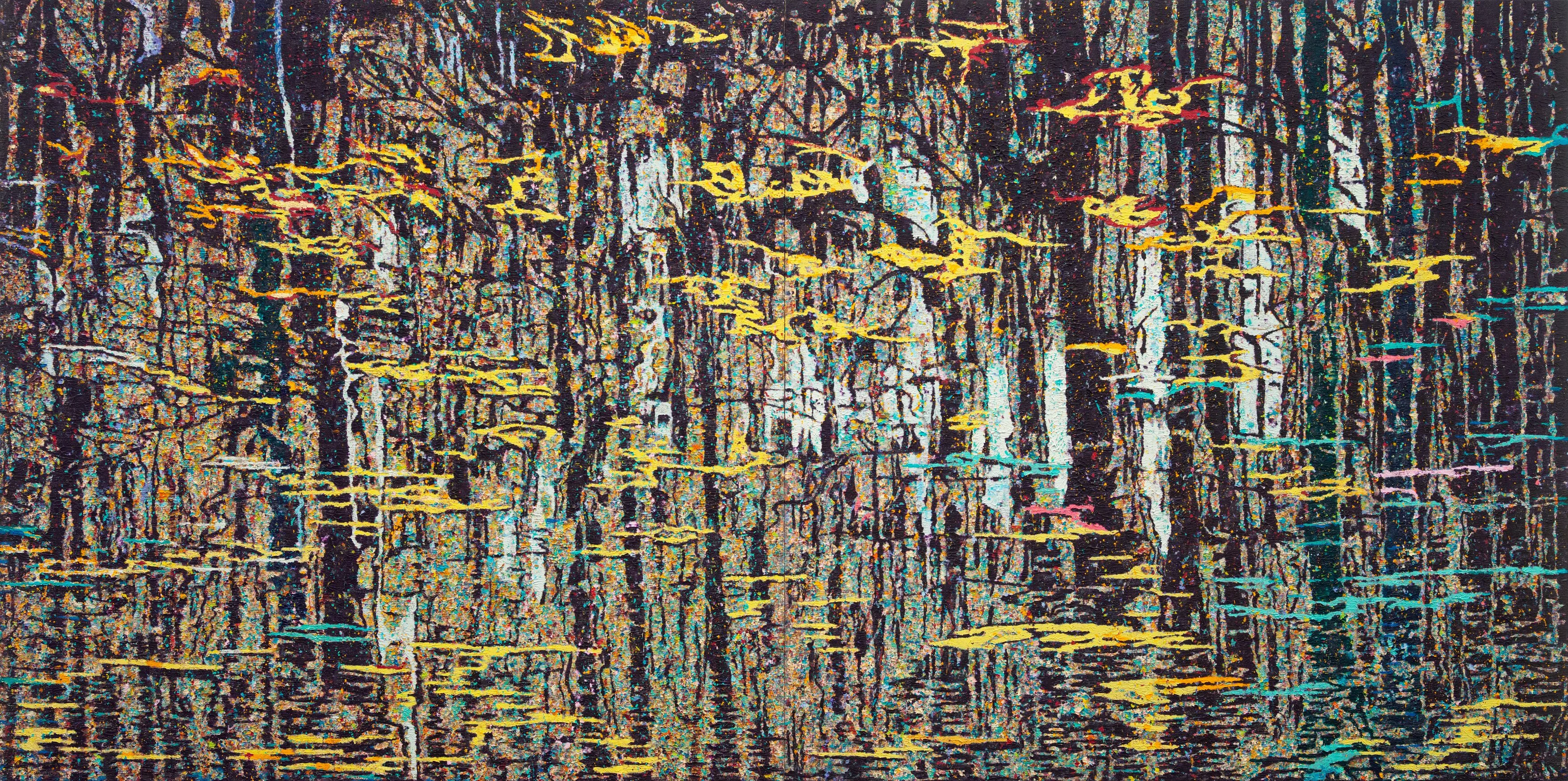
Zeng Fanzhi "Untitled" © Zeng Fanzhi (2026) Courtesy the artist and Hauser & Wirth
Optical mixing comes from the Impressionists and Post-Impressionists, and in 2017 your work was shown alongside Van Gogh’s in Amsterdam. What did you learn from studying those painters closely, and where does your approach part ways with theirs?
My approach differs from traditional "optical mixing" placing colors side by side on the canvas so that they blend in the viewer’s eye rather than on the palette. In that method, the process is predetermined, with each step meticulously calculated in advance.
The color composition in my practice, by contrast, involves a degree of contingency: as layers accumulate and are juxtaposed, there is room for free color association, and the resulting atmosphere does not ultimately depend on the viewer’s vision to construct it.
Up close, the work reveals a distinctly tactile surface texture. In this respect, the works are utterly distinct from Impressionism, Post-Impressionism, or Pointillism. I welcome everyone to visit the exhibition, see the works in person, and share their responses with me.
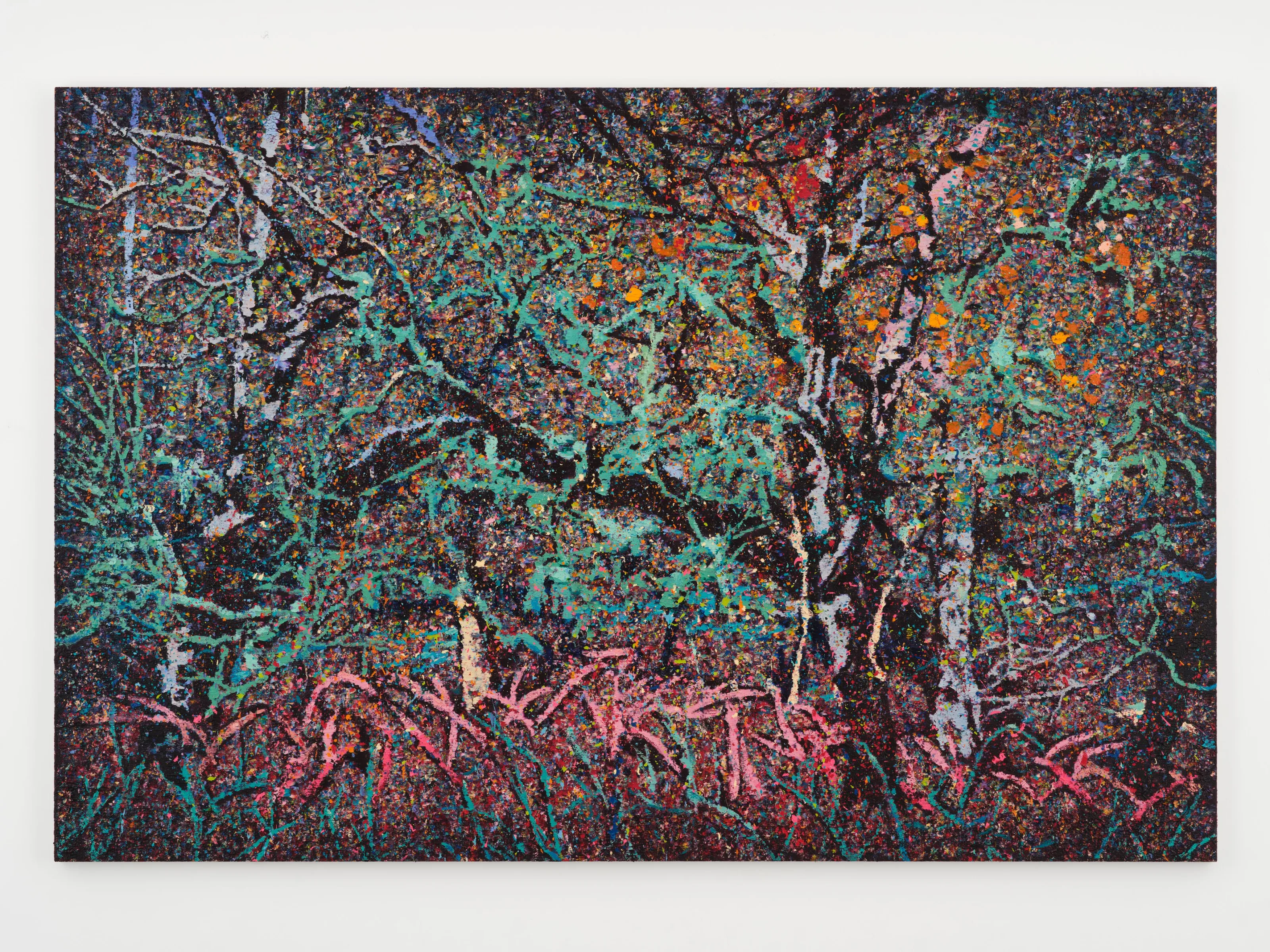
Zeng Fanzhi "Untitled" © Zeng Fanzhi (2025) Courtesy the artist and Hauser & Wirth
These new paintings look like otherworldly landscapes, both prehistoric and futuristic. Where do these places come from for you? Do you begin with anything observed, or do they take shape entirely on the canvas?
These scenes and images derive from various kinds of fragments and visual information that I absorb in my daily life, through observation, reading, internet browsing, as well as memory. I extract these elements and reintroduce them onto the canvas. What viewers perceive, in turn, depends on their own visual experience.
In these paintings, the images hover between figuration and abstraction, imbued with both affect and emotion. In this respect, the paintings follow a creative path rooted in traditional Chinese painting. Ancient Chinese painters, for example, often expressed their subjective feelings through the rendering of objective landscapes. In my work, the medium is Western oil painting, yet it conveys the spirit of traditional Chinese painting.
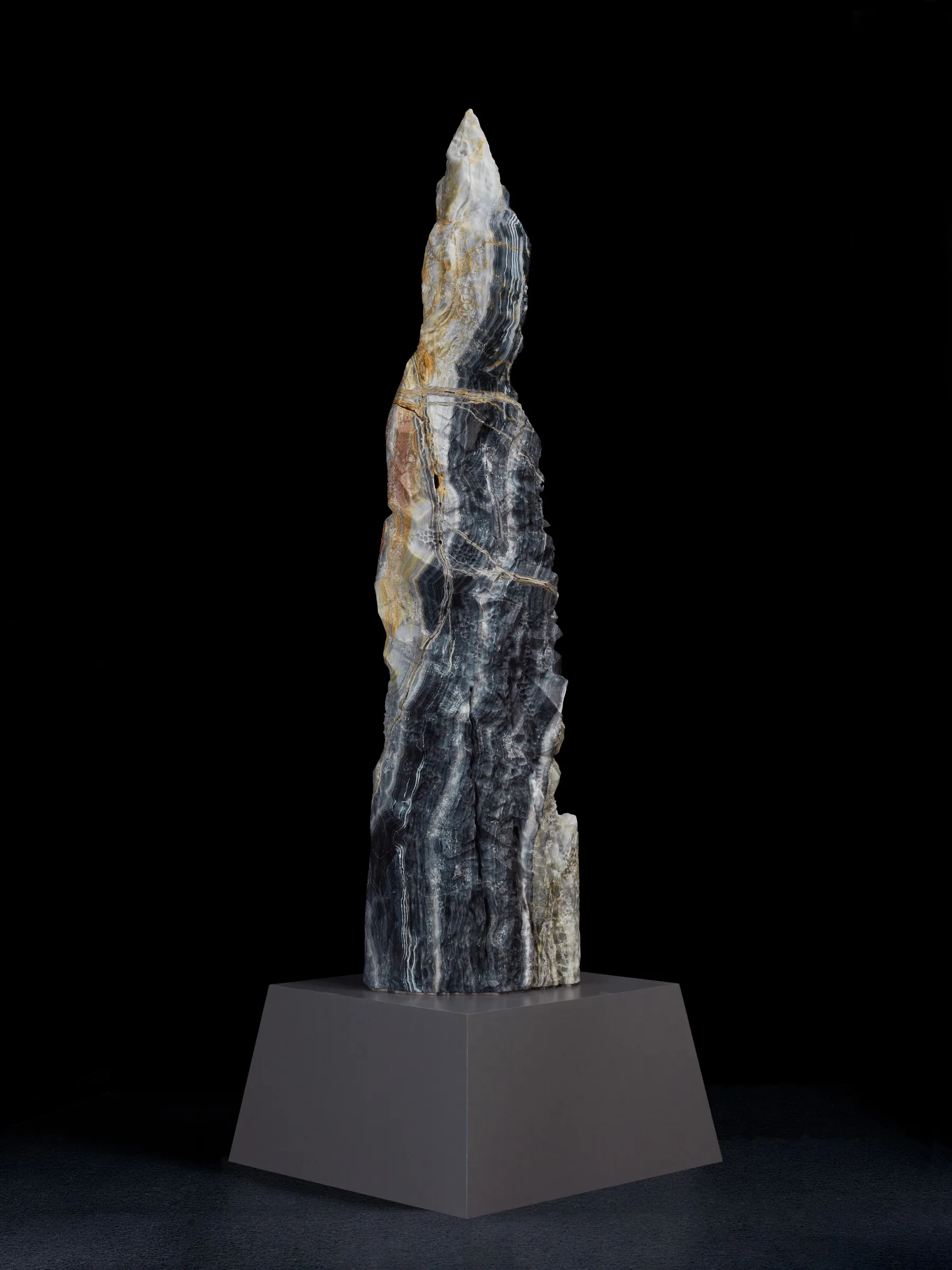
Zeng Fanzhi "Untitled" (2025-2026) © Zeng Fanzhi Courtesy the artist and Hauser & Wirth
The blue onyx sculpture (above) reads like an object dug up from one of your painted worlds. What drew you to stone, and how did working with a material that already has its own patterns change how you think about the paintings?
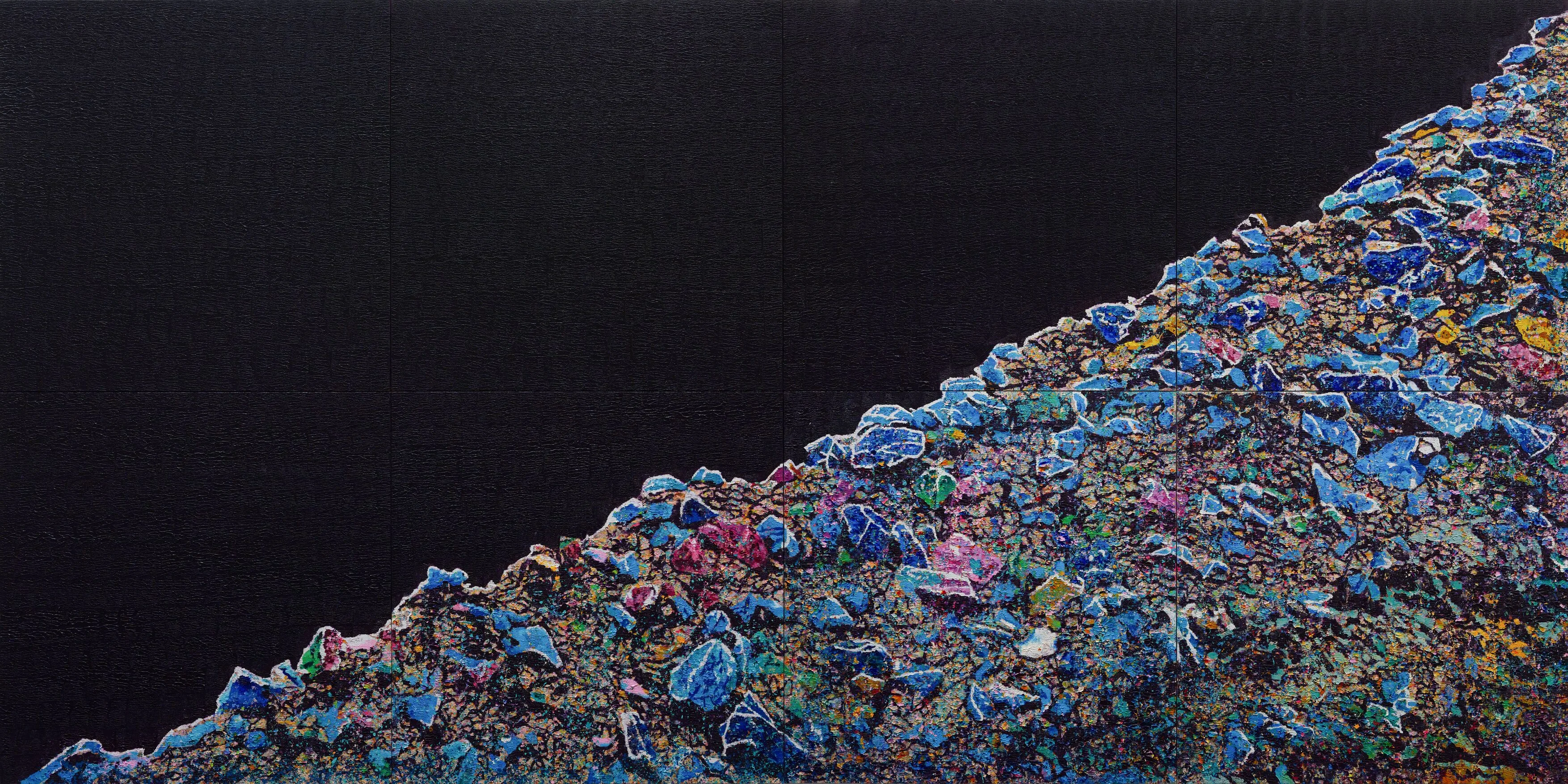
This sculpture was created after another work (below), one of the oil paintings also on display. After completing the painting, I spent a long time looking at it. As I looked, more interesting ideas came to mind. I wondered whether it would be interesting to transform the pictorial plane into a three-dimensional sculpture.
Zeng Fanzhi "Untitled" (2025) © Zeng Fanzhi Courtesy the artist and Hauser & Wirth
I began with a small sketch based on the painting and then developed it into a maquette with the help of a collaborator. After that, I worked with the TEN X studio in Carrara. We selected the stone and scaled the sculpture up to its present form. I regard this sculpture as an extension of my painting practice. It represents a particular angle of my vision and can be seen as a three-dimensional painting.
The grids and lines in these paintings suggest mapping and excavation, while your brushwork pulls against them. Do you plan that tension, or does it emerge as you paint?
My starting point is the relationship between abstraction and figuration, and between the composition as a whole and its details. I consider how to balance these elements as I work, how to help viewers experience them, and how to create a new pictorial space by layering and juxtaposing colors. I believe I found the answers through painting.
Zeng is clear that these paintings need to be seen in person, and he's right. The surfaces reveal things up close that no photo can capture. Zeng Fanzhi is on view at Hauser & Wirth New York, 22nd Street, through January 23rd, 2027.