Cultivist Conversations with Sally J. Han
24 Aug 2026
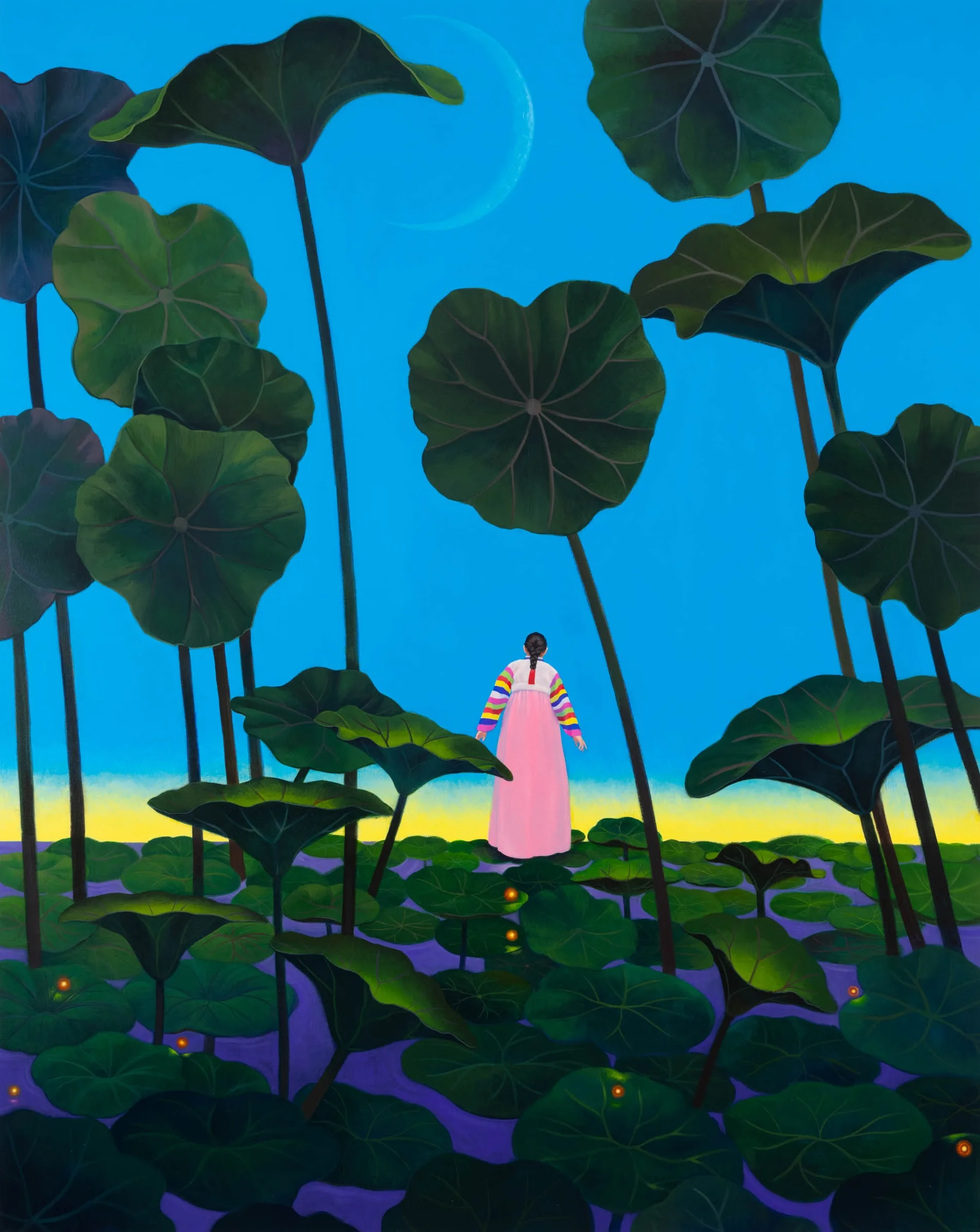
Sally J. Han has spent the better part of a decade building a name for herself in New York and across Europe, painting quiet, almost cinematic scenes that position the viewer alongside the artist. This September, during Frieze Seoul, she's opening her first solo exhibition in Korea. Gazing brings seven new paintings to LEE ART Korea in Hannam-dong, featuring figures who rarely meet the viewer's gaze and motifs that represent the intersection of personal memory, diasporic identity, and the timeless, universal textures of human life. We caught up with Han ahead of the opening to talk about identity, process, and what it means to show work in the country she partly grew up in but has never called entirely her own.
Sally J. Han "Dance with Fireflies" (2026) Courtesy of the Artist and LEE ART Gallery
You've had years of solo shows in New York and Stockholm, and you showed with Belenius at Kiaf Seoul back in 2024, but always as part of a group presentation. Now you’re back in Seoul, but this time the room is entirely yours. What’s something you’re excited about in this setting, at this time?
Even when I showed works with Korean or East Asian iconography in places where those elements weren’t necessarily familiar, I was surprised and grateful that they still seemed to resonate with people without much of a barrier. Now I’m curious to see what happens when I show them in a place where this kind of imagery and aesthetic feels much more familiar. As an artist, I wonder whether that familiarity will work in my favor or perhaps have the opposite effect.
You were born in China, spent your early years moving between China and South Korea, and moved to New York as a teenager. Does having your first solo show in Korea feel like a sort of homecoming? Or is it something different?
Ironically, now that I’ve spent more of my life in New York, I think the word “homecoming” actually feels more fitting when I show there. Showing in South Korea feels more like seeing family I haven’t seen in a long time but have never forgotten. So to me, it feels more like a reunion than a homecoming.
If I were to use a metaphor, I’d say my life in China and South Korea gave me the seed and the roots, while my years of struggling and building a life in New York have been the process of growing into myself. Maybe one day I’ll bloom somewhere, I just don’t know where yet.
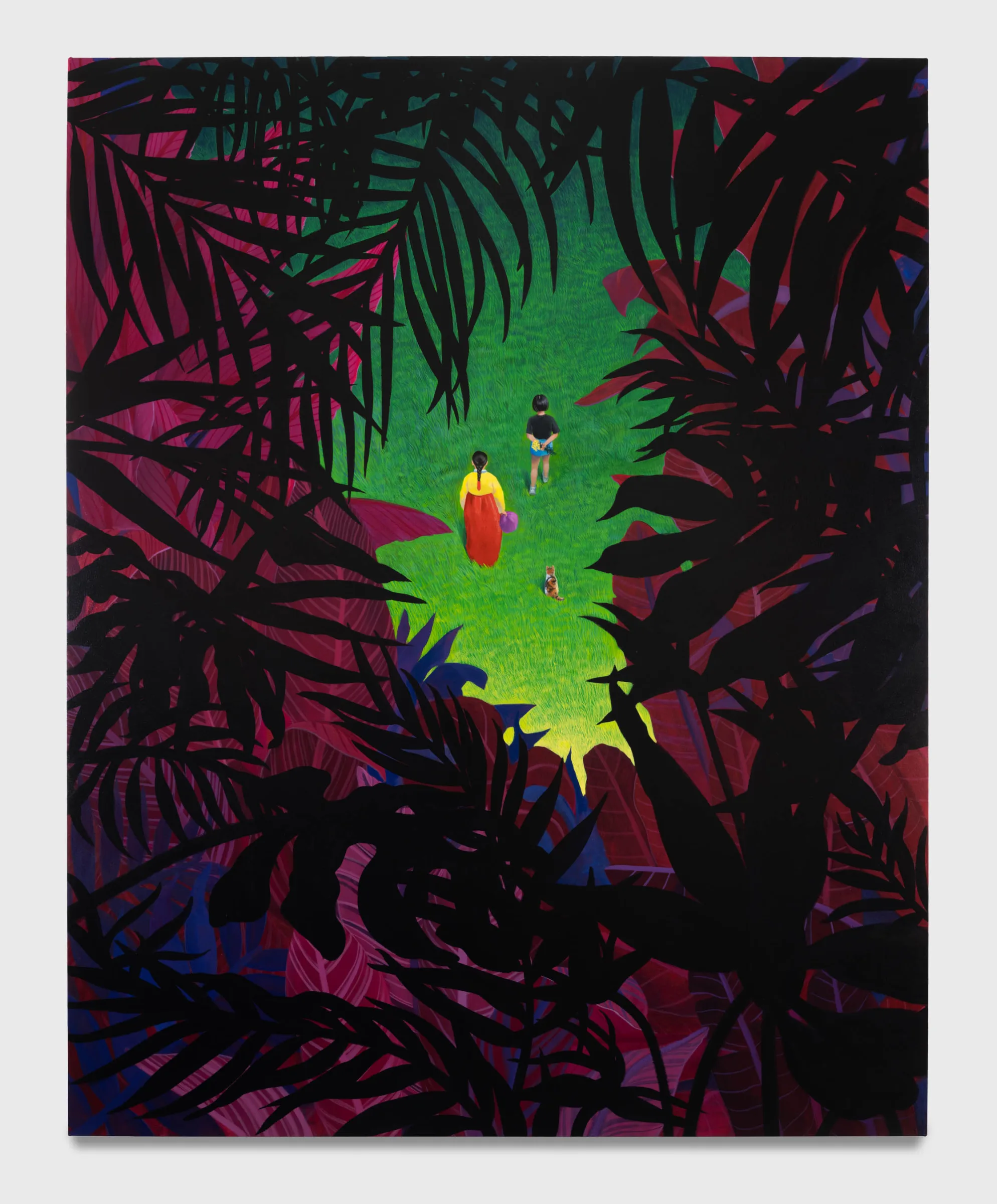
Sally J. Han "On the Way to the Picnic" (2026) Courtesy of the Artist and LEE ART Gallery
You've described your paintings as one continuous thought moving from canvas to canvas rather than separate scenes. Did one painting in particular spark the next? And how do you know when you’ve painted everything in a scene versus when another canvas is needed.
This is something I think about every time I prepare for a solo show. Even though the composition of each painting is different, I often find that the aesthetics, emotions, thoughts, or ideas I’m drawn to are indirectly connected, sometimes without me even realizing it. Especially with this exhibition, Gazing, there isn’t a definitive answer as to how one scene leads to another and I don’t particularly like giving one. The paintings come from moments when I simply gaze at everyday life: observing, recording, and remembering, then filtering those moments through my own imagination and expressing them through the language of painting. I don’t think I’m the one who decides when a painting is finished, or when another canvas is needed. Somehow, the work tells me.
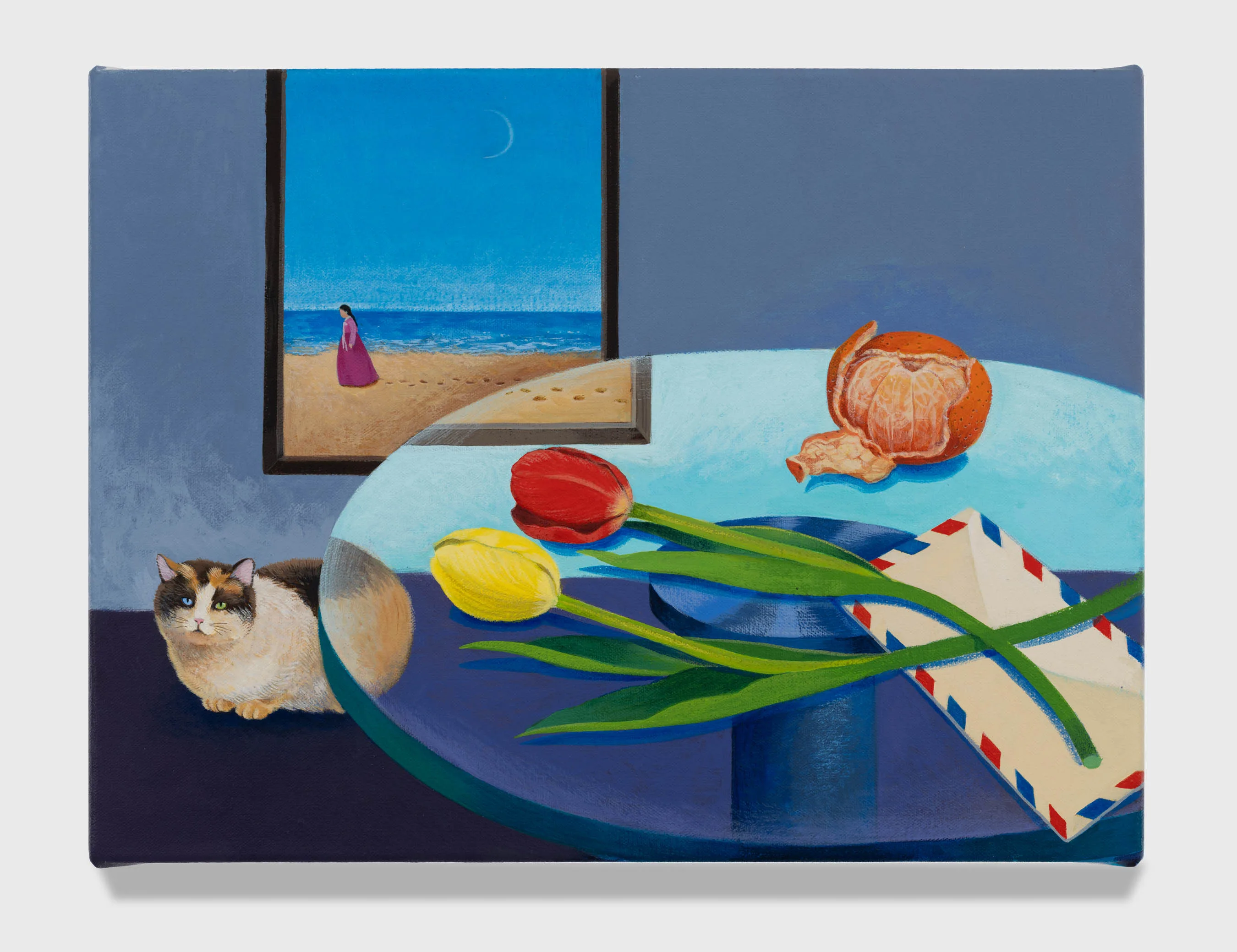
Sally J. Han "Calico Tangerine" (2026) Courtesy of the Artist and LEE ART Gallery
Almost none of your figures look directly at the viewer, but the birds, cats, and other animals often make direct eye contact. What position are you hoping to put the viewer in when deciding where the eyes of the subjects are pointed?
I don’t really want to decide what position the viewer should be in. Once I finish a painting, I become a viewer just like everyone else. The way each person sees a work is always subjective, and I want to respect that. So even when I decide where a figure or an animal is looking, I’m not necessarily trying to control how the viewer should feel or respond.
Your reading list runs from Kobo Abe to Min Jin Lee. Is there a book or a writer that shaped how you were thinking while you made this particular body of work?
My reading list has had a lasting influence on not only this exhibition, but I think it will continue to resonate in my future shows as well. I also want to mention the Korean writer Chu Yo-seop, who may not be as widely known outside Korea but had an incredibly perceptive way of looking at the time he lived in. Chu Yo-seop’s Ten Handfuls of Earth made me ask, “What does the land I left behind mean to me?” Kobo Abe’s The Face of Another made me ask, “Who am I in the eyes of others?” And finally, Min Jin Lee’s Pachinko left me with the question, “When we don’t fully belong anywhere, where do we belong?” Looking back, these questions may come from very different stories, but they all seem to connect through ideas of roots, identity, and belonging. These questions are deeply important to me, not only as an artist, but also as a person.
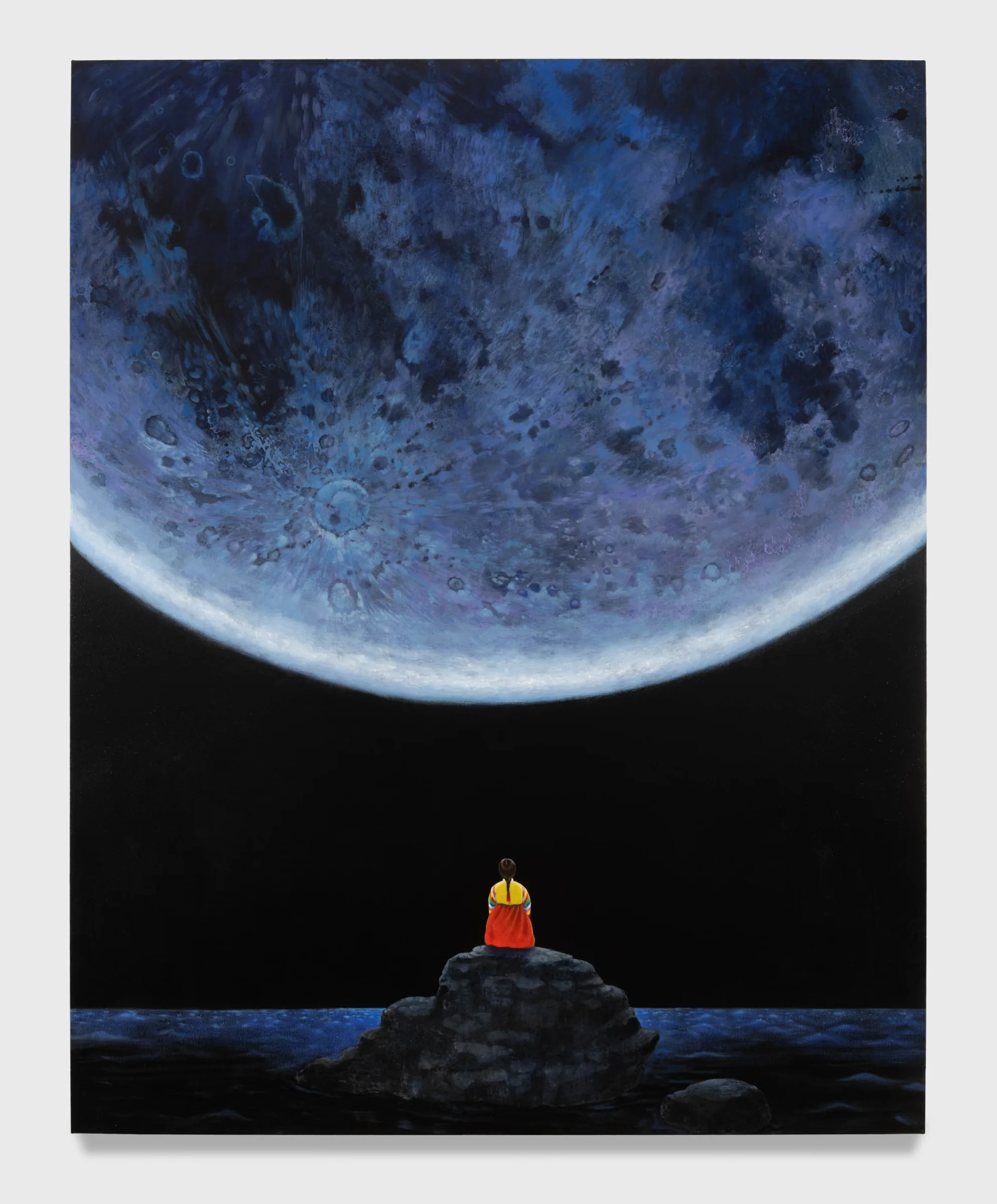
Sally J. Han "Satellite of Love" (2026) Courtesy of the Artist and LEE ART Gallery
What do you hope a Korean audience sees in these paintings that a New York audience might miss, or vice versa?
I’m honestly just grateful that people take the time to look at my paintings. I believe that anyone who sees my work is my audience. Maybe all I can ask is that they stay with the paintings a little longer — to look, observe, and simply gaze.
Gazing is on view at LEE ART Korea from 1 September through 31 October, with an opening reception on September 1. If you're in Seoul for Frieze or Kiaf this year, it's a quiet, worthwhile detour from the fair floor, and a rare chance to see Han's work on her own terms, in a room she built herself.