Cultivist Conversations with Raven Halfmoon
14 Apr 2026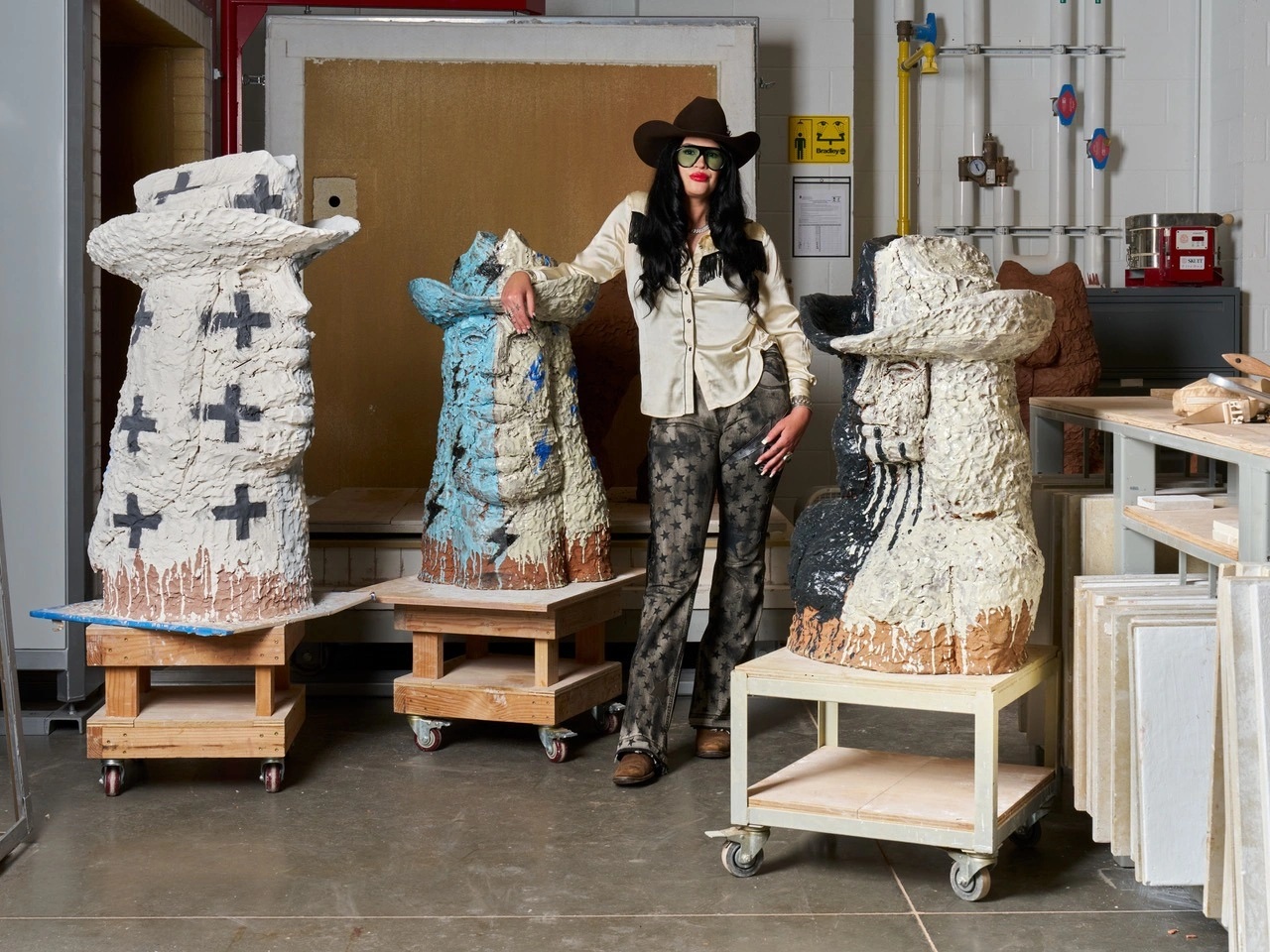
Raven Halfmoon is an artist, sculptor, and member of the Caddo Nation. Born and raised in Norman, Oklahoma, she works in coil-built ceramics, a tradition passed down through generations of Caddo women. She builds totemic figures that can soar thirteen feet and weigh thousands of pounds. Her work is in the permanent collections of Crystal Bridges, the Museum of Fine Arts Houston, and the Detroit Institute of Arts, and this spring, her sculpture Too Ancient to Care greets visitors at the entrance of the 2026 Whitney Biennial. We sat down with Raven to discuss her practice, future exhibitions, and what it’s like to create the first artwork visitors see at the Whitney this year.
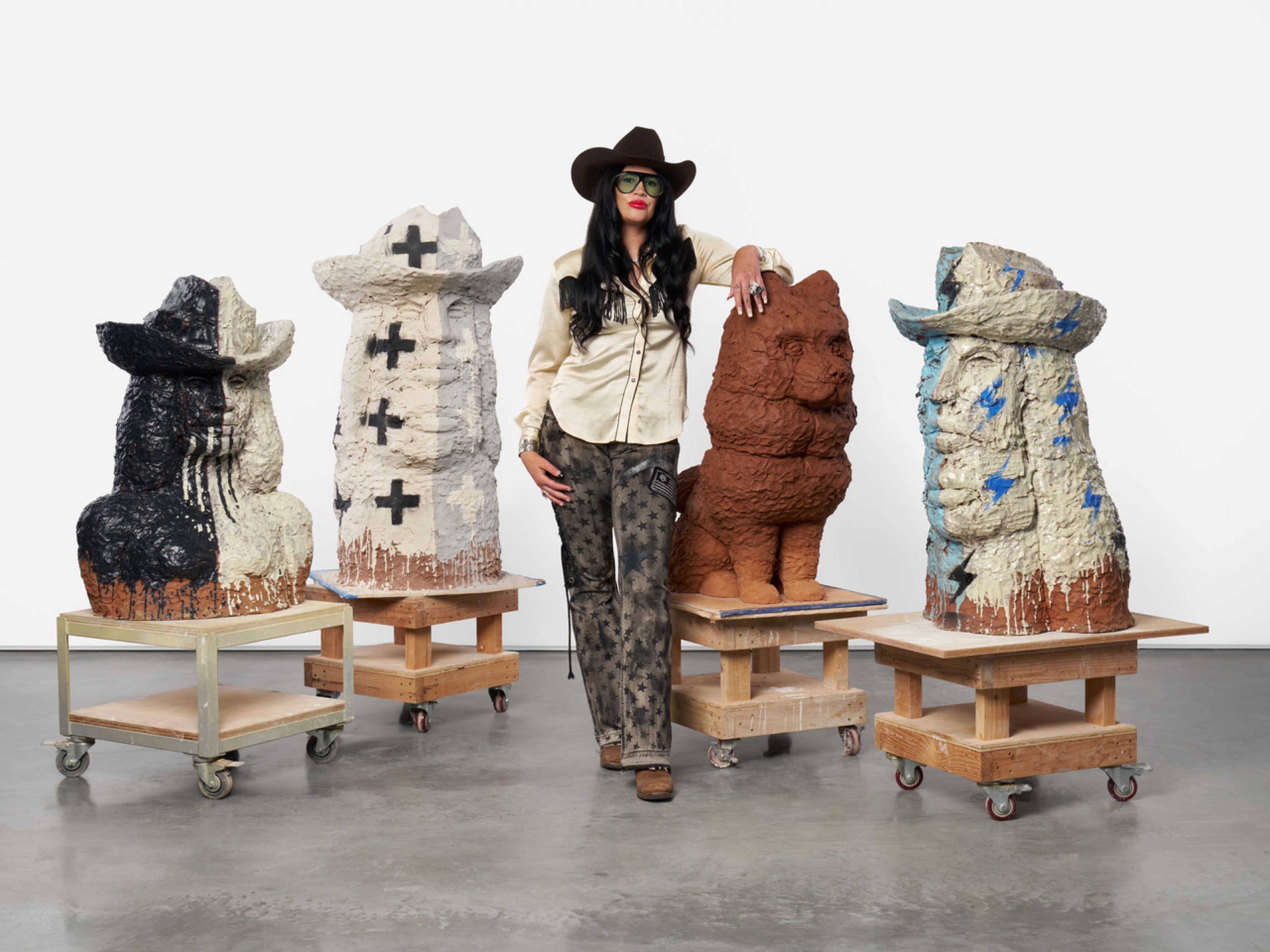
Courtesy of the artist and Salon 94 ©️Raven Halfmoon Photo credit: Kes Efstathiou
Your sculpture Too Ancient to Care (below) is one of the first works visitors encounter when they approach the Whitney. What does it mean to you to hold that first impression position for this year's Biennial?
It's super powerful. All the words I have would never be enough for how grateful I am to have this piece outside as you walk up to the Whitney. It's pretty magical getting to see her in person, there, with the building as you walk in. Growing up, I've been going to the Whitney for several years, ever since I was a child, and so to see my piece there outside is like you're outside of yourself almost. You're like, wow. Twenty-two-year-old me would have never believed it.
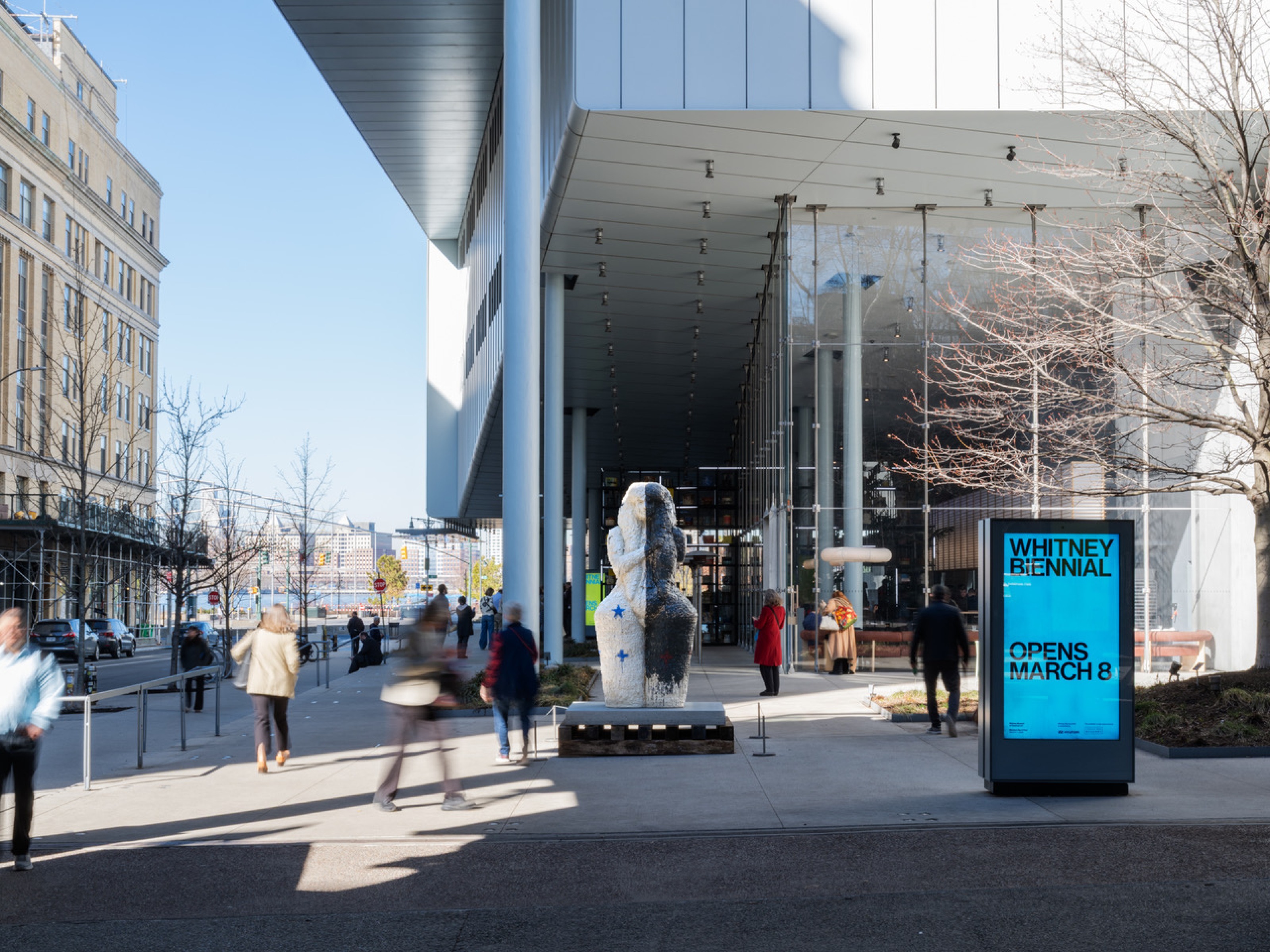
Courtesy of the artist and Salon 94 ©️Raven Halfmoon Photo credit: Pierce Sapper
You spent three weeks building Too Ancient to Care, working six to eight hours a day, on scaffolding, afraid of heights, burning through an entire pallet of clay. Has any piece ever come close to breaking you?
This piece outside the Whitney was probably the most physically taxing I've ever had to make. So much blood, sweat, and tears went into it, physically and emotionally. She is truly a part of me. That's how I feel when I see her. It literally feels like a piece of me and a piece of my family. I remember I had to come back home for something and only had three more days to finish her, so I would stay up most of the night, the only one in this huge, crazy warehouse. I started smoking cigarettes again. But that's how much love I have for this piece. She challenged me the most. She's the most powerful thing I've ever made. She's epic.
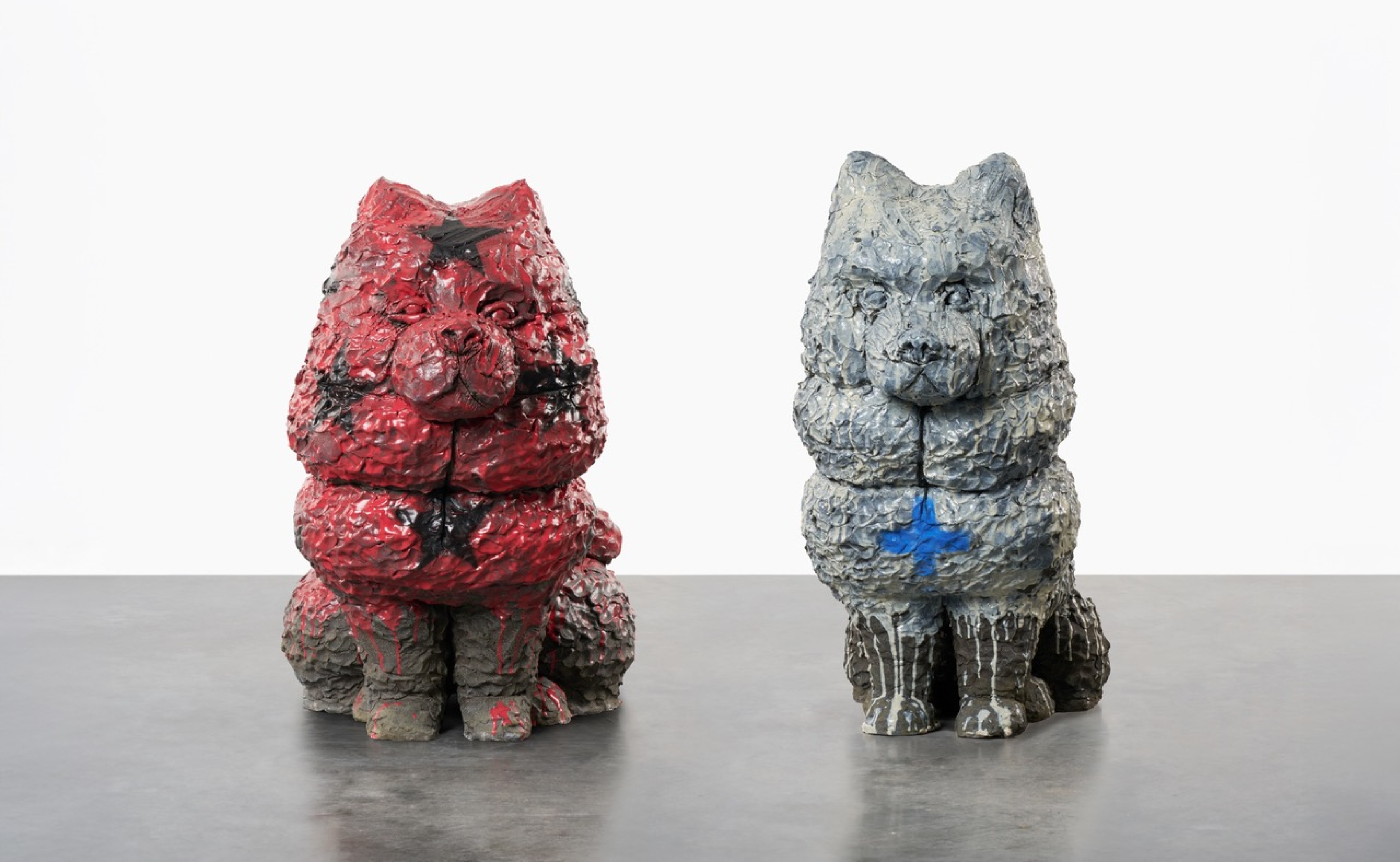
Courtesy of the artist and Salon 94 ©️Raven Halfmoon Photo credit: Kes Efstathiou
The coil-building technique you work in is a tradition carried heavily by Caddo women. When you first started making ceramics, could you have imagined it leading to the Whitney? What does it mean to you that something traditionally considered a women's art form is now filling rooms in some of America's most prominent institutions?
No, I didn't think it would lead all the way here. I mean, a girl can dream, so I've definitely had thoughts about where I want to be and what I want to create. But to be here, in this moment, it feels wonderful to be one of those women who has a voice and who is literally taking up space at the Whitney. I'm still internalizing it a bit. We just went to the opening and I got to see my pieces outside and inside the Whitney, and I think I'm still just taking in that breath of, like, we're here, you did this. I remember being in school making small pieces, however large I could build in the kilns, and I've always had dreams of being in spaces like this. To finally be here is like, wow. It's a breath of fresh air.
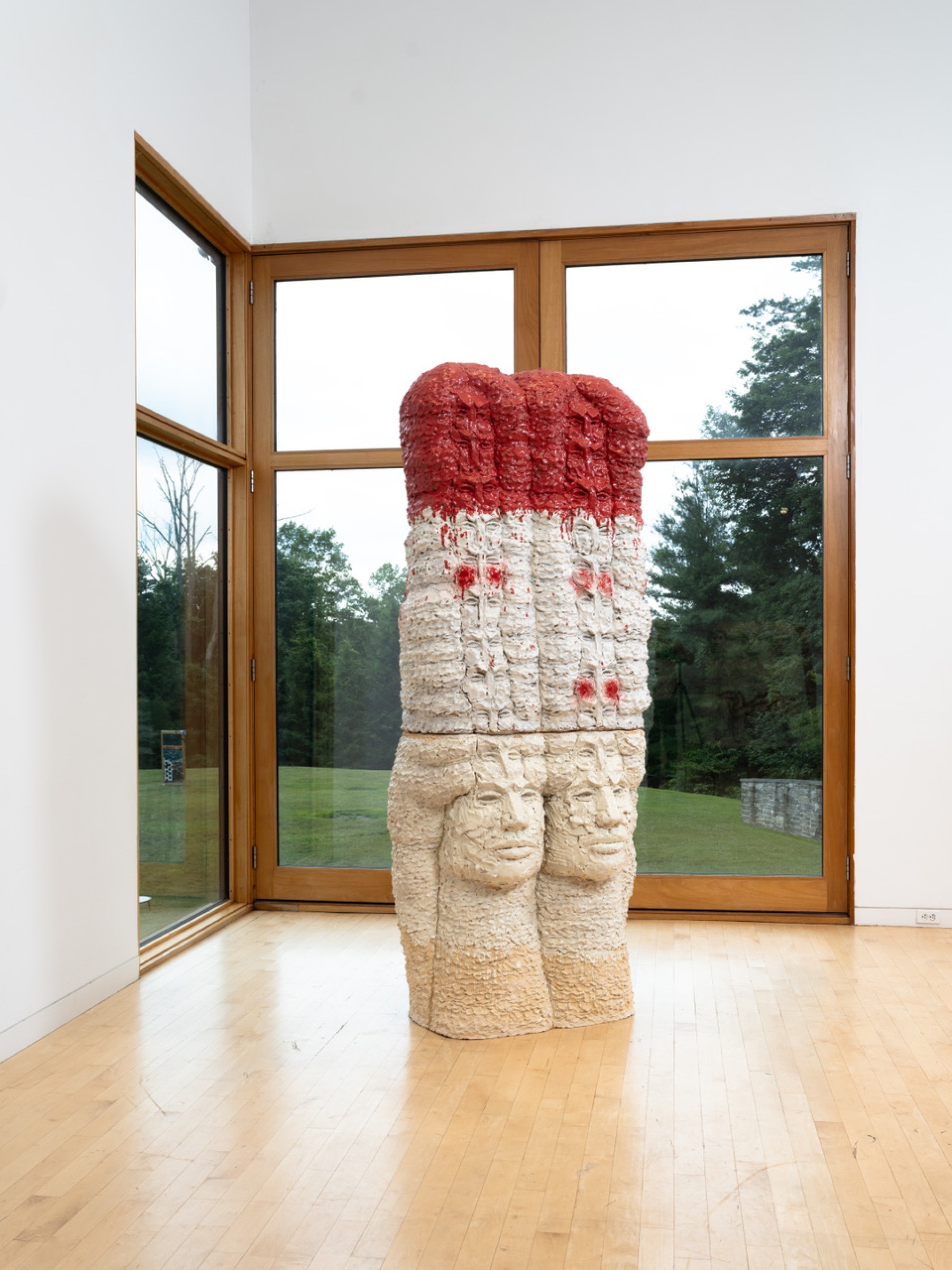
Images courtesy of The Aldrich Contemporary Art Museum, photography by Jason Mandella.
Cowboy hats, cigarettes, totemic stacking, those are some of the dominant elements of your visual language, positioning your work at this unique crossroads of the ancient and the completely contemporary. Is there an object or symbol you've been circling lately that hasn't made it into the work yet?
Oh yeah, I have tons of things coming up. It's really important for me to capture that balance within the work, this balance of ancient and contemporary, traditional and the material world we live in. The cowboy hats and cigarettes came through because it's everything I've learned growing up, sharing our culture and history, but also asking what does that look like today, as someone who is a millennial, a woman, making Native art in the 21st century? And beyond just wearing cowboy hats, I'm from Oklahoma. It plays into the trope of the Western theme. So yeah, I have other ideas in mind that are super exciting. I wear crazy long fingernails, jewelry, tattoos, and sunglasses. I love the idea of big rings and bracelets on the pieces too. These are all things I'm playing with and will probably come up in the work pretty soon.
You've said that growing up in Oklahoma shaped your need to assert an Indigenous presence and resilience through your work. What does it mean to you to live and work in your home state while your art becomes so widely traveled?
I always knew it was important for me to come back home. This is where my voice was born, this is where my tribe is, where my family lives. The pieces really act as reflections of me, reflections of my family, my ancestors. They can go out into the world and educate and serve and be pillars of Native feminism, these strong, powerful moments that other people need, where I can't be in all these places at once. For me it's like visiting family again. Seeing the Guardians again at the Whitney, it's like seeing my Grammy, it's seeing my mom. That's how important these pieces are, and how important it is for other people to see them. They're doing their job.
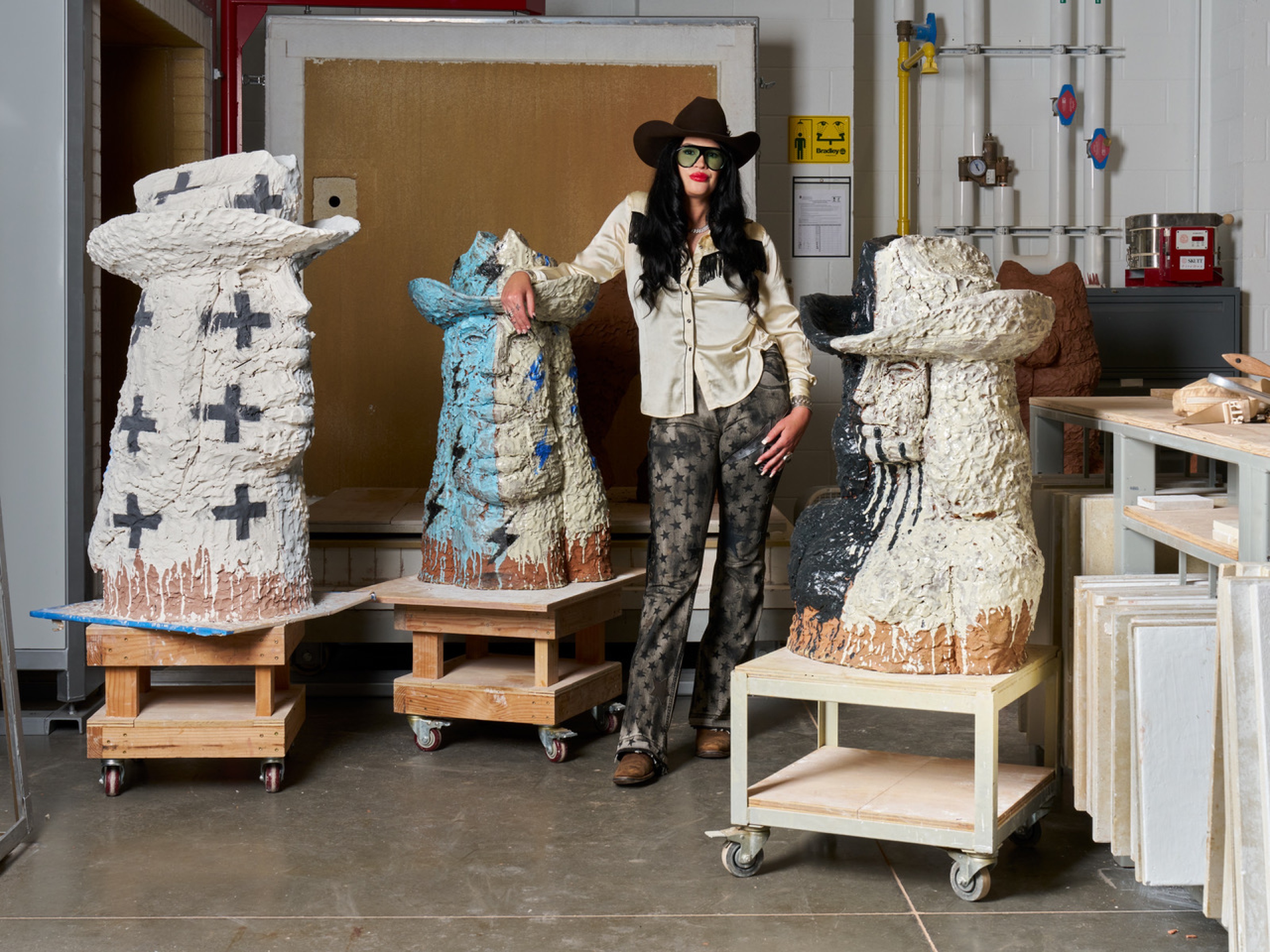
Courtesy of the artist and Salon 94 ©️Raven Halfmoon Photo credit: Kes Efstathiou
The Biennial describes itself as a survey shaped by "profound transition," foregrounding mood, tension, and new forms of coexistence. You've talked about your work as an act of presence. What does it mean to you personally to have these sculptures inside the Whitney right now, at this particularly tense moment in American life?
I think it's just important to keep sharing what life looks like living in America at this moment in time. When we come back thousands of years from now, if you want to look at how life was, we go to art museums. These are huge educational tools. And I think a lot of history and a lot of voices are currently trying to be silenced by policies and political systems. So I think it's important for people like me to have a voice and to say, here's a different aspect, and I'm not gonna be silenced. Now we're gonna build even bigger. A really important notion within my work is that Native history is American history. It can't be eradicated, it can't be silenced. And especially my pieces being as monolithic as they are, this idea of monumentality is an even bigger stance of, it just is. We are here.
Flags of Our Mothers is now traveling to Ballroom Marfa this spring. For a body of work that began so personally, how has it felt to watch it move through so many different communities? And what's next in the studio?
This is the longest running museum show, and it's still going. I still can't believe it. It's like traveling with a big group of family and going to different cities. The show was just in Austin, and it just came back from the Ogden Museum in New Orleans, which I had never been to. So this show traveling is actually educating me too. I meet all new people, we do community events, but then I also go and eat at new places, go to the museums, go to concerts. I grow even more and understand more deeply the history and the people that make up this country. As for the studio, I have a solo show with Salon94 coming up, a solo show at SITE Santa Fe in 2028, and a piece going out on the National Mall at the Hirshhorn in the fall. That one's gonna be pretty exciting. Pretty powerful.
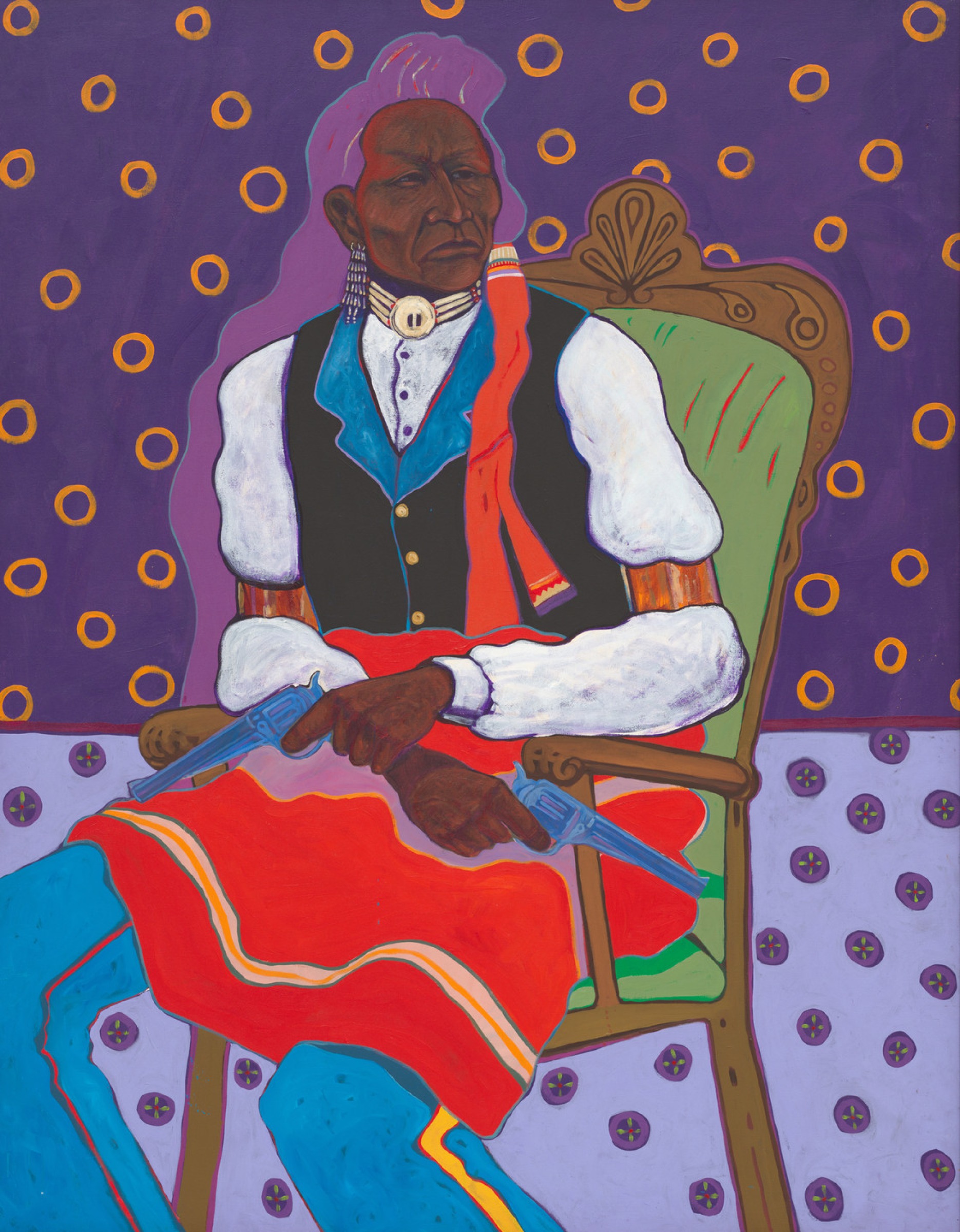
T.C. Cannon “Two Guns Arikara” (1973/1977) Courtesy of the Museum of Modern Art
And finally, a personal one. You've mentioned being a fan of T.C. Cannon. Is there a particular work of his you keep coming back to?
There are two I really love. Growing up, my Grammy always had this print of Two Guns Arikara (above) in her home. I have that print now in my house. That was one of the things I wanted from her and it's hanging up there right now. And then I also really love His Hair Flows Like a River. T.C. Cannon is one of my gods. He trailblazed a lot of the same things I talk about, and he was the forefather of that. He's also Caddo, which is pretty cool. I'll always keep talking about him.