Cultivist Conversations with Lauren Quin
03 Feb 2026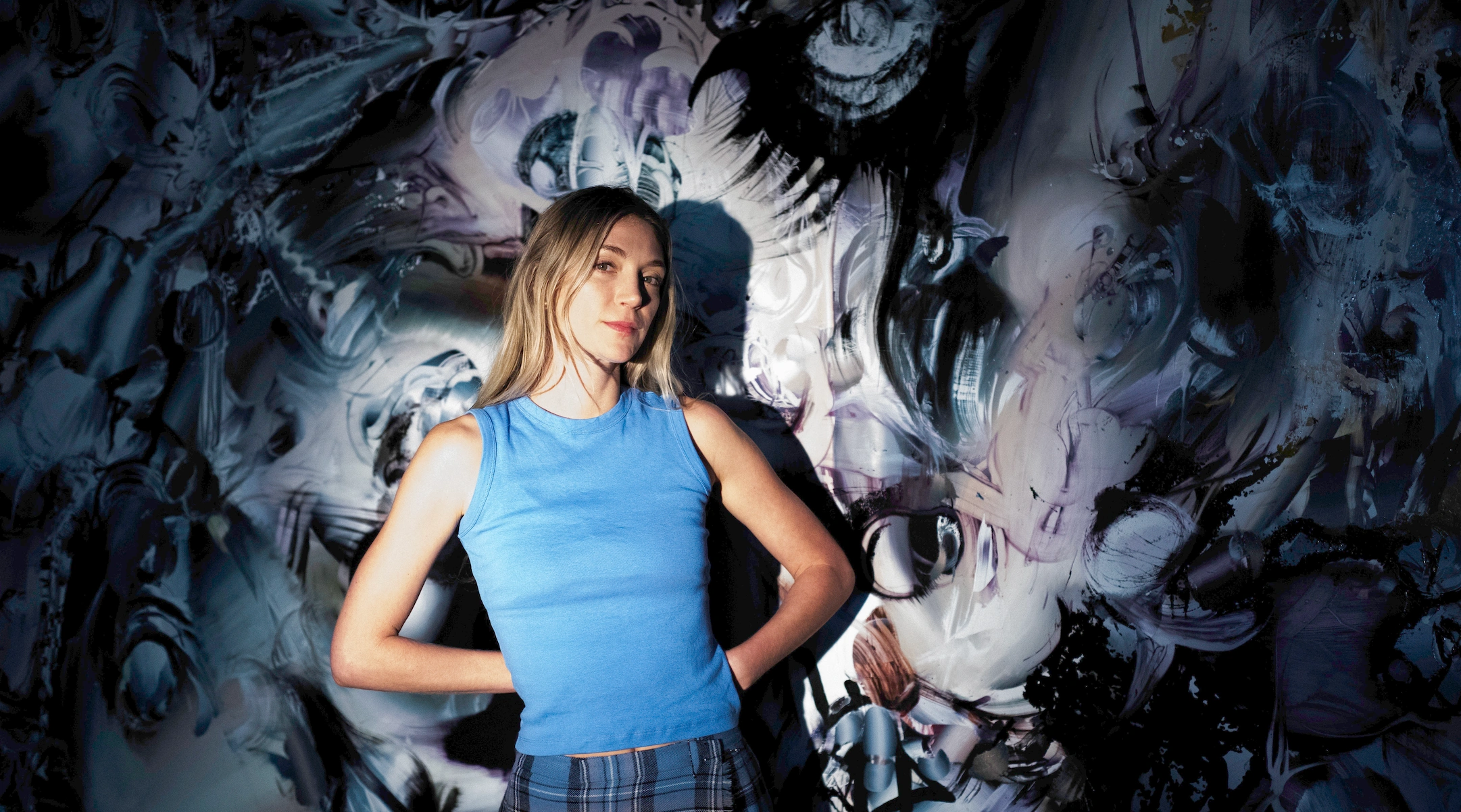
Lauren Quin is a Los Angeles-based painter whose deeply considered abstract works explore the interplay of color, form, and symbol, developed through an intuitive process of layering, carving, and reworking paint. Her new solo exhibition Eyelets of Alkaline at Pace Los Angeles (January 31–March 28, 2026) marks her first show with the gallery and presents a striking evolution toward reduced, near-monochromatic compositions that Quin describes as a “detox of color.” The presentation will be accompanied by a fully illustrated catalogue featuring a new text by poet and essayist Ariana Reines.
Join us in conversation with Lauren to explore her creative journey and the inspirations behind her work!
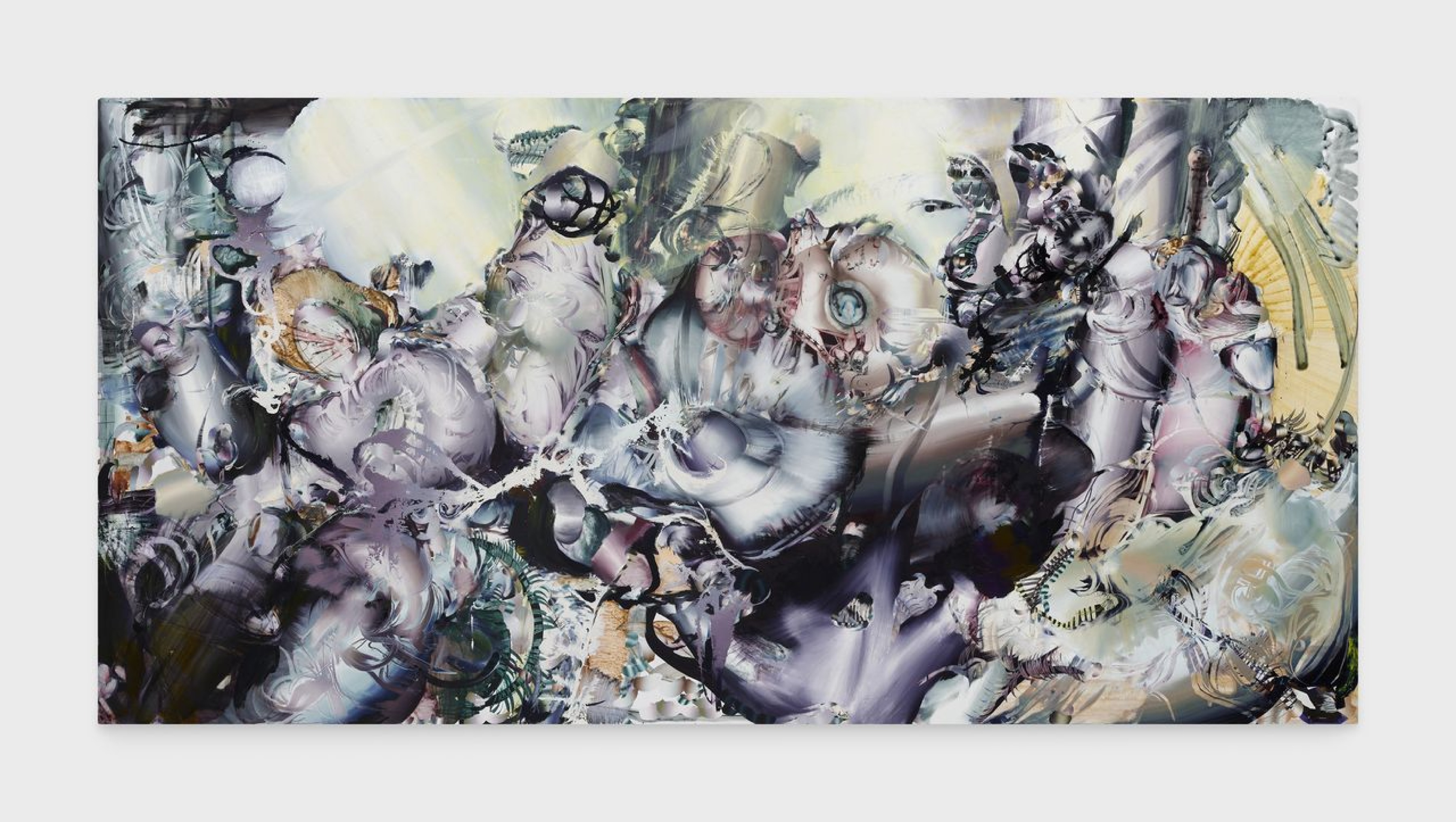
Photo Credits: Lauren Quin, The Cold Vein, 2025. No. 97421 Courtesy of Pace Gallery
What are you working on now, and what can we expect across the rest of 2026?
My current show Eyelets of Alkaline is the culmination of about two years, but not the conclusion. I do not start paintings with a plan for how they will end. Instead, I span time with them and, in the end, I am changed by the nature of them. I often feel I make my best work after deadlines and openings, when the storm has passed and the only motivation is my own curiosity.
Your work explores the intersection of abstraction and identity, often using color and texture to convey emotional depth. How do you approach using color as a tool to express complex psychological and cultural themes in your art?
I started making this body of work as a way to center myself. Up until that point, my palette had been oriented towards potency and volume—every color was competitive, everything was cooked on broil. I started to feel that color took too much credit for the emotional register of abstraction. It became a clarifying exercise, to test my own tendencies and make an argument for what might remain.
At times, I would start with an entirely monochromatic ground, mixing any remainders on my paint table into neutrality. Or I would work backwards, starting with a vivid painting and working to pull the hues out again. If I was working on a painting with full blown color, then I would try to make an inversion. I would separate them by the dividing wall in my studio. After a day of making a monochrome, my eyes would be tuned. I would walk into the other room and feel the shock of the color again. It was a way to step outside of myself.
The fluidity in your work, both in form and brushstroke, evokes a sense of transformation. How do you balance control and spontaneity in your creative process, and what role does materiality play in this exploration?
There is a certain logic to the material, and a repertoire of marks at my disposal that I carry through each painting. I consider them to be the initiation into the painting. I can feel a painting take shape when I am truly lost. It is a frustrating and magnetic interim that I can never replicate, only instigate.
Much of your practice is informed by personal history and evolving identity. As your work grows, how do you maintain creative freedom while still staying true to the narratives you wish to explore?
Albert Oehlen once said he made his grey series in order to invigorate his palette. Not to eliminate color, but so he could miss his color once again. I feel a resonance with that notion, to reintroduce color not as a shock to the system, but to steal it back like it’s a guilty pleasure.
There is a painting at the heart of the show, called The Silk of Release, that comes full circle. I started with a deep turquoise composition, pushed it entirely into a monochrome, and then finally I found a way back into color. I felt there was a freedom to that moment, I broke my own rules.
Your paintings have a dynamic energy that seems to challenge the boundaries between abstraction and figuration. How do you decide when to blur these lines, and what do you hope viewers take away from this ambiguity?
I don’t use that dichotomy between figuration and abstraction, rather I am often trying to shake such categories off. I think about it in terms of language, the way words can pollinate or evade each other. There is a type of synchronicity to be found in the gap between what we can name and what we can feel. I am looking for a way to be literal about a type of dissonance. Words often fail, but it's all we have to work with.
Looking toward the future, how do you see your exploration of abstraction evolving? Are there new mediums or concepts you're excited to experiment with, and how do you anticipate these changes influencing your practice?
There are so many directions that I could pursue out of this work. Scale has become a new medium. These are large paintings built out of a chorus of small details. They are intensely physical, and I wrestle with them daily. I am interested to test the criteria that this scale allows. Could I preserve their nature if I changed their range?