Cultivist Conversations with Kasia Redzisz
6 Oct 2026
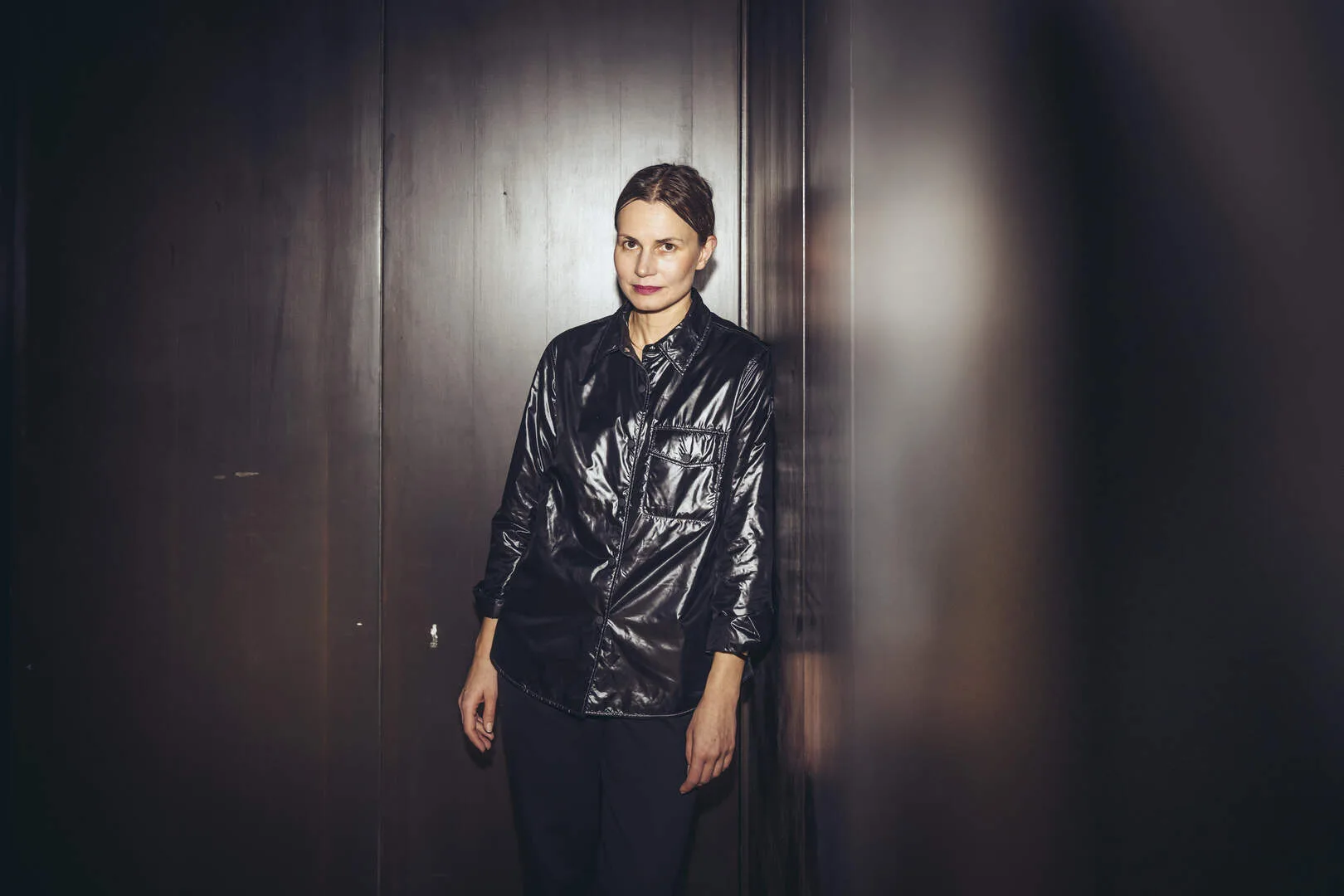
Kanal-Centre Pompidou opens in Brussels on November 28, in a former Citroën garage that has been turned into a museum. Ahead of the opening, we spoke with Artistic Director Kasia Redzisz about the ten exhibitions launching the museum, working with the Centre Pompidou's collection, and building a space meant to be open to everyone.
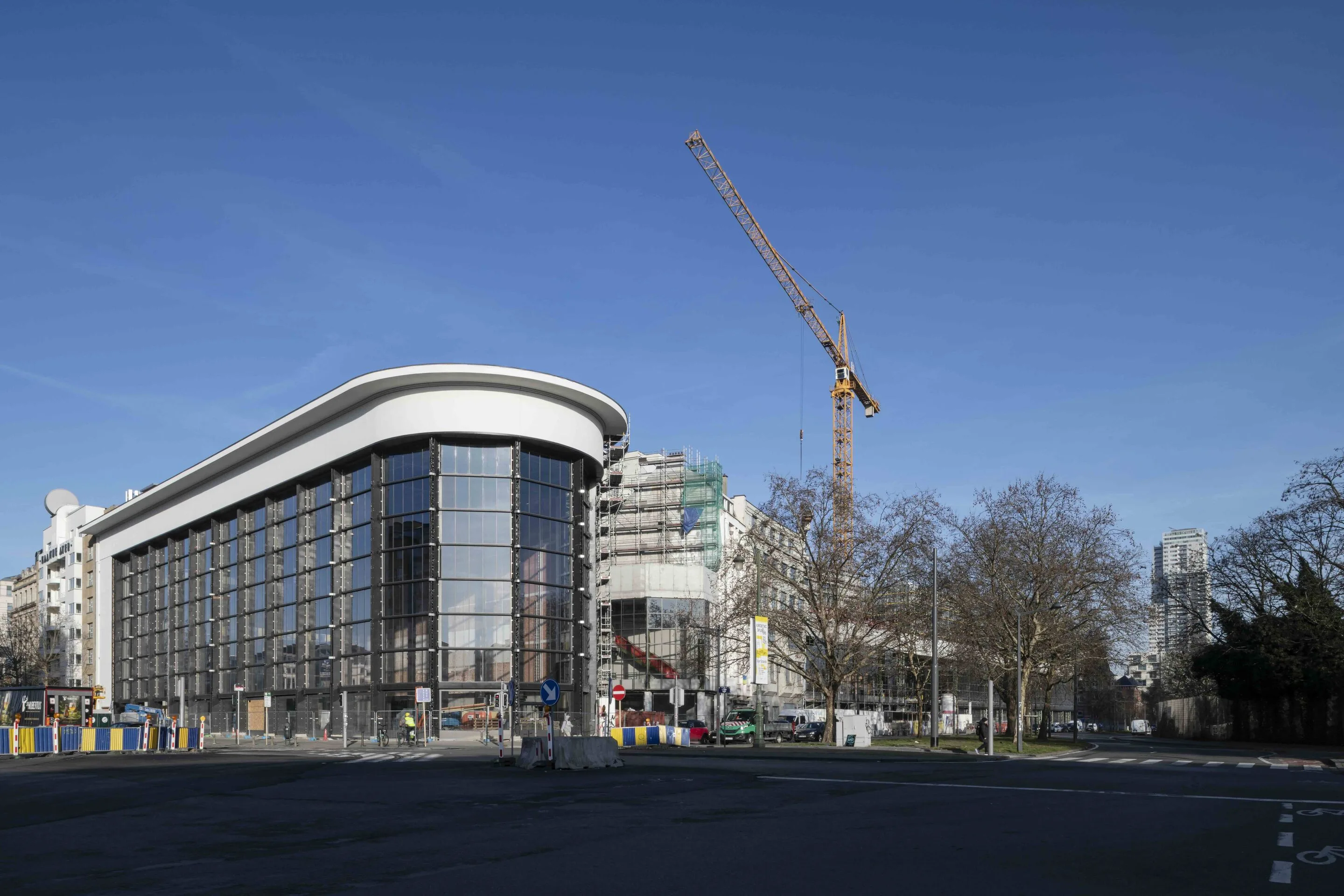
Exterior of Kanal–Centre Pompidou Brussels, Courtesy of Brussels Museums
You've talked about Brussels never lacking creativity, just an institution able to hold and question it. So what does that institution actually look like in practice, in the choices you've made for this opening program?
Our museum is a really lucky, institutional component of this very diverse, exciting, and booming art scene in Brussels. It really is a city of culture, in which so many independent artists live. Obviously the opening is just one moment in our future life, so as much as it is a statement, I like to articulate the full sentence. I hope that the entire programming plan will become much clearer in the years to come.
There are a couple of things that are important to us as a museum in Brussels, as the first museum of modern and contemporary art. The art historical mission is important, and I think as a museum conceived post-2020, we have to think about who is represented in this art history — how are those narratives told, and by whom? So obviously there will be many familiar things in the program, but maybe unfamiliar angles as well. That's the first thing: try to actively search for those new narratives, and maybe bring some omissions to light.
There is a strong focus on interdisciplinarity. Obviously we have more traditional exhibition formats, but alongside that there's a strong move toward a series of shows with hybrid forms that play with this idea of transgressing the boundaries of media — something that stems from Brussels, because somewhere between the '70s and '80s, Brussels and Belgium fell into a particular singularity of dance blending with visual arts, with performance, and with fashion, and with experimental film. So we try to look at how that looked in the past, and what it means for contemporary practice.
“Participation” is a big word for us. It's not only in highlighting participatory practices, but in thinking about how our audience, our constituents, can participate in this institution — through various audience engagement programs of course, but also through the making of the institution itself. We took the time to develop our interpretation tools; we consulted, we let others bring their voices into this. So there are small but real groups of people, mostly Bruxellois, who will hear their voices heard in the museum, and who already know what's coming because they were part of the making. For instance, a playground for kids was also designed during workshops with kids from a local school. These are small moments when people can really take some ownership of the programming, and this is also an angle we're going to cultivate.
Another aspect of the programming that's also relevant for Kanal as an institution is seeing the Belgian and Brussels art scene in the context of the global conversation — which is so significant for this city, which on one hand has plenty of hyperlocalities and small communities, and yet holds the status of the capital of the European Union, the center of governance, the policymaking place. So we really think about that in the programming as well.
I'm sure there are blind spots, and we'll keep thinking about it again and again, but these are the starting points.
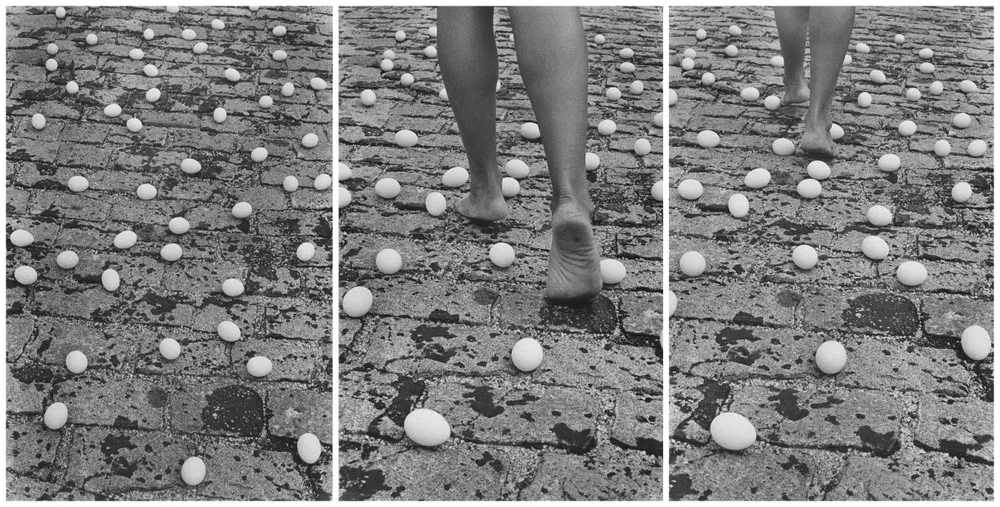
Anna Maria Maiolino, Entrevidas, 1981 Part of "A Truly Immense Journey" exhibition © Photo credit: Centre Pompidou, MNAM-CCI/Laboratoire photographique/Dist. GrandPalaisRmn. Copyright Artwork : Anna Maria Maiolino
One of the opening exhibitions draws on more than 350 works from the Centre Pompidou collection alongside Kanal's own holdings and private collections. How did you and your curatorial team decide what earns a place in that first show?
Just to say, this is one of ten opening shows — the collection display, “A Truly Immense Journey”, and it was a journey — that started at Kanal, and at the beginning it was a fairly solitary experience. I was in the position of appointing most of the curatorial team, but at the start it was mostly just me.
I thought a lot about what this partnership with Centre Pompidou is doing in Brussels. It's Francocentric, it's a different museum, a collection coming from a different context. Obviously it's a canonical Western collection — that's fabulous, but it tells a certain story of a Parisian institution. How do we make it relevant here in Brussels, beyond the fact that these are absolute highlights of Western modernism and art history?
So very quickly, I settled on a thematic approach rather than a chronological one, and a team that would be inspired by Brussels. As our name says, we're next to a canal, which was used as a trade route, a way of transporting goods on the back of the industrial revolution — our building is an iconic part of that industrial heritage. Goods were traded, shipped from the port of Antwerp down to the south of the country, to France. Many communities, also migrant communities — first Belgian, then international — settled in this area because of the industrial nature of the booming factories and businesses here. So this canal really determined the social texture of our neighborhood, and this idea of movement, exchange, trade, migration — that's really important to how we approached it. We look at movement across three floors.
The first floor is about migration and the social aspects of the movement of people — borders, extraction, geographies, the experience of exile. The second floor is about the exchange of ideas, the exchange of motifs and appropriation at the beginning of modernity. And the third floor is about movement in the most physical sense — dance, moving bodies, but also kinetic art, and artists who had to move because of various political crises and brought artistic movements with them. That's how the ideas traveled.
And on each floor, there are works that resonate locally — by local artists, or works tied to the neighborhood — put in dialogue, in various conversations, with this amazing collection of works from Centre Pompidou. So in that way, we hope this show is more relatable, and that it also tells a story of the city, not only the story of a collection.
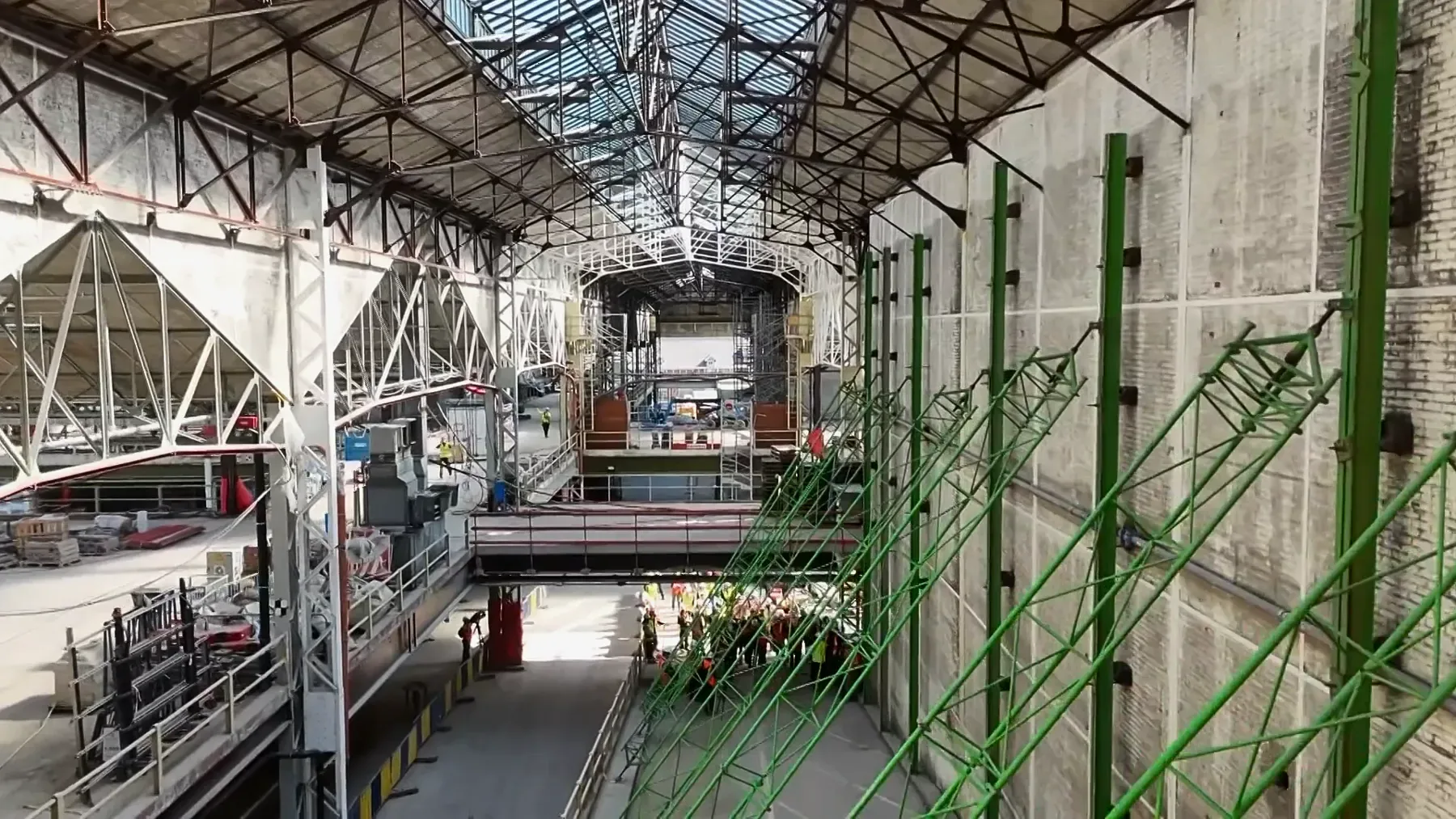
Interior view of Kanal–Centre Pompidou Brussels, courtesy of the Kanal–Centre Pompidou Brussels
You're working across curatorial staff in both Paris and Brussels. How does that collaboration actually happen, and where do the two perspectives pull in different directions?
The most exciting part of this collaboration is not only the fantastic collection, but working with a very large institution filled with people with amazing expertise — curatorial, academic, and otherwise. We were able to draw on that. Our own team is obviously much smaller; maybe we have more versatile practices, not all of us coming from major institutional or corporate backgrounds. Especially for this collaboration, dialogue was quite crucial, because we worked collectively — this display was shaped with contributions from seven or eight different curators on their side.
Whereas our team set the entire framework, gave it a tone, and went browsing the collection, supported by our colleagues from Centre Pompidou who actually know what's in the collection. You know, a collection is funny: you need to know what you're looking for in order to find it. The people who brought in those acquisitions to the institution, they hear from the team and then they react to that, and colleagues from one department relate to it completely differently than those from the Modern department, or the Photography department — the knowledge within Centre Pompidou is very compartmentalized.
So it was a big effort. We always start by throwing ideas on the table — there's a team, people from all sorts of different perspectives and departments, and they just think of works that they know and love, and bring them forward. And there are amazing works that don't make the cut, because of space, because of various conditions. There are some surprises too — our curators digging out works that are maybe a bit forgotten. So it's a big collective brainstorming effort, and as we go on, the framework becomes more and more precise and the selection becomes narrower.
There are all sorts of bureaucratic steps to get those works actually agreed and formalized, and very often with great collections, it's the same ten percent that everybody in the world wants. But we found a way of working with a lot of people around the table, contributing ideas, contributing to this exhibition.
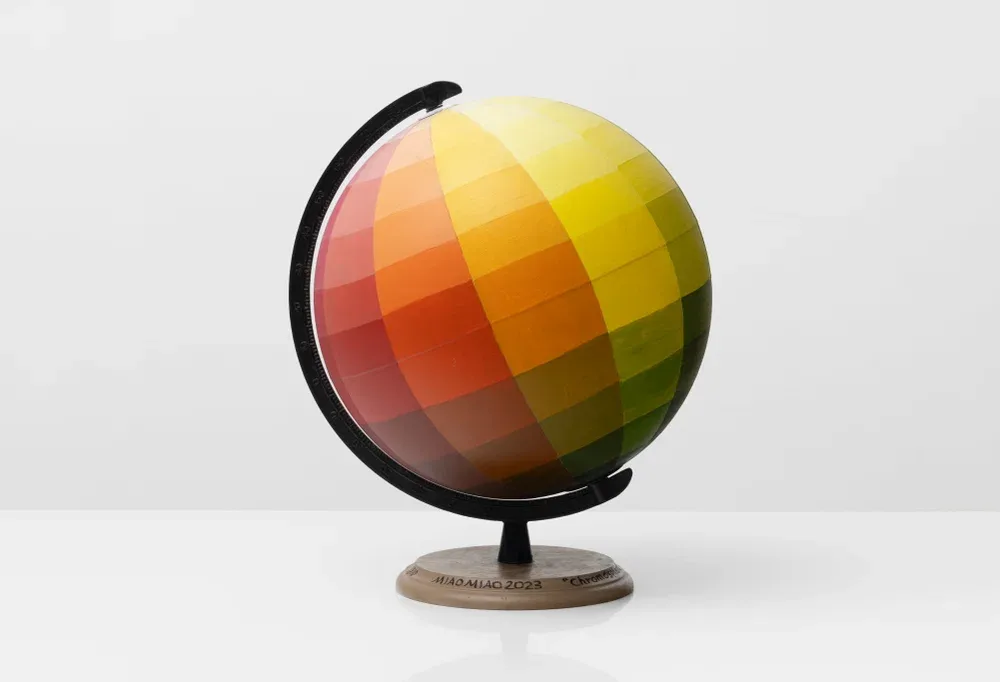
Chromosphere by Miao Miao, 2023, part of the "Département des Pièges" exhibition © Courtesy the Artist and Galerie Urs Meile. Photograph: Yang Hao
As you mentioned before — Kanal is running ten exhibitions at once, spanning both art and architecture. Is there a through-line connecting them, or did you want each to stand on its own?
I really like this question. The common denominator is the things I mentioned to you: the narrative stakes, the interdisciplinary practices, the participation. Beyond that, the shows are independent from each other. Within the one big framework of Kanal, we don't want the exhibitions to repeat the same aims, but they can expand on each other. And they're conceived with the idea that all of them are for everyone — but knowing some are aimed at different audiences too. It's not just about giving people a ticket to choose — we're also trying to open up different pockets of our audience, different parts of the city.
One of the shows gathers twenty young artists from Brussels with quite experimental practices. We hope that show brings in their peers, their parents, their families, their fellow students — people who might otherwise find the rest of the program less relevant to them. So it's a generational mix, a geographical mix, a mix of media and networks. And the building is so big that I thought having one thematic season would be too restrictive. For some institutions that works perfectly well, but there are just too many spaces here to fill with one theme.
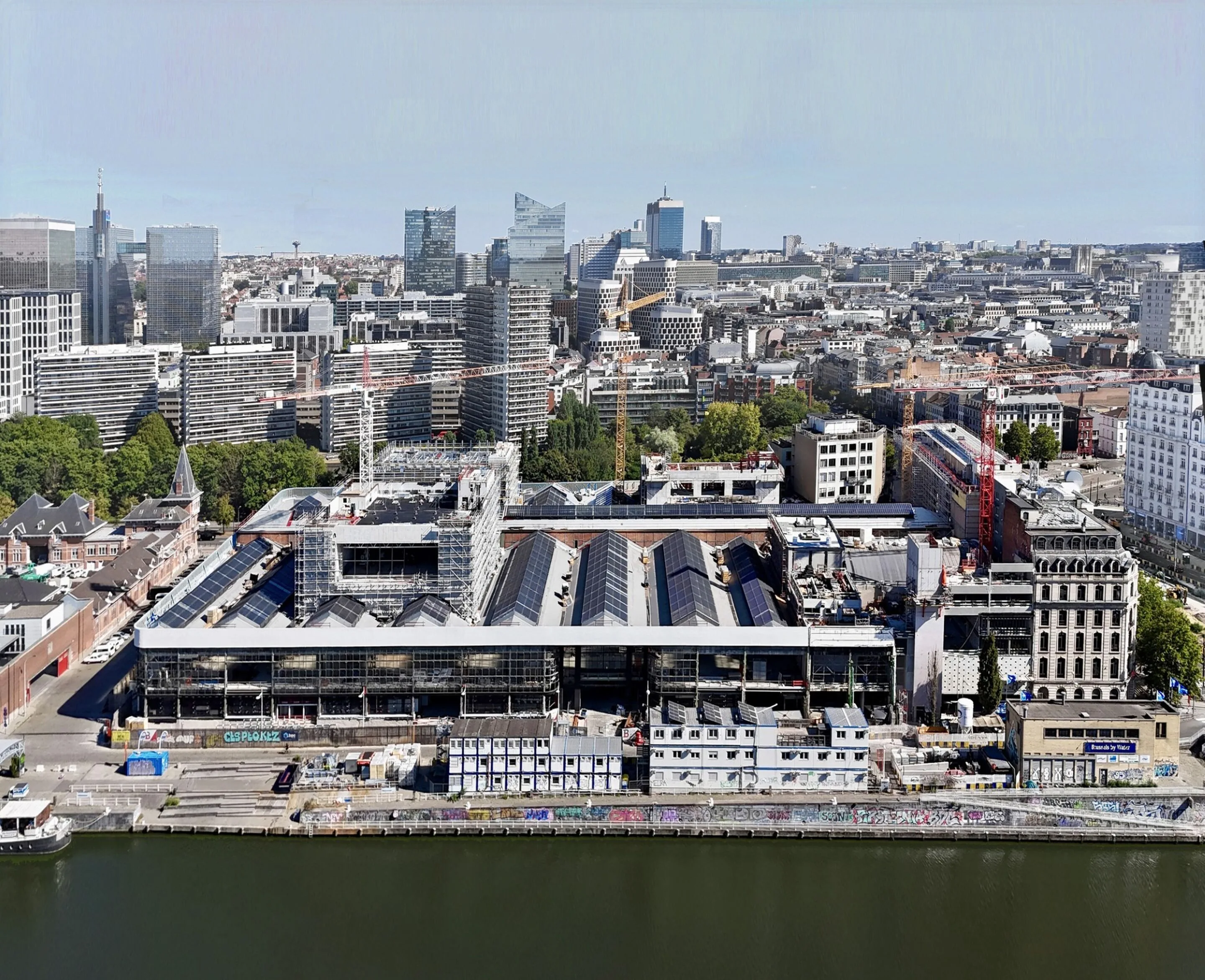
Exterior of Kanal–Centre Pompidou Brussels, next to the Canal that gave the museum it's name. Courtesy of Brussels Museums
Architecture gets its own dedicated programming here, which is unusual for a museum at this scale. Why did that deserve equal footing with the art program?
The architecture part is a really interesting one — it also operates on a different footing, because it's an existing institution. We used to call it CIVA; now it's called Kanal Architecture. It's an established institution. It holds, in its collection, one of the most amazing archives of books, prints, and archival material related to the urbanism, architecture, and landscape architecture of Belgium and Brussels — a fabulous and unique repository of objects and knowledge. It's been doing this for many, many years — not only facilitating research, but also running an exhibition program, a fantastic outreach program that brings it all into contemporary debates. It's not a huge institution, but it has a very loyal following, a fabulous specialized audience that cuts across generations.
So they're moving into Kanal — there's a space for storage of the collection, there's a beautiful library where most of it will go. The library is now complemented by Kanal's own book acquisitions. So it's art and architecture together now. There's a consultation center, so you can request blueprints on demand, alongside the exhibition spaces. They'll have a better facility, hopefully attended by more people, and they'll continue the brilliant work they've been doing — and they already come with an audience, which provides a certain comfort.
And we're not entirely separate, even in the artistic direction — the playground that was commissioned for the public spaces, that's a joint project.
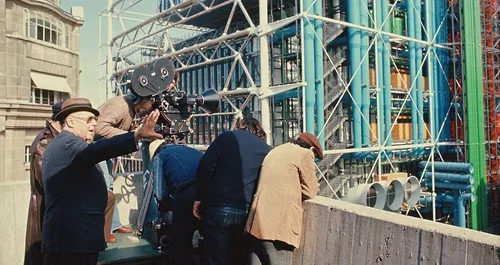
Still from “Protocols for the Opening of the Museum”, Courtesy of Kanal–Centre Pompidou Brussels
Is there one work or one room in the opening program you keep coming back to, something you can't wait for people to see?
Honestly, it's like trying to choose a favorite child. I think everything is absolutely incredible. This is a program that offers a lot of diversity, with many, many stories, very different types of experiences and ways of encountering art.
There's a gem I love — it's not really hidden, but it's not at the forefront of our marketing. During the opening we're running, on a loop, free of charge, in our smaller auditorium, a film program that's part of a bigger project called “Protocols for the Opening of the Museum”. Our curatorial team gathered documentary films from the openings of various institutions around the world — From LACMA, to Centre Pompidou, and Tate Modern, etc. Some of them are just fabulous. They show this institutional hope. They show controversies, they show how the world has changed, and what the mood was surrounding those ceremonies. I care about it dearly, because it doesn't have the same scale of exhibition or prestige, but it'll be there, running throughout the day.
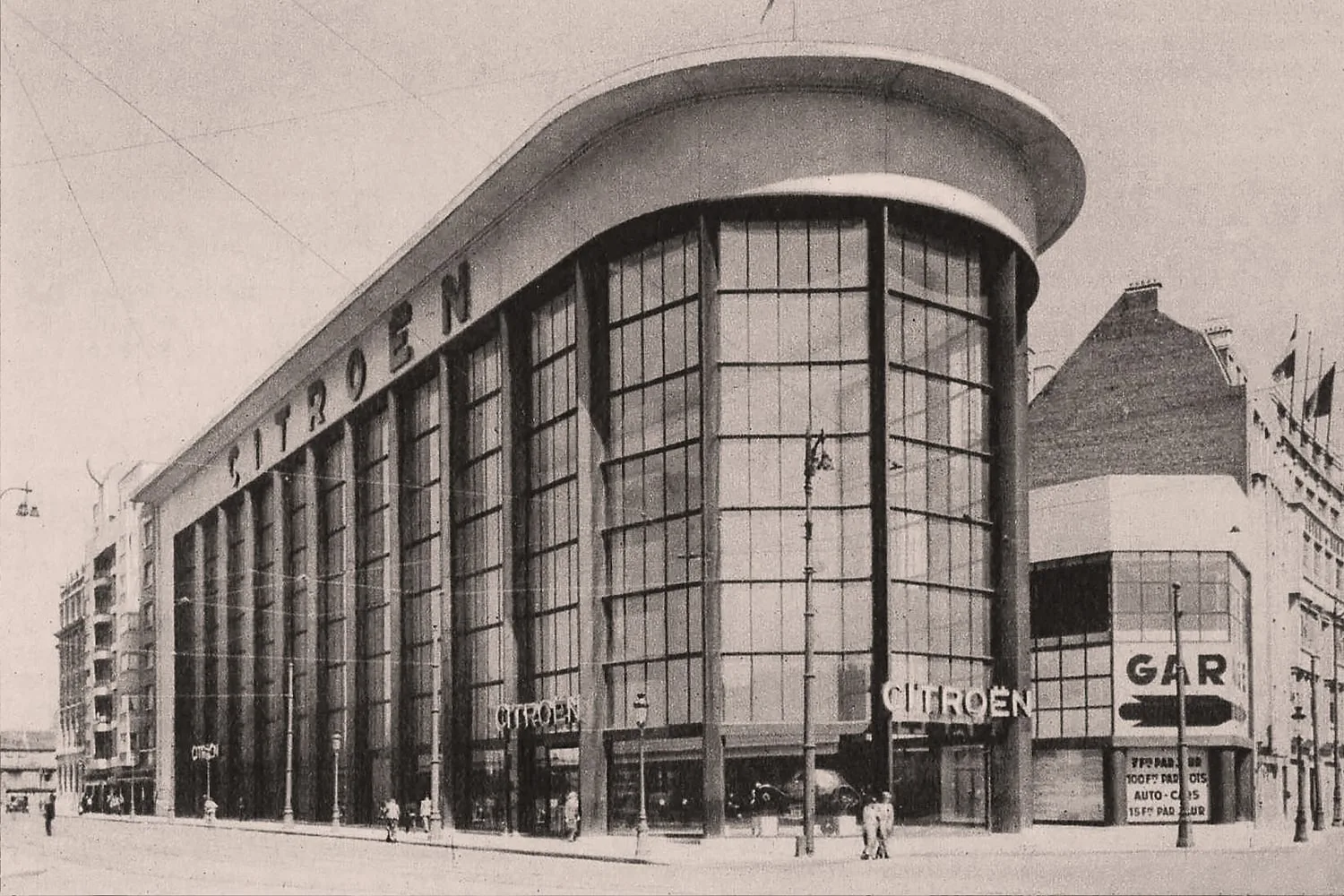
Photo of Kanal when it was still the Citroën Garage © www.admirable-facades.brussels
This building was a Citroën garage for decades. How much did that industrial history shape your curatorial choices, rather than just the architecture?
It shaped more than just the curatorial choices, too. There's the fact that the architects decided to work with the old garage using a conservation-minded approach — many spaces remained as they were, and the new elements were inserted rather than replacing the old ones. That gesture itself is part of why we have 20,000 square meters of public space, which automatically demands that a curator or director think about publicness as part of the institution. And what does that stewardship of public space mean today? Is it free resource sharing, what is our responsibility to the public in that space?
So the efforts of the museum works that way too, and it's great because it aligns with my values — I was inspired to apply for this job because of what this architecture lets you do with the notion of publicness, as well as with art. Art can be a bigger portion of the picture, but the architecture and public accessibility is still important.
So that's one thing. And then, obviously, we drew upon the industrial history of the area in this opening display, which evokes the building a bit. There's one exhibition in the opening program that's inspired very directly by the Citroën garage: in 1924–25, Citroën responded to a public tender from the French government to run the first automobile colonial expedition onto the African continent. The cars, over a hundred years ago, went down to Madagascar, and that coincided with the development of film and photography. There's documentary footage and plenty of visual material from that expedition, and some of the images that were generated became a “pre-internet” meme, including a stunning profile of a Mangbetu woman. There are still monuments around this, in Brussels and elsewhere. And the film from the expedition premiered in Brussels, at the Luna Theatre, which is the cinema next door to us. That shows not only an archive of that moment, but a contemporary response, reclaiming this image, which became so present. We felt this show needed to be part of the opening, to also acknowledge the legacy of this building — the full story behind it. It's always present.
The other thing I always look at is how choreographers and performance artists react to a space like this. We don't have a stage, we're not built for performance, but the space is so incredible and unique that this will generate something very interesting.
One of the free exhibitions at Kanal, "Hans Haacke" - Hans Haacke / Artists Rights Society (ARS), New York. Courtesy the artist, New Museum, New York, and Paula Cooper Gallery, New York. — © Dario Lasagni
You mentioned this a bit in your last answer too — a large part of Kanal is designed to stay free and open to the public. From a programming standpoint, how does that change what you choose to show and where?
It's really the nature of the spaces that doesn't let you program the same things everywhere. There's a museum circuit that holds museum-controlled, climate-controlled conditions, and that's where the more fine-art exhibitions go, because the public spaces aren't climate-controlled. So obviously we won't show historical works on loan from other museums in those spaces — that's absolutely impossible, for conservation reasons. Instead, we commission for the public spaces.
We started with not only the playground, but two other commissions — by Otobong Nkanga and by Banu Cennetoğlu. They're really fantastic works, also on a big scale, because the spaces they're situated in are that big, and they're site-specific and site-responsive. So we hope to maintain that approach of placing art in the public spaces as well as in the exhibitions. The ideal plan is also to make one evening a month free of charge. We're working on finding sponsorship support for that — it's important, although we know it's not always the economic barrier that prevents people from coming.
There's also the museum pass — for a yearly fee, it lets you visit all the museums of Belgium free of charge. It's below €100, and then you have access to absolutely everything, including Kanal. So there are ways around that. Obviously, the difference between the public spaces and the exhibition spaces is that the public spaces can only hold works that are less fragile, less sensitive, less precious. Nevertheless, these are great artists, and we really want that first encounter to happen, in a space that makes sense.
Finally, the partnership with Centre Pompidou runs through 2031. What do you want Kanal's own artistic identity to look like once you're not leaning as heavily on their collection?
I hope this gives us enough time to develop the identity we've spoken about, and the program we've talked about. But I have to say that no matter what the future of this partnership looks like, with a space of this scale, we need a historical collection to draw on — whether through partnerships, through long-term loans, through long-term projects. We don't know yet exactly what it's going to look like. We're just getting started, and there's a new regional government to work with. We need a bit of post-opening time to think through our identity and our future beyond the first five years.
But there's a lot at stake — I don't think we can run this museum without structural partnerships like the one with Centre Pompidou, because even though Kanal is a collecting institution, we currently have around 120 artworks by artists based in Belgium and Brussels. That won't fill those spaces. And it's a bit unrealistic to think we could fill them on our own while also growing exhibitions all the time. So we need to think about the future in a more strategic way. But first we need to get the hurdle of the opening out of the way!
Kanal-Centre Pompidou opens its doors on November 28, 2026, with ten exhibitions spanning art and architecture and large public spaces open to all. The 30,000 free tickets for opening weekend were claimed within the first 24 hours, but tickets for other days are now on sale. Plan your visit here!