Cultivist Conversations with Andrea Alvarez
13 Jul 2026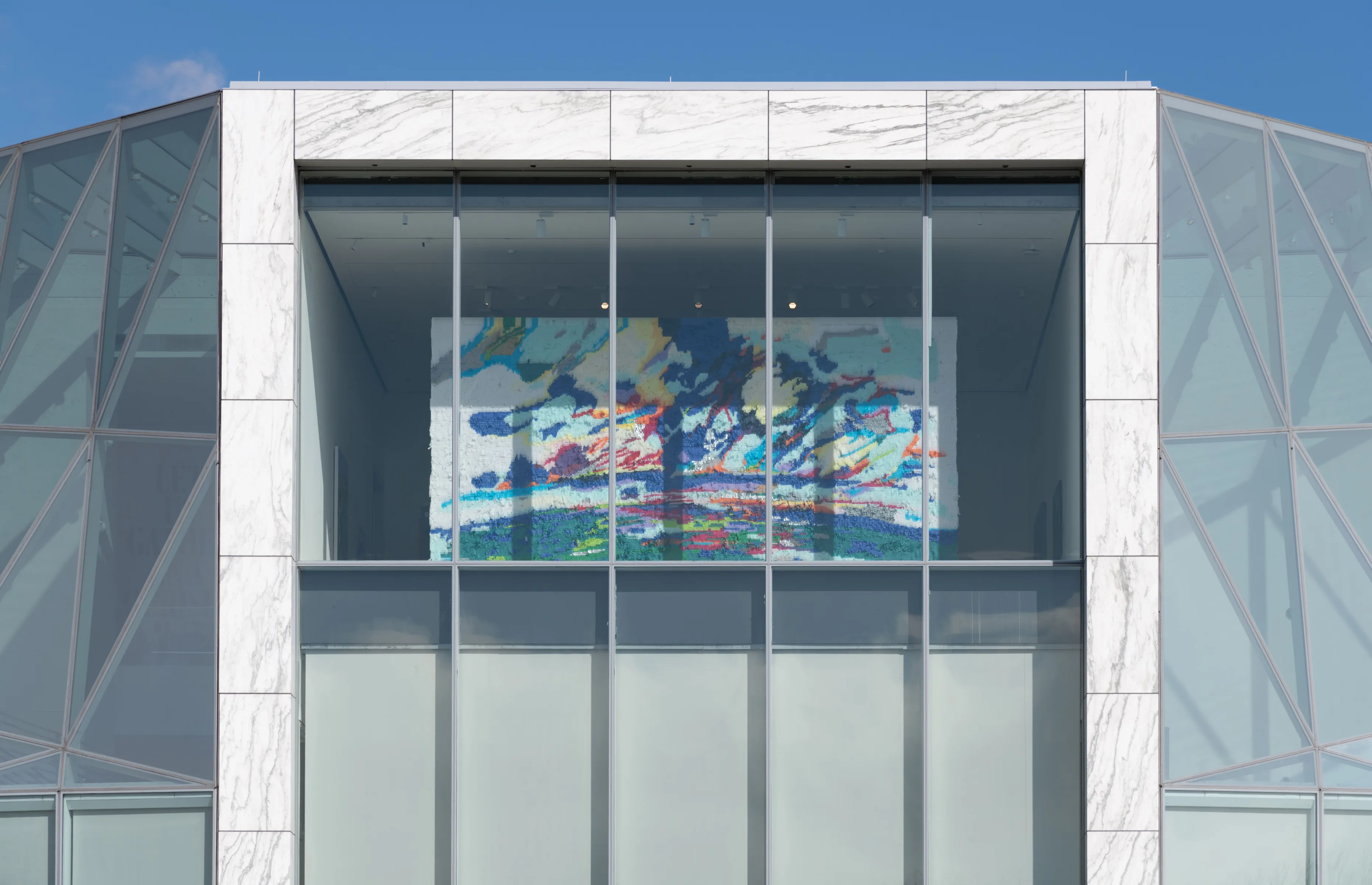
Buffalo isn't the first city that comes to mind when you think about a landmark survey of contemporary Latinx painting. Andrea Alvarez would like to change that. Her exhibition Let Us Gather in a Flourishing Way brings together 58 artists in a show that's as expansive as it is precise, and after this Summer, it's going to travel the country. We caught up with the curator to talk about how it all came together.
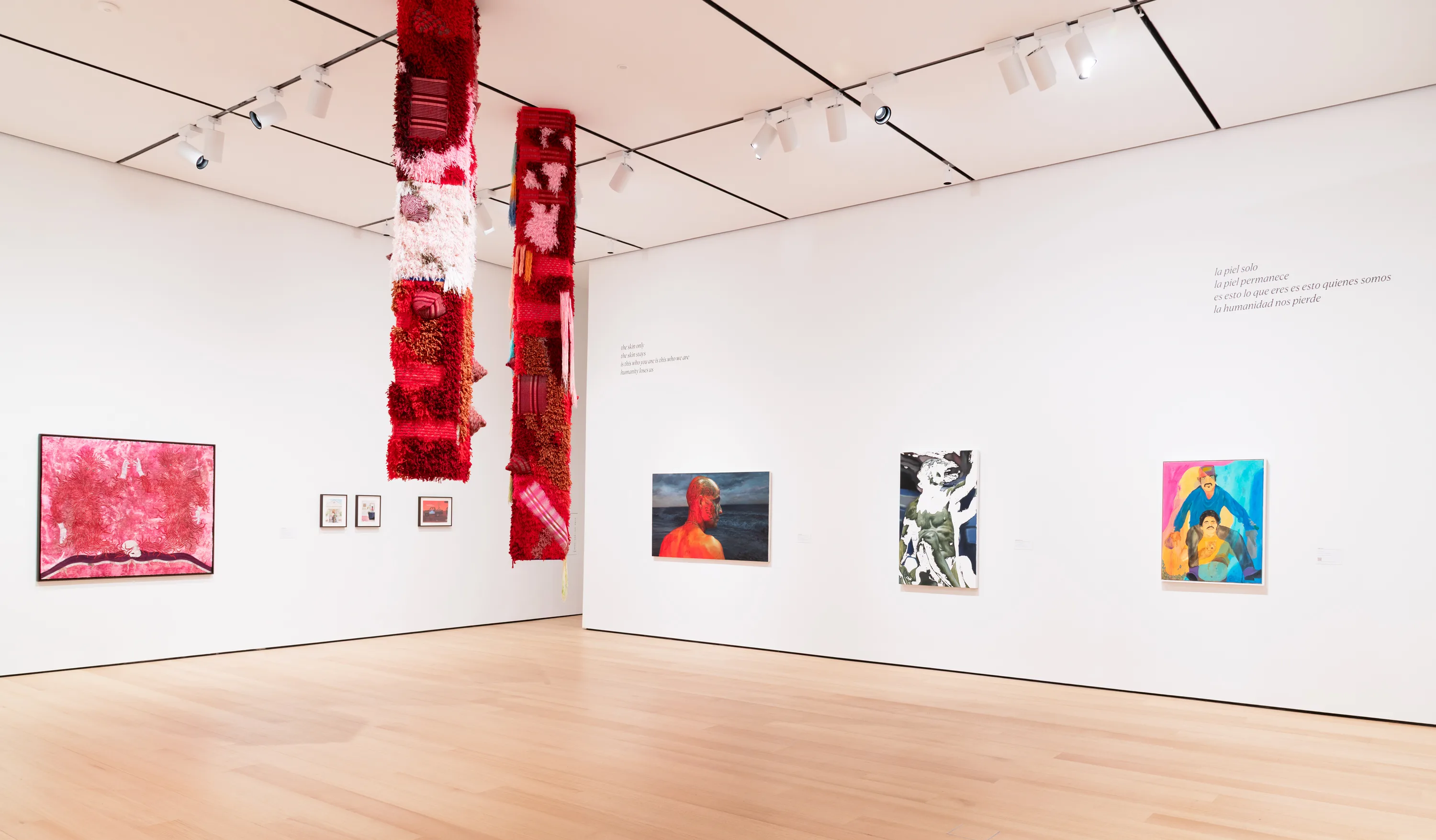
Installation view "Let Us Gather in a Flourishing Way" curated by Andrea Alvarez. Photo Brenda Bieger, Buffalo AKG
You've been at the AKG since 2017, and Comunidades Visibles in 2021 was an earlier chapter in your engagement with Latinx art and migration. How does Let Us Gather in a Flourishing Way feel like a different kind of statement in scale, ambition, and what you wanted to say?
With a smaller project like Comunidades Visibles, we worked to platform the artists and their engagements with materials to highlight the importance of community and collectivity among first- and second-generation immigrants. Let Us Gather in a Flourishing Way, on the other hand, is broader in scope and is an opportunity to make wider claims about what or how these artists are contributing to the fields of contemporary art, American art, and painting in general. As you look at a large-scale project like Let Us Gather, you might see from one angle an argument about hybridity or from another about resisting or engaging with art history. Smaller shows cannot be so kaleidoscopic.
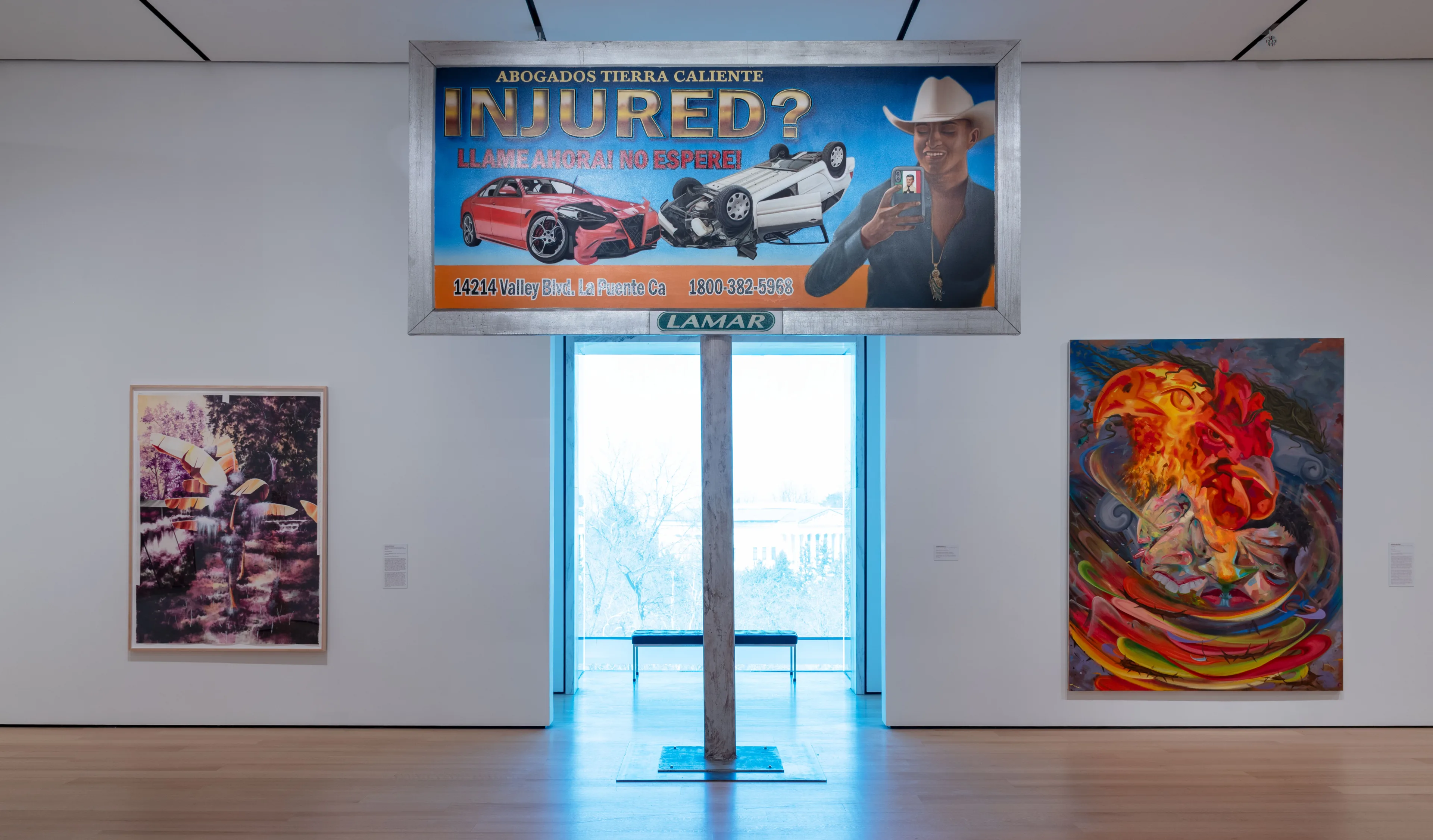
Installation view "Let Us Gather in a Flourishing Way" curated by Andrea Alvarez. Photo Brenda Bieger, Buffalo AKG
Fifty-eight artists is a genuinely extraordinary number for a single exhibition. How did you avoid the trap of the kind of show that lists names rather than builds an argument? What was the curatorial logic that held it together?
I kept returning to a central question: is this artist contributing to the ongoing conversations (implicit or explicit) on what is contemporary Latinx painting? If they were, then I also identified shared concerns/interests among artists over the course of years of studio visits and research, which I later used to group them into thematic categories. These thematic groupings are only one way to understand or approach the artworks. I was careful in the book and galleries to convey that these are not closed readings, but instead invitations to understand one layer. In this way, the show feels expansive in scope but manageable in scale as people navigate the groups.
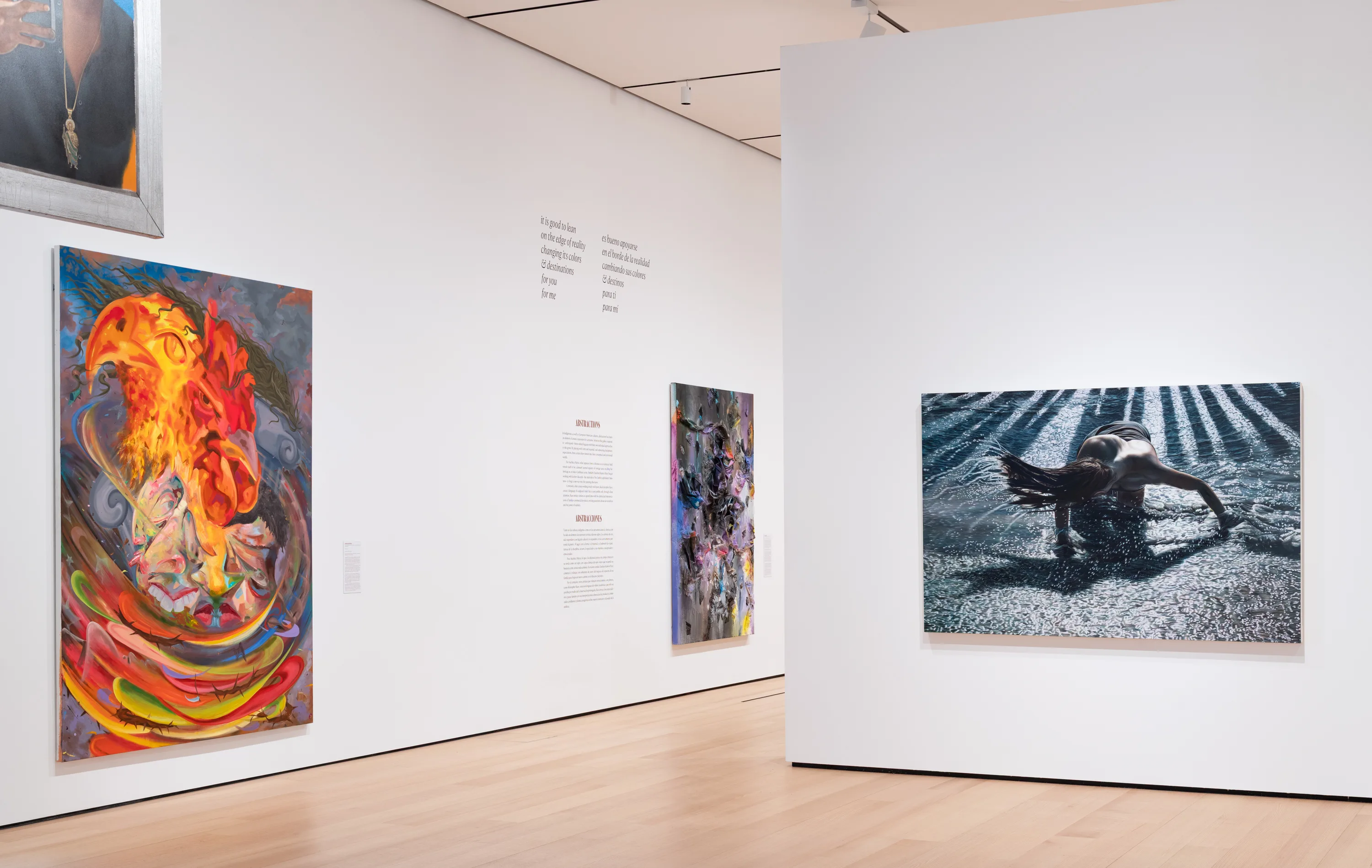
Installation view "Let Us Gather in a Flourishing Way" curated by Andrea Alvarez. Photo Brenda Bieger, Buffalo AKG
The title comes from a Juan Felipe Herrera poem,(below) and the show is organized into seven thematic groupings rather than a single through-line. Can you walk us through one grouping and tell us what a visitor discovers there that they wouldn't expect?
In the “Bodies & Figures” section, visitors encounter a group of artworks that drive home the importance of visibility for marginalized and minoritized bodies. In different ways, the artworks center languages of portraiture that invite reflection on visibility, access, and presence. One body of work seen in this grouping, however, does not feature any human forms. Salomón Huerta’s three Untitled works function as double portraits of himself and his father, using inanimate objects as surrogates that carry the narrative and bear the weight of the subjects’ story. The artist merges the influence of Giorgio Morandi’s quiet still lifes with his own autobiographical practice to create a uniquely powerful body of work.
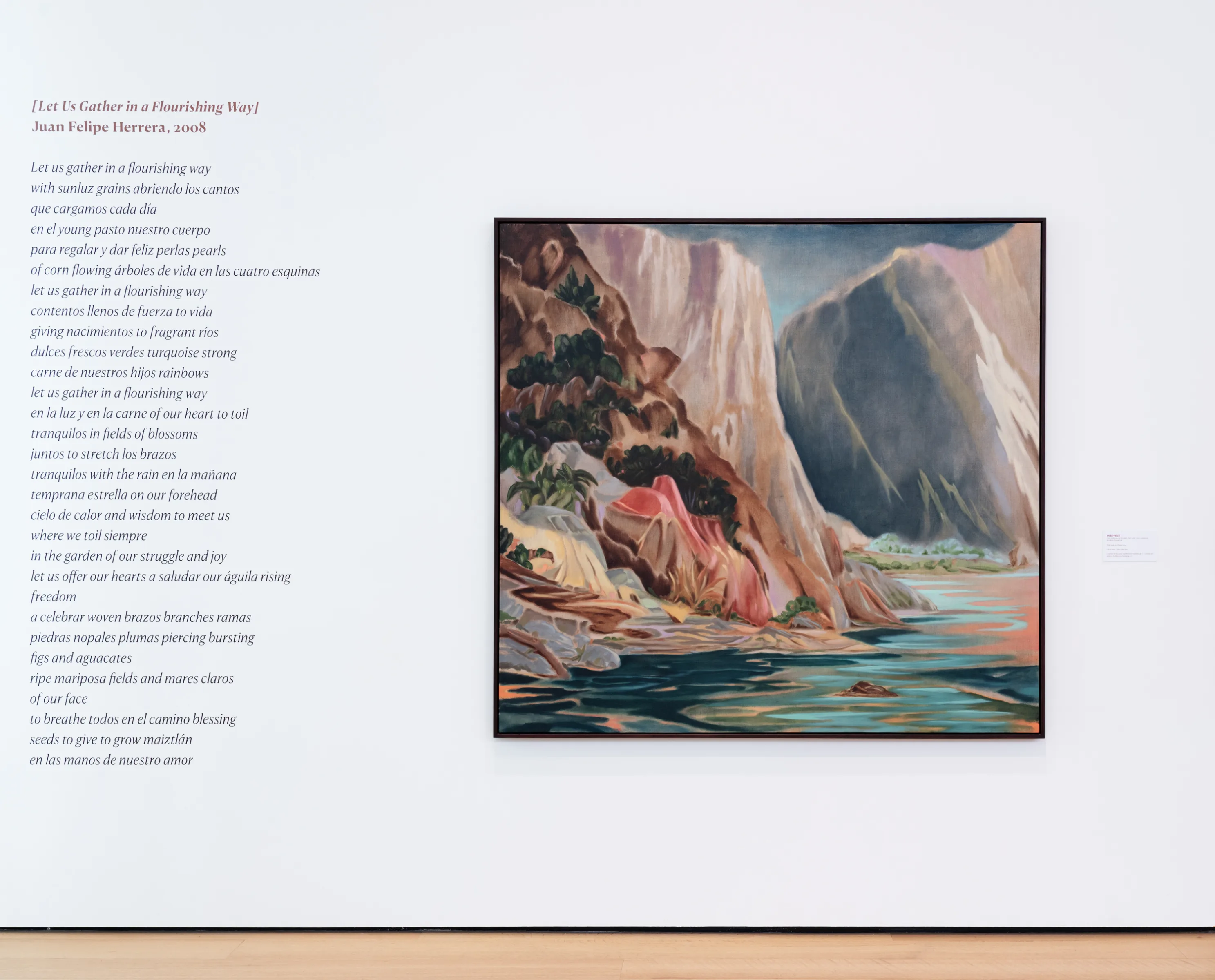
Juan Felipe Herrera "Let Us Gather in a Flourishing Way" (2008) (left) Emilio Perez "Wide Awake in a Dream" (2024) (right) Photo Brenda Bieger, Buffalo AKG
The works in this show feature some unusual practices and mediums. Yvette Mayorga reworking Boucher through acrylic nails and rhinestones, Patrick Martinez building a whole architectural surface out of neon tubes, tile, and family photographs, etc. (below) What are you hoping the viewer gets out of such a multidisciplinary exhibition?
The Latinx artists in this exhibition (and many more) are resisting many inherited disciplinary expectations. Many of them have gone through the traditional pipeline of art school MFA programs and have the foundational grounding the field promises is the key to their success. To those learnings they bring cultural techniques and materials, family histories, and personal experiences that have historically been derided as aligned with craft aesthetics or as uncomfortable realities to be kept out of the fine arts. By embracing alternative materials, channelling a rasquache aesthetic, or honoring their families’ labor, these artists forge new paths forward for a contemporary language that embraces life and its realities.
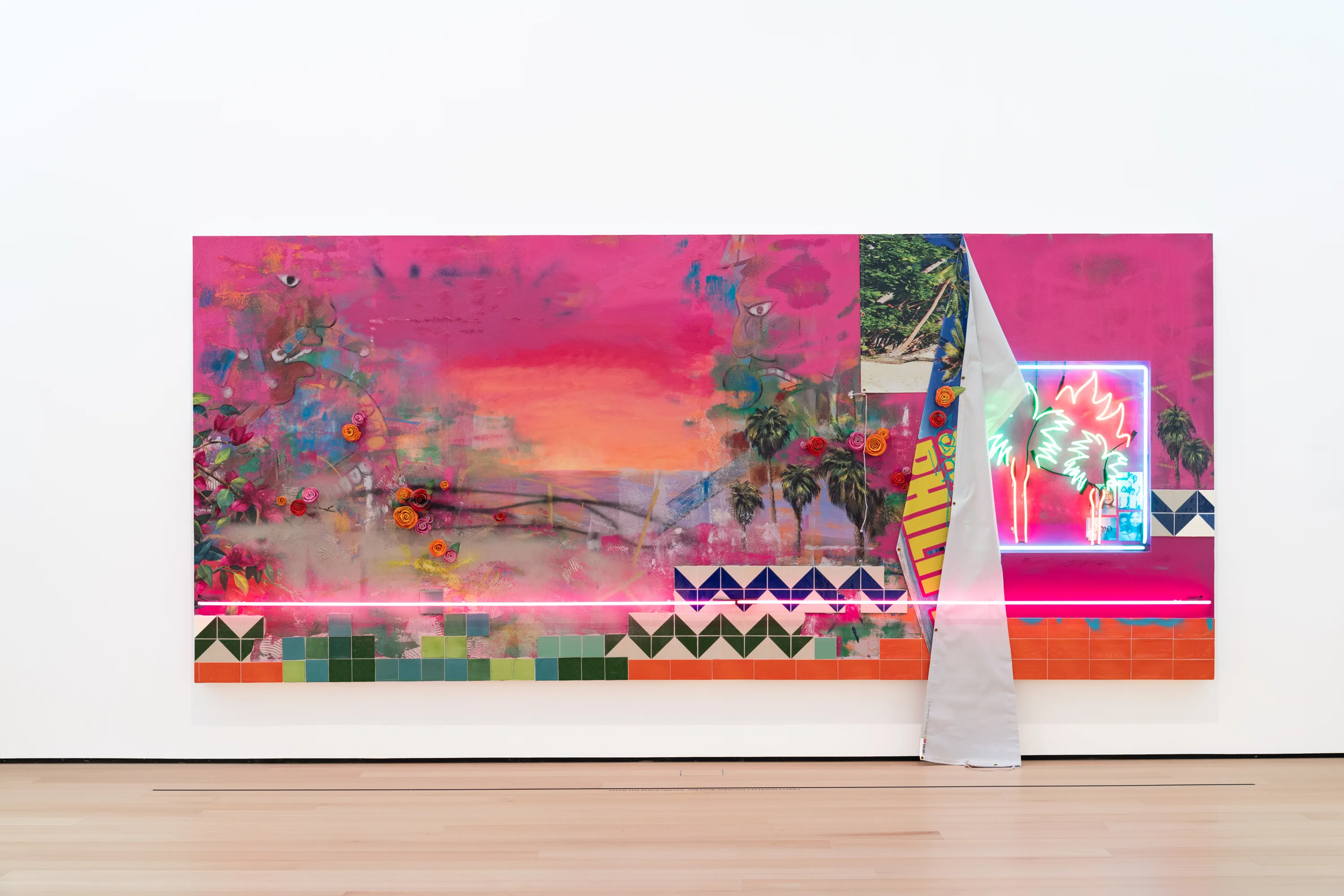
Patrick Martinez "Promised Land" (2022) Collection Buffalo AKG Art Museum, George B. and Jenny R. Mathews Fund, 2022 (2022:78). Photo: Yubo Dong, ofstudio photography, courtesy of Charlie James Gallery
The show is explicitly bilingual, it's listed in both English and Spanish on the AKG's website. How did that decision shape the experience of being in the galleries and how does it change the perception of the exhibition?
The exhibition catalogue and the gallery didactics are also fully bilingual. This was a deliberate decision on our part to make sure people can read, see, and think in two languages as they move through the spaces or the book. Like me, many of the artists speak Spanglish, moving between Spanish and English, and our audiences do, too. It also felt important to provide materials in both languages to make this exhibition accessible to Buffalo’s monolingual Spanish audience, and critical to make sure the catalogue would reflect this value as well.
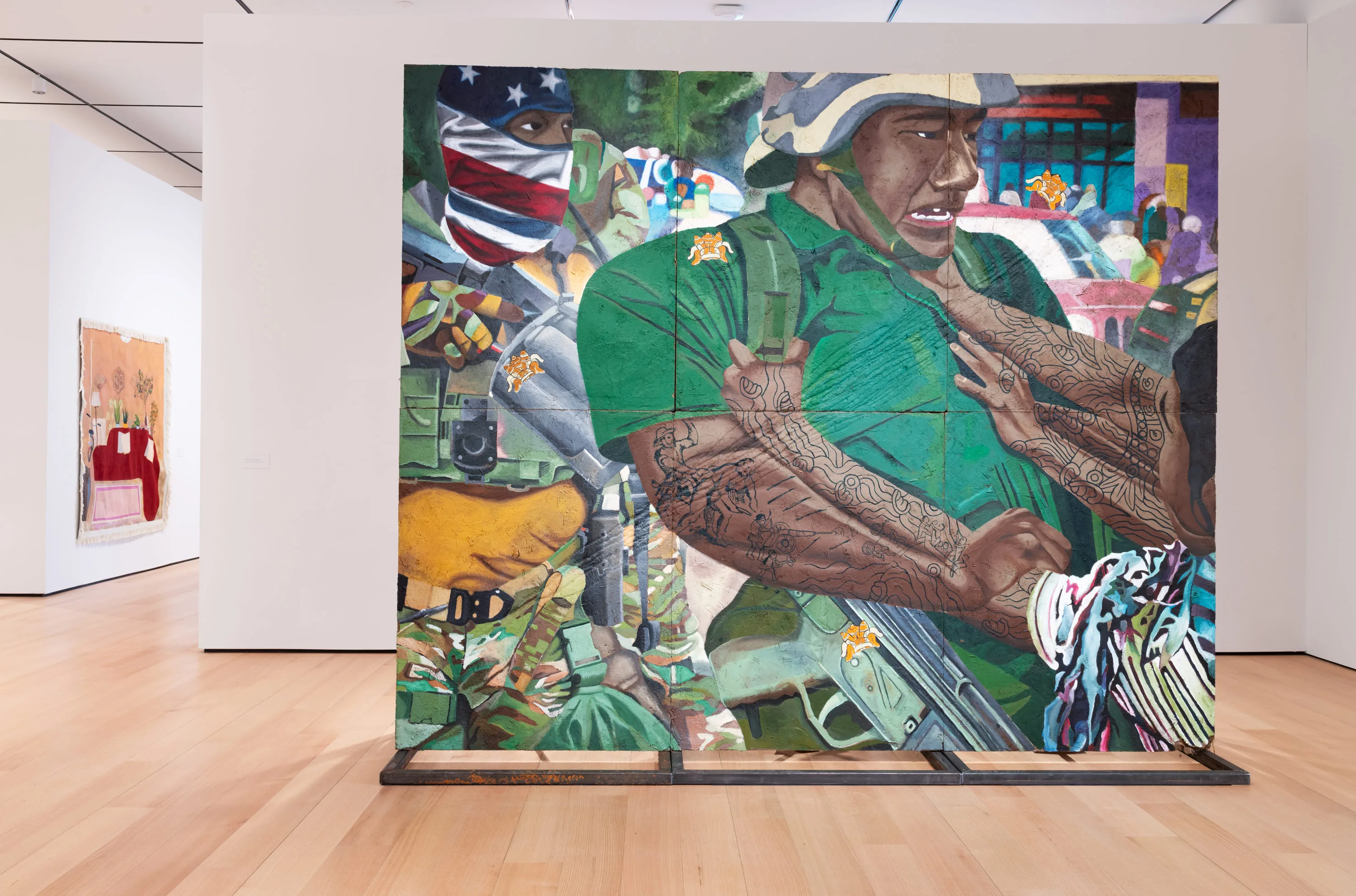
Rafa Esparza "Tratos" (2025–26) Photo Brenda Bieger, Buffalo AKG
There's a political context that's impossible to ignore right now: debates about borders, about who belongs, about the visibility of Latin American and Latinx communities in American life. Did that context change how you thought about this exhibition as you were finishing it?
These political and social contexts have become more visible and palpable in the mainstream media and in public life over the last few years, but for immigrants and their families, these realities have been inescapable for decades. It is in that context that these artists have been making work, and it is in that contexts that scholars like me have been working. Recent heightened attention and intensified policing find their ways into the work but for the most part the greatest shift is in how an exhibition like this one is received by the public. Audiences are better suited today, for example, to empathize with the struggles of undocumented individuals or to appreciate the contributions of migrants to American public life.
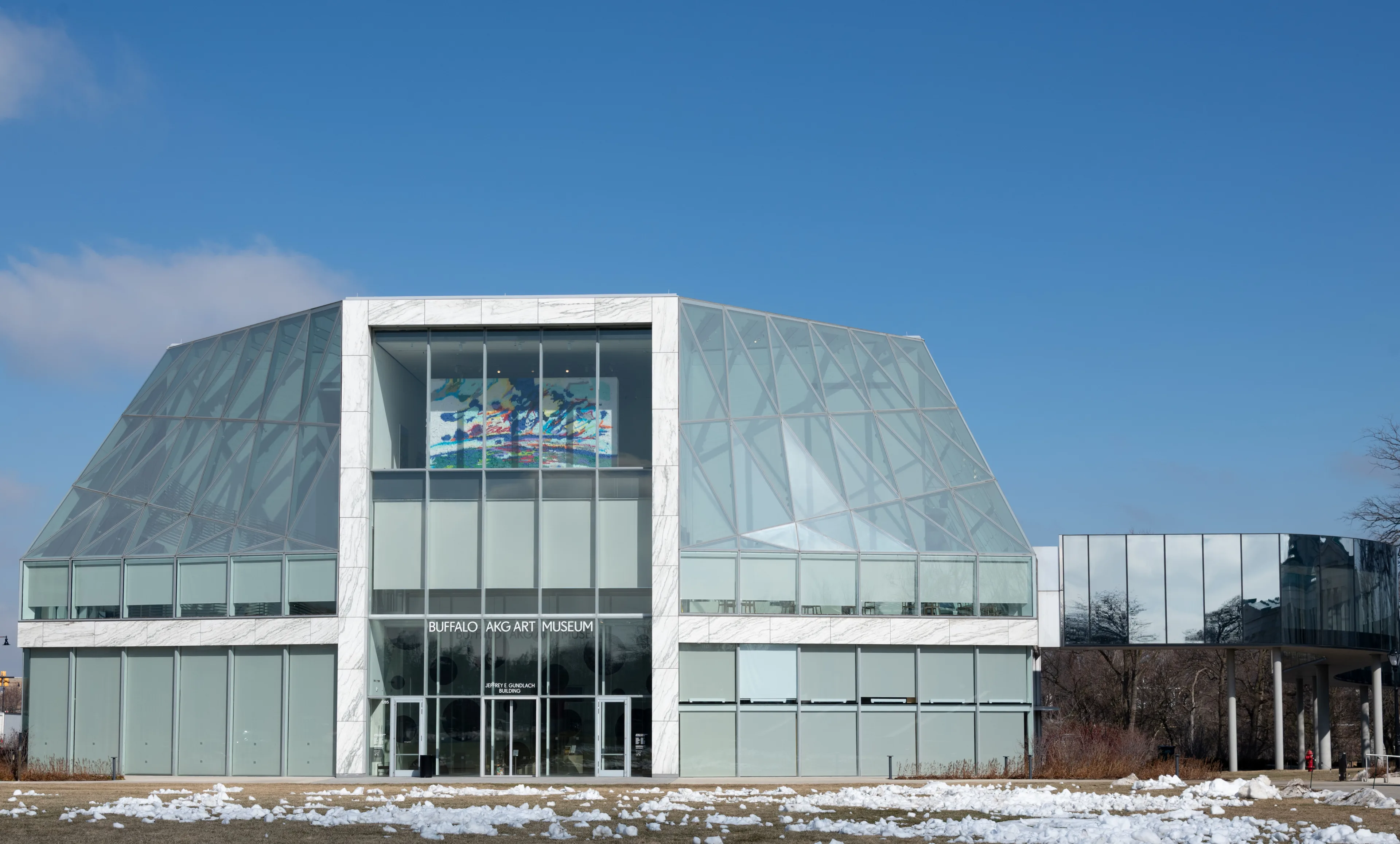
Exterior Installation View Justin Favela "St. Maarten (1972), After Marisol" (2025-26) Photo Brenda Bieger, Buffalo AKG
After Buffalo, the show travels to Des Moines, Denver, Phoenix, and Seattle. These four very different cities contain very different Latinx communities. What does it mean to you that this will land differently in each of those places? And is there anything about seeing it here first, at the AKG, that feels specific to Buffalo?
I’m looking forward to discovering how each museum’s audiences will shift the conversation around the artworks, how different pieces will be received based on those contexts, and whether there are any marked differences we experience across the sites.
When I envisioned this project, I organized it in relationship to the AKG’s world-renowned collection of mid-twentieth century American and European paintings, so it felt very important to open the exhibition here where we could see that argument in the galleries. Many of the artists are deeply informed by art history, either implicitly or explicitly, so our collection functions as a springboard for some of these conversations around how Latinx artists are contributing to the fields of contemporary and American art.
Let Us Gather in a Flourishing Way is on view at the Buffalo AKG Art Museum through September 6, 2026. The AKG is a Cultivist partner, and members can plan their visit using the Cultivist App, and buffaloakg.org.