Cultivist Conversations with Alexis Lowry
18 Sep 2026
As Senior Curatorial Director at Hauser & Wirth, Alexis Lowry has built a career on excavating underexamined corners of modern and contemporary art, from her retrospective of Charlotte Posenenske at Dia Beacon to this year’s Calder | O’Keeffe in Palo Alto. Her latest project turns to Hans Arp.
Arp. Heads or Tails is the German-French modernist’s first New York exhibition in nearly fifteen years. The show takes Arp’s late Threshold sculptures as its starting point, tracing them back through the cut-out drawings and paper collages that first gave them shape decades earlier. We caught up with Alexis to talk about chance, contingency, and what an artist known for curves and biomorphic forms has to contribute to modern conversations.
You've spent a good portion of your career focusing on Minimalism and Land art, artists working in very clean, geometric ways. Arp’s work was shaped through his own complex “object language”, curves, and chance. A departure from your typical focus. What was it like getting into his head for this one?
Arp is an important antecedent for many of the artists I have long been interested in, and this project felt like a natural extension of several of my own ongoing research questions. First, there is the economy of means in Arp's work. By this I mean the simplicity of his line, which, despite the lushness of his forms, seems to pave the way for the geometric austerity of minimalism. There is also the way the cut functions as a central artistic strategy across his practice and, of course, his interest in nature, not as something to depict but as a structural model for thinking about form and composition.
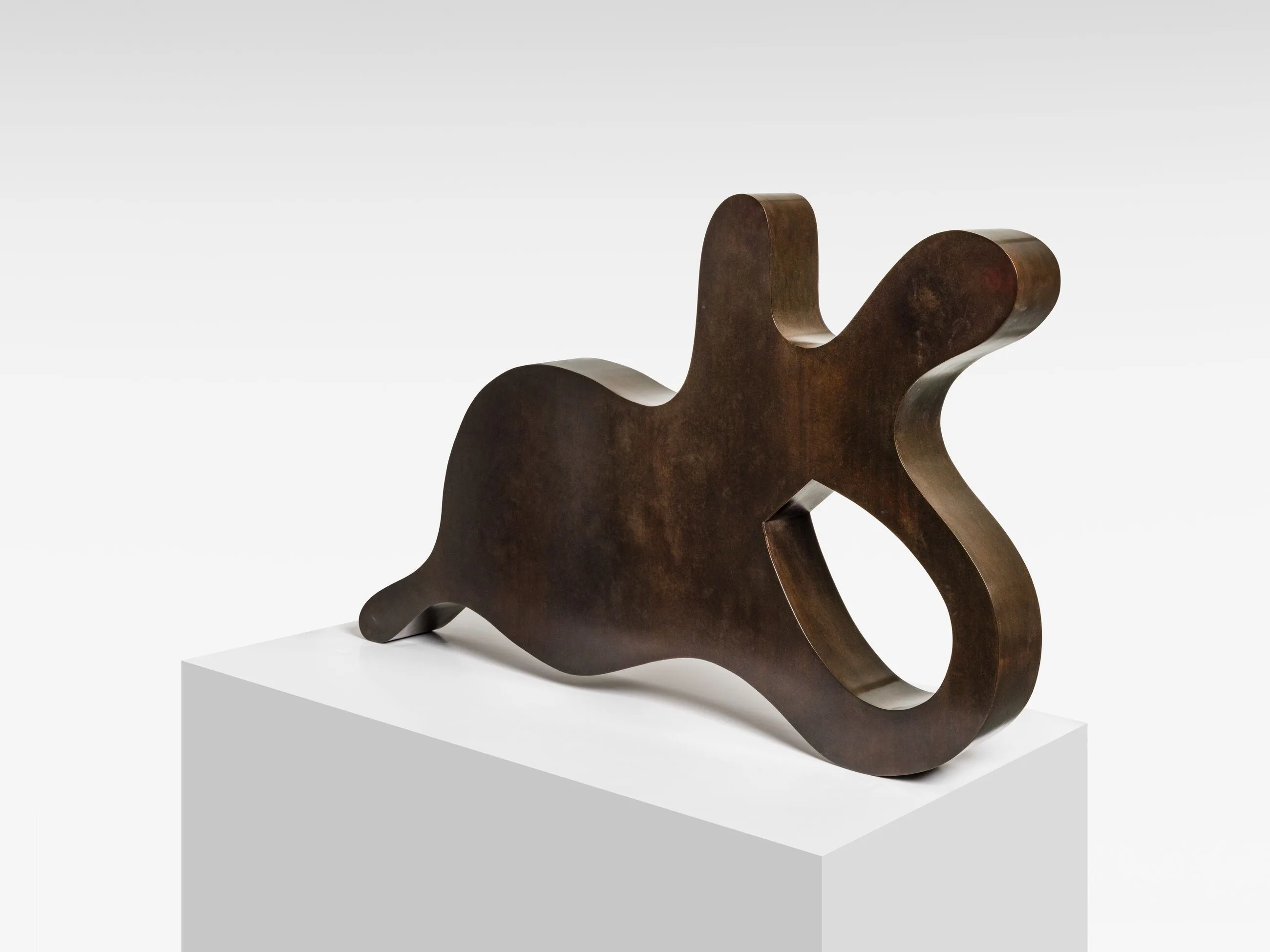
Hans Arp “Siamesisch / Siamois (Siamese)” (1960 - cast 1984) Photo Roman März
The design of the show is inspired by Arp's actual studio in Locarno. What did you borrow from that space?
Arp’s studio in Locarno, Switzerland featured these wonderful shelves where he would lean framed drawings and other two-dimensional works. He similarly stacked the Threshold sculptures on what look like bookshelves. His more rounded sculptures were clustered together on pedestals of many different shapes and sizes. The studio was set up so that it was easy to move things around, to pick up a drawing, like a book, and use it as source material for the next work or to turn a sculpture around in hand to imagine how one shape could develop into another. I wanted to bring this sense of contingency to the exhibition display and to invite viewers to see the works not as fixed in place, but as a library of forms – part of Arp’s ‘object language.’
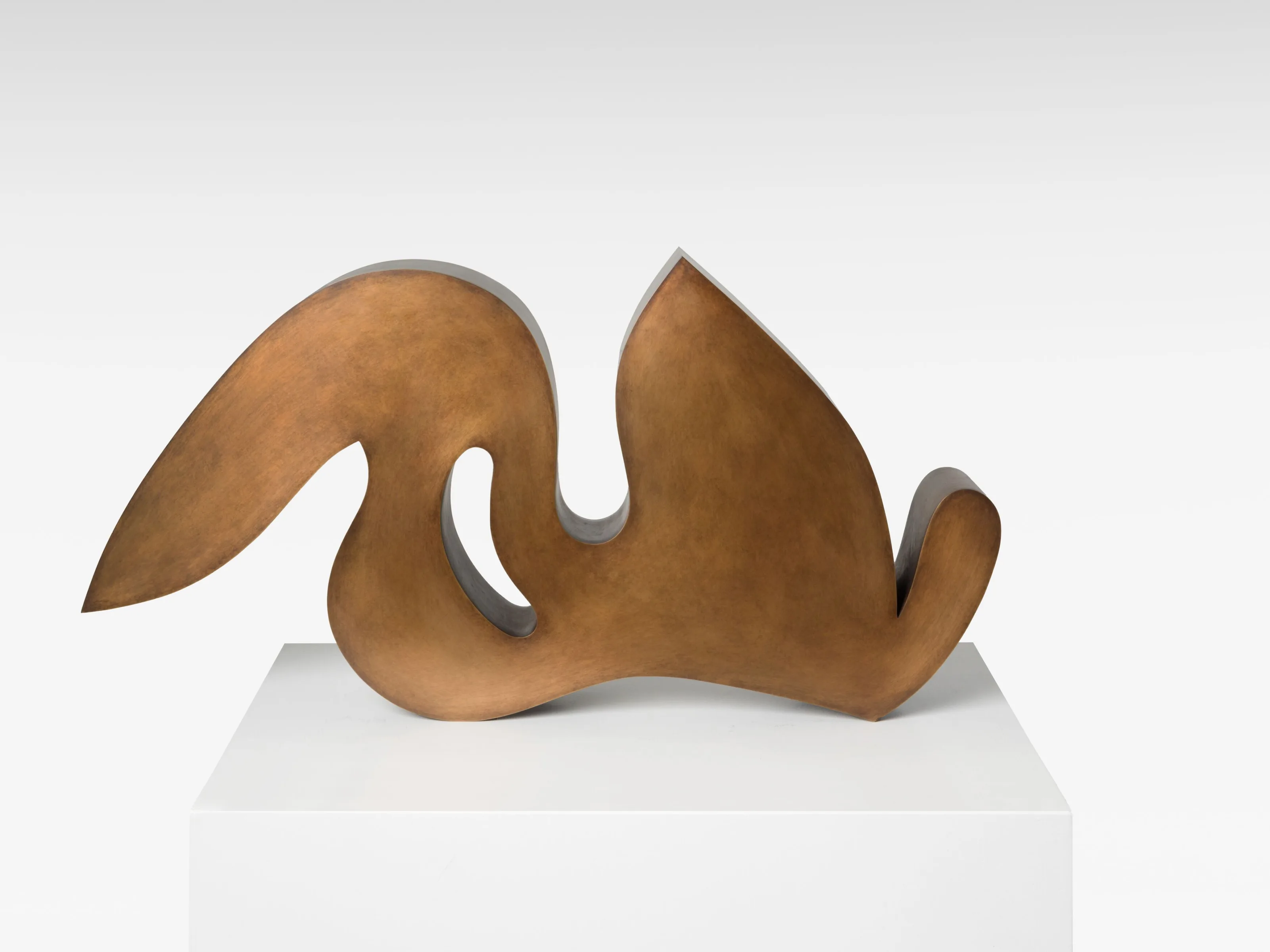
Hans Arp “Ruhende / Allongée (Reclining)” (1960) Photo by Roman März
There's a sculpture in the show, "Ruhende / Allongée (Reclining)" from 1960, that's basically Arp remixing his own drawings, "Stuhl und Flasche" (1926) and "Vegetale Nacht" (1938), from decades earlier. Did you feel any connection to Arp while tracing the throughlines between those works?
Working on this show I gained an enormous appreciation for how Arp never wasted a line. He never threw out an idea. A curve from the 1930s easily gets revisited and becomes a relief in the 1950s. There is an indefatigable sense of possibility in this way of working that I think offers a kind of optimism about the future we could all use right now.
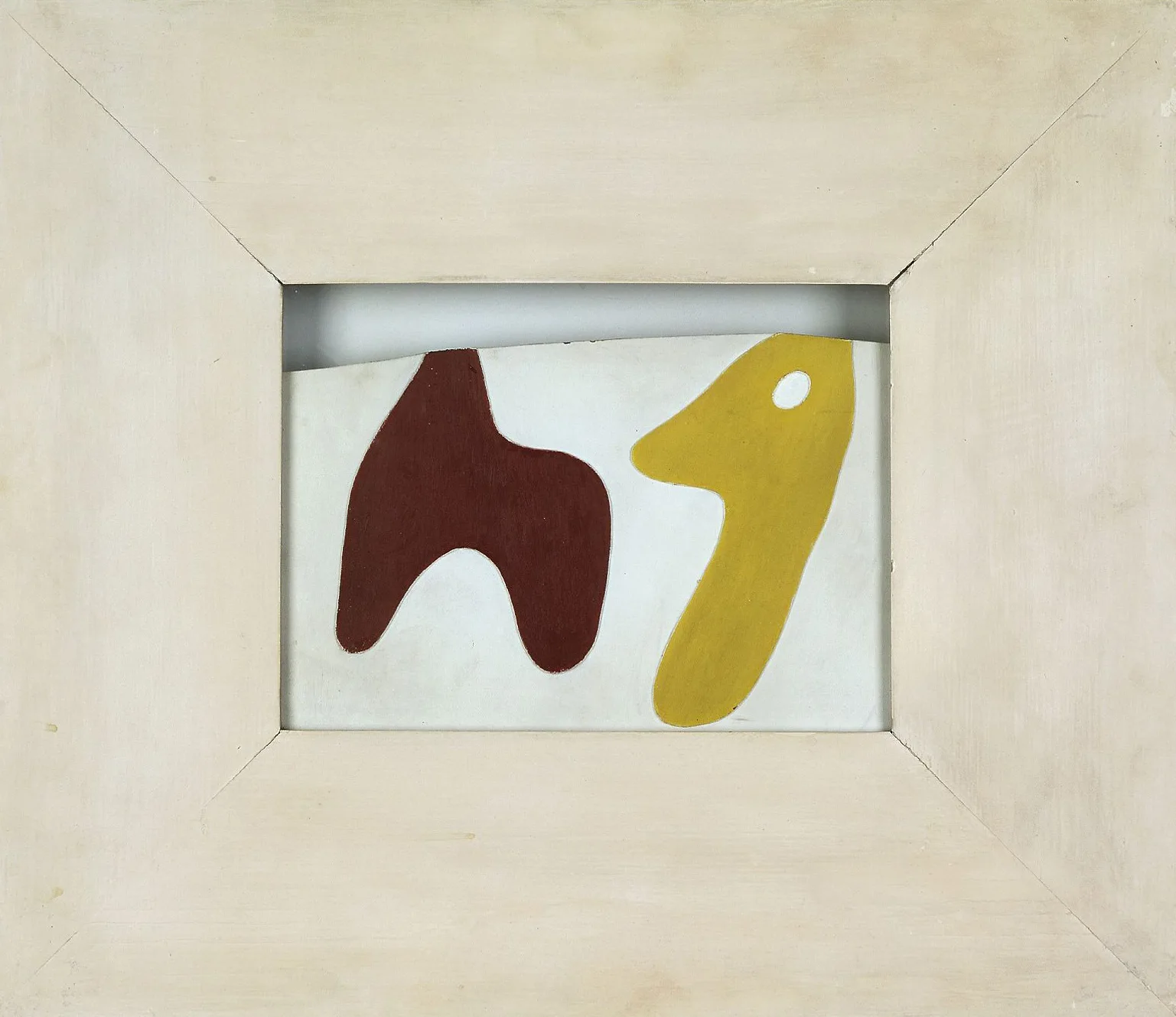
Hans Arp “Stuhl und Flasche / Chaise et bouteille (Chair and Bottle)” (1926) Photo by Roman März
"Das kleine Theater" is described as a sculpture that's almost missing its back panel, so it opens right up into the room around it. How do you even light and place something like that?
One reason I wanted to play with wall color in this exhibition is that I really wanted to emphasize for viewers what Arp described as the two perspectives of the Threshold sculptures, of which ‘Das kleine Theater’ is really emblematic. Arp thought of these works as having fronts and backs, and so when looking at and through ‘Das kleine Theater’ I wanted visitors to have a different experience depending on which side of the room they were looking at the work from.
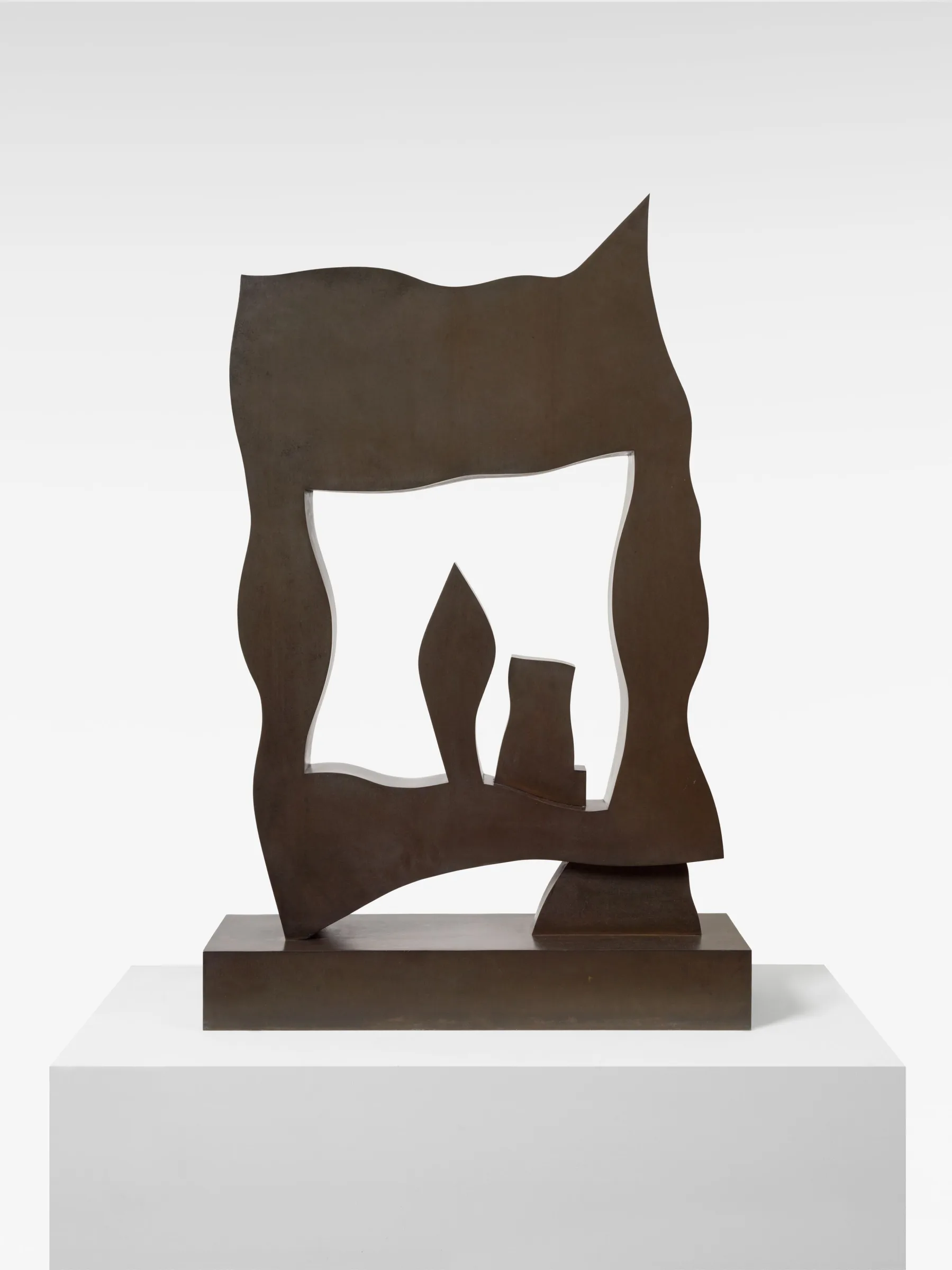
Hans Arp, “Das kleine Theater / Le petit théâtre (The Small Theater)” (1959, cast 1972) Photo by Roman März
The show's title, "Heads or Tails" comes from a piece that's literally about chance. How much “chance” did you rely on while actually arranging the show?
There is a lot of planning that goes into making an exhibition, but I think it’s always important to leave some questions unanswered until you are in the space with the works of art themselves. Artworks have a way of speaking to you in this process of expressing where they need to be and what works they need to be next to. This can be really surprising. In this case, we moved a few things around from our initial layout and they completely changed the feel of the room and the sense of vivacity that these works exude.
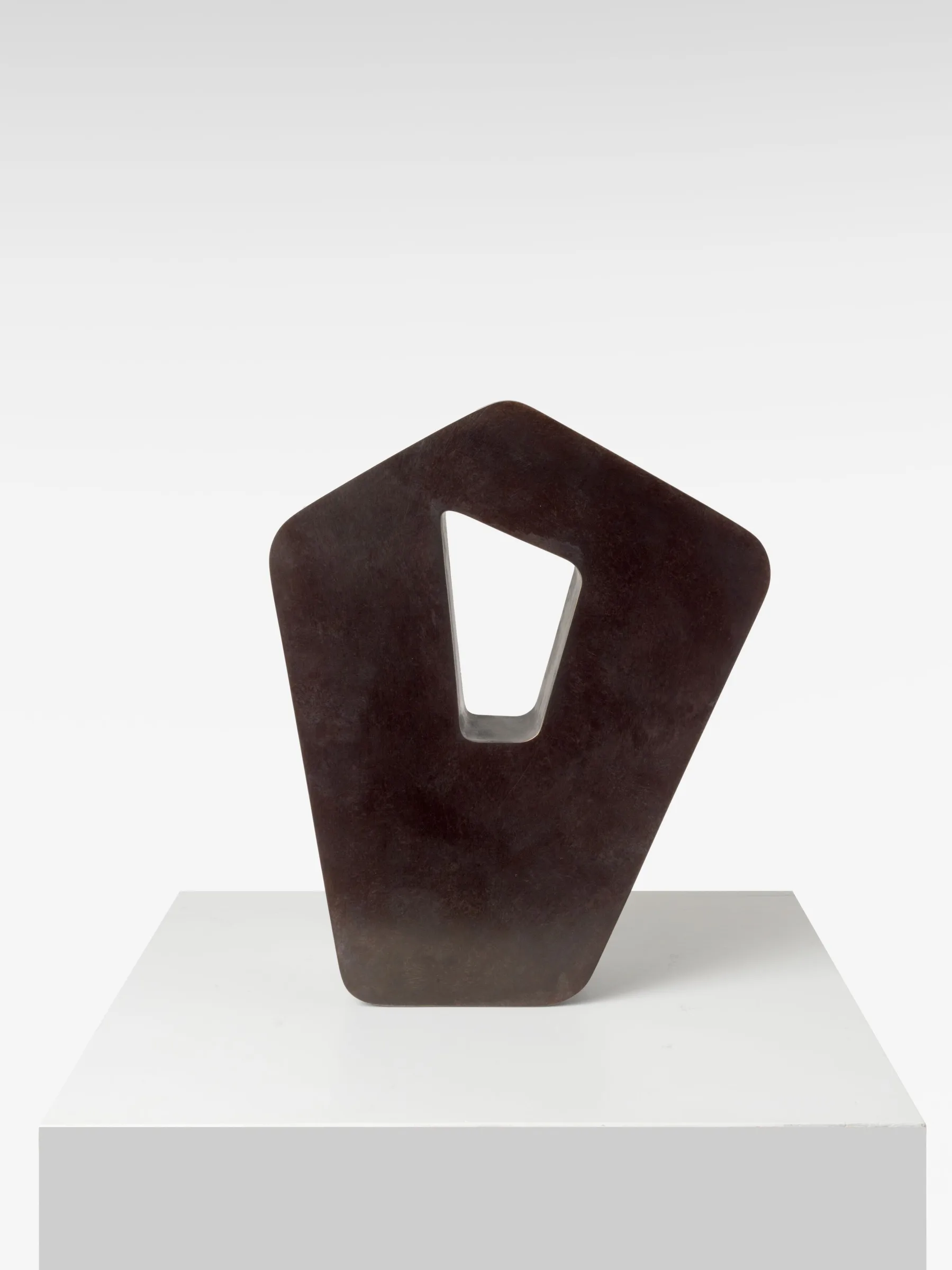
Hans Arp “Wappen oder Zahl / Pile ou face (Heads or Tails)” (1959 - cast prior to 1977) Photo by Roman März
This is the first Arp show in New York in almost 15 years. What are you hoping contemporary audiences will take away from this exhibition that may not have hit a decade and a half ago?
Well, first of all, even though this is the first show in some time, I think that because Arp has always been absolutely critical to so many artists’ thinking, his relevance is everywhere. It’s always an interesting exercise to think ‘why this artist right now?’ though. Arp’s work was shaped by and developed in the wake of enormous global catastrophes. Arp turned first to dada and then surrealism as means for grappling with the absurdity then trauma of the First World War and the collapsing of old certainties. At a moment of deep social and political instability, I think there is something really powerful about Arp’s methodology. As the brilliant curator Catherine Craft summarizes, nature appears in Arp’s work as process not as imitation. This structural model of growth and the constant regeneration of his forms — as simple and modest as they can sometimes be — offer a really useful way of thinking about human creativity and persistence in moments of crisis.
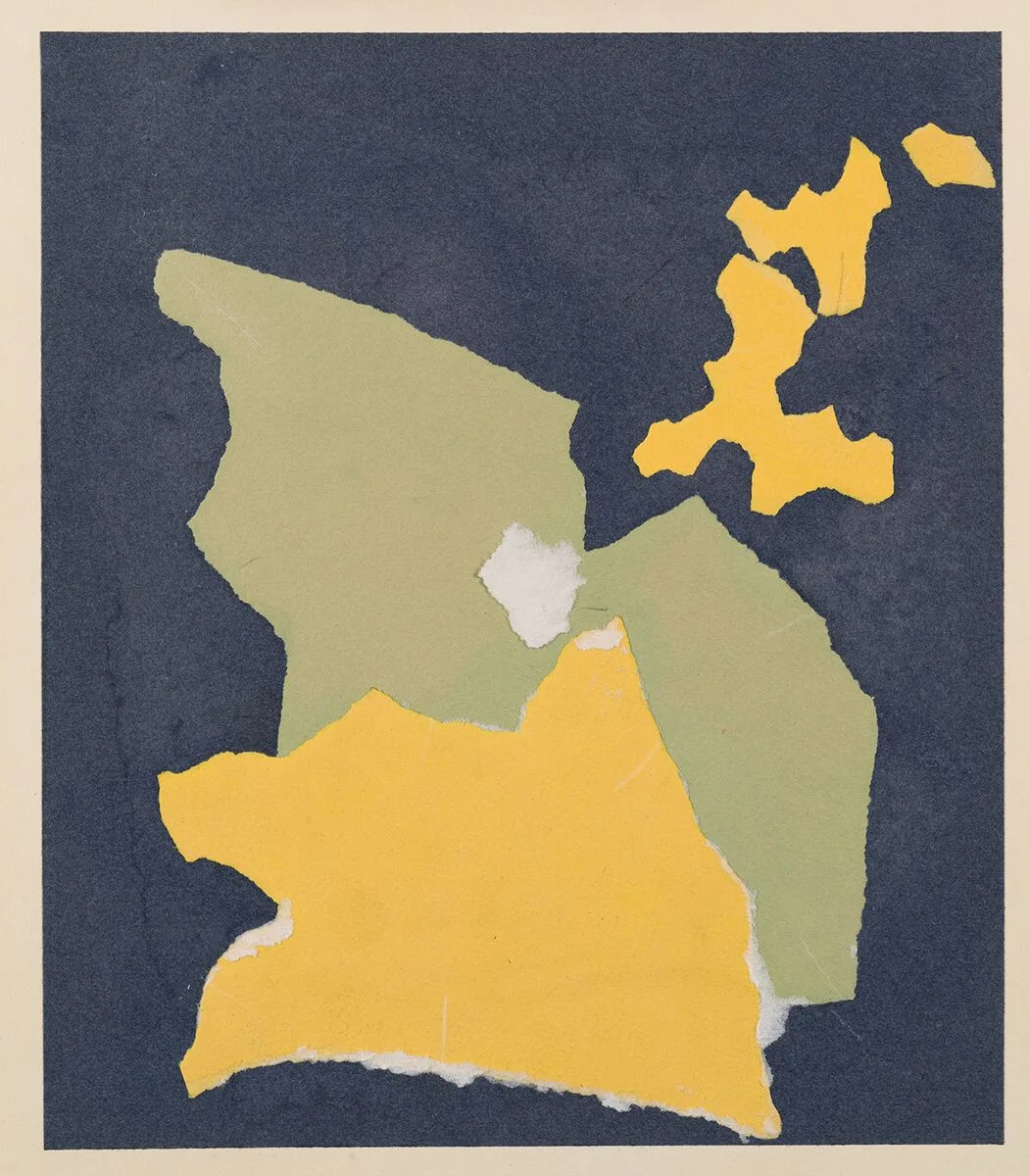
Hans Arp “Composition” (1961) Photo by Roman März
The show is coming out alongside a new book featuring nearly two hundred of Arp's paper works. Were there any paper works that you weren’t able to fit into this show that you wish you could’ve found a place for alongside the sculptures?
So many! It was really hard to make this edit, because Arp’s work is so rich and varied. At the same time, the fact that the book was being published meant that we knew we would have other avenues for sharing works that we couldn’t include in the show. I think of the two projects as happy companions.
Between Posenenske, "Calder | O'Keeffe" and now Arp's late, underexamined Threshold works, there's a clear thread in your recent projects toward reviving overlooked bodies of work. Is that a deliberate methodology at this point, or does it just keep finding you?
I don’t know, maybe I just have eccentric taste!
Arp. Heads or Tails is on view through 17 October 2026 at Hauser & Wirth New York, 22nd Street. The exhibition coincides with the release of Arp: Paper from Hauser & Wirth Publishers, a survey of nearly two hundred works, many never before exhibited or published.
Image Credits:
All images: Hans Arp. © Stiftung Arp e.V., Berlin/Rolandswerth / ProLitteris, Zurich, ARS, New York, and DACS, London. Courtesy Stiftung Arp e.V., Berlin/Rolandswerth and Hauser & Wirth.