Charlotte Colbert: The Power of Collective Imagination
22 May 2026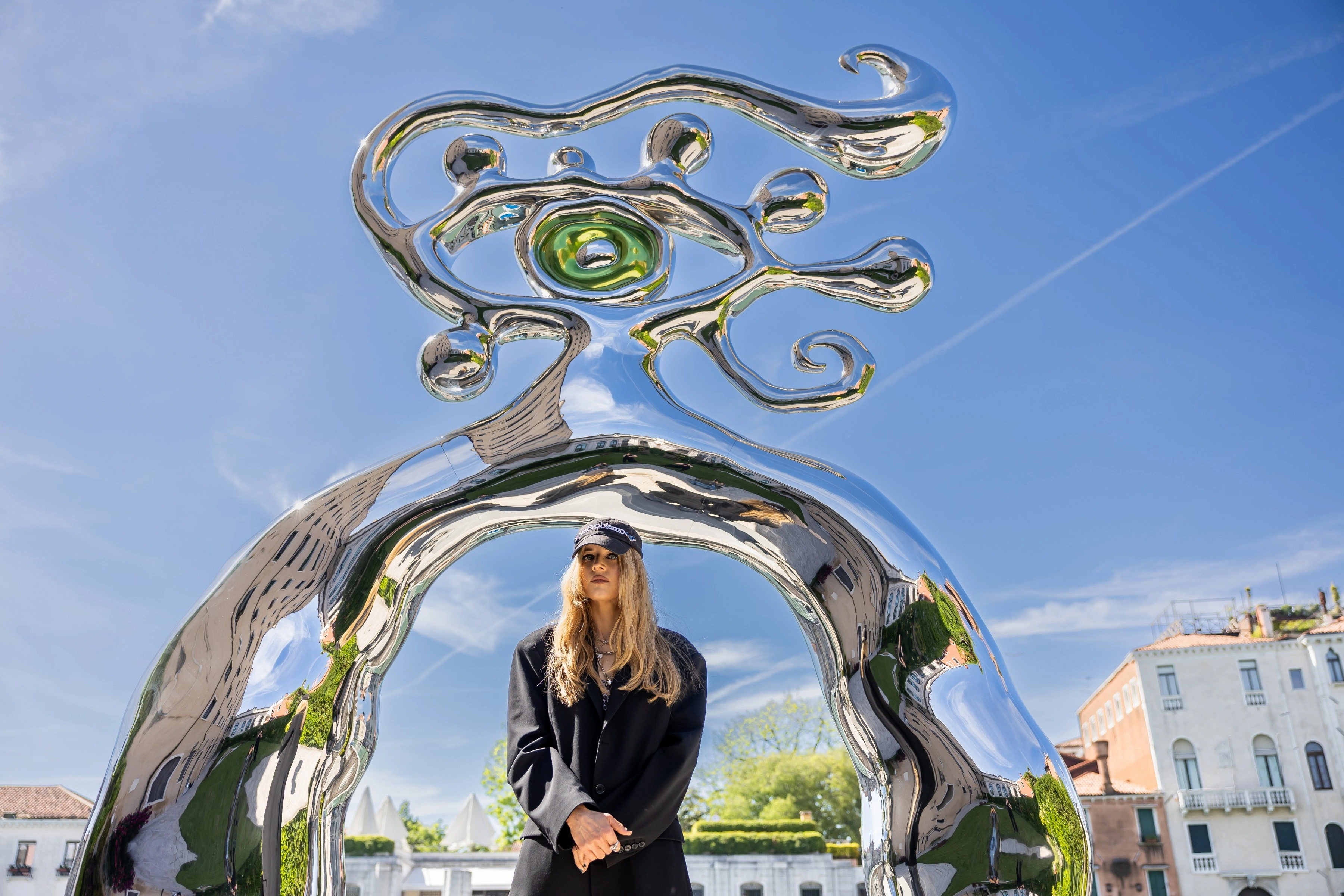
Charlotte Colbert is an artist and filmmaker whose practice spans monumental public sculpture, photography, and cinema. Her work draws on surrealism and fairy tale, with motifs like the eye, the milagros, and the wishing well recurring throughout, animated by what she describes as the power of collective imagination. This spring, two of her largest projects are unfolding at once: Chasing Rainbows is on view in New York’s Meatpacking District and Flatiron NoMad, and Possible Landscapes has just opened across two historic Venetian palazzos for the 2026 Biennale, running through September. Her new film Becoming Capa is on the horizon. We sat down with Charlotte mid-Biennale to discuss public art as an act of defiance, using language to realize the inventions of our imaginations, and what she has coming up!
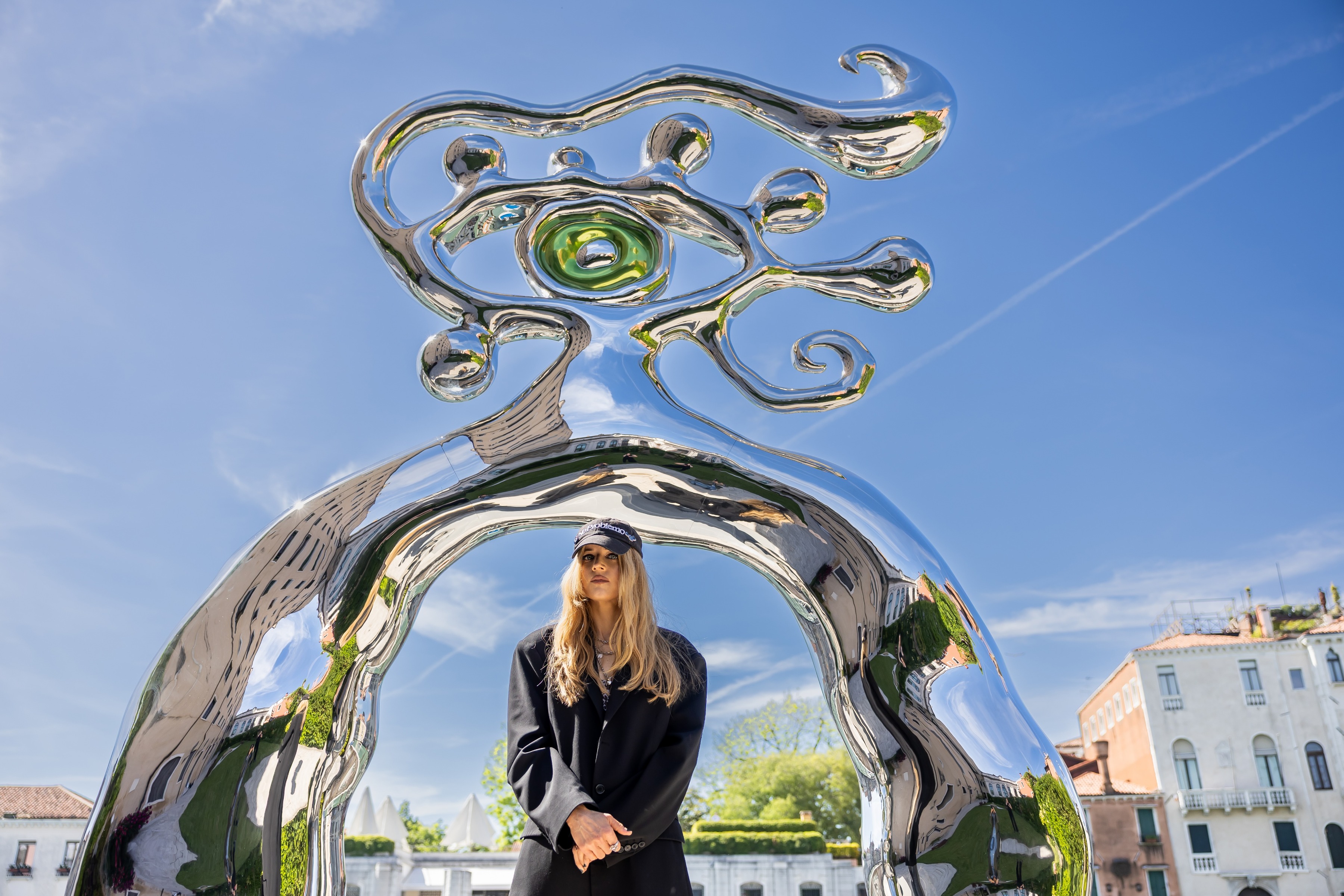
Image © Marta Buso. Artwork © Charlotte Colbert
“Possible Landscapes” just opened across two historic Venetian palazzos, while your monumental “Chasing Rainbows” are wrapping up in the streets of Manhattan. What does it feel like to move between those two parts of the art world right now, amidst the Biennale and New York Art Week?
The pieces are large polished-steel sculptures that live as public works. In New York, in Flatiron NoMad, just off Madison Square, there’s a thirty-foot-tall eye in polished steel, so very reflective. On one side it’s brown, and on the other it’s blue, and it sits on a tear-shaped base. The eye has come to symbolise, in my practice, the power of collective imagination.
Imagination is so often dismissed as something pointless or whimsical or futile when you’re growing up. But actually, everything human-made around us has been imagined before. We’re creatures of language, so everything around us was imagined by someone first. My cup, my mug, the shoes you’re wearing, but also our political systems. What we imagine today becomes our reality tomorrow, and there’s an amazing potential in that.
The wonder and the joy of being able to put pieces outside in the street is the possibility of chance encounters, of people connecting, of creating a moment of pause and interaction. I love chatting to strangers, and I feel that at the moment it’s almost an act of defiance. Everything around us is so controlled by algorithms that decide who we speak to, how, what information we get. So in some ways, breaking the algorithm by just talking to someone random is an act of defiance. And when two strangers meet, the whole world opens up. Anything feels possible.
It feels wonderful to be working in that space outside, and to be entering into a dialogue with New York City. I grew up reading its poets and watching its films. It’s such a dream space, such an amazing city of characters and strong opinions and literary figures. I’m very grateful to the city for letting us show the work.
The other piece is in the Meatpacking District. It’s a thirty-foot polished-steel tree of milagros, of miracles, and it’s very much an ode to belief, to hope, and to togetherness.
In Venice, for the occasion of the Venice Biennale, there are again works installed across multiple sites. One, in collaboration with the city of Venice, is in the wonderful gardens of the Prefettura, Palazzo Corner Della Ca’ Granda, which sits opposite the Peggy Guggenheim Collection. That feels lovely because I’m a lover of surrealism. The piece is a four-metre polished-steel arch with a green eye on top.
I love surrealism because it’s a kind of glitch in the system. It allows people to rethink what they cling onto as certitudes. It installs a moment of doubt and rethinking, in some ways through comedy and absurdity, poking fun at the human condition. So being opposite the Peggy Guggenheim, which is such an ode to surrealism, is wonderful. The piece itself is an arch, a portal, and it mirrors the idea of the canal as a portal. I feel the canal in Venice is a portal between the visible part of the city and the subterranean, aquatic, mysterious underworld that exists beneath it.
Venice is incredible because, obviously, it’s the ultimate space of imagination. Of collective imagination. It defies imagination. It feels like it should never have existed. It’s like a science-fiction imagining of the 15th century, as if science-fiction authors came together and mapped out what a city of the future might look like, and then built it in the past. There’s something very magical about it.
The second part of the show continues a bit further along, in this hidden, wonderful old garden that’s part of the Aman Hotel in Palazzo Papadopoli. It’s a beautiful, ancient garden you reach through tiny winding streets at the back. The idea inside it is to create a kind of magical space tapping into the archetypes of fairy tales, of the narratives we tell our children and grow up on. There’s a tree of wishes, in dialogue with an actual organic tree next to it, hung with votives and polished steel, very reflective again, so with the light, it feels a little bit like another space. There’s a wishing well, where people very sweetly started dropping little pennies in for wishes. There’s something lovely about that. And a lantern, a fairy-tale take on a lantern, with candles, so at night it has this magical little aura.
I forgot to say that in the first space along the canal, on the opening night, we had a musical collaboration with an amazing musician and magical, magical human called Birdy. She did a soundscape, a vocalisation, of the piece. Hearing the voice of the piece sing along the Grand Canal, luring you in like a siren, was very special. And she was there, which was great.
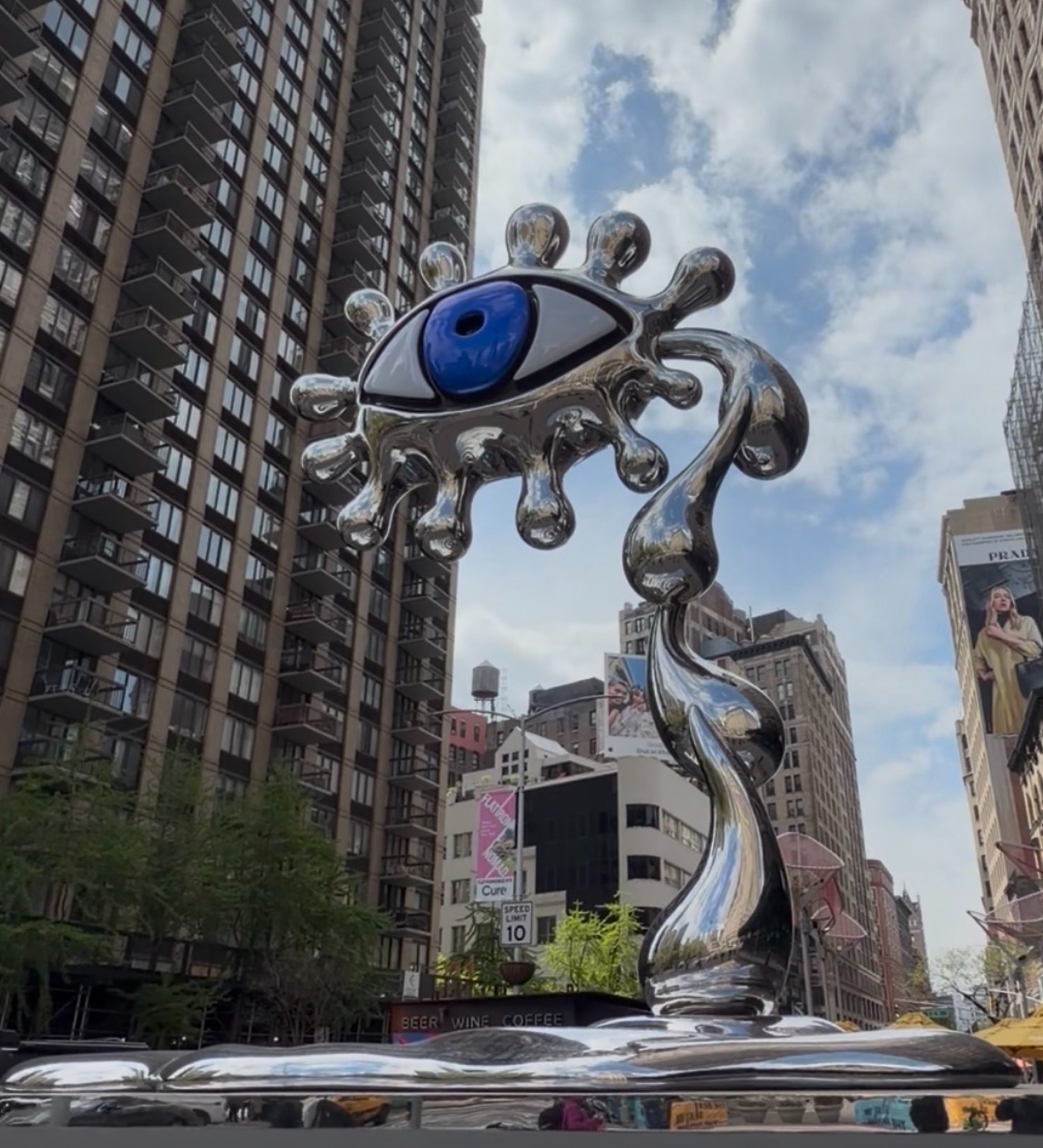
Charlotte Colbert’s “Dreamland Sirens” in Flatiron Nomad Artwork © Charlotte Colbert.
You've talked about chance encounters and collective imagination as central to your practice. How have those ideas played out in the actual reactions you've been getting from people in both cities?
In New York, it’s been really interesting and very joyous. The reactions of people, spending time around the pieces, all these incredible characters arriving with their stories. We had a wonderful couple who got engaged in front of the piece. Some celebrity dog doing pirouettes in front of it for his fans. School kids, full of wonder and magic, lots of different characters, and such wonderful enthusiasm for it. It’s been really magical.
In Venice, we’ve had a lot of cheering from the gondoliers, especially while we were installing. There are such characters in Venice too. It’s the Biennale, so there’s a lot going on, and it’s quite celebratory. It’s interesting because both cities have that kind of retro-futuristic vibe, just from different periods, and obviously a strong sense of myth and narrative and legend around them. It’s wonderful to be a tiny, tiny part of that.
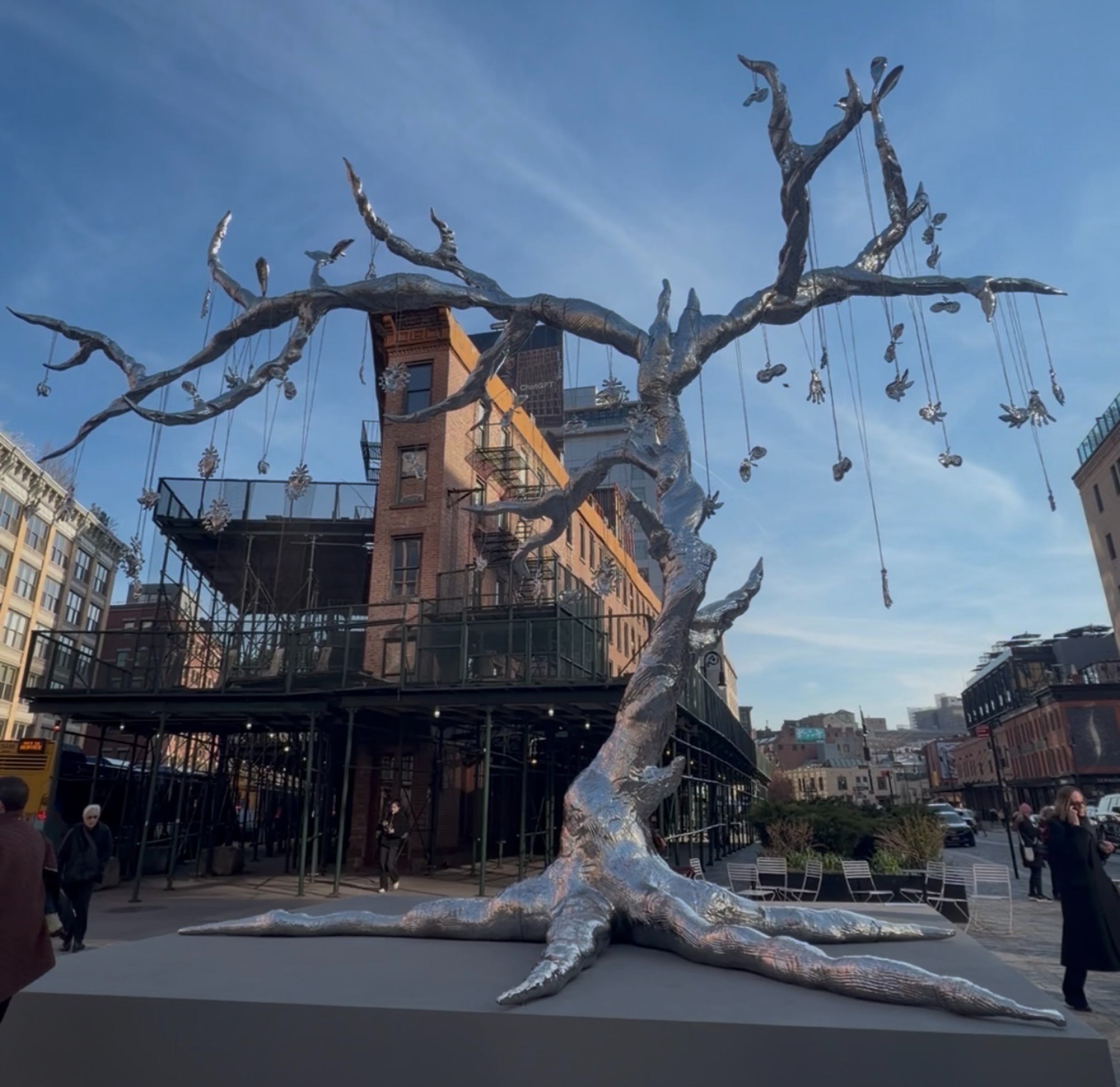
Charlotte Colbert’s “Where Angels Live” in the Meatpacking District Artwork © Charlotte Colbert.
Between “Possible Landscapes” running through September, “Becoming Capa” on the horizon, and summer stretching out ahead, what’s something that has been on your mind?
I feel we’re at a turning point at the moment, where we’re being presented with quite clear aesthetics of what the future should look like by massive companies. It would be amazing if we were able to remember that that’s just one very well-articulated vision of the future, amongst millions, and that collectively we can reimagine the futures we want to live in. Sometimes, the more impossible it seems to reimagine our futures, the more important it becomes.