Céleste Boursier-Mougenot's "clinamen" at Park Avenue Armory
10 Jun 2026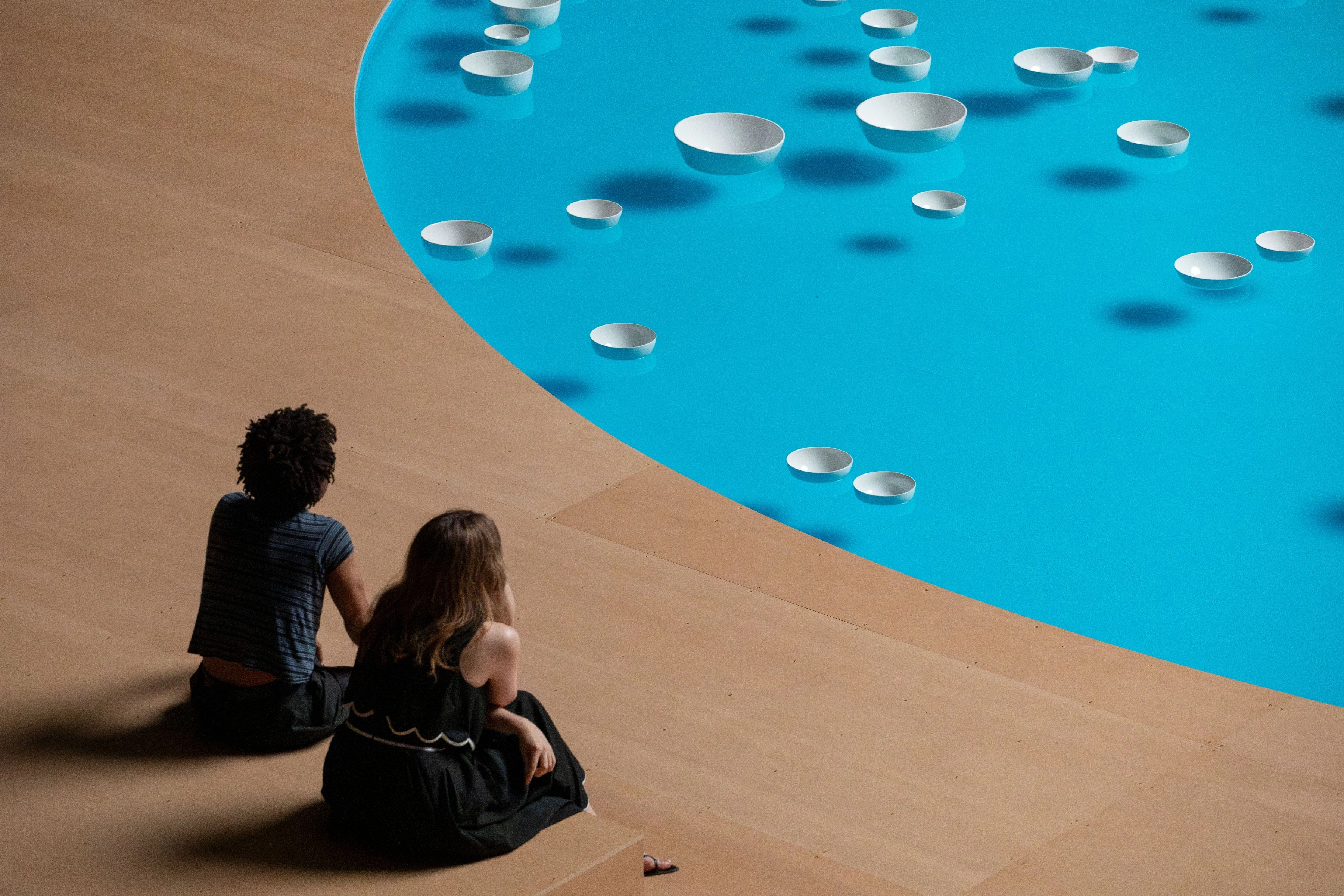
French artist Céleste Boursier-Mougenot has spent his career making music from the world around him. From finches perching on amplified electric guitars to grand pianos circling each other in slow, unprogrammed pursuit, Boursier-Mougenot will not stop creating new ways to make music. Now, nearly 800 white porcelain bowls drift across three circular pools of water in the cavernous Wade Thompson Drill Hall at Park Avenue Armory, each gentle collision releasing a soft, microtonal chime. The work is clinamen, a title borrowed from Lucretius, who used the term for the random swerve of atoms. This is its largest iteration yet, and its first showing in New York in more than two decades. It opens today (10 June) and runs through 2 August. We had the chance to chat with the artist during previews to talk about losing track of time, the trouble with illustrative music, and what it feels like to let a piece go.
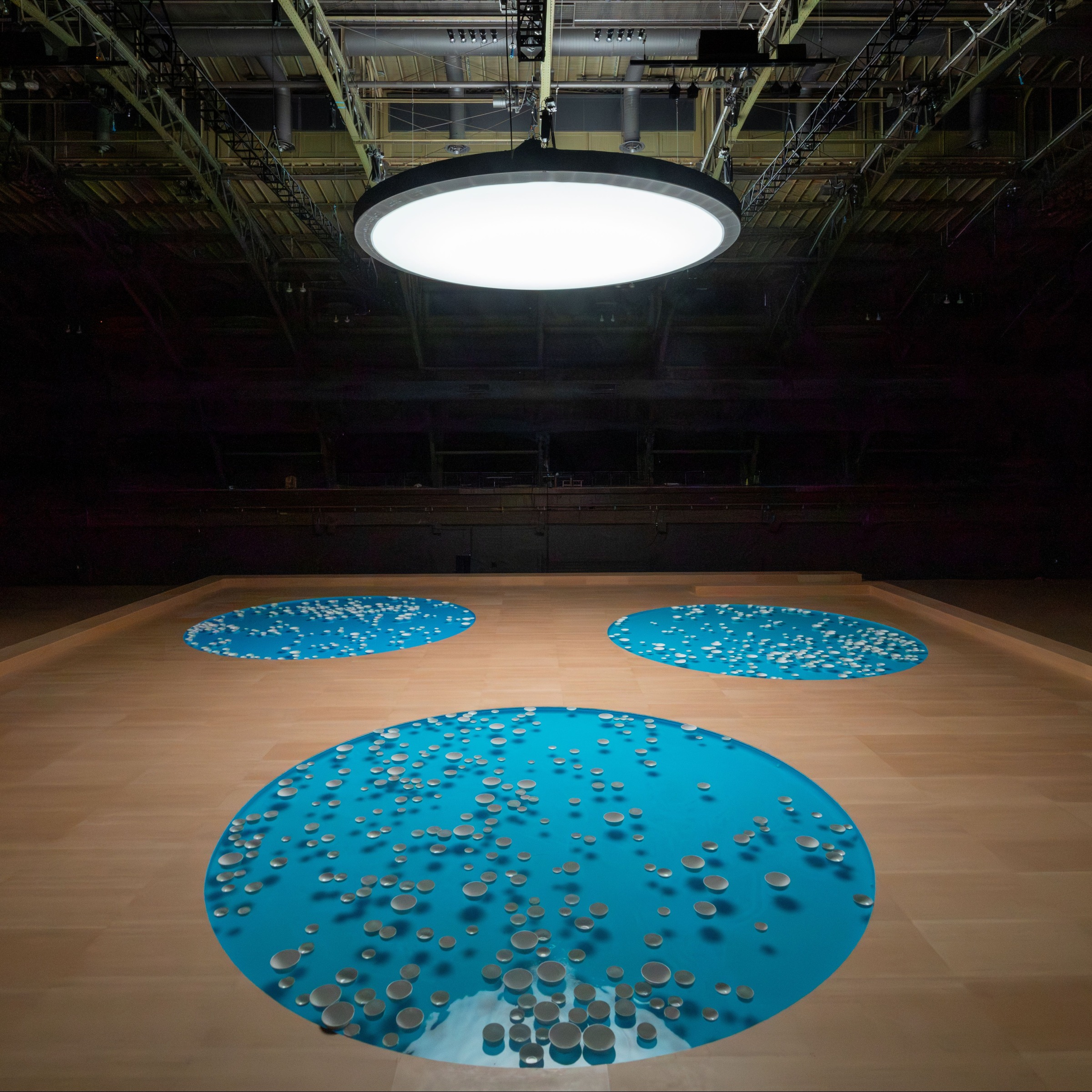
Installation view Céleste Boursier-Mougenot “clinamen (v.11)” (2026) Courtesy of the Artist and Park Avenue Armory
The work is designed to pull people in and slow them down. How long have you spent with it yourself, in one sitting?
I've been here a week now. We started placing the bowls, and I find myself spending more and more time just present with it. What's fascinating is that the piece can transport you. That happens to me too. Sometimes it carries you somewhere and you stop noticing where you are. I love this idea in my practice, the idea of creating a kind of visual trap. I always try to show the sound itself. If you have a video piece, and you can see the reality and then see it again inside the frame of the video, you can measure the difference between the two. It's fascinating, but not as easy to do with music and sound. All my works are about revealing how the sound gets made.

Installation view Céleste Boursier-Mougenot “clinamen (v.11)” (2026) Photo by Julian Weber
You've said the piece acts as a mirror for the state of mind of whoever is watching it. Do you see the three pools as standing for distinct aspects of the mind?
Absolutely not. I'm not in the business of representing anything. This is simply what it is. Think of it as polyphonic music as reality. What's the difference between visual art and music? Visual art represents things, especially when it's two-dimensional. But music is the thing itself. It isn't representing. The problem starts when music tries to represent, the way film scores do. Many composers are forced to live this way, and it's a pity, but they have to make music that illustrates. Descriptive music. Very boring, to my mind. There are exceptions. I was struck by the score for Poor Things, the Yorgos Lanthimos film. It was genuinely exploring different tunings, dissonant, with this strange, unsettling use of the flute. A real experience. But that's rare.
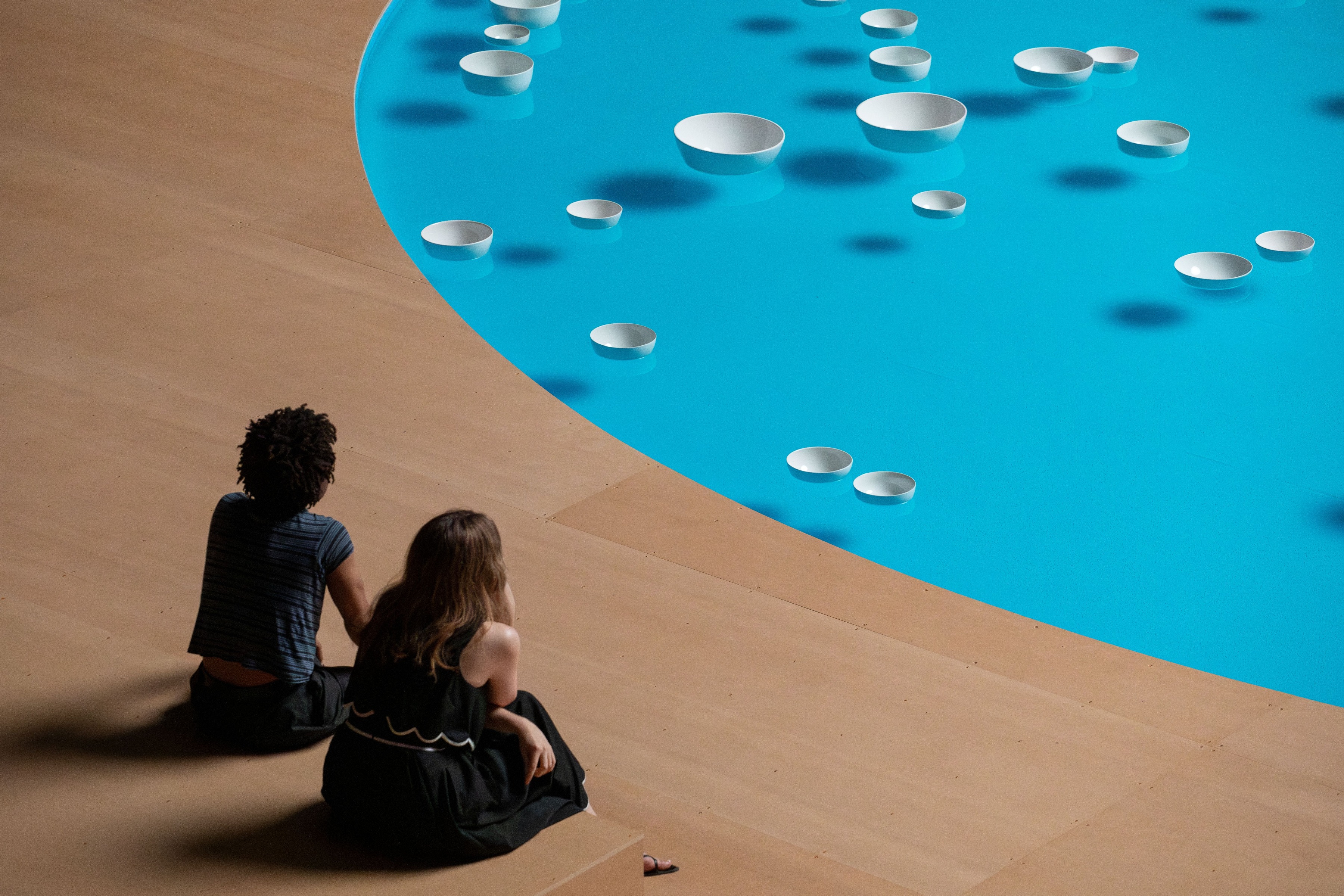
Installation view Céleste Boursier-Mougenot “clinamen (v.11)” (2026) Courtesy of the Artist and Park Avenue Armory
After tuning every bowl by hand, adapting the currents, calibrating the work to the acoustics of each new space, what does the moment of letting go feel like?
The thing is, each new place reactivates the principle. I keep the same aesthetic and technical principle, and sometimes I adapt it, improve it. But every time I'm invited into a place as magnificent as this one, I try to set the work inside it like an object on black velvet. I try to erase all the visual noise around it. And here, I have the means to do that. It's a miracle. For me, this is the most important part of the whole approach, because the experience of the work depends entirely on its context. If you're bothered by the other visitors, if the space isn't right, if something makes it feel ugly, the experience changes completely. I'm very sensitive to this myself as a visitor. And then, at a certain point, you identify the sound before you even see anything. You get an instant image, a sensation, several at once. And then you discover what it is. It's a great trip, every time. I need the piece not to be empty but alive, with people moving through it, sometimes just standing still inside it. It's incredible.
clinamen is on view at Park Avenue Armory's Wade Thompson Drill Hall from June 10 through August 2.