5 Must-Sees at Art Basel Hong Kong 2026
20 Mar 2026
Art Basel Hong Kong returns this month from 27 - 29 March, bringing together 240 galleries from 41 countries in what is shaping up to be one of the most thematically rich editions in recent memory. From politically charged installations to a work that literally takes over the Hong Kong skyline, here are the five works you need to see.
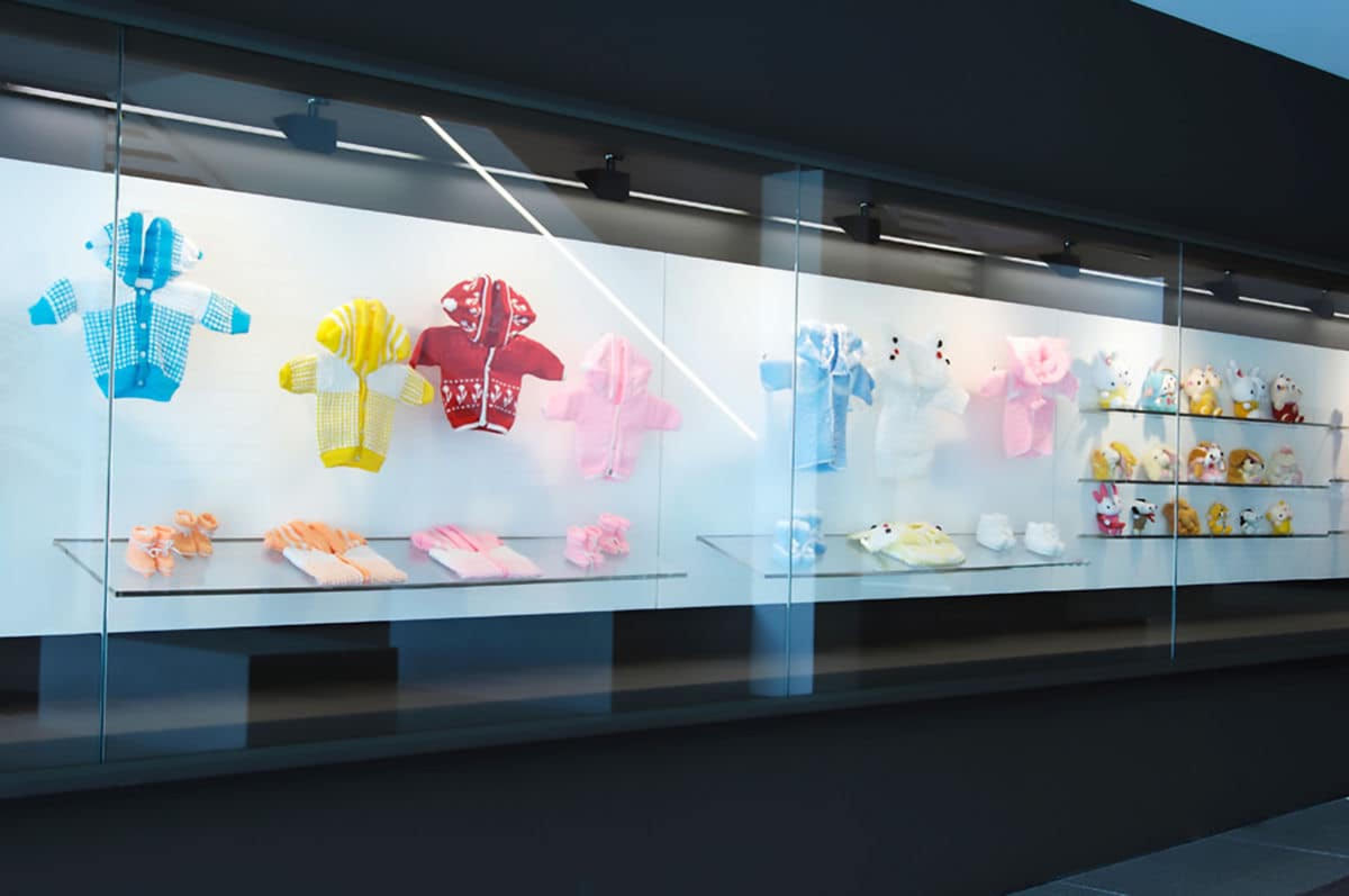
Photo Credits: Dinh Q. Le - Damaged Gene (1998). Courtesy of The Gunk Foundation, New York
Dinh Q. Lê, Damaged Gene (1998) | P.P.O.W.
Few presentations at this year's fair carry as much weight, or ask as much of the viewer, as Dinh Q. Lê's 1998 installation Damaged Gene. P.P.O.W. 's Kabinett booth stages a pop-up kiosk filled with miniatures, stuffed toys, and baby clothes, each one with two heads. Created while the Vietnamese government was pursuing an international lawsuit against the companies responsible for distributing Agent Orange, the work confronts chemical warfare's devastating generational legacy through the uncanny logic of children's objects. Arriving on the 50th anniversary of the end of the Vietnam War, it is one of the most historically resonant moments in the entire fair. Don't rush past it.
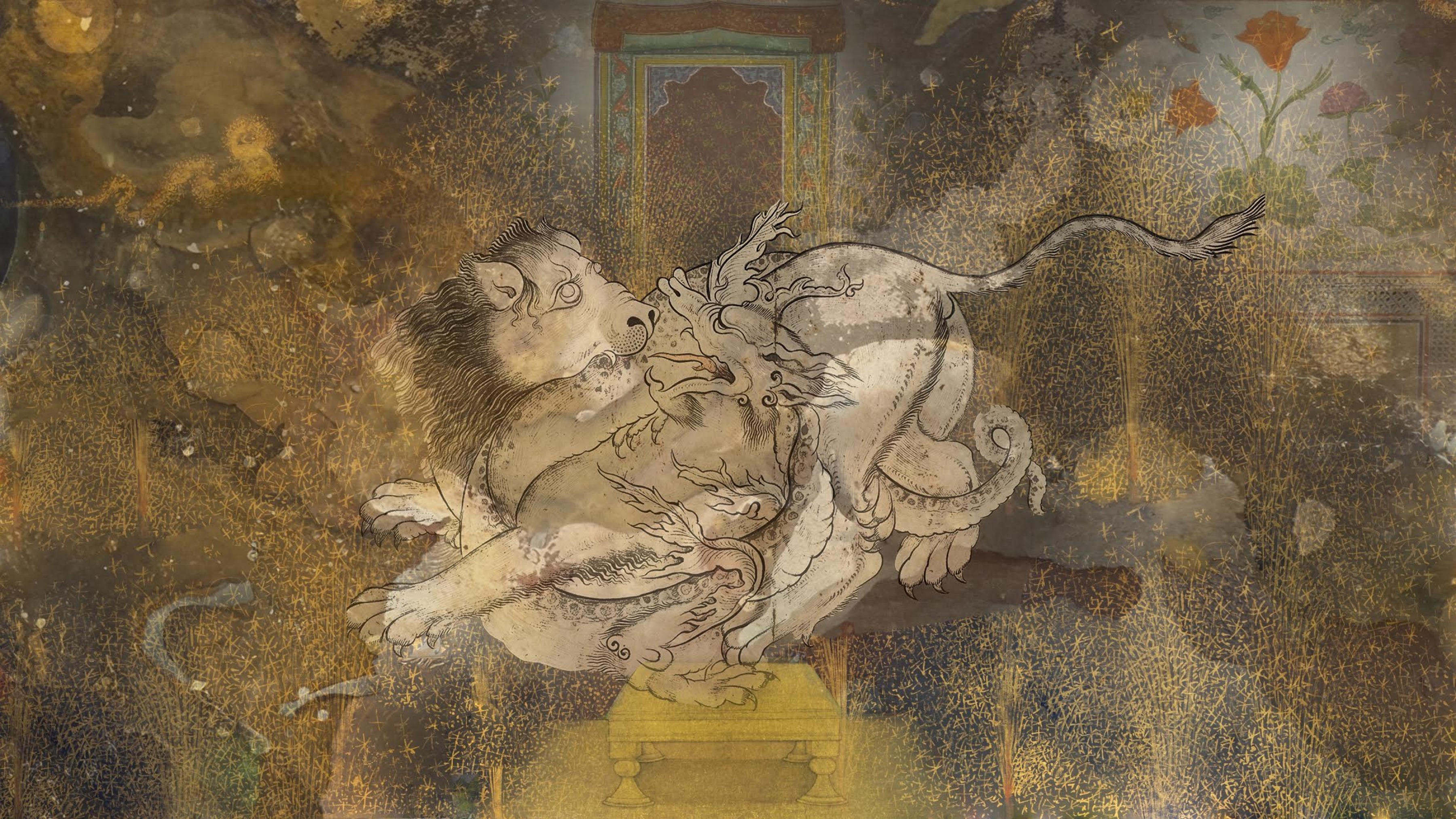
Photo Credits: Animated tableau still, Shahzia Sikander, 3 to 12 Nautical Miles Courtesy of M+ and the Artist
Shahzia Sikander, 3 to 12 Nautical Miles (2026) | M+ Facade, West Kowloon
You don't even need a fair ticket for this one. Co-commissioned by M+ and Art Basel and presented by UBS, Shahzia Sikander's sweeping hand-painted animation transforms the M+ facade facing Victoria Harbour every night from March 23, free and open to the public. The work traces the entangled histories of the British East India Company, Mughal India, and Qing China, from the decline of Mughal authority to the First Opium War, built from hundreds of individually painted gestures, objects, and symbols that magnify the mechanics of how authority is constructed, distributed, and lost. In a city that sits at the precise crossroads of those histories, the resonance is impossible to miss. Screening nightly through June 21.
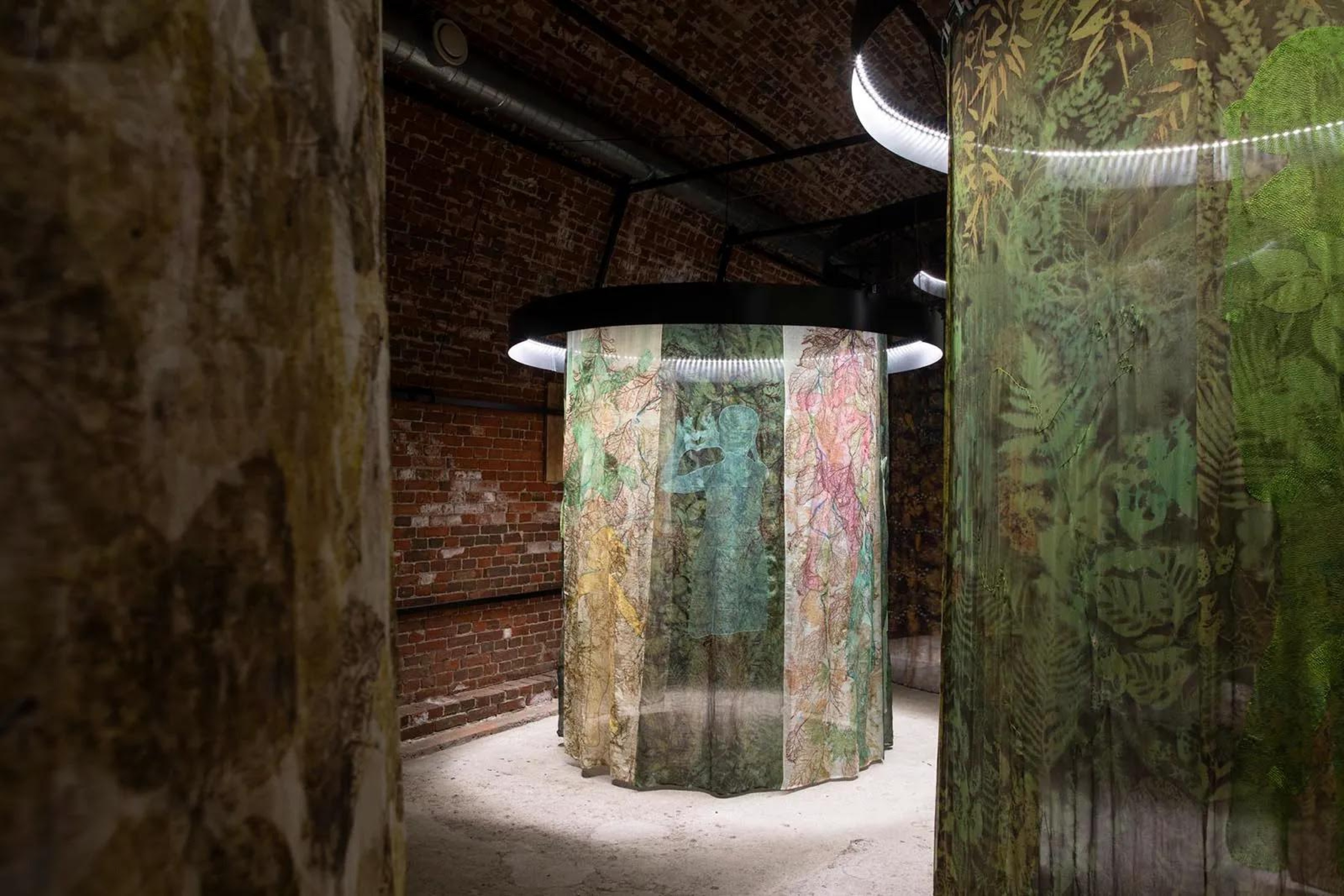
Installation View - Courtesy of Helsinki Biennal
Geraldine Javier’s Eco-Printed Fabric Columns | Silverlens
For the 2025 Helsinki Biennial, Filipino artist Geraldine Javier filled a former gunpowder magazine on Vallisaari Island with towering eco-printed fabric columns, each one carrying the impressions of plants pressed, hammered, and steamed directly into textile from her own garden. She called it a metaphorical rewilding: beating swords into ploughshares by filling a store for explosives with the very sap of living things. Now she brings a version of that vision into the Encounters sector at Art Basel Hong Kong, where her columns, resembling trees and evoking a speculative future shaped by climate, represent the element of earth within the curators' elemental framework. It is one of the most quietly radical works in the fair, and certainly one of the most beautiful.
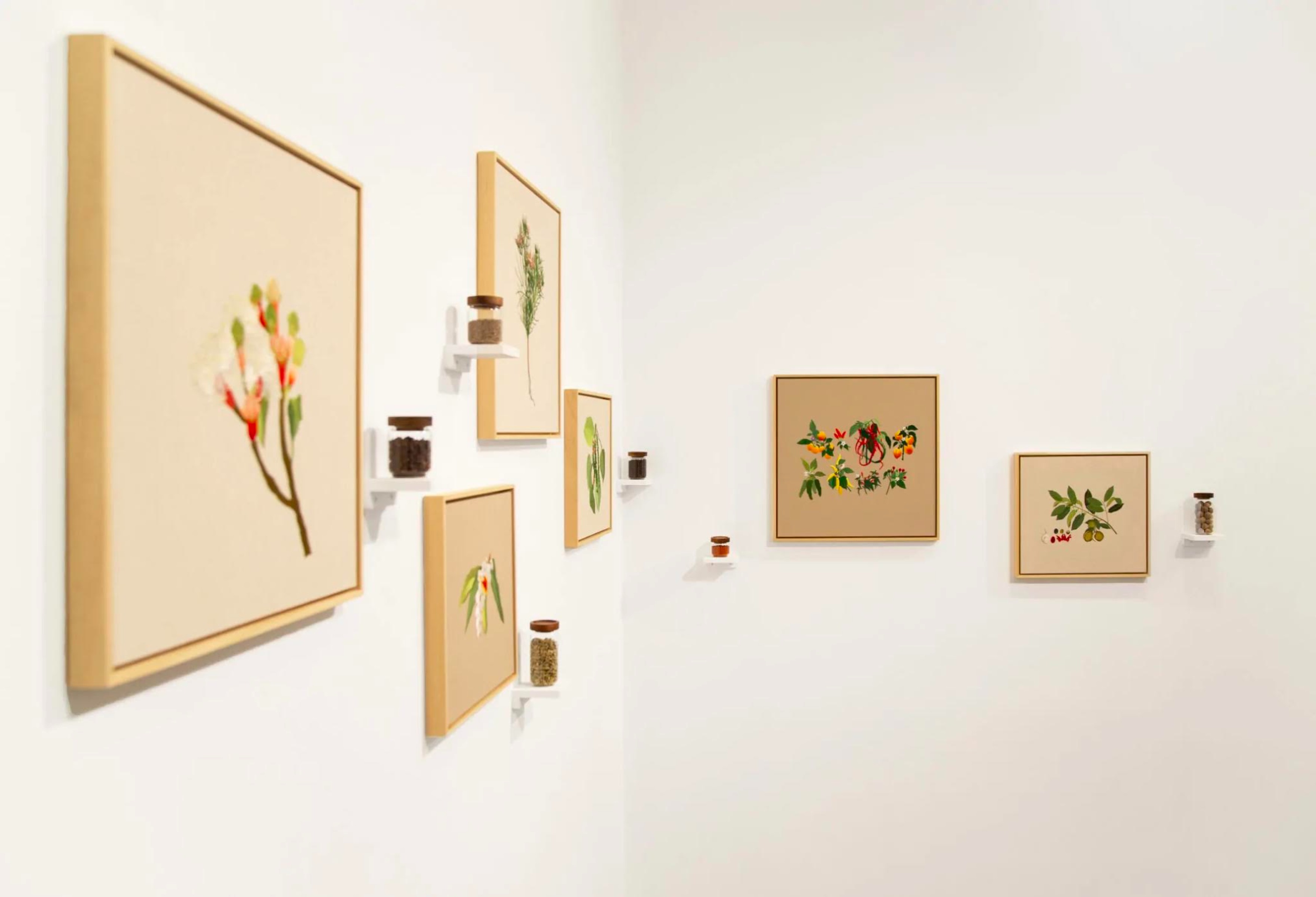
Installation View, Courtesy of the Artist and Max Estrella
Tiffany Chung, Studies of Exotic Botanical Organisms and Spices from the Ends of the Earth in Quest of Market Dominance (2024–2025) | Max Estrella
The title alone earns this a spot on the list. Vietnamese-American artist Tiffany Chung has spent years transforming rigorous historical research into embroidered maps, works that trace the routes of displacement, colonialism, and migration through a medium associated with domesticity, patience, and the feminine hand. Her contribution to Echoes, a brand new sector at Art Basel Hong Kong dedicated exclusively to work made in the past five years, focuses on the global spice trade: the routes that connected Asia, Africa, Europe, and the Americas across millennia, shaping cuisines, economies, conflicts, and cultures in ways that still reverberate today. Stitched in linen with the precision of a cartographer and the care of a historian, these works are as politically urgent as they are formally exquisite.
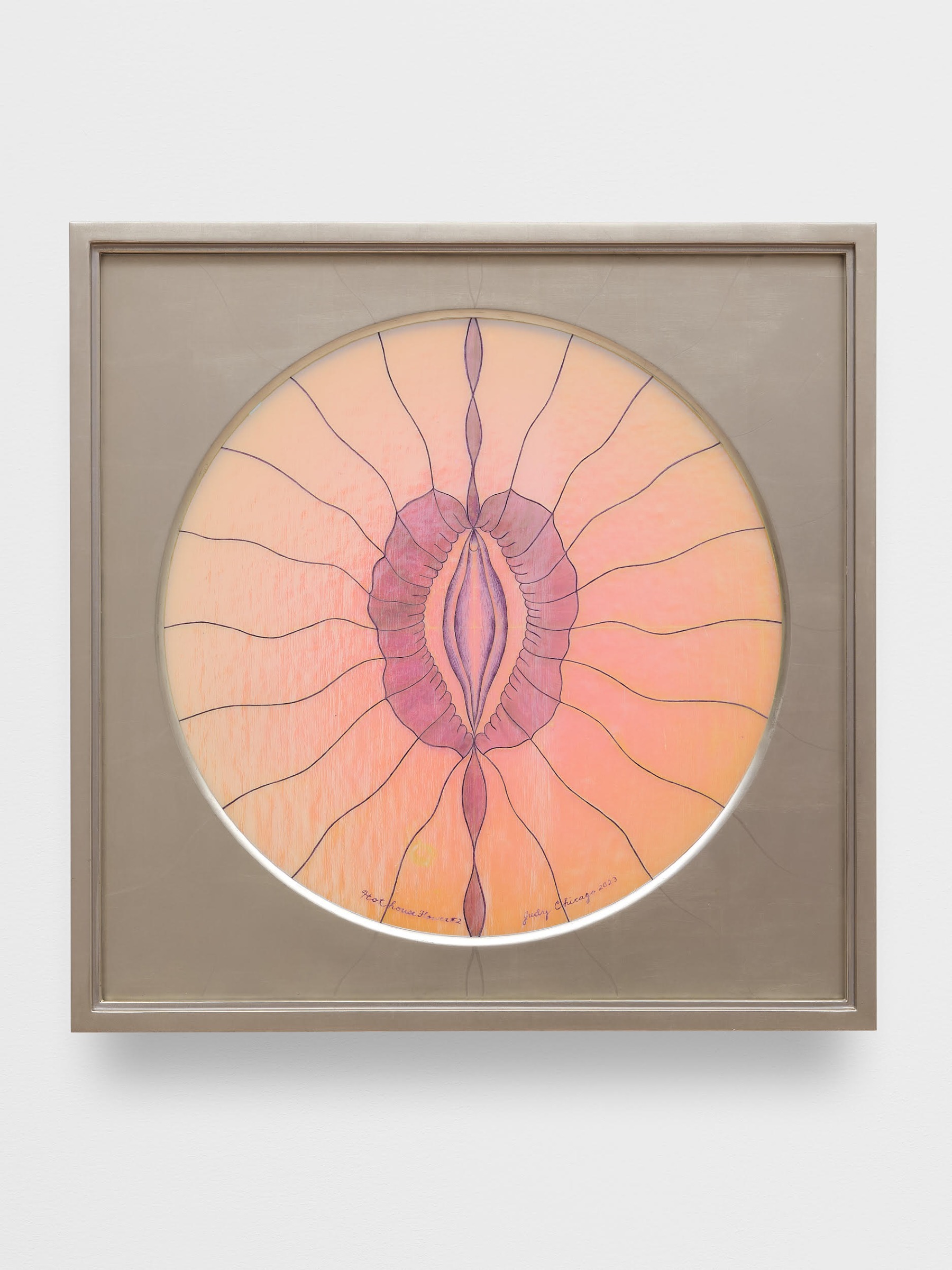
Judy Chicago “Dichroic Hothouse Flower 2” (2023) Courtesy of the Artist and Jessica Silverman
Judy Chicago, Hothouse Flower Series (2022–2023) | Jessica Silverman
At 87, Judy Chicago is still finding new ways to say what she has always meant. The Hothouse Flower series, presented in the Kabinett sector, revisits one of the most enduring motifs of Chicago's career, rendering the flower as a meditation on embodiment and female empowerment in a medium that is entirely her own: china paint and iridescent lustre on glass, set within illuminated lightboxes. The format is borrowed from commercial display, that most seductive and democratic of stages, but here redirected entirely toward the visibility and power of women. Intimate in scale and luminous in effect, they are the kind of works that stop you mid-stride on a busy fair floor, which is, of course, exactly the point.